

 SkillClick
Does the Thickness of Your Hair Affect PRP Treatment Results?
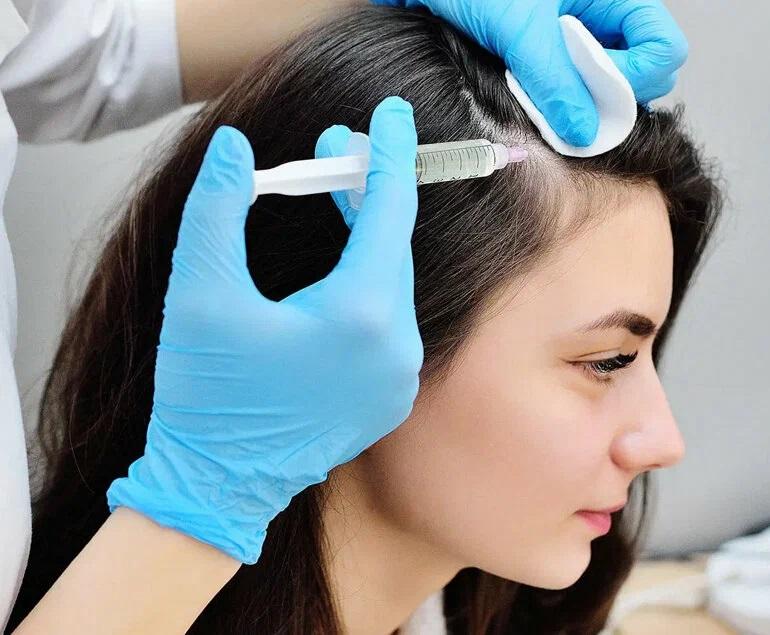
Have you ever wondered why some people notice improvements after PRP hair treatment while others experience only minor changes? One factor that often raises questions is natural hair thickness. Some people have naturally fine strands, while others have thick hair that gradually becomes weaker and thinner. If you are considering PRP Hair Treatment in islamabad, understanding the relationship between hair thickness, follicle health, and treatment response can help you develop realistic expectations.
Platelet-rich plasma (PRP) uses concentrated platelets from your own blood to deliver growth factors to selected areas of the scalp. It may help improve hair density in certain types of hair loss, but its effectiveness depends on several factors. Hair thickness alone does not determine whether you will respond successfully to PRP.
Does Natural Hair Thickness Affect PRP Results?
Hair thickness can influence how full your hair looks, but it is not the only factor that determines treatment suitability. Someone with naturally fine hair may have a healthy number of active follicles, while another person with naturally thick hair may experience progressive follicle miniaturisation.
PRP primarily aims to support existing hair follicles rather than change someone's genetically determined hair characteristics. This means that naturally fine hair is not automatically a reason to expect poor results.
Similarly, having thick hair does not guarantee a better response. The condition and activity of your hair follicles are generally more important than the natural thickness of individual strands.
What Is the Difference Between Hair Thickness and Hair Density?
These two terms are often confused, but they describe different aspects of hair growth. Hair thickness refers to the diameter of an individual strand, whereas hair density refers to the number of hairs growing within a particular area of the scalp.
For example, someone may have thick individual hair strands but relatively few follicles. Another person may have thousands of fine strands that create good overall coverage.
This distinction matters when evaluating PRP results because an improvement in hair density does not necessarily mean that every individual strand becomes thicker.
A fuller appearance can result from changes in hair density even when individual hair diameter changes very little.
Can PRP Help When Your Hair Strands Are Naturally Thin?
Yes, people with naturally fine hair may still be considered for PRP. However, the specialist needs to determine whether the thin strands are part of your natural hair characteristics or the result of progressive follicle miniaturisation.
In androgenetic alopecia, commonly known as pattern hair loss, certain follicles gradually become smaller and produce finer, shorter strands. PRP may support some of these weakened follicles when they remain active.
However, completely lost or permanently damaged follicles are unlikely to respond in the same way. PRP may be more useful when weakened follicles are still present than when an area has become completely bald.
Does Thick Hair Mean You Will Get Better PRP Results?
Not necessarily. Naturally thick hair can create the impression of greater volume, but it does not automatically indicate stronger follicles or better treatment response.
Some individuals with thick hair begin experiencing thinning around the temples, crown, or central scalp. Their original hair thickness may make early changes less noticeable, allowing hair loss to progress before they seek treatment.
A specialist should examine the scalp rather than judge suitability based on the appearance of the hair alone. Even people with naturally thick hair can experience follicle miniaturisation and progressive hair loss.
How Does Hair Follicle Health Influence PRP Treatment?
Hair follicles go through natural growth, transition, and resting phases. When certain conditions disrupt this cycle, hair may become weaker, thinner, or fall out more frequently.
PRP contains platelets that release growth factors and other signalling proteins involved in tissue repair and cellular activity. Researchers are studying how these components may influence the environment around hair follicles and support hair growth.
The response depends on the condition of the follicles and the underlying cause of hair loss. Healthy, active follicles and weakened but viable follicles need to be distinguished from areas where permanent follicle loss has occurred.
Which Factors Can Influence Your PRP Treatment Results?
Hair thickness is only one part of the assessment. Several other factors may influence how much improvement someone experiences after treatment.
During a consultation for PRP Hair Treatment in islamabad, the specialist may evaluate:
-
Hair follicle condition: Existing follicles and their degree of miniaturisation can influence treatment suitability.
-
Cause of hair loss: Pattern hair loss, temporary shedding, nutritional deficiencies, and scalp conditions require different approaches.
-
Hair density: The number of existing hairs helps establish the baseline condition of the scalp.
-
General health: Certain medical conditions and nutritional deficiencies may contribute to hair loss.
-
Treatment preparation: PRP concentration, preparation methods, and platelet characteristics may influence treatment quality.
-
Treatment consistency: Following the recommended sessions and attending follow-up assessments helps evaluate the response.
A personalised assessment provides a more useful prediction than hair thickness alone.
Can PRP Make Fine Hair Look Thicker?
Some patients experience improved hair density and a fuller-looking scalp after PRP treatment. However, evidence that PRP consistently increases the diameter of individual hair strands is less conclusive.
A 2025 systematic review and meta-analysis of 43 randomised controlled trials found evidence that PRP could improve hair density and reduce hair loss, but it did not demonstrate a significant overall improvement in hair thickness.
Other research has reported improvements in both density and thickness in particular patient groups. These differences show why individual outcomes should not be guaranteed.
PRP may improve the appearance of hair coverage without necessarily changing the natural diameter of every strand.
How Is Hair Thickness Evaluated Before PRP?
A proper consultation should establish the condition of your scalp before treatment begins. The specialist may examine the hairline, temples, crown, and other areas where thinning is noticeable.
Trichoscopy, a specialised scalp examination using magnification, can help identify miniaturised hairs, variations in hair shaft diameter, and follicle condition. Standardised photographs may also provide a useful baseline for evaluating changes over time.
If hair loss appears related to a medical or nutritional condition, additional investigations may be recommended. Accurate assessment helps determine whether PRP is appropriate or whether another treatment should be considered first.
How Many PRP Sessions May Be Required?
PRP generally involves multiple sessions rather than a single appointment. Some treatment protocols begin with approximately three sessions spaced several weeks apart, followed by maintenance sessions depending on the patient's response.
However, there is no universally accepted schedule for every patient. The number of sessions depends on the severity of hair loss, treatment protocol, and individual response.
Improvements are usually assessed over several months because hair growth is a gradual process. More sessions do not automatically guarantee thicker hair or better results.
Can You Combine PRP With Other Hair Restoration Treatments?
Yes. Depending on the diagnosis, PRP may be combined with other treatments to address different aspects of hair loss.
For androgenetic alopecia, a dermatologist may discuss topical minoxidil or suitable prescription medications. Nutritional deficiencies may require targeted correction, while inflammatory scalp conditions need their own treatment.
Combining therapies should be based on individual medical needs rather than using multiple procedures without a clear reason. An integrated treatment plan can be more appropriate than relying on PRP alone when hair loss has several contributing factors.
Final Thoughts
The natural thickness of your hair does not automatically determine how successfully you will respond to PRP treatment. Follicle health, hair density, the underlying cause of thinning, and the quality of the treatment approach are all important considerations. A professional scalp examination can help establish realistic expectations and determine whether PRP is suitable for your hair condition.
For individuals considering PRP Hair Treatment in islamabad, Dynamic Aesthetic Clinic offers personalised hair restoration consultations, experienced board-certified surgeons, and advanced hair restoration techniques. Its team can assess individual hair characteristics, evaluate follicle health, and discuss suitable treatment options based on your hair restoration goals.
- Managerial Effectiveness!
- Future and Predictions
- Motivatinal / Inspiring
- Fitness and Wellness
- Medical & Health
- Manufacturing
- Education
- Real-Estate
- Food Industry
- Hospitality
- Online Games
- Sports
- Home Services
- Civil Engineering
- Safety and Protection
- Software Products & Services
- Fashion and Jewellery
- Artificial Intelligence
- Entrepreneurship
- Mentoring & Guidance
- Marketing
- Networking
- HR & Recruiting
- Literature
- Shopping
- Career Management & Advancement