

 SkillClick
How to Choose an Oman E-Invoicing Solution Provider
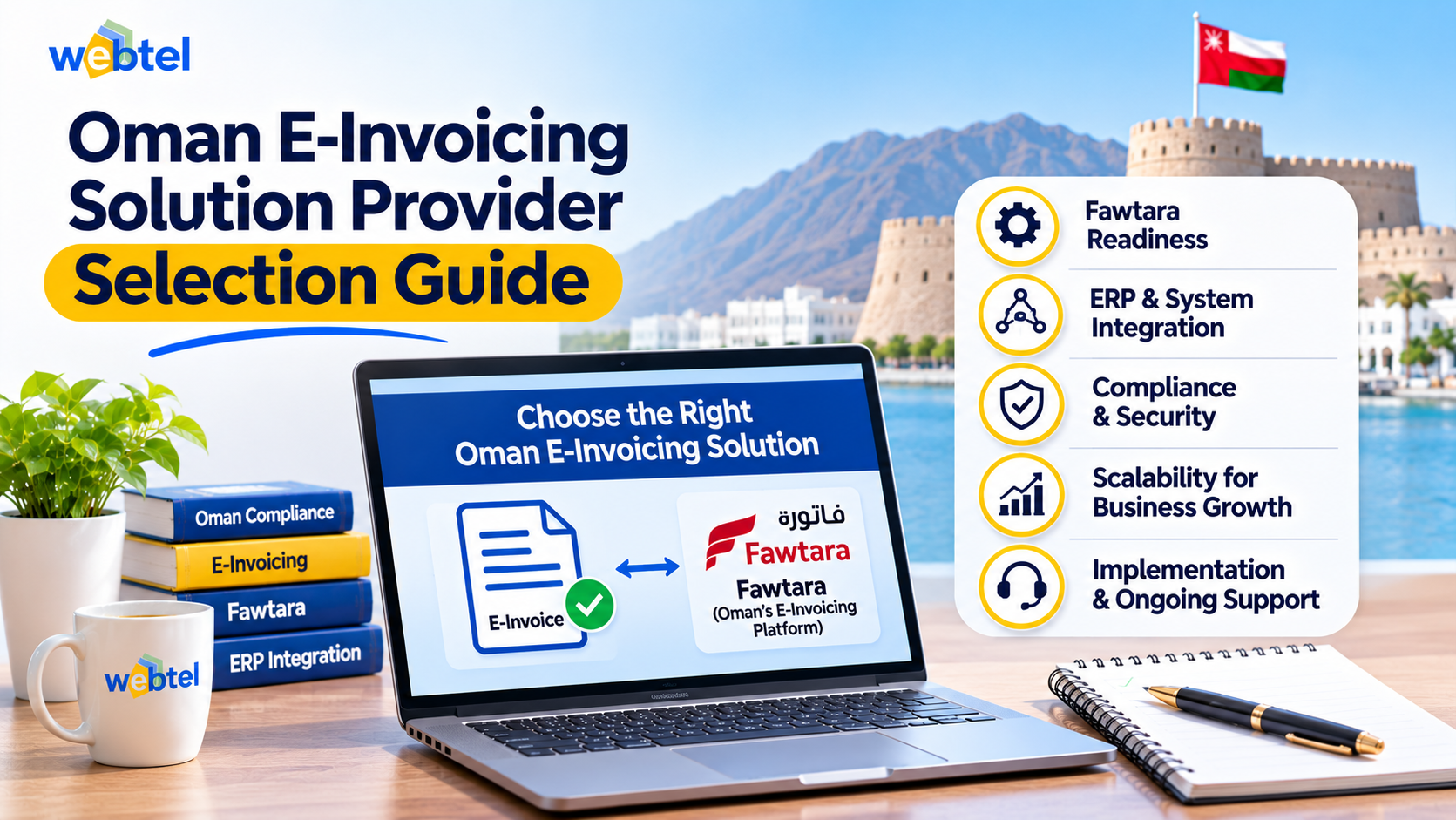
Choosing an Oman e-invoicing solution provider involves more than finding software that can create and send invoices. Businesses need to consider how the solution will handle invoice data, connect with existing accounting or ERP systems, manage transaction responses and support the organisation as Oman introduces its Fawtara e-invoicing framework.
For businesses preparing for this transition, selecting the right Oman e-invoicing solution provider means assessing the complete invoicing process rather than focusing only on software features. The provider should be able to explain how its solution fits existing business systems and supports the technical requirements of electronic invoice exchange.
In short, compare providers on regulatory readiness, system integration, invoice accuracy, transaction handling, security and ongoing support. Ask each provider to demonstrate these areas using a realistic example from your business rather than relying only on a feature list.
Understand What an Oman E-Invoicing Solution Must Do
Before comparing providers, understand the workflow your business will need to support. Under the Fawtara model, electronic invoicing involves more than converting a paper invoice into a PDF or sending an invoice by email. The process uses structured invoice data and service providers to exchange information between suppliers, buyers and the tax authority.
This means your chosen solution should be assessed as part of a wider transaction process. Consider whether it can prepare invoice information in the required structure, exchange it through the relevant service-provider network and handle acknowledgements or errors returned during processing.
The provider should also explain which responsibilities belong to its platform and which remain with your finance or IT team. This distinction matters because software can support invoice preparation and transmission, but your business still needs accurate source data and appropriate internal controls.
Six Factors to Compare When Selecting a Provider
1. Readiness for Oman's Fawtara Framework
Start by asking how the provider is preparing its solution for Oman's e-invoicing requirements. A general electronic invoicing product may not automatically support the technical and operational requirements of a country's specific framework.
Ask the provider to explain:
-
How invoice data will be structured and exchanged.
-
How the solution will work with the applicable service-provider model.
-
How transaction acknowledgements and rejected invoices will be handled.
-
How changes to technical requirements will be communicated and implemented.
-
What testing will be available before your business goes live.
Avoid accepting a broad statement such as "Fawtara ready" without a demonstration or supporting explanation. Ask for a walkthrough that shows the steps from invoice creation to transmission and response handling.
2. Compatibility With Your Existing Accounting or ERP System
Integration is one of the most practical selection factors. If invoice information is already maintained in an ERP or accounting platform, employees should not have to re-enter the same details manually into a separate e-invoicing application for every transaction.
Check which systems the provider can connect with and whether the integration supports your actual workflow. For example, a distributor may generate invoices from its ERP after confirming an order and dispatch. The e-invoicing solution should be assessed on how it receives the relevant invoice data and returns transaction status to the systems used by the finance team.
Ask these questions:
-
Does the provider support your current ERP or accounting software?
-
Is the connection based on an API, file exchange or another method?
-
Which invoice fields are transferred automatically?
-
How are failed connections or incomplete records reported?
-
Does the integration require changes to existing ERP workflows?
A provider should explain the implementation effort, not simply confirm that integration is possible.
3. Invoice Data Validation and Error Handling
Incorrect invoice data can create problems even when the transmission technology works properly. Missing customer details, incorrect tax information, inconsistent product descriptions or incomplete mandatory fields may interrupt the invoicing process.
Find out what checks the solution performs before an invoice is submitted. Does it identify missing information? Can users see why a record has failed validation? Is there a clear process to correct the source data and submit the invoice again?
A useful demonstration should include both a valid invoice and an invoice containing an error. Observe whether the system explains the issue in a way that finance staff can understand and act on.
4. Security, Access and Record Management
Electronic invoices contain commercially sensitive information. Your provider should explain how invoice records are protected, who can access them and how users' activities are controlled.
Review access permissions, authentication methods, audit records, backup arrangements and data-retention practices. Also ask where invoice data is stored and what contractual arrangements apply to its handling.
Do not assume that a provider's general security statement answers every question. Request information relevant to your organisation's data policies and operational requirements.
5. Implementation and Support
A solution can meet technical requirements but still create difficulties if implementation is poorly managed. Before selecting a provider, understand the activities involved in connecting the platform, configuring invoice data, testing transactions and training employees.
Ask who will coordinate the implementation and whether the provider will work with your ERP team or existing technology partner. Clarify the support process for technical failures, rejected invoices and changes to business requirements.
Also establish realistic timelines. A provider should identify dependencies such as access to ERP data, availability of technical staff and completion of testing. This helps your organisation plan the transition without assuming that installation alone means the system is ready for daily use.
6. Scalability and Total Cost
Your current invoice volume may not represent future requirements. Consider whether the solution can support additional business units, users, transaction volumes or changes in the company's ERP environment.
Compare pricing beyond the initial subscription. Ask whether implementation, integration, additional entities, transaction volume, support and future configuration changes carry separate charges.
A lower starting price may not represent the lower overall cost if the solution requires extensive manual work or additional integration services.
Use a Practical Provider Evaluation Matrix
A structured comparison can help finance, IT and procurement teams assess providers consistently. Use the following matrix during demonstrations and record evidence rather than relying on sales descriptions.
| Evaluation area | What to ask for | What a good response should clarify |
|---|---|---|
| Fawtara readiness | Demonstration of the intended workflow | How structured invoices and responses are handled |
| ERP integration | Example using your current system | Data transfer method and implementation needs |
| Validation | Test with incomplete invoice data | How errors are identified and corrected |
| Security | Security and access-control documentation | Data protection, permissions and record management |
| Support | Support process and escalation details | Who handles issues and expected response arrangements |
| Pricing | Itemised commercial proposal | Setup, integration, usage and recurring costs |
You can also score each provider against your own requirements. For example, assign a higher internal priority to ERP integration if your business processes a large volume of invoices through an existing enterprise system. A smaller organisation with a simpler invoicing workflow may place more emphasis on ease of use and implementation support.
The purpose is not to select the provider with the highest number of features. It is to identify the solution that fits your transaction process and can be implemented with manageable effort.
Check Invoice Generation Before You Sign
Invoice generation deserves a separate review because it is where business information becomes the structured record used in the e-invoicing process. Ask the provider to demonstrate how invoice details are collected, mapped and checked before transmission.
For example, consider a business that issues invoices for several product categories and serves customers across different locations. The finance team should understand how customer information, item descriptions, quantities, values and applicable tax details move from the source system into the electronic invoice.
Review how the solution handles corrections, cancellations or other invoice changes relevant to your workflow. Ask whether users can trace a generated invoice back to its original business record and identify the status of each transaction.
When reviewing a provider's capabilities, it is useful to examine its approach to Oman e-invoice generation as a distinct part of the wider solution. This helps your team assess whether invoice preparation is accurate and consistent before considering the complete transmission and response workflow.
Questions to Ask During the Final Demonstration
Before making a decision, arrange a demonstration with representatives from finance and IT. Ask the provider to show a complete example rather than presenting separate screens without explaining how they connect.
Use a typical invoice from your business and follow it through the proposed workflow. Check how the solution receives the source information, validates the record, generates the electronic invoice and reports the transaction outcome. Include an error scenario so your team can see how problems are identified and resolved.
Finally, request a written proposal that defines the implementation scope, responsibilities, support arrangements, commercial terms and any assumptions about your existing systems. This document will make it easier to compare providers on the same basis.
Make the Selection Based on Your Actual Workflow
The right Oman e-invoicing solution provider should fit your business systems and explain how it will support the full invoicing process under the Fawtara framework. A provider's feature list is only a starting point. Integration, data validation, security, implementation and ongoing support determine whether the solution will work reliably in daily operations.
Take time to test the proposed workflow with your own invoice data, involve both finance and IT teams, and document the provider's commitments before signing. This gives your business a clearer basis for choosing a solution that can support its current operations and future e-invoicing needs.
- Managerial Effectiveness!
- Future and Predictions
- Motivatinal / Inspiring
- Fitness and Wellness
- Medical & Health
- Manufacturing
- Formazione
- Real-Estate
- Food Industry
- Hospitality
- Online Games
- Sports
- Home Services
- Civil Engineering
- Safety and Protection
- Software Products & Services
- Fashion and Jewellery
- Artificial Intelligence
- Entrepreneurship
- Mentoring & Guidance
- Marketing
- Networking
- HR & Recruiting
- Literature
- Shopping
- Career Management & Advancement