

 SkillClick
Digital Twins in Logistics: The Next Step Toward Smarter Supply Chain Management
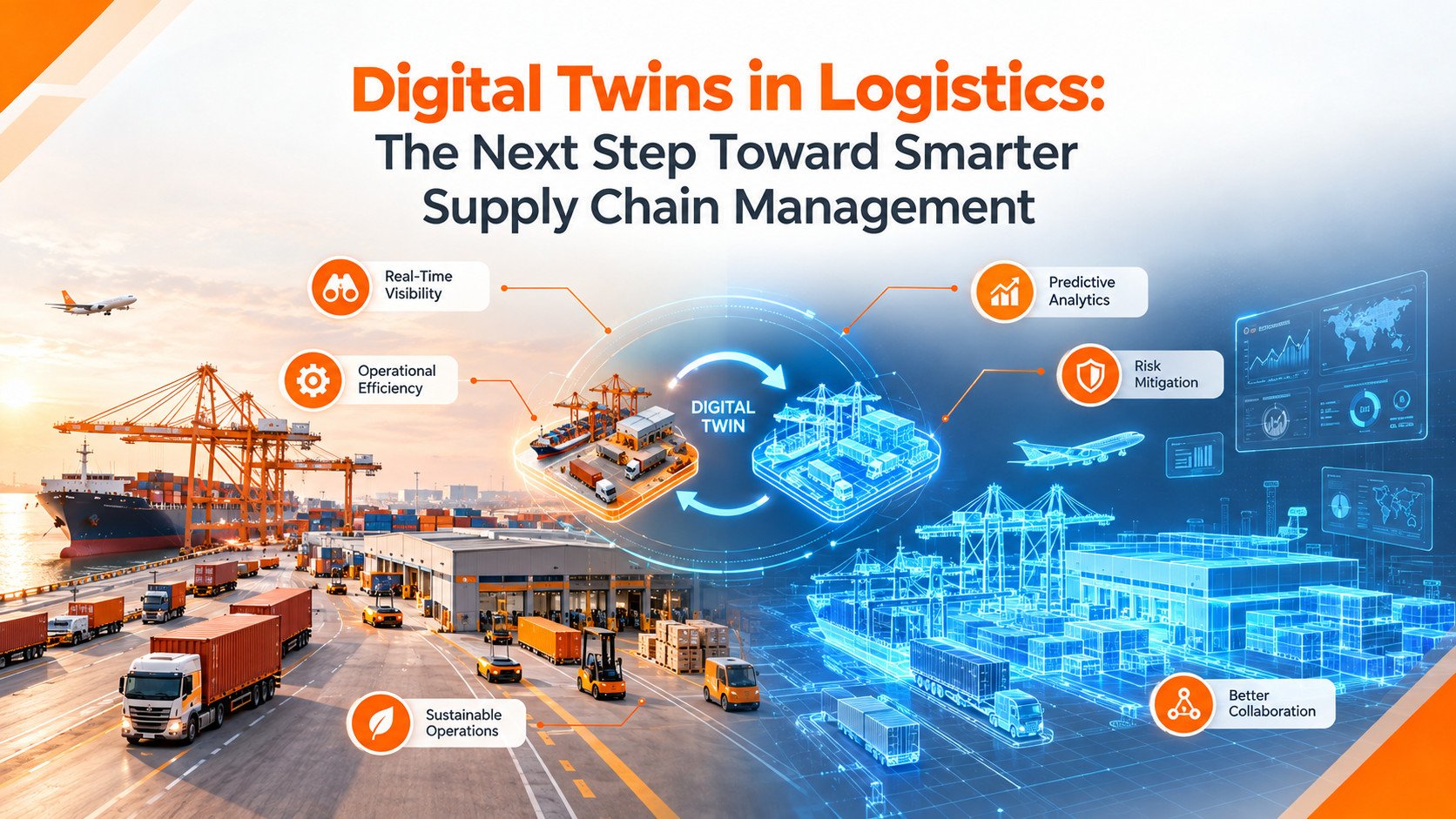
Modern supply chains are becoming increasingly connected and complex. Businesses need to coordinate warehouses, transportation networks, suppliers, inventory, distribution centers, and customers across multiple locations.
With so many moving parts, making decisions based only on historical reports can be challenging. This is where digital twins are becoming an important technology for logistics and supply chain management.
A digital twin creates a digital representation of a physical asset, process, facility, or network. By connecting the digital model with operational data, businesses can better understand current conditions and evaluate potential changes before implementing them in the real world.
What Is a Digital Twin?
A digital twin is more than a static digital model.
It can continuously receive information from connected systems, sensors, business applications, and operational databases. This information can be used to represent what is happening in the physical environment.
For example, a logistics company could create a digital representation of a warehouse, including storage areas, inventory movement, equipment, workers, and order activity.
The model can then be used to analyze operations and explore potential improvements.
Why Digital Twins Matter for Logistics
Logistics operations involve constant movement.
Vehicles travel between locations, inventory moves through warehouses, shipments pass through distribution centers, and customer demand changes throughout the day.
A digital twin can help businesses visualize these activities in a connected environment.
This can support better planning and more informed decision-making.
1. Improving Warehouse Planning
Warehouse design can significantly affect productivity.
Businesses need to determine where products should be stored, how inventory should move, how picking routes should be organized, and where equipment should be positioned.
With a digital twin, organizations can model different warehouse configurations before making physical changes.
For example, a company could simulate what might happen if high-demand products were moved closer to packing stations.
This allows teams to evaluate possible operational changes digitally.
2. Simulating Transportation Networks
Transportation planning can also benefit from digital twin technology.
A digital model can represent routes, distribution centers, vehicles, delivery schedules, and shipment volumes.
Businesses can then examine different scenarios.
What happens if a distribution center becomes unavailable?
How would a change in delivery schedules affect transportation capacity?
What happens if shipment volumes increase during a particular period?
Digital simulation can help teams explore these questions before making operational decisions.
3. Supporting Predictive Maintenance
Vehicles, warehouse equipment, conveyors, refrigeration systems, and other assets require regular maintenance.
Unexpected equipment failures can interrupt operations.
Digital twins can combine equipment information with historical and real-time data to help identify unusual patterns.
When integrated with predictive analytics, they can support maintenance planning and help organizations address potential equipment issues before they become major operational disruptions.
Digital Twins and Supply Chain Visibility
One of the biggest benefits of connected digital systems is improved visibility.
Businesses cannot effectively manage what they cannot see.
Digital twins can bring information from different parts of the supply chain into a common digital environment.
This makes them particularly relevant to modern digital supply chain solutions.
Instead of viewing transportation, inventory, warehouse operations, and distribution as completely separate functions, organizations can analyze how these components interact.
Connecting Digital Twins With AI
Digital twins become even more useful when combined with artificial intelligence.
AI can analyze large volumes of operational data and identify patterns that may not be immediately visible to human teams.
For example, an AI-powered digital twin could help identify potential warehouse bottlenecks, evaluate transportation scenarios, or estimate the operational impact of changing inventory levels.
This combination can turn digital models into more intelligent decision-support environments.
The Role of Logistics Software Development
Building a useful digital twin requires data integration.
Businesses may need to connect ERP platforms, warehouse management systems, transportation management systems, IoT devices, GPS tracking platforms, and other applications.
A logistics software development company can help design the technical architecture needed to connect these systems.
Through specialized logistics software development services, businesses can also create customized dashboards, analytics platforms, APIs, and industry-specific workflows.
Digital Twins for Supply Chain Resilience
Supply chains can face unexpected disruptions.
A digital twin can help businesses simulate potential scenarios and understand how different disruptions might affect operations.
For example, companies can examine the potential impact of supplier delays, transportation capacity changes, warehouse shutdowns, or demand fluctuations.
This can support contingency planning and make supply chain strategies more data-driven.
Challenges to Consider
Digital twins require accurate data.
If the information feeding the model is incomplete or outdated, the digital representation may not accurately reflect real-world operations.
Integration complexity, cybersecurity, data governance, implementation costs, and employee adoption should also be considered.
Therefore, businesses should begin with clearly defined use cases rather than trying to digitally model every part of the supply chain at once.
The Future of Digital Logistics
As logistics technology continues to evolve, digital twins can become an important part of connected supply chain environments.
When combined with AI, IoT, analytics, cloud platforms, and automation, digital twins can help businesses understand complex operations and test potential improvements digitally.
For organizations investing in modern logistics technology solutions, digital twins offer a practical way to connect physical operations with digital intelligence.
Conclusion
Digital twins are changing how businesses can analyze and manage logistics operations.
By creating digital representations of warehouses, transportation networks, assets, and supply chain processes, organizations can simulate scenarios, improve visibility, and support more informed decisions.
With the right technology foundation and supply chain management solutions, digital twins can become an important component of the modern digital supply chain.
INTECH Creative Services supports businesses in exploring technology-driven digital transformation through software development, automation, AI, data engineering, and customized enterprise technology solutions.
- Managerial Effectiveness!
- Future and Predictions
- Motivatinal / Inspiring
- Fitness and Wellness
- Medical & Health
- Manufacturing
- Education
- Real-Estate
- Food Industry
- Hospitality
- Online Games
- Sports
- Home Services
- Civil Engineering
- Safety and Protection
- Software Products & Services
- Fashion and Jewellery
- Artificial Intelligence
- Entrepreneurship
- Mentoring & Guidance
- Marketing
- Networking
- HR & Recruiting
- Literature
- Shopping
- Career Management & Advancement