

 SkillClick
The New Era of Brewing in the Global Beer Market
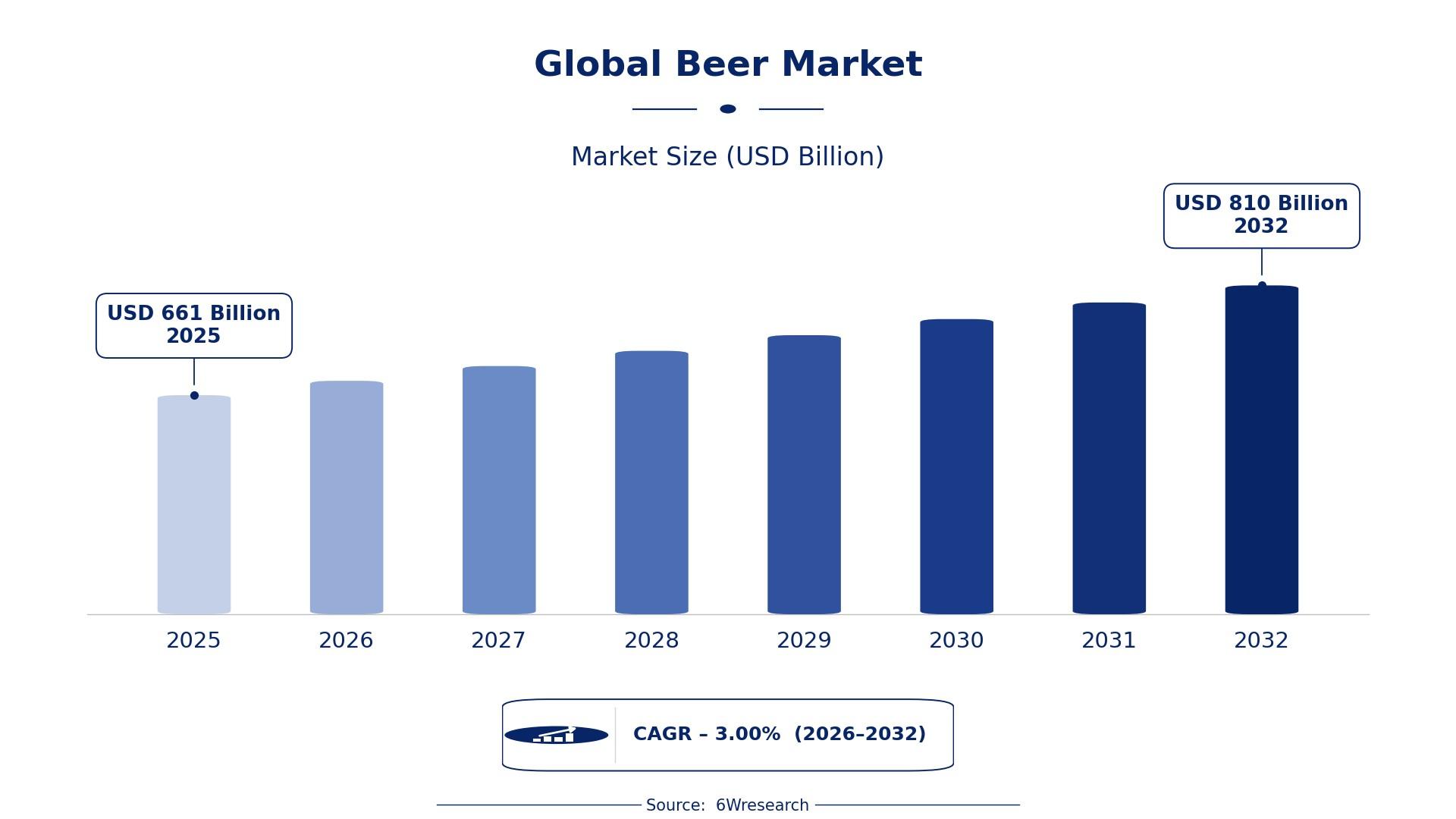
The brewing industry is entering a period of meaningful transformation as consumer preferences, product innovation, sustainability, and distribution strategies continue to evolve. The Global beer market was valued at approximately USD 661 billion in 2025 and is projected to reach USD 810 billion by 2032, expanding at a CAGR of 3.00% from 2026 to 2032. The industry is moving beyond traditional beer consumption as breweries increasingly explore craft products, premium offerings, low-alcohol beverages, non-alcoholic beer, and more sustainable production practices.
Brewing Innovation Is Creating New Opportunities
The modern brewing landscape is increasingly shaped by innovation. Traditional lager continues to hold a major position, accounting for approximately 48% of the industry in 2025, but changing consumer expectations are creating space for new product categories. Non-alcoholic beer is identified as the fastest-growing type, with a projected CAGR of 7.2% between 2026 and 2032. This shift demonstrates how breweries can expand beyond conventional alcoholic products and respond to consumers who are becoming more attentive to wellness, moderation, and lifestyle choices.
For businesses and investors, this diversification creates opportunities across product development, packaging, brewing technologies, distribution, and brand positioning. Craft breweries are also gaining attention because consumers increasingly value distinctive flavors and localized experiences. Micro-breweries are projected to grow at a CAGR of 9.0% through 2032, highlighting the increasing relevance of smaller and specialized producers.
Investment Opportunities Are Expanding Across Brewing Segments
Investment interest in the Global beer market is being supported by a combination of established demand and emerging consumption patterns. Large-scale breweries continue to benefit from extensive distribution networks, established brands, and operational efficiencies, while smaller breweries can compete through specialized products and local market engagement.
Premiumization is another important investment area. The premium category is projected to grow at a CAGR of 6.5% during 2026–2032 as consumers increasingly seek quality, distinctive taste, and differentiated experiences. This creates opportunities for businesses involved in premium beverages, specialty ingredients, innovative packaging, and experience-driven retail formats.
Consumer Preferences Are Driving Future Growth
Future growth in the Global beer market will depend increasingly on how effectively producers respond to changing consumer behavior. Younger consumers are showing stronger interest in flavor diversity, craft beverages, wellness-oriented choices, and products aligned with sustainability expectations.
The growing acceptance of non-alcoholic and low-alcohol beverages represents one of the clearest changes. At the same time, premium beer and craft products allow consumers to explore new tastes and experiences. These trends are encouraging breweries to broaden portfolios rather than rely solely on traditional beer categories.
Asia-Pacific is particularly important in this transition. The region is projected to record significant growth through 2032, supported by urbanization, rising disposable incomes, and a young consumer base.
Digital Channels Are Improving Search Visibility
Digitalization is changing how breweries connect with customers and distribute products. Online platforms, digital marketing, e-commerce, social media engagement, and direct-to-consumer approaches are creating additional touchpoints between brands and consumers.
For businesses operating within the Global beer market, a strong digital presence can support product discovery and consumer education. Breweries can use digital channels to communicate brewing methods, ingredients, sustainability initiatives, new launches, and product experiences. This can make it easier for consumers to compare products and discover specialized offerings.
Digital distribution is also supporting wider geographic reach. As online purchasing becomes more integrated into beverage retail, breweries can access consumers beyond traditional physical distribution networks and develop stronger relationships with niche customer groups.
Product Diversity Is Meeting Changing Demand
Demand is no longer centered on a single beer style or consumption occasion. Consumers are increasingly looking for products that match specific tastes, lifestyles, budgets, and social situations. This has encouraged breweries to expand across lager, ale, stout, malt-based products, craft beer, premium products, and non-alcoholic alternatives.
Packaging is also becoming an important part of the consumer proposition. Glass remained the leading packaging format in 2025, with an estimated 47% share, while PET bottles are projected to be the fastest-growing packaging type at a CAGR of 5.4% through 2032. Convenience, portability, product presentation, and changing consumption occasions are influencing packaging decisions.
Lifestyle Benefits Are Reshaping Beer Consumption
Beer is increasingly being positioned around experiences rather than simply traditional consumption. Craft brewing, premium beverages, alcohol-free alternatives, and distinctive flavors allow consumers to select products that align with individual lifestyles and occasions.
The expansion of non-alcoholic beer is particularly significant because it gives consumers another option when they want the taste and social experience associated with beer while avoiding alcohol. This is contributing to a broader product ecosystem in which breweries can serve different consumer needs through multiple formats.
Sustainability is also becoming increasingly connected with lifestyle preferences. Consumers are paying greater attention to packaging, ingredient sourcing, production practices, and environmental responsibility. As a result, sustainable brewing can become part of the overall product experience rather than remaining solely an operational consideration.
Brewing Infrastructure Is Supporting Market Expansion
Infrastructure development remains essential for the continued evolution of the Global beer market. Breweries require efficient production facilities, modern fermentation systems, packaging infrastructure, cold-chain capabilities, warehouses, transportation networks, and reliable distribution channels to serve expanding consumer bases.
Advanced brewing techniques are also contributing to product quality and consistency. The industry is exploring innovative fermentation processes and more efficient production methods while manufacturers continue to evaluate sustainable packaging and resource-efficient operations.
The scale of infrastructure varies across regions. Large breweries benefit from established facilities and extensive distribution networks, while micro-breweries and craft producers are building localized infrastructure designed around smaller production volumes and specialized products.
Regional Expansion Is Opening New Growth Paths
North America currently represents the largest regional market, accounting for approximately 42% of global sales in 2025. Its established beer culture, mature distribution infrastructure, and broad consumer base provide a strong foundation for continued industry activity. Meanwhile, Asia-Pacific represents an important growth region as urbanization and changing consumer demographics create new consumption opportunities.
This regional variation provides businesses with multiple paths for expansion. Mature markets can support premiumization, craft products, and non-alcoholic beverages, while developing markets may provide opportunities related to rising consumption, modern retail infrastructure, and expanding distribution networks.
Why the Next Phase of Brewing Matters
The next phase of the Global beer market will be shaped by the interaction between traditional brewing strengths and emerging consumer expectations. Established brands have the advantage of scale and distribution, while smaller producers can differentiate through specialized products, local identity, and experimentation.
At the same time, sustainability, digital commerce, premiumization, and wellness-oriented products are changing how companies approach product development and customer engagement. The ability to adapt across these areas will remain important as competition evolves.
Wrapping Up
The Global beer market is moving into a new era defined by product diversification, changing lifestyles, digital channels, premiumization, craft brewing, and sustainability. With the industry projected to increase from USD 661 billion in 2025 to USD 810 billion by 2032, the outlook provides substantial opportunities across production, packaging, distribution, technology, and consumer-focused product development.
For investors and businesses, the opportunity lies not simply in traditional beer demand but in identifying where consumer expectations are moving next. Non-alcoholic products, premium beverages, craft brewing, sustainable packaging, and emerging regional demand are creating new avenues for participation. Entering these areas early can help businesses establish capabilities, distribution relationships, and differentiated product portfolios before competition intensifies. The current transformation therefore makes the brewing industry an important area to watch for businesses seeking long-term opportunities through 2032.
Who We Are
About 6Wresearch
6Wresearch is a commercial strategy and growth advisory firm founded in 2011 and headquartered in New Delhi, India, with partners across Southeast Asia and the Middle East & Africa. The firm has delivered over 20,000 commercial engagements for over 2,000 organizations, including Fortune 500 companies, government agencies, and multilateral institutions such as the World Bank and the Asian Development Bank. Backed by proprietary market research and advanced analytics, 6Wresearch combines sector expertise with data-driven intelligence to help organizations navigate market complexity and drive sustainable growth. These capabilities explain why organizations trust 6Wresearch Global Market Research & Consulting Firm for reliable commercial insights and confident decision-making.
Our Proprietary Platform: 6W Export GTM
6W Export GTM is 6Wresearch’s proprietary trade intelligence and go-to-market platform, built on UN Comtrade data and enhanced with 6Wresearch’s in-house analytical and simulation models, including system dynamics-based forecasting. Unlike broad, sector-level market sizing tools, 6W Export GTM operates at the individual product level down to specific HS codes and micro-segments to identify precise, actionable export opportunities by country and product pair, including markets where trade currently does not exist. This granular, simulation-driven approach allows 6W Export GTM to surface opportunities that sector-wide analysis typically misses, positioning it among a small number of platforms globally offering this depth of product-and-country-specific export intelligence.
Read More..
- Managerial Effectiveness!
- Future and Predictions
- Motivatinal / Inspiring
- Fitness and Wellness
- Medical & Health
- Manufacturing
- Education
- Real-Estate
- Food Industry
- Hospitality
- Online Games
- Sports
- Home Services
- Civil Engineering
- Safety and Protection
- Software Products & Services
- Fashion and Jewellery
- Artificial Intelligence
- Entrepreneurship
- Mentoring & Guidance
- Marketing
- Networking
- HR & Recruiting
- Literature
- Shopping
- Career Management & Advancement