

 SkillClick
PayFac vs Payment Service Provider: Which Is Better?
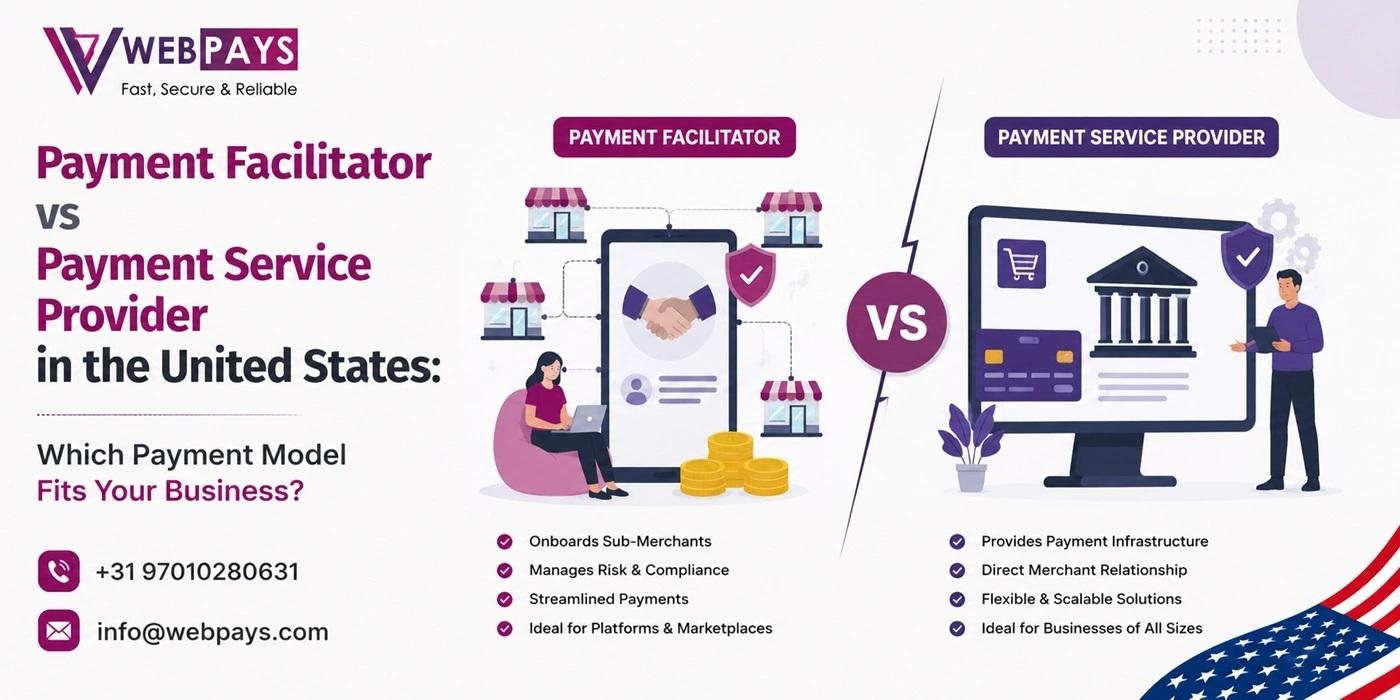
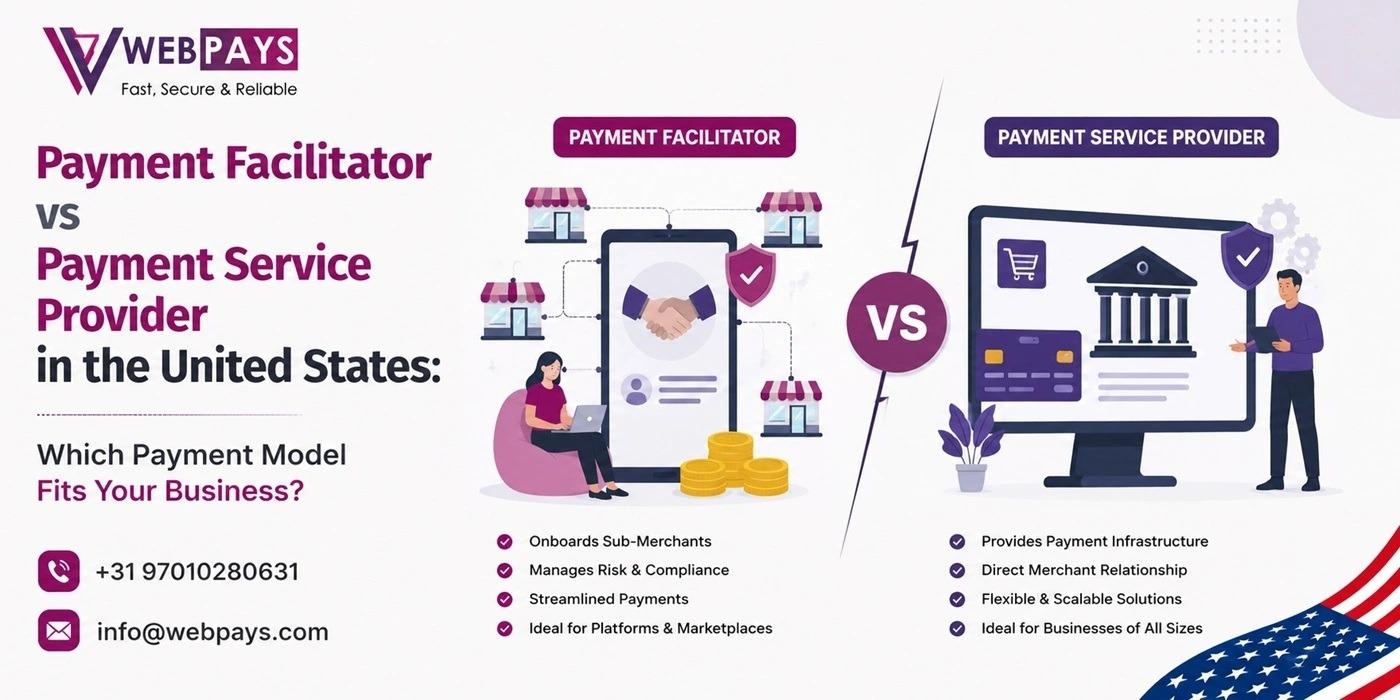
Payment Facilitator vs Payment Service Provider: Which Payment Model Fits Your Business?
Choosing a payment partner is a bit like choosing a car. One option gives you the engine and steering wheel with plenty of control. Another comes with a more managed setup, built-in features, and support when something goes wrong.
In payments, this difference often comes down to a Payment Service Provider (PSP) and a Payment Facilitator (PayFac).
Both help businesses accept payments, but their responsibilities, merchant relationships, onboarding processes, risk management, and operating structures can differ.
For U.S. businesses, understanding these models matters. Payment acceptance involves acquiring banks, card networks, fraud controls, chargebacks, compliance requirements, and settlement processes. The right structure depends on how your business operates, how quickly you need to onboard merchants, and how much control you want over your payment operations.
What Is a Payment Service Provider (PSP)?
A Payment Service Provider, or PSP, gives businesses access to the technology and services needed to accept electronic payments.
Depending on the provider, these services may include:
-
Payment gateway connectivity
-
Transaction routing
-
Fraud screening
-
Recurring billing
-
Reporting and analytics
-
Security tools
-
Settlement services
-
Payment integration APIs
A PSP connects merchants with the wider payment infrastructure. Some PSPs operate acquiring services themselves, while others work with processors and acquiring banks.
For a standard e-commerce business, a PSP can offer the payment infrastructure needed to accept online payments without building everything internally.
Businesses operating marketplaces, SaaS platforms, or networks of sellers may need a more structured model that supports merchant onboarding and payment management. That's where the PayFac model comes into the picture.
What Is a Payment Facilitator (PayFac)?
A Payment Facilitator, commonly called a PayFac, enables other businesses to accept card payments through a structured relationship with an acquiring bank.
These businesses are often called sub-merchants. Instead of each merchant establishing an independent acquiring relationship, eligible businesses can join a PayFac's sponsored payment structure.
This model can simplify merchant onboarding and reduce the steps involved in getting payment acceptance up and running.
A PayFac may manage or coordinate:
-
Merchant onboarding
-
Underwriting and risk assessment
-
Sub-merchant management
-
Transaction monitoring
-
Chargeback handling
-
Payment operations
-
Merchant support
-
Settlement coordination
For marketplaces and software platforms onboarding multiple sellers, this arrangement can reduce the administrative work associated with individual payment accounts.
One important point: a Payment Facilitator is not automatically a Merchant of Record. A PayFac's responsibilities are based on its acquiring relationship, agreements, and operating model. A Merchant of Record has a different contractual and legal role in a transaction.
PayFac vs PSP: What Is the Main Difference?
The biggest difference comes down to how payments and merchant relationships are managed.
A PSP generally provides payment services and infrastructure to businesses. A PayFac typically operates a structured model for onboarding and managing multiple sub-merchants through an acquiring relationship.
A PSP may be suitable for a merchant that simply wants to accept payments online. A PayFac may be more appropriate for a marketplace or software platform that wants payments built directly into its product.
The differences often involve:
Merchant onboarding: PayFacs commonly offer a managed onboarding process for sub-merchants, while PSP onboarding depends on the provider's setup.
Sub-merchant structure: PayFacs typically support sub-merchants. A standard PSP arrangement may not require this structure.
Risk management: PayFacs often take on responsibilities for monitoring and managing sub-merchant risk. PSP responsibilities depend on their processing and acquiring arrangement.
Payment integration: Both can provide APIs, gateway connectivity, payment methods, and processing services. The available features vary by provider.
Merchant control: PSP arrangements may give merchants a more direct relationship with their payment provider, while PayFacs can centralize payment management for a platform.
Best use case: PSPs often suit individual merchants, while PayFacs are commonly used by marketplaces, SaaS businesses, and platforms with multiple sellers.
How Does a Payment Facilitator Work in the United States?
Imagine a software platform serving 500 independent businesses. If every seller had to establish a separate payment relationship, the onboarding process could become a major operational challenge.
A PayFac model can simplify this arrangement.
The payment flow generally involves:
Customer → Sub-Merchant → Payment Facilitator → Acquirer → Card Network → Issuing Bank
The PayFac works with an acquiring partner to create a payment structure for eligible sub-merchants. Sellers can join the platform's payment system rather than establishing a completely separate acquiring relationship from scratch.
This arrangement can help platforms in several ways.
Faster merchant onboarding: A centralized process can reduce the paperwork and steps required for eligible sellers to start accepting payments.
Centralized risk management: The platform can apply merchant screening, transaction monitoring, fraud checks, and chargeback procedures across its network.
Payments within the platform: Sellers can manage transactions through the software they already use instead of moving between separate systems.
For SaaS businesses and marketplaces, payment acceptance can become part of the product itself.
How Does a Payment Service Provider Work?
A PSP gives a merchant access to the infrastructure required to process customer payments.
A typical transaction flow looks like this:
Customer → Merchant → PSP/Payment Gateway → Processor/Acquirer → Card Network → Issuing Bank
The exact arrangement depends on the PSP.
A business may use a PSP to:
-
Accept card payments online
-
Connect with card networks
-
Offer different payment methods
-
Tokenize payment information
-
Detect suspicious transactions
-
Manage payment reports
-
Support recurring transactions
-
Track authorization results
For growing businesses, this removes the need to develop payment infrastructure from scratch. The merchant can focus on its products, sales, and customer service while the payment provider handles the technical processing requirements.
Which Model Offers Faster Merchant Onboarding?
PayFacs often have an advantage when a platform needs to onboard many sub-merchants.
The platform can provide an integrated application and onboarding experience, allowing eligible sellers to enter the payment system without setting up individual acquiring relationships.
That doesn't mean compliance checks disappear. PayFacs still need appropriate merchant screening, underwriting, fraud controls, transaction monitoring, and ongoing oversight.
The speed of onboarding depends on the merchant's business model, documentation, risk profile, and the provider's policies.
PayFac vs PSP: How Much Do They Cost?
Neither model is automatically cheaper.
Payment processing costs depend on transaction volume, business category, payment methods, risk level, geography, chargeback exposure, and the provider's pricing structure.
When comparing providers, look beyond the advertised transaction rate. Check:
-
Transaction fees
-
Gateway fees
-
Monthly platform fees
-
Chargeback fees
-
Fraud-related losses
-
Currency conversion costs
-
Settlement fees
-
Integration expenses
-
Support costs
-
Operational overhead
A processor with a lower rate may cost more in the long run if payment declines, fraud losses, or limited support affect revenue.
A managed payment model may carry additional costs but reduce the time your team spends on onboarding, payment operations, and merchant management.
WebPays focuses on payment processing requirements beyond headline pricing, including payment acceptance, transaction risk, operational needs, and the infrastructure businesses need as they expand.
Which Model Is Better for High-Risk Businesses?
High-risk merchants face additional scrutiny during payment onboarding and ongoing processing. This can apply to industries such as:
-
Online gaming and gambling
-
Forex trading
-
Cryptocurrency businesses
-
Adult businesses
-
Digital subscriptions
-
Nutraceuticals
-
Certain financial services
-
Digital products
For these businesses, payment acceptance depends on underwriting, transaction history, fraud controls, chargeback levels, acquiring-bank policies, and industry restrictions.
A PSP or PayFac may work with certain high-risk businesses, but availability depends on its underwriting policies and acquiring relationships. Merchants should check whether the provider accepts their exact business model, target countries, payment methods, and expected transaction volume.
No legitimate provider can guarantee approval without evaluating the business.
When Should a U.S. Business Choose a PSP?
A PSP may be the right option when:
-
You operate a standard online business.
-
You need straightforward payment acceptance.
-
You want payment infrastructure without building it internally.
-
You need gateway and processing connectivity.
-
You don't require a sub-merchant structure.
-
Your team can handle some payment and compliance responsibilities.
Retailers, e-commerce stores, service providers, and many SaaS businesses can operate comfortably with a PSP.
When Should a Business Choose a PayFac?
A PayFac may be a better fit when:
-
You operate a marketplace.
-
Your SaaS platform serves multiple merchants.
-
You want to embed payments into your software.
-
You onboard sellers regularly.
-
You need centralized merchant management.
-
You want more control over the payment experience.
-
Payments are a core part of your product.
For these businesses, payment functionality can be built directly into the platform instead of treated as a separate service.
Can a Business Use Both a PayFac and a PSP?
Yes. Depending on its payment architecture, a business may work with multiple PSPs, processors, PayFacs, gateways, or orchestration providers.
A company expanding into international markets may need different payment partners to support local payment methods, currencies, acquiring relationships, settlement options, and regional processing requirements.
Using multiple providers can also give a business alternative processing routes if one provider experiences downtime or changes its operating policies.
The goal isn't to collect payment providers. It's to build a payment setup that works across the markets where your customers are located.
7 Questions to Ask Before Choosing a Payment Partner
Before signing an agreement with a PSP or PayFac, ask:
1. Who is the acquiring partner?
Understand who supports the acquiring relationship and how funds move through the payment system.
2. How does underwriting work?
Ask which documents are required, how your business is assessed, and what happens if your products or transaction volume change.
3. How are chargebacks handled?
Check what tools, reporting, dispute assistance, and monitoring are available.
4. What fraud prevention tools are included?
Review fraud screening, authentication, transaction monitoring, and risk controls.
5. How are settlements managed?
Understand payout timing, currencies, reserves, settlement procedures, and possible payment holds.
6. Can the infrastructure handle business growth?
A setup that works for 100 transactions a month may struggle with 100,000 transactions.
7. What support is available?
Check whether technical and merchant support is available when payment issues affect sales.
Payment Facilitator vs Payment Service Provider: Which Is Better?
There is no universal winner.
A Payment Service Provider is often a suitable choice for businesses seeking payment technology, gateway connectivity, and processing services without managing a network of sub-merchants.
A Payment Facilitator may be more suitable for marketplaces, SaaS platforms, and businesses that want embedded payments with a structured onboarding and merchant-management model.
The right choice depends on your business type, transaction volume, risk profile, customer locations, technology requirements, compliance responsibilities, and growth plans.
For U.S. businesses, choosing payment infrastructure based on one advertised rate or feature can lead to problems later. Processing fees matter, but so do approval rates, fraud exposure, settlement timing, integration requirements, and the provider's ability to support your business model.
WebPays can be part of that evaluation for businesses looking at payment processing, international acceptance, and payment requirements specific to their industry.
When payments work as expected, customers can complete checkout without giving the process a second thought. That's exactly how payment infrastructure should work.
Frequently Asked Questions
1. What is the difference between a Payment Facilitator and a Payment Service Provider?
A PSP provides payment technology and services for accepting electronic payments. A PayFac operates a structured arrangement that allows eligible sub-merchants to accept payments through its acquiring relationship. PayFacs often handle additional merchant onboarding, risk monitoring, and management responsibilities.
2. Is a Payment Facilitator the same as a Merchant of Record?
No. A PayFac manages payment acceptance within a sub-merchant structure, while a Merchant of Record assumes specific contractual and legal responsibilities associated with a sale. The roles are different and depend on the agreements involved.
3. Is a PSP or PayFac better for a U.S. business?
A PSP may suit a business that needs standard payment processing. A PayFac may be a better fit for marketplaces, SaaS platforms, and businesses onboarding multiple sellers. The decision depends on the company's operating model and payment requirements.
4. Can high-risk businesses use a PSP or PayFac?
Yes, some providers support high-risk industries. Acceptance depends on underwriting, acquiring-bank policies, transaction history, chargeback levels, business type, and geographic coverage.
5. Why should businesses consider WebPays for payment processing?
Businesses evaluating WebPays can review its payment services against their processing needs, including payment methods, integration, settlement, risk management, pricing, support, and international payment requirements.
Final Takeaway
The PSP vs PayFac decision isn't about choosing the most popular payment model. It's about understanding how much control, merchant management, payment infrastructure, and operational support your business needs.
If you run a straightforward online store, a PSP may cover your requirements. If you're managing a marketplace or software platform with multiple sellers, a PayFac model may offer a more suitable structure.
Think beyond today's processing fees. Choose a payment setup that can handle your current transactions, your customers' expectations, and the next stage of your business growth.
- Managerial Effectiveness!
- Future and Predictions
- Motivatinal / Inspiring
- Fitness and Wellness
- Medical & Health
- Manufacturing
- Education
- Real-Estate
- Food Industry
- Hospitality
- Online Games
- Sports
- Home Services
- Civil Engineering
- Safety and Protection
- Software Products & Services
- Fashion and Jewellery
- Artificial Intelligence
- Entrepreneurship
- Mentoring & Guidance
- Marketing
- Networking
- HR & Recruiting
- Literature
- Shopping
- Career Management & Advancement