

 SkillClick
End-to-End Technology Transfer Solutions for Industrial Plant Setup and Expansion
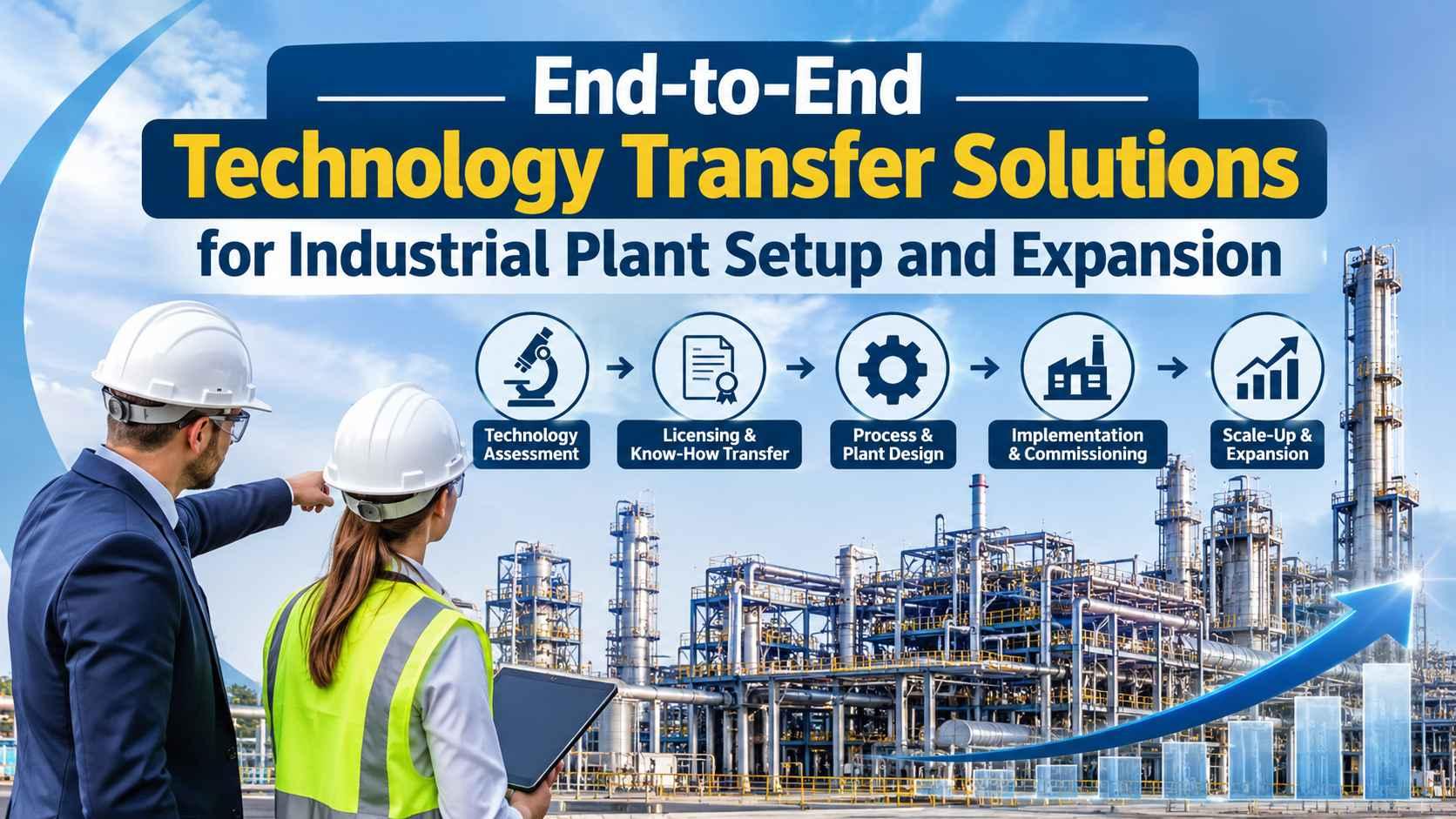
A plant can have the right machinery, an approved budget and a signed licence agreement, and still fail to deliver a saleable product on schedule. For most plant owners, the gap lies in how process knowledge moves from the technology owner to the receiving site. As licensed processes and global know-how flow into new and expanding Indian plants, this has become a boardroom issue rather than a technical detail.
What Are End-to-End Technology Transfer Solutions?
End-to-end technology transfer solutions are a structured programme that moves product, process, analytical and quality knowledge from a technology owner to a new or expanding plant. The programme then proves through validation that the plant can reproduce the same output consistently. It covers planning, engineering, compliance, training and commercial handover under one coordinated scope.
Well-designed technology transfer solutions typically include:
- Gap analysis: a comparison of the sending and receiving sites across equipment, scale, utilities, people and quality systems
- Process engineering: scale-up calculations, critical process parameters and in-process controls
- Equipment and utility matching: specifications that reproduce the source process, not just the general function
- Regulatory, FDI and IP structuring: licences, royalties, confidentiality and sectoral approvals
- Training and competency: documented capability building for operators and quality teams
- Trial batches and validation: proof of performance before commercial production begins
What Makes Technology Transfer Essential for Modern Manufacturing Plants?
Policy and capital are pulling more advanced technology into Indian plants, and each such project depends on a clean transfer.
- As of 30 June 2026, the PLI scheme had 791 approved applications across 14 sectors, with actual investment above ₹2.58 lakh crore and cumulative production and sales above ₹23.79 lakh crore.
- Incentive disbursals under PLI stood at ₹36,754 crore by June 2026. Incentives depend on committed production, so a delayed transfer directly delays revenue.
- Twelve semiconductor manufacturing units have been approved with cumulative investment above ₹1.64 lakh crore, along with 24 design projects.
- The electronics component scheme outlay was raised to ₹40,000 crore in Union Budget 2026-27.
- FDI equity inflows rose 18% to $58.84 billion in FY 2025-26. Inflows from the United States more than doubled to over $11 billion.
Most manufacturing sectors allow 100% FDI under the Automatic Route. Foreign capital often arrives with a licensed process, so a structured transfer protects the investment.
What Pain Points Do Plant Owners Face?
Plant owners commonly report these problems:
- Validation failure: the plant runs the process but cannot demonstrate control, so batches fail acceptance criteria.
- Equipment mismatch: a different mixer geometry, heat-transfer behaviour or control system changes process results.
- Raw material variability: local grades with a different impurity profile or particle size alter product quality.
- Skill gaps: documents arrive, but the team lacks hands-on experience with the process.
- Regulatory complexity: quality, FEMA, IP, sectoral and environmental approvals run as separate, uncoordinated streams.
- IP anxiety: technology owners hesitate to release know-how without strong contractual protection.
- Timeline misalignment: the facility is ready before the process, or the process is ready before the facility.
- Cost overruns: MoSPI's July 2026 report recorded a cumulative cost overrun of about ₹3,40,504 crore across 1,775 central infrastructure projects. The figure is for public infrastructure, but it shows how expensive weak execution planning becomes at scale.
What Are the Stages of an End-to-End Transfer?
A full cycle typically runs 9 to 24 months, depending on the sector, complexity and whether new construction is involved. It works best as a gated programme with defined deliverables:
- Planning and protocol: define scope, team, responsibilities and acceptance criteria.
- Gap analysis: identify and plan remediation for differences between sites.
- Knowledge transfer: exchange product, process, analytical and quality knowledge through a transfer dossier and training.
- Engineering and setup: match equipment, prepare utilities and complete DQ, IQ, OQ and PQ qualification.
- Trial batches: run dry runs to surface scale-up and material issues before formal validation.
- Validation: complete process validation, typically three consecutive successful batches, plus cleaning and analytical method validation.
- Closure and handover: issue the Technology Transfer Report and move to commercial production with defined post-transfer support.
How Does Transfer Differ for New Plants and Expansions?
- Greenfield plants: transfer and construction must be sequenced together, with land, environmental clearance, factory licensing, installation and commissioning all aligned to the validation date.
- Capacity expansion: the new line must replicate the validated source process, and existing environmental or factory approvals may need amendment if the process changes.
- Site-to-site transfer: this is common under supply-chain diversification, and the main risk is scale and equipment difference between sites.
- Licensor-to-licensee transfer: commercial terms, royalty structure and IP ownership need to be settled before technical work starts.
What Compliance Should Plant Owners Plan For?
- GMP and quality: the revised Schedule M became mandatory for large pharma manufacturers from 28 June 2024. Smaller manufacturers received an extension to 31 December 2025.
- FEMA and FDI: royalties and technical fees are generally permitted, subject to arm's-length pricing. FC-GPR and technical-collaboration reporting must meet prescribed timelines.
- Intellectual property: agreements should define ownership, licensed scope, improvement rights and post-termination terms. The Competition Commission of India reviews restrictive clauses.
- Sectoral approvals: depending on the product, these include CDSCO, BIS, FSSAI, PESO, AERB or MeitY requirements.
- Environmental and factory: these include Environmental Clearance, Consent to Establish and Consent to Operate, and factory licensing.
What Should Plant Owners Check Before Starting?
- Is the transfer type (R&D to plant, site to site, or licensor to licensee) clearly defined?
- Has a documented gap analysis been completed before equipment orders are placed?
- Are local raw materials tested for equivalence to source materials?
- Is the transfer timeline locked to the construction and commissioning schedule?
- Is post-transfer support from the technology owner written into the agreement?
How Can IMARC Engineering Help?
IMARC Engineering is an EPCM advisory firm that supports industrial projects from concept to commissioning. For plant setup and expansion, its team supports:
- Transfer protocol development and gap analysis
- Process engineering, equipment selection and matching
- Facility and utility design aligned to the source process
- Validation planning and trial batch support
- Regulatory, FEMA and IP structuring coordination
- Integrated project management across transfer and plant construction
Plant owners planning a new facility or capacity expansion can speak with IMARC Engineering's team to scope the transfer before equipment orders are finalised.
Talk to Our Experts About Your Requirements: https://www.imarcengineering.com/contact?service=technology-transfer
Conclusion
Technology transfer decides whether a plant produces compliant output on time or spends months in rework. With PLI investment, semiconductor approvals and record FDI inflows reshaping Indian manufacturing, plant owners benefit from treating transfer as a managed, documented programme from the first planning meeting.
Contact Us:
IMARC Engineering
Phone: +91-782-786-0593
Email: sales@imarcengineering.com
India: C-130, Sector 2, Noida, Uttar Pradesh 201301
LinkedIn: https://www.linkedin.com/showcase/imarc-engineering/
- Managerial Effectiveness!
- Future and Predictions
- Motivatinal / Inspiring
- Fitness and Wellness
- Medical & Health
- Manufacturing
- Education
- Real-Estate
- Food Industry
- Hospitality
- Online Games
- Sports
- Home Services
- Civil Engineering
- Safety and Protection
- Software Products & Services
- Fashion and Jewellery
- Artificial Intelligence
- Entrepreneurship
- Mentoring & Guidance
- Marketing
- Networking
- HR & Recruiting
- Literature
- Shopping
- Career Management & Advancement