

 SkillClick
How Startups Can Plan Packaging for a Successful Product Launch
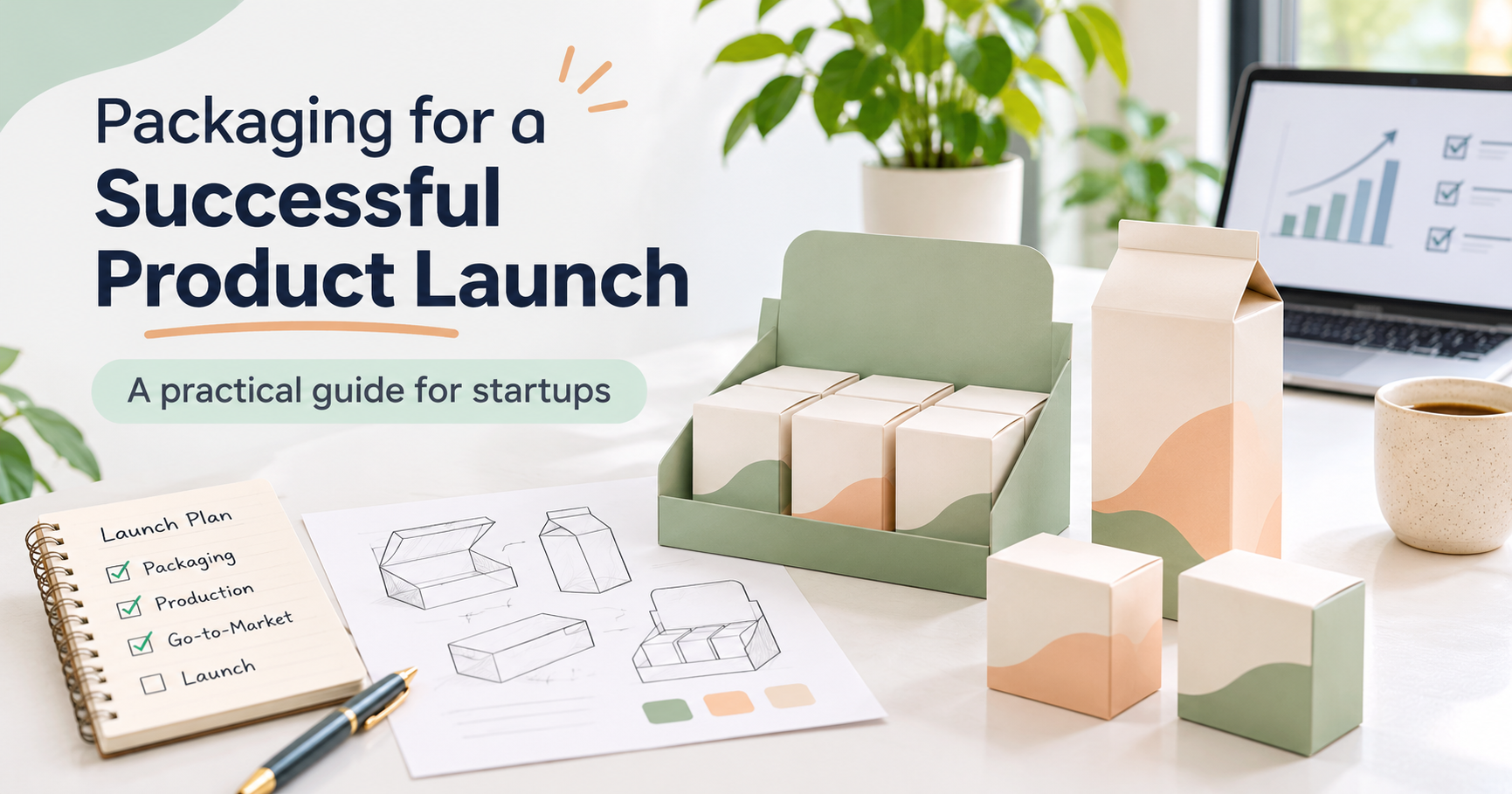
How Startups Can Plan Packaging for a Successful Product Launch
Imagine a small skincare brand preparing to introduce its first collection of products. The formulas are ready, the labels are printed, and several local stores have agreed to stock the collection. However, when the products arrive, their packaging takes up too much shelf space, and the display boxes make it difficult for customers to reach individual items.
Problems like these are easier to address before production begins. For startups, packaging is not simply a printed container. It influences how products travel, how employees arrange merchandise, and what customers notice when they walk into a store.
A successful launch requires packaging that works under everyday business conditions. Here is how founders can approach the process.
Study Where Your Products Will Be Displayed
Before choosing a box style, visit the places where your products are likely to be sold. Pay attention to shelf heights, counter space, lighting, and the way similar products are arranged. These observations can influence several decisions during packaging development.
A compact counter display might work well for lip balms, while handmade candles may require a wider structure with stronger base support. Both products have different presentation needs, even when they share the same selling environment.
The U.S. Small Business Administration recommends market research and competitive analysis as part of business planning. Looking at existing product displays is one practical way to apply this advice.
Founders should consider product visibility, customer access, available space, and the arrangement of neighboring merchandise before settling on a packaging format.
Choose Packaging Materials Based on Actual Use
Not every product needs thick cardboard or reinforced panels. A lightweight carton containing a small bar of soap has different structural requirements from a display holding several glass jars.
Begin by examining the weight and shape of the merchandise. Consider how often the packaging will be handled and whether it must remain in use for several weeks.
| Material | Suitable Products | Selection Factor |
|---|---|---|
| Paperboard | Cosmetics and small accessories | Lightweight construction |
| Corrugated cardboard | Glass jars and heavier merchandise | Load-bearing capacity |
| Kraft paperboard | Handmade soaps and candles | Natural surface appearance |
| Coated cardstock | Beauty products and gifts | Smooth printing surface |
| Recycled paperboard | General merchandise | Strength and consistency |
Material performance depends on more than thickness. Board grade, fiber direction, moisture exposure, and structural design can all affect how a finished box behaves.
Requesting material samples before approving a design gives founders an opportunity to compare these characteristics firsthand.
Make Product Displays Easy to Use and Maintain
A common mistake during packaging development is concentrating entirely on how the display looks when it is full. Once customers begin removing products, the arrangement changes. Items may lean forward, gaps become visible, and printed messages can lose their intended position.
A good display should remain usable throughout the selling process. Store employees should also be able to refill it without removing the entire structure from its location.
Consider these practical questions during development.
-
Can customers remove individual products comfortably?
-
Will the remaining merchandise stay upright?
-
Does the display fit within the available counter space?
-
Can employees refill empty sections without difficulty?
-
Are product names visible when the display is full?
Testing these conditions early can reveal problems that are difficult to identify through digital mockups alone.
Find a Display Structure That Fits Your Products
The dimensions of a product often determine which display format makes the most sense. Tall bottles may need additional side support, whereas flat merchandise can fit comfortably inside shallow trays.
Founders comparing packaging formats can refer to suppliers such as Shop Display Boxes to understand how countertop units, open-front boxes, and display trays accommodate different product arrangements.
For instance, a business selling individually wrapped snacks might benefit from a low-front display that provides easy access. A company introducing small fragrance bottles may prefer separate compartments to prevent movement and maintain consistent spacing.
The goal is to select a structure that responds to the needs of the merchandise instead of forcing products into an unsuitable design.
Keep Branding Clear Without Overloading the Design
Small packaging surfaces can quickly become crowded. Adding several illustrations, promotional messages, product descriptions, and decorative elements may leave customers unsure where to look first.
Start with the information that matters most. A customer should be able to identify the brand, understand the product, and recognize its main purpose without examining every panel.
Color contrast also deserves attention. Light text printed against a similarly light background may appear readable on a computer screen but become difficult to see under store lighting.
The same principle applies to typography. Small lettering may work on an individual carton but become ineffective on a display header viewed from several feet away.
Print the proposed artwork at its actual size before approving it. This simple exercise can reveal spacing and readability problems that are less noticeable on a digital screen.
Build a Physical Sample Before Approving Production
A packaging prototype does not need finished artwork to be useful. Even an unprinted sample can reveal whether the dimensions, folds, openings, and support panels work together.
Place the actual merchandise inside the sample rather than relying on estimated measurements. A few millimeters of difference can affect how products fit, particularly when several units sit next to one another.
During sample testing, follow these steps.
-
Assemble the box and inspect its folding points.
-
Load it with the intended number of products.
-
Examine the base for bending or deformation.
-
Remove products from different sections.
-
Check whether the remaining items stay in position.
-
Refill the display and observe how easily it can be maintained.
For heavier merchandise, pay particular attention to the base and supporting panels. If the sample shows signs of bending under the intended load, discuss structural adjustments with the manufacturer before approving production.
Basic prototype checks are useful, although they do not replace formal transportation or performance testing where required.
Prepare Packaging for Storage and Distribution
A product launch can involve several distribution locations, storage facilities, and independent stores. Packaging needs to accommodate these movements without making inventory handling unnecessarily complicated.
Flat-packed display boxes can occupy less space before assembly. They may be useful for businesses that send empty display units alongside separately packed merchandise. However, employees must be able to assemble them correctly.
Preassembled structures serve a different purpose. They can simplify product placement but generally require more storage space.
Founders should discuss assembly procedures with the people responsible for handling the packaging. Clear instructions and consistent box dimensions help reduce confusion when merchandise reaches its destination.
The easier a packaging system is to manage, the less likely it is to interfere with routine business operations.
Reduce Packaging Waste Through Better Measurements
Excess material is not always necessary for product protection. Sometimes an oversized box requires additional inserts simply because its original dimensions were unsuitable.
Measuring the merchandise carefully can help prevent this problem. Allow enough space for loading and removal without leaving large empty sections that serve no practical purpose.
The U.S. Environmental Protection Agency reported that corrugated boxes had a high recycling rate in its 2018 packaging waste data.
However, paper-based packaging is not automatically recyclable under every condition. Coatings, adhesives, contamination, and local recycling facilities can influence whether a particular structure is accepted.
Businesses should examine the complete packaging construction before making environmental claims. Selecting appropriate materials and avoiding unnecessary components are useful starting points.
Learn From Packaging Performance After the Launch
The first production batch provides an opportunity to understand how packaging behaves outside the design studio. Store employees may notice issues with assembly, while customers may struggle to remove products from certain compartments.
Ask the people handling your merchandise what works and what does not. Their observations can reveal opportunities for improvement that were overlooked during development.
Useful performance indicators include damaged units, display stability, replenishment time, and customer accessibility.
For example, if employees repeatedly adjust products that lean forward, the next production batch may benefit from a revised divider or back panel. If customers have difficulty reaching smaller items, reducing the front wall height could improve access.
These adjustments should respond to observed problems rather than assumptions about customer behavior.
Give Your Packaging Room to Support Future Growth
A startup may introduce three products today and expand its collection several months later. Packaging decisions made during the first launch should account for reasonable changes in product sizes and presentation requirements.
This does not mean every box must accommodate an entire future product range. Instead, founders can establish consistent design principles, material preferences, and structural requirements that can be adapted as the business develops.
Product packaging works best when it supports the people who manufacture, transport, display, and purchase the merchandise. Paying attention to those everyday needs gives new businesses a practical foundation for their first launch and future product development.
- Managerial Effectiveness!
- Future and Predictions
- Motivatinal / Inspiring
- Fitness and Wellness
- Medical & Health
- Manufacturing
- Education
- Real-Estate
- Food Industry
- Hospitality
- Online Games
- Sports
- Home Services
- Civil Engineering
- Safety and Protection
- Software Products & Services
- Fashion and Jewellery
- Artificial Intelligence
- Entrepreneurship
- Mentoring & Guidance
- Marketing
- Networking
- HR & Recruiting
- Literature
- Shopping
- Career Management & Advancement