

 SkillClick
Why a Strong Brand Identity Matters for Small Businesses in the USA
A customer finds two home renovation companies offering similar services. Both have positive reviews, experienced workers, and competitive prices.
The first company has a recognizable logo, consistent website design, clear service information, and photographs of completed projects. The second uses different logos across its website and social media accounts, and its marketing materials don't clearly explain what makes the company different.
Even without knowing much about either business, the customer may find the first one easier to recognize and evaluate.
This is one reason brand identity matters for small businesses. Customers need to understand who they're buying from, what the company offers, and what they can expect.
A strong brand identity gives businesses a consistent way to communicate that information across websites, advertisements, social media, and other customer interactions.
What Is Brand Identity?
Brand identity is the collection of visual and written elements a business uses to present itself.
These elements include the company name, logo, color palette, typography, photography, messaging, and overall communication style.
But brand identity isn't limited to graphic design.
It also reflects how the company describes its services, which customers it wants to reach, and what distinguishes it from competitors.
Consider a small accounting firm serving independent contractors.
Its brand might emphasize straightforward financial advice, clear pricing, and practical support for self-employed professionals.
The website, advertising messages, and educational content should reflect those priorities.
If the business advertises itself as a specialist for freelancers but its website discusses only large corporate accounting services, customers may struggle to understand its actual focus.
A consistent brand identity prevents this kind of confusion.
Why Small Businesses Often Struggle With Branding
Many new businesses develop their visual identity gradually.
An owner creates a logo using an online design tool, chooses website colors later, and eventually hires a freelancer to produce social media graphics.
Each decision may work individually, but the finished materials don't always look or sound like they belong to the same company.
This becomes more noticeable as the business grows.
Different employees may use different fonts, outdated logos, or inconsistent advertising messages.
A prospective customer who visits several platforms may see three different versions of the same brand.
The problem isn't necessarily a lack of creativity. It's the absence of shared guidelines.
A small set of documented brand rules can prevent these issues without requiring a large marketing budget.
1. Brand Recognition Makes Businesses Easier to Remember
People regularly encounter several competing businesses before making a purchase.
Someone buying home furniture might discover a store through Instagram, compare prices on Google, and return to the website a week later.
Recognizable visual elements can make it easier to connect those interactions with the same company.
A consistent logo, familiar color combinations, and similar photography styles help create that connection.
For example, a local coffee brand might use the same packaging colors in its online store, social media photographs, and retail displays.
Customers who recognize the packaging in a store may remember seeing the brand online.
Recognition doesn't guarantee that someone will purchase the product. Customers still consider quality, price, reviews, and convenience.
But a recognizable identity makes it easier for people to remember which business they were considering.
2. Clear Branding Explains What Makes a Business Different
A business can offer good services and still struggle to explain why customers should choose it.
Generic statements about excellent service or customer satisfaction don't tell potential buyers much.
Specific information is more useful.
Imagine a company providing commercial cleaning services across several US cities.
Instead of describing itself as an industry leader, it could explain that it specializes in medical offices, retail properties, and corporate buildings.
The company might also describe its cleaning schedules, inspection procedures, and types of facilities served.
Those details give customers something concrete to evaluate.
Brand positioning should reflect what the company actually does well.
For a small business, this could involve focusing on a particular industry, customer group, service category, or purchasing experience.
The aim isn't to invent an advantage. It's to communicate genuine differences that matter to customers.
3. Consistent Graphic Design Supports Marketing Campaigns
A business website, Google advertisement, Instagram post, and printed brochure don't need identical layouts.
They do, however, benefit from recognizable design elements.
Consistent typography, colors, logos, and image styles make marketing materials look connected.
Consider a US-based skincare company launching a new product.
Its website uses minimal packaging and neutral colors, but its social media advertisements suddenly feature unrelated illustrations and a completely different visual style.
Customers may not immediately recognize the product or company.
A shared design system would allow the business to use different advertisements while retaining familiar visual elements.
Graphic design also affects how easily information can be understood.
An advertisement with too much text may be difficult to read. A website banner with weak contrast might hide important information.
Good visual design should direct attention toward the message rather than compete with it.
For small businesses managing several campaigns, reusable templates can make everyday content production more consistent.
4. Brand Messaging Matters as Much as Visual Appearance
A professional logo doesn't explain what a business sells.
That responsibility belongs to its messaging.
Website headlines, service descriptions, advertisements, and social media captions should communicate in language customers understand.
For example, a bookkeeping company might use the headline:
"Monthly bookkeeping and financial reporting for small businesses."
That's clearer than a broad statement about transforming financial experiences.
The first version explains the service and identifies the intended customer.
A business should also maintain a consistent communication style.
A family-owned bakery may use friendly, conversational language. A commercial equipment supplier might use a more technical tone because customers need detailed product information.
Neither approach is automatically better.
The wording should suit the business and its audience.
Brand guidelines can document preferred terminology, writing style, and the main points employees should communicate.
This becomes particularly useful when different people manage the website, advertising, and customer communications.
5. Branding Can Influence How Customers Evaluate Credibility
People often research unfamiliar companies before contacting them.
They look at websites, read reviews, examine previous work, and compare service information.
A consistent brand presentation can support that evaluation.
However, design alone isn't evidence that a company is trustworthy.
A polished website with exaggerated claims, missing contact information, or fabricated reviews can still create serious concerns.
Businesses should support their brand presentation with useful information.
A construction company could include photographs of completed projects and clear explanations of its services.
An ecommerce store should make delivery information, returns, and customer support easy to find.
A consultancy might introduce its team, explain its areas of experience, and publish useful educational material.
Brand identity works best when it accurately represents how the business operates.
6. Small Businesses Need Brand Guidelines Before Expanding
Brand guidelines provide a reference for anyone creating materials on behalf of the business.
They don't have to be complicated.
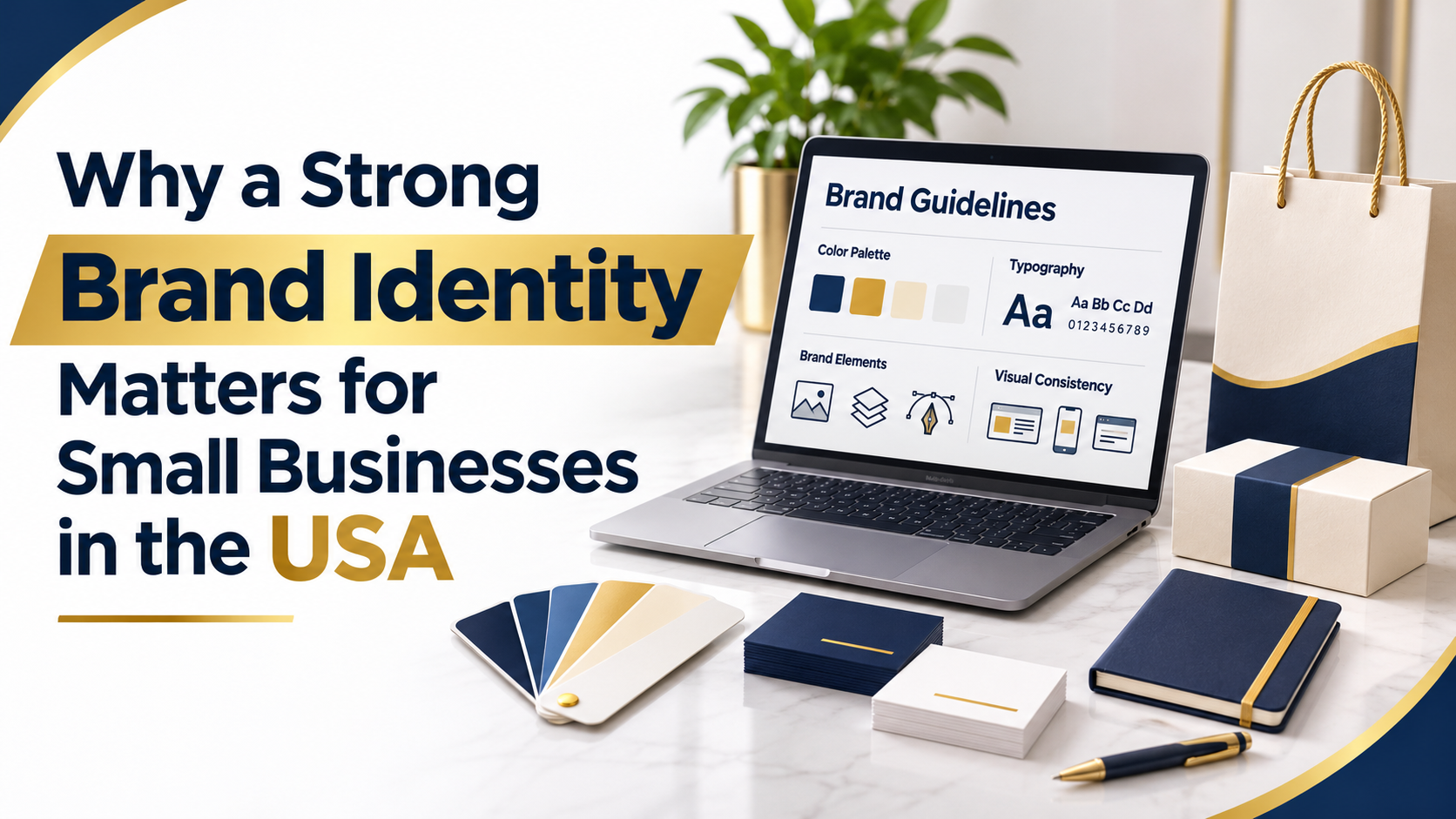
A basic document can identify approved logo versions, brand colors, typography, image styles, and messaging rules.
For example, a business might specify which logo should appear on dark backgrounds and which one belongs on white backgrounds.
It could also include examples of social media graphics, advertisement layouts, and presentation templates.
These instructions become useful when a company hires new employees, works with external designers, or starts advertising on additional platforms.
Without guidelines, each new project may introduce unrelated design decisions.
For businesses needing professional support, Metrolux Global offers branding services in us for companies across the United States.
Its branding work includes market positioning, brand messaging, naming, logo systems, typography, visual identity, and brand guidelines for digital and print materials.
These services address the wider identity of a business rather than focusing only on an individual logo or advertising graphic.
7. Rebranding Isn't Always the Right Decision
Some businesses assume a new logo will solve weak sales or poor marketing performance.
That isn't necessarily true.
A company may have a recognizable brand but struggle because its pricing is unclear, its website performs poorly, or its advertisements reach the wrong audience.
Changing the visual identity won't automatically correct those problems.
Rebranding makes more sense when the existing identity no longer represents the business.
For example, a company that began as a small residential cleaning service might expand into commercial property maintenance.
Its original branding could make it difficult to communicate the wider range of services.
A redesign may help clarify the company's new position.
In other situations, the business might only need updated website content, better photography, or more consistent graphic design.
Before investing in a complete rebrand, identify which parts of the existing identity are causing problems.
Preserving familiar brand elements may be useful when customers already recognize and trust them.
How Can Small Businesses Measure Branding Results?
Branding isn't always as easy to measure as paid advertising.
A business can track how many inquiries came through a particular advertisement, but it may be harder to measure the effect of a recognizable logo or consistent messaging.
Several indicators can still provide useful information.
Branded searches show how often people look for a company by name, although changes can have several causes.
Customer surveys can reveal whether people recognize the business and understand its services.
Website analytics may show changes in direct visits or returning users, but those numbers shouldn't automatically be attributed to branding work.
Small businesses can also examine practical improvements.
Are marketing materials consistent? Can customers identify the company's services quickly? Does the sales team use the same information as the website?
These questions are especially useful after a branding update.
The purpose of brand measurement is to understand what has improved, rather than assign a financial value to every design decision.
What Should a Small Business Do First?
A business doesn't need an expensive rebranding project to improve its identity.
Begin by reviewing its current website, social media profiles, advertisements, and sales materials.
Look for inconsistent logos, unclear descriptions, outdated information, and design elements that don't match.
Next, write a simple explanation of the company's services, intended customers, and genuine differences.
Use that information to create basic visual and messaging guidelines.
Once those foundations are clear, website design, advertising materials, and social media content become easier to manage.
A strong brand identity gives customers a consistent picture of the company. The most useful identity is one that accurately represents the business and makes its services easier to recognize and understand.
- Managerial Effectiveness!
- Future and Predictions
- Motivatinal / Inspiring
- Fitness and Wellness
- Medical & Health
- Manufacturing
- Education
- Real-Estate
- Food Industry
- Hospitality
- Online Games
- Sports
- Home Services
- Civil Engineering
- Safety and Protection
- Software Products & Services
- Fashion and Jewellery
- Artificial Intelligence
- Entrepreneurship
- Mentoring & Guidance
- Marketing
- Networking
- HR & Recruiting
- Literature
- Shopping
- Career Management & Advancement