

 SkillClick
Antibiotics, Antivirals, Antifungals, and Antiparasitics: Product Class Demand Analysis
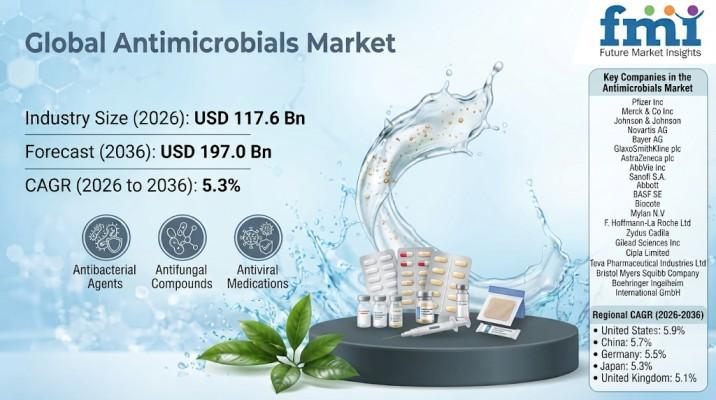
The global antimicrobials market is projected to reach USD 117.6 billion in 2026 and expand to USD 197.0 billion by 2036, registering a compound annual growth rate (CAGR) of 5.3% during the forecast period, according to Future Market Insights (FMI). Increasing infectious disease burdens, the spread of antimicrobial resistance (AMR), and the need for more targeted treatment options are influencing product development and purchasing decisions across healthcare systems.
The market is undergoing a shift from conventional broad-spectrum treatments toward resistance-aware therapies, combination strategies, and diagnostic-guided prescribing. Pharmaceutical manufacturers are increasingly focused on developing products that address resistant pathogens while supporting antimicrobial stewardship and reliable treatment outcomes.
Request a report sample: https://www.futuremarketinsights.com/reports/sample/rep-gb-31774
The short version
· Market size: USD 117.6 billion in 2026.
· Forecast value: USD 197.0 billion by 2036.
· Growth rate: 5.3% CAGR from 2026 to 2036.
· Leading product type: Antibacterial agents, accounting for 45.3% of the market.
· Leading origin category: Synthetic antimicrobials, representing 51.7% of market revenue.
· Leading administration route: Oral antimicrobials, with a 57.8% share.
· Leading growth markets: United States, China, Germany, Japan, and the United Kingdom.
These figures reflect sustained demand for medicines used to manage bacterial, fungal, viral, and other infectious diseases, alongside continued development of therapies targeting resistant microorganisms.
Why demand for antimicrobials is increasing
The growing challenge of antimicrobial resistance is a major factor shaping the market. Resistant infections can make conventional treatments less effective, increasing the need for new therapeutic options and more precise prescribing practices. International public health initiatives are encouraging research into treatments that address high-priority resistant pathogens.
Antibacterial agents remain central to infection management across hospitals and community healthcare settings. They account for 45.3% of the market, supported by their role in treating a broad range of bacterial infections. Antifungal and antiviral products also contribute to demand as healthcare providers address diverse infectious disease threats.
Another growth factor is the integration of diagnostics into treatment decisions. Rapid pathogen identification and antimicrobial susceptibility testing can help clinicians select more appropriate therapies, reduce unnecessary broad-spectrum prescribing, and support stewardship objectives.
Regulatory and commercial incentives are also influencing investment. Subscription-style purchasing models and development incentives can help address the commercial challenges associated with antibiotics that must be used selectively to preserve their effectiveness.
Product and administration segments shaping the market
Antibacterial agents lead the market with a 45.3% share. Their widespread use in hospital and outpatient settings makes them the largest therapeutic category. Antifungal, antiviral, antiparasitic, and other antimicrobial products provide additional treatment options across different pathogen types.
By origin, synthetic antimicrobials account for 51.7% of market revenue. Their established manufacturing processes and scope for controlled molecular development support their position. Natural and semi-synthetic products also remain part of the competitive landscape.
By route of administration, oral antimicrobials represent 57.8% of the market. Oral formulations support outpatient treatment, step-down therapy following hospital care, and convenient administration for patients who do not require injectable treatment. Topical and parenteral products remain important for localized infections and severe conditions requiring hospital-based management.
Where growth is strongest
FMI projects steady growth across major national markets during 2026–2036.
Country-wise Projected CAGR
· United States: 5.9%
· China: 5.7%
· Germany: 5.5%
· Japan: 5.3%
· United Kingdom: 5.1%
The United States is projected to lead the listed countries, supported by infectious disease research, established pharmaceutical infrastructure, and policy initiatives aimed at improving the commercial environment for important antimicrobial treatments.
China's market is expected to expand as healthcare access and treatment capacity continue to develop. Germany's growth is associated with diagnostic-led stewardship and appropriate antibiotic use, while Japan's market benefits from initiatives intended to strengthen the supply of essential antimicrobial medicines. In the United Kingdom, subscription-style purchasing models are helping create alternative commercial pathways for selected antibiotics.
Who is moving in the competitive landscape
The global antimicrobials market includes multinational pharmaceutical companies with established infectious disease portfolios, research capabilities, and broad distribution networks. Key companies profiled by FMI include:
· Pfizer Inc.
· Merck & Co., Inc.
· Johnson & Johnson
· Novartis AG
· Bayer AG
· GlaxoSmithKline plc
· AstraZeneca plc
· AbbVie Inc.
· Sanofi S.A.
· Abbott
· F. Hoffmann-La Roche Ltd
· Gilead Sciences, Inc.
· Cipla Limited
· Teva Pharmaceutical Industries Ltd.
· Bristol Myers Squibb Company
· Boehringer Ingelheim International GmbH
Competitive positioning increasingly depends on the ability to develop therapies for resistant infections, demonstrate clinical value, maintain reliable manufacturing capacity, and navigate changing regulatory and reimbursement frameworks.
Industry developments shaping the outlook
Recent developments highlight the growing role of innovation and institutional collaboration in infectious disease management.
GSK's antibiotic Blujepa (gepotidacin) received US FDA approval in 2025 for uncomplicated urinary tract infections and subsequently for uncomplicated urogenital gonorrhoea, highlighting renewed progress in novel antibacterial treatments.
In November 2025, GSK announced a collaboration with the Fleming Initiative to apply artificial intelligence and advanced computing to research on Gram-negative bacteria and antimicrobial resistance. The partnership reflects growing interest in using computational approaches to identify potential antibiotic candidates and understand resistance mechanisms.
These developments illustrate how pharmaceutical research, diagnostic technologies, and public health initiatives are increasingly interconnected in the effort to address infectious disease challenges.
Access the Full Report: https://www.futuremarketinsights.com/reports/antimicrobials-market
Where to act and where to be careful
Opportunities are emerging in targeted antibacterial development, combination therapies, and products designed to address resistant pathogens. Manufacturers that align their research portfolios with high-priority infectious disease needs may be better positioned to address unmet clinical demand.
However, antimicrobial development faces significant commercial and scientific challenges. Clinical trials for infectious diseases can be complex, while resistance patterns may change over time. Stewardship practices also limit the routine use of certain high-value therapies, making traditional volume-based commercial models less suitable.
Manufacturers must therefore balance innovation with affordability, reliable supply, regulatory compliance, and responsible use. Diagnostic integration and alternative reimbursement arrangements will remain important considerations for long-term market development.
Market outlook and research coverage
FMI expects the antimicrobials market to maintain steady expansion through 2036 as healthcare systems respond to infectious disease risks and antimicrobial resistance. Demand will continue to span antibacterial, antifungal, antiviral, and antiparasitic therapies, with product selection increasingly influenced by pathogen profiles, treatment guidelines, and stewardship requirements.
The FMI report examines the market by type, origin, route of administration, distribution channel, and region. It covers antibacterial, antifungal, antiviral, and other antimicrobial products, alongside synthetic, natural, and semi-synthetic origins. Regional analysis includes North America, Europe, Asia Pacific, Latin America, and the Middle East and Africa.
Related Reports:
· Intraoral Scanner Market - https://www.futuremarketinsights.com/reports/intraoral-scanners-market
· Retinoid Market - https://www.futuremarketinsights.com/reports/retinoids-market
· Multiomic Market - https://www.futuremarketinsights.com/reports/multiomic-market
About Future Market Insights (FMI)
Future Market Insights (FMI) is a global market intelligence and consulting firm providing comprehensive market research, competitive intelligence, and strategic business insights across industries. The firm delivers detailed forecasts, technology analysis, and data-driven recommendations that support informed decision-making for manufacturers, investors, distributors, and policymakers worldwide.
For Press & Corporate Inquiries
Rahul Singh
AVP – Marketing and Growth Strategy
Future Market Insights, Inc.
+91 8600020075
For Sales – sales@futuremarketinsights.com
- Managerial Effectiveness!
- Future and Predictions
- Motivatinal / Inspiring
- Fitness and Wellness
- Medical & Health
- Manufacturing
- Education
- Real-Estate
- Food Industry
- Hospitality
- Online Games
- Sports
- Home Services
- Civil Engineering
- Safety and Protection
- Software Products & Services
- Fashion and Jewellery
- Artificial Intelligence
- Entrepreneurship
- Mentoring & Guidance
- Marketing
- Networking
- HR & Recruiting
- Literature
- Shopping
- Career Management & Advancement