

 SkillClick
How Legalisation Services Help Simplify International Document Requirements
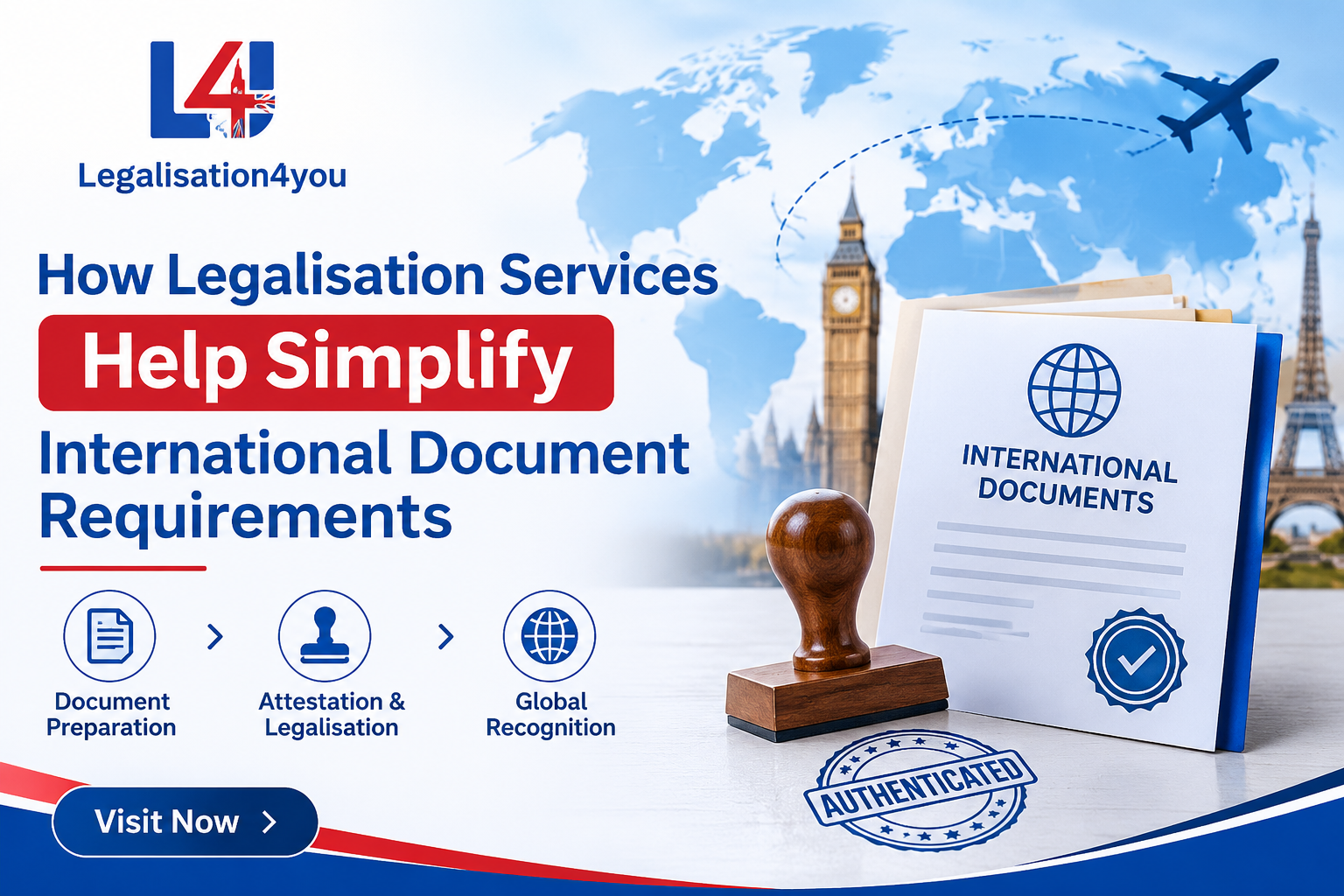
Using UK documents in another country often involves more than simply presenting the original paperwork. Whether someone is moving abroad for work, applying for a university, getting married overseas or expanding a business internationally, they may need to prove that their documents are genuine and officially recognised. Different countries have different rules, which can make the process confusing for individuals and businesses.
This is where legalisation services become useful. They help people understand the steps required to prepare UK-issued documents for international use. From checking document requirements to arranging certification, apostille and embassy attestation where necessary, professional assistance can make the process easier to manage.
Understanding how document legalisation works can help applicants avoid unnecessary delays and prepare their paperwork correctly before submitting it to overseas authorities.
What Are International Document Requirements?
International document requirements refer to the rules set by foreign governments, universities, employers, courts and other organisations when they request official paperwork from another country.
For example, someone moving from the UK to another country may be asked to provide a birth certificate, marriage certificate, degree certificate or police clearance certificate. A business setting up operations overseas might need to submit company registration documents, commercial agreements or powers of attorney.
However, the receiving authority may not automatically recognise a UK document. It may require additional verification to confirm that the signature, stamp or seal on the document is genuine.
The exact requirements depend on the destination country and the type of document. Some authorities accept original certificates, while others request certified copies, notarisation, an apostille or further embassy legalisation.
Understanding these requirements before starting an application is important because submitting the wrong document or missing a required verification step can delay the entire process.
How Legalisation Services Make the Process Easier
Preparing documents for international use can involve several organisations and procedures. Professional legalisation services help applicants understand which steps may apply to their documents and organise the process more efficiently.
Here are some of the main ways they can help.
1. Identifying the Correct Document Requirements
One of the biggest challenges is understanding what the receiving country actually requires. The process can vary depending on whether the document is personal, educational, professional or commercial.
For example, a person applying for employment overseas may need a degree certificate and a police certificate. Someone planning to get married abroad may be asked for a birth certificate or a certificate of no impediment.
A professional provider can help review the document type and explain whether certification, notarisation, an apostille or embassy attestation may be necessary.
Checking these requirements in advance helps applicants avoid arranging unnecessary services or submitting incomplete paperwork.
2. Helping With Document Certification
Some UK documents need to be certified before they can be submitted for legalisation. Certification is a process in which an authorised professional confirms that a copy is a true copy of the original document or verifies a signature, depending on the purpose.
A solicitor or notary public may be able to certify certain documents. The appropriate professional depends on the document and the requirements of the organisation requesting it.
For example, a certified copy of a passport or a qualification certificate may be required for an overseas application.
Professional guidance helps applicants understand when certification is necessary and which type of certification should be arranged before moving to the next stage.
3. Arranging an Apostille Certificate
An apostille is an official certificate issued by a designated authority to authenticate the origin of a public document. In the UK, the Foreign, Commonwealth & Development Office (FCDO) Legalisation Office is responsible for issuing UK apostilles.
An apostille confirms the authenticity of the relevant signature, the capacity in which the person signing the document acted and, where appropriate, the identity of the seal or stamp.
For countries covered by the Hague Apostille Convention, an apostille generally replaces the need for further diplomatic or consular legalisation.
For example, a UK birth certificate, marriage certificate or certain educational documents may require an apostille before being accepted by an overseas authority.
Reliable legalisation services can help applicants understand whether their documents are eligible for an apostille and whether any preparation is required before submission.
4. Understanding Embassy Attestation Requirements
Not every country follows the same document legalisation procedure. Some destinations require additional verification after an apostille has been issued.
For countries where the simplified apostille procedure does not apply, the document may need to go through a more traditional legalisation route. This can involve FCDO legalisation followed by authentication at the relevant embassy or consulate in London. Further approval by an authority in the destination country may also be required.
The exact process depends on the destination country's rules and the document category.
Professional assistance can help applicants identify the relevant stages and understand which authorities need to be involved. This is particularly helpful when dealing with documents for countries that have specific embassy attestation requirements.
5. Reducing Errors and Unnecessary Delays
Small mistakes can create significant problems during document legalisation. An incorrect document format, missing signature, unsuitable certification or incomplete application may result in a document being rejected or returned.
For example, an overseas authority may request an original government-issued certificate, but an applicant might submit an ordinary photocopy instead. In another situation, a document may require notarisation before it can be presented for an apostille.
Experienced providers understand that document requirements vary and can help applicants check important details before submission.
Using professional legalisation services can therefore reduce avoidable errors and make it easier to follow the correct procedure.
Which Documents May Need Legalisation for International Use?
Different types of documents may require legalisation depending on their intended purpose and destination country.
Some common examples include:
Personal Documents
Personal documents are frequently requested for immigration, marriage, residency and family-related applications.
These may include:
-
Birth certificates
-
Marriage certificates
-
Death certificates
-
Divorce certificates and court orders
-
Police clearance certificates
-
Medical certificates
-
Certificates of no impediment
For example, someone planning to get married overseas may be asked to provide a birth certificate and other supporting documents. The receiving authority may require these documents to be apostilled or legalised before accepting them.
Educational Documents
Students and professionals moving abroad may need to prove their academic qualifications.
Common educational documents include:
-
Degree certificates
-
Diploma certificates
-
Academic transcripts
-
School certificates
-
Professional qualifications
-
Training certificates
A university or employer may request an apostille or notarised copy to verify the authenticity of educational documents issued in the UK.
Business and Commercial Documents
Businesses operating internationally may also need to prepare official paperwork for overseas registration, contracts, partnerships and financial activities.
Examples include:
-
Certificate of incorporation
-
Memorandum and articles of association
-
Company registration documents
-
Powers of attorney
-
Commercial invoices
-
Business agreements
-
Board resolutions
Depending on the destination country, these documents may need certification, notarisation, apostille or embassy attestation.
Understanding the Difference Between Certification, Apostille and Legalisation
These terms are sometimes used interchangeably, but they refer to different procedures.
Document certification: This generally involves an authorised professional confirming that a copy is a true copy of an original document or verifying a signature.
Notarisation: A notary public performs official notarial acts, which may include witnessing signatures, authenticating documents or certifying copies, depending on the circumstances.
Apostille: An apostille is issued by a designated government authority to authenticate the origin of a public document for use in another country covered by the Hague Apostille Convention.
Embassy attestation: This involves verification by the relevant embassy or consulate when the destination country's requirements call for it.
Understanding these differences is important because completing one step does not automatically mean that every other requirement has been fulfilled.
A professional provider can explain which procedure applies to a particular document and destination.
How to Prepare Documents Before Starting the Process
Preparing your documents properly can make international legalisation more straightforward. Before submitting anything, consider the following steps:
-
Confirm the destination country's requirements: Contact the organisation or authority requesting your documents to understand its exact requirements.
-
Check the original documents: Make sure the documents are complete, readable and issued by the appropriate authority.
-
Confirm whether certification is required: Some documents need to be certified or notarised before they can be submitted for an apostille.
-
Check translation requirements: If the receiving authority requires documents in another language, arrange a translation that meets its standards. Confirm whether the translation itself also needs certification or legalisation.
-
Identify the correct legalisation route: Find out whether an apostille is sufficient or whether further embassy attestation is required.
-
Allow enough processing time: Some applications involve multiple authorities, so it is sensible to start early and check the current processing arrangements.
Following these steps can help reduce confusion and prevent avoidable problems during the application process.
Why Choose Professional Legalisation Support?
Preparing UK documents for international use can involve several steps, from solicitor certification and notarisation to obtaining an apostille or completing embassy attestation. Choosing the correct process is important to avoid delays and ensure your documents meet the requirements of the receiving country.
Legalisation4you provides support with document legalisation for personal, educational and business purposes. Whether you need a birth certificate, marriage certificate, degree certificate or commercial document legalised, the team can help you understand the relevant requirements and available options.
Visit to explore professional document legalisation services and get assistance with preparing your UK documents for use abroad.
FAQs About Legalisation Services
1. What are legalisation services used for?
Legalisation services help individuals and businesses prepare official documents for use in another country. Depending on the requirements, this may involve document certification, notarisation, an apostille or embassy attestation.
2. Do all UK documents need an apostille for international use?
No. Not every UK document requires an apostille. The requirement depends on the destination country, document type and organisation requesting it. Some documents may be accepted without legalisation, while others require additional verification.
3. How long does document legalisation take in the UK?
Processing times depend on the type of service, document and authorities involved. FCDO processing times can change, and additional certification or embassy procedures may extend the overall timeframe. Applicants should check current processing estimates before applying.
4. Can educational certificates be legalised in the UK?
Yes. Certain educational documents can be legalised in the UK, provided they meet the relevant requirements. They may need to be certified by a solicitor or notary public before an apostille can be issued.
5. Is an apostille the same as embassy attestation?
No. An apostille is issued by a designated authority under the Hague Apostille Convention. Embassy attestation is a separate procedure that may be required by countries where the apostille process does not apply.
6. Can personal and business documents be legalised together?
It may be possible to arrange legalisation for different document categories as part of the same overall application. However, each document must meet the relevant requirements, and some may need different preparation or verification procedures.
7. Why should I use professional legalisation services?
Professional assistance can help you understand the correct process, identify required documents, arrange relevant certification and avoid common application mistakes. It can also make coordinating multiple stages easier.
- Managerial Effectiveness!
- Future and Predictions
- Motivatinal / Inspiring
- Fitness and Wellness
- Medical & Health
- Manufacturing
- Education
- Real-Estate
- Food Industry
- Hospitality
- Online Games
- Sports
- Home Services
- Civil Engineering
- Safety and Protection
- Software Products & Services
- Fashion and Jewellery
- Artificial Intelligence
- Entrepreneurship
- Mentoring & Guidance
- Marketing
- Networking
- HR & Recruiting
- Literature
- Shopping
- Career Management & Advancement