

 SkillClick
How to Build a White-Label Fantasy Sports App for Your Business
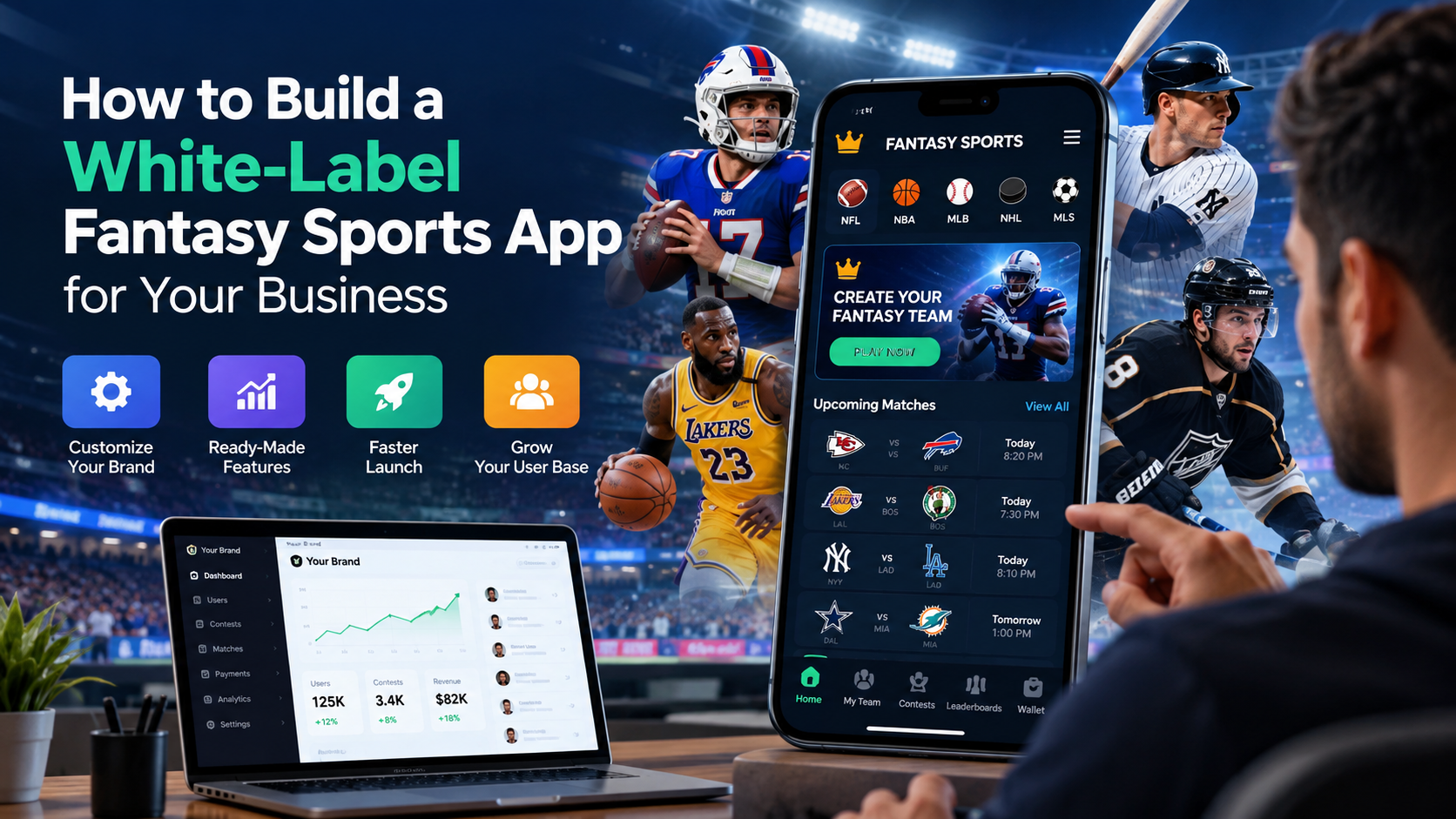
Launching a fantasy sports platform can be a good way for businesses to enter the sports technology market without building everything from scratch. A white-label fantasy sports app gives you a ready-made foundation that can be customized with your brand name, logo, colors, features, and business rules.
Instead of spending months developing every part of the platform, you can start with an existing solution and modify it according to your target audience and business needs. However, choosing the right platform and planning the product properly are still important if you want to build a reliable fantasy sports business.
Here is a simple step-by-step guide to help you understand how the process works.
What is a White-Label Fantasy Sports App?
A white-label fantasy sports app is a pre-built fantasy sports platform that a business can purchase, customize, and launch under its own brand.
The basic platform may already include features such as user registration, player selection, contests, fantasy points, leaderboards, payments, notifications, and an admin panel. The business can then add its own branding and make changes based on its requirements.
For example, a business can use a white-label platform to launch a fantasy cricket, football, basketball, or multi-sport application without developing the complete system from the beginning.
Why Choose a White-Label Fantasy Sports App?
Building a fantasy sports platform from the ground up requires considerable development time, technical resources, testing, and ongoing maintenance. A white-label solution can reduce some of this work because the basic technology is already available.
Some common advantages include:
-
Faster time to market
-
Lower initial development effort
-
Ready-made core features
-
Easier branding and customization
-
Existing admin functionality
-
Support for multiple sports
-
Easier integration with payment systems and sports data
-
Scalability for future growth
However, white-label does not mean you should accept every feature as it comes. Your platform still needs to match your business model and the expectations of your users.
Step 1: Define Your Business Model
Before selecting a platform, decide what type of fantasy sports business you want to operate.
You may want to focus on one sport or offer several sports through the same application. You also need to decide which fantasy format you want to support.
Common options include:
-
Daily fantasy sports
-
Season-long fantasy leagues
-
Prediction and pick'em games
-
Head-to-head contests
-
Private leagues
-
Free-to-play contests
Your business model will affect the features, payment setup, sports data requirements, and overall app structure. Defining these things early can prevent unnecessary development work later.
Step 2: Identify Your Target Audience
The next step is understanding who will use your application.
For example, an app targeting casual sports fans may need a very simple interface with easy contest joining and player selection. A platform aimed at experienced fantasy players may require advanced statistics, detailed player information, multiple contest formats, and more customization options.
Consider factors such as:
-
Target age group
-
Preferred sports
-
Geographic market
-
User experience expectations
-
Preferred payment methods
-
Mobile usage habits
-
Competition in the target market
Knowing your audience helps you decide which features actually deserve priority.
Step 3: Select a Reliable White-Label Platform
This is one of the most important decisions in the entire process.
When comparing a fantasy sports app development company or technology provider, look beyond the demo. A platform may look impressive but still have limitations that become visible only after launch.
Check whether the solution supports:
-
Multiple sports
-
Real-time scores
-
Reliable sports data APIs
-
Contest management
-
User wallets
-
Payment integration
-
Admin controls
-
Security features
-
Analytics
-
Push notifications
-
Multi-language support
-
Scalability
-
Third-party integrations
Ask about customization options as well. You should know which parts of the platform can be changed and which parts are fixed.
Step 4: Customize Your Brand
Once you select the platform, you can start making it look and feel like your own product.
Brand customization may include:
-
App name
-
Logo
-
Color scheme
-
Fonts
-
Icons
-
Splash screen
-
Website
-
App store branding
-
Promotional banners
The goal is to make users feel that they are using a dedicated fantasy sports platform rather than a generic application.
We AppIt Right, for example, can be considered when businesses are looking for a technology partner to customize and develop their fantasy sports solution according to their requirements.
Step 5: Add the Essential Features
A white-label platform should contain the basic features required to operate your fantasy sports business.
User Registration and Profiles
Users should be able to create accounts quickly using options such as email, phone numbers, or supported social login methods.
Team and Player Selection
The app should allow users to select players, create fantasy teams, and make changes according to the rules of the selected contest.
Contests and Leagues
Users should be able to view available contests, understand entry requirements, check prizes, and join contests easily.
Live Scores and Leaderboards
Real-time information is extremely important in fantasy sports. Users expect scores, player performances, points, and leaderboard positions to update quickly.
Wallet and Payments
If your business model involves paid contests, the platform needs secure payment and wallet functionality. Deposit, withdrawal, transaction history, and applicable verification processes should be handled carefully.
Notifications
Push notifications can keep users informed about match schedules, contest updates, team changes, and other important events.
Admin Panel
The admin panel allows the business to manage users, contests, sports, payments, promotions, reports, and other platform activities from one place.
Step 6: Integrate Reliable Sports Data
Fantasy sports depend heavily on accurate sports information.
Your app may need data such as:
-
Match schedules
-
Player information
-
Live scores
-
Player statistics
-
Team information
-
Match results
-
Player availability
A reliable sports data provider is therefore an important part of the technical setup.
The data should reach your application quickly and consistently because delays or incorrect information can directly affect the user experience.
Step 7: Focus on Security
Security should not be treated as an optional feature.
Your platform may handle personal information, account details, transactions, and other sensitive data. Strong security measures can help protect both your business and your users.
Important areas include:
-
Secure authentication
-
Data encryption
-
Secure payment processing
-
API security
-
Role-based admin access
-
Fraud detection
-
Regular security testing
-
Secure database management
-
Backup and recovery systems
If the platform supports real-money contests, you should also understand the legal and compliance requirements of every market where you plan to operate.
Step 8: Test the Application Before Launch
Never launch a fantasy sports app immediately after customization.
Test the complete user journey, starting from registration and continuing through team creation, contest participation, scoring, payments, and withdrawals.
Testing should cover:
-
App performance
-
Login and registration
-
Player selection
-
Contest rules
-
Live scoring
-
Leaderboards
-
Payment transactions
-
Notifications
-
Admin functions
-
Different screen sizes
-
High traffic conditions
-
Security vulnerabilities
It is better to identify problems during testing than after thousands of users have joined the platform.
Step 9: Launch and Promote Your App
After testing, you can prepare the application for launch.
Set up your website, app store listings, social media profiles, customer support, and marketing campaigns. You can also use referral programs, promotional contests, content marketing, and partnerships with sports communities to attract users.
Do not focus only on acquiring users. Make sure your platform provides a smooth experience so users have a reason to return.
Step 10: Keep Improving the Platform
Launching the app is only the beginning.
User expectations and sports trends change over time. You should regularly review user feedback, app performance, retention, contest participation, and technical issues.
A fantasy sports app development company can also help with ongoing maintenance, feature updates, bug fixes, integrations, and performance improvements after launch.
You can gradually introduce features such as advanced statistics, personalized recommendations, loyalty programs, private leagues, social features, or additional sports based on actual user demand.
How Much Does It Cost to Build a White-Label Fantasy Sports App?
The cost depends on several factors, so there is no single price that applies to every business.
The main factors include:
-
Number of sports
-
Number of platforms
-
Customization requirements
-
Fantasy formats
-
Sports data provider
-
Payment integrations
-
Admin features
-
Security requirements
-
Third-party integrations
-
Maintenance and support
A basic white-label solution may require less investment than a highly customized platform with multiple sports, advanced analytics, complex contest systems, and additional integrations.
It is better to prepare a feature list and request a detailed quotation rather than selecting a provider based only on the lowest price.
Final Thoughts
A white-label fantasy sports app can give businesses a faster starting point than developing an entire platform from zero. But the technology itself is only one part of the project.
You still need a clear business model, reliable sports data, useful features, strong security, proper testing, and a plan for user acquisition and long-term maintenance.
Before choosing a provider, compare its technology, customization options, support, scalability, security practices, and previous work. Taking time to evaluate these areas can help you avoid expensive problems after launch.
With the right planning and a platform that fits your requirements, you can build a fantasy sports product that carries your own brand while giving users a simple and reliable way to participate in their favorite sports.
- Managerial Effectiveness!
- Future and Predictions
- Motivatinal / Inspiring
- Fitness and Wellness
- Medical & Health
- Manufacturing
- Education
- Real-Estate
- Food Industry
- Hospitality
- Online Games
- Sports
- Home Services
- Civil Engineering
- Safety and Protection
- Software Products & Services
- Fashion and Jewellery
- Artificial Intelligence
- Entrepreneurship
- Mentoring & Guidance
- Marketing
- Networking
- HR & Recruiting
- Literature
- Shopping
- Career Management & Advancement