

 SkillClick
How to Improve Warehouse Dispatch Accuracy with Barcode Scanning
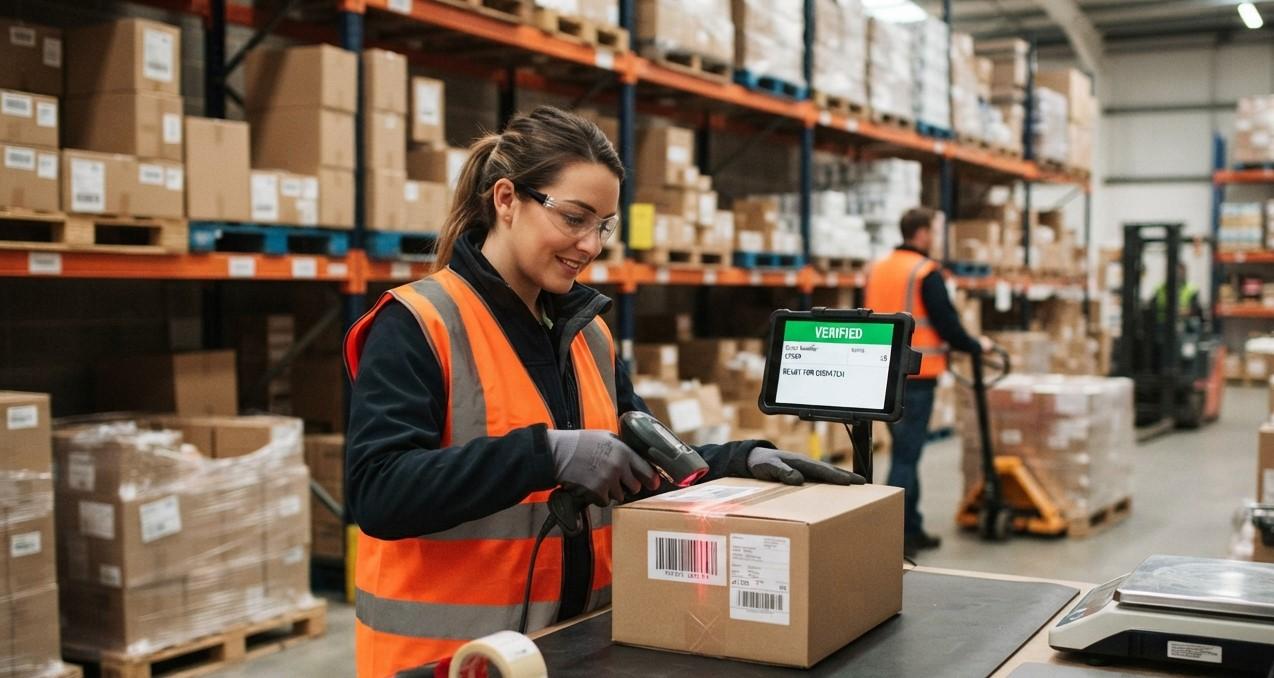
Warehouse dispatch is one of the final and most important stages of the order fulfillment process. After products have been received, stored, picked, and packed, they must be verified and sent to the correct customer, store, branch, or distribution center. A mistake at the dispatch stage can result in incorrect deliveries, returns, additional transportation costs, customer dissatisfaction, and inventory discrepancies. Pointus Solutions helps businesses improve warehouse operations through barcode and Auto-ID technologies. With the right Shop Barcode solutions and dependable Printing Products, businesses can create a more accurate and efficient dispatch process.
Barcode scanning provides a reliable way to verify products, quantities, cartons, pallets, shipment numbers, and destinations before goods leave the warehouse. Instead of depending entirely on paperwork or manual data entry, warehouse employees can scan items and compare them with digital shipment records. This creates multiple verification points and helps identify errors before a shipment is dispatched.
What Is Warehouse Dispatch Accuracy?
Warehouse dispatch accuracy refers to the ability of a warehouse to send the correct products, quantities, and shipments to the correct destination within the required timeframe.
An accurate dispatch process ensures that:
- The correct product is shipped.
- The correct quantity is included.
- The correct customer or destination is selected.
- The correct shipping documentation is associated with the order.
- Inventory records are updated correctly.
- The shipment leaves through the correct carrier or route.
Even if picking and packing are performed correctly, an error during final dispatch can still result in an incorrect delivery. This is why dispatch verification is an important part of warehouse management.
Why Dispatch Accuracy Matters
Dispatch errors can have a direct impact on warehouse efficiency and customer service.
Common dispatch problems include:
- Wrong products being shipped
- Incorrect quantities
- Cartons assigned to the wrong order
- Shipments sent to the wrong destination
- Missing packages
- Incorrect shipping labels
- Duplicate shipments
- Inventory records not being updated
These issues can lead to product returns, replacement shipments, customer complaints, additional labor, and higher transportation costs.
Barcode scanning helps create a controlled verification process before products leave the warehouse.
How Barcode Scanning Improves Dispatch Accuracy
Barcode technology allows warehouse employees to verify shipment information quickly and consistently.
A barcode-enabled dispatch workflow can follow this process:
Order Verification → Product Scan → Quantity Check → Shipment Scan → Destination Verification → Dispatch Confirmation
Each scan provides another opportunity to identify an error before the shipment leaves the facility.
1. Verify the Correct Products
The first step in accurate dispatch is confirming that the shipment contains the correct products.
Warehouse employees can scan each product or carton barcode before loading.
The system compares the scanned information with the shipment order.
If the order requires Product A but Product B is scanned, the system can flag the discrepancy immediately.
This prevents incorrect products from being dispatched.
2. Confirm Product Quantities
Quantity errors are another common cause of dispatch problems.
For example, an order may require 20 units, but only 18 units are packed.
Barcode scanning can help employees confirm the quantity before the shipment is finalized.
Depending on the workflow, employees can scan individual products, cartons, or pallet labels to verify that the required quantity has been prepared.
This reduces reliance on manual counting.
3. Verify Cartons and Packages
A single customer order may contain multiple cartons.
Each carton can have a unique barcode or shipment identifier.
Employees can scan each package before loading it onto a vehicle.
This helps confirm that all packages belonging to the shipment are present.
For example:
Order #10025 → Carton 1 → Carton 2 → Carton 3 → Dispatch Confirmed
If Carton 2 is missing, the system can identify the incomplete shipment before loading.
4. Confirm the Correct Destination
Dispatch accuracy also depends on sending products to the correct destination.
Destination information can include:
- Customer
- Retail store
- Branch
- Distribution center
- Delivery route
- Carrier
- Dock door
Barcodes can be used to identify destinations and staging areas.
Employees can scan the shipment and destination barcode to verify that the package is being loaded into the correct dispatch area.
5. Reduce Manual Data Entry
Manual data entry can create errors in product codes, order numbers, quantities, and shipping information.
Barcode scanning reduces the amount of information employees need to type.
Instead of manually entering a long shipment number, the employee scans the barcode.
The system automatically retrieves the relevant information.
This can make dispatch faster while improving data consistency.
Barcode-Based Dispatch Workflow
A well-designed barcode dispatch process can be divided into several stages.
Step 1: Prepare the Shipment
Products are picked, packed, and assigned to the appropriate order.
Step 2: Print the Shipping Label
A barcode label is created for the carton, package, pallet, or shipment.
Step 3: Scan the Shipment
The employee scans the shipment barcode to retrieve order information.
Step 4: Verify the Contents
Product or carton barcodes are scanned to confirm that the shipment contains the correct items.
Step 5: Verify the Destination
The destination or staging location barcode is scanned.
Step 6: Confirm Carrier or Route
If required, the carrier, route, dock door, or vehicle information can also be verified.
Step 7: Complete Dispatch
Once all verification steps are completed, the system records the shipment as dispatched.
This creates a digital record of the dispatch transaction.
The Role of Barcode Labels in Dispatch
High-quality barcode labels are essential for accurate dispatch operations.
Labels may be used on:
- Individual products
- Cartons
- Pallets
- Shipping packages
- Shipment documents
- Staging areas
- Dock doors
Labels should be readable, durable, and positioned where scanners can easily capture them.
Poorly printed or damaged barcodes can slow down dispatch and may force employees to identify shipments manually.
Choosing the Right Barcode Printer
Barcode printers are important for producing product and shipping labels.
Businesses should consider several factors when selecting a printer.
Printing Volume
High-volume warehouses may require printers capable of handling frequent label production.
Print Resolution
Clear printing helps scanners read barcodes reliably.
Label Size
The printer should support the required product, carton, pallet, and shipping label sizes.
Printing Method
Direct thermal or thermal transfer printing may be suitable depending on label durability and application requirements.
Connectivity
USB, Ethernet, Wi-Fi, or other connectivity options may be needed depending on the warehouse infrastructure.
Choosing Barcode Scanners for Dispatch
Different scanners can support different dispatch workflows.
Handheld Scanners
Suitable for standard package and product verification.
Wireless Scanners
Useful for employees moving around packing and loading areas.
Mobile Computers
Mobile computers allow employees to scan packages while viewing shipment details and instructions.
Fixed Scanners
High-volume warehouses may use fixed scanners at conveyor lines, loading points, or dock doors.
The appropriate scanner depends on the warehouse layout, scanning volume, barcode types, and required scanning distance.
Integrating Barcode Scanning With WMS and ERP Systems
Barcode scanning becomes more powerful when integrated with warehouse management and enterprise software.
A connected system can synchronize:
- Orders
- Inventory
- Picking
- Packing
- Shipping
- Dispatch
- Customer information
- Carrier information
For example:
Order → Picking → Packing → Barcode Verification → Dispatch → Inventory Update
This reduces duplicate data entry and helps maintain consistent information across warehouse operations.
Benefits of Barcode-Based Dispatch
Improved Accuracy
Scanning helps verify products, quantities, and destinations before dispatch.
Faster Processing
Employees can quickly retrieve and verify shipment information.
Reduced Errors
Barcode-based verification reduces reliance on manual entry and visual checking.
Better Inventory Accuracy
Dispatch transactions can automatically update inventory records.
Improved Traceability
Businesses can maintain a record of when shipments were scanned and dispatched.
Reduced Returns
Correct dispatch reduces the possibility of customers receiving incorrect products.
Better Productivity
Employees spend less time searching for shipment information or correcting errors.
How Barcode Scanning Helps Prevent Common Dispatch Errors
Wrong Product
Problem: An employee loads the wrong product.
Barcode solution: Scan the product and compare it with the order.
Wrong Quantity
Problem: The shipment contains too many or too few items.
Barcode solution: Scan products or cartons to verify quantities.
Wrong Destination
Problem: A package is placed in the wrong dispatch area.
Barcode solution: Scan both shipment and destination identifiers.
Missing Carton
Problem: One carton from a multi-package shipment is left behind.
Barcode solution: Scan each package and confirm that all required cartons are present.
Incorrect Shipping Label
Problem: A package receives the wrong label.
Barcode solution: Scan the package and order information before final dispatch.
Best Practices for Improving Dispatch Accuracy
Businesses can improve barcode-based dispatch by following several best practices.
Standardize Barcode Identification
Use consistent barcode formats across products, cartons, pallets, and shipments.
Label Dispatch Areas
Assign unique barcodes to staging zones, dock doors, and loading areas.
Use Multiple Verification Points
Do not rely on a single scan. Verify products, shipments, and destinations at appropriate stages.
Keep Labels Readable
Replace damaged, faded, or poorly printed labels.
Maintain Scanning Equipment
Clean scanners and inspect equipment regularly.
Maintain Barcode Printers
Regular printer maintenance helps ensure consistent barcode quality.
Train Employees
Employees should understand scanning procedures, system alerts, and exception handling.
Monitor Dispatch Performance
Track metrics such as:
- Dispatch accuracy
- Shipment errors
- Order processing time
- Missing cartons
- Returns caused by incorrect shipments
- Scanning errors
Regular performance monitoring can help identify recurring problems.
Supporting Multi-Warehouse Dispatch Operations
Barcode technology is especially useful for businesses that operate multiple warehouses or distribution centers.
A shipment may move through several stages:
Warehouse A → Sorting → Distribution Center → Regional Warehouse → Customer
Barcode scans can record each movement and help maintain shipment visibility.
This is particularly useful when businesses need to coordinate inventory and shipments across multiple locations.
How Businesses Can Build a Scalable Barcode Dispatch System
A scalable system can include:
- Handheld barcode scanners
- Wireless scanners
- Mobile computers
- Barcode printers
- Durable labels
- WMS integration
- ERP integration
- Shipping software
- Fixed scanning stations
Businesses can start with essential scanning processes and expand their technology as shipment volumes increase.
Choosing the Right Barcode Solution for Dispatch
Before implementing a barcode dispatch system, businesses should consider:
- Daily shipment volume
- Number of SKUs
- Number of warehouses
- Package types
- Barcode types
- Scanning distance
- Label requirements
- Printer requirements
- Existing software
- Network infrastructure
- Future growth
The goal should be to create a workflow that is accurate, practical, and easy for warehouse employees to use.
Conclusion
Warehouse dispatch accuracy is essential for ensuring that customers, stores, and business locations receive the correct products on time. Barcode scanning provides a practical way to verify products, quantities, packages, destinations, and shipment information before goods leave the warehouse.
By combining barcode scanners, mobile computers, reliable labels, barcode printers, and integrated WMS or ERP software, businesses can reduce dispatch errors and improve operational visibility. Pointus Solutions can help businesses implement suitable Auto-ID technologies for modern warehouse operations, while Shop Barcode solutions and dependable Printing Products can provide the equipment and labeling capabilities required for accurate product and shipment identification.
As warehouse and logistics operations continue to become more complex, barcode scanning can provide a scalable foundation for improving dispatch accuracy, reducing manual work, supporting faster fulfillment, and delivering a more reliable customer experience.
- Managerial Effectiveness!
- Future and Predictions
- Motivatinal / Inspiring
- Fitness and Wellness
- Medical & Health
- Manufacturing
- Education
- Real-Estate
- Food Industry
- Hospitality
- Online Games
- Sports
- Home Services
- Civil Engineering
- Safety and Protection
- Software Products & Services
- Fashion and Jewellery
- Artificial Intelligence
- Entrepreneurship
- Mentoring & Guidance
- Marketing
- Networking
- HR & Recruiting
- Literature
- Shopping
- Career Management & Advancement