

 SkillClick
How to Select the Right Drill Point Geometry for Industrial Machining
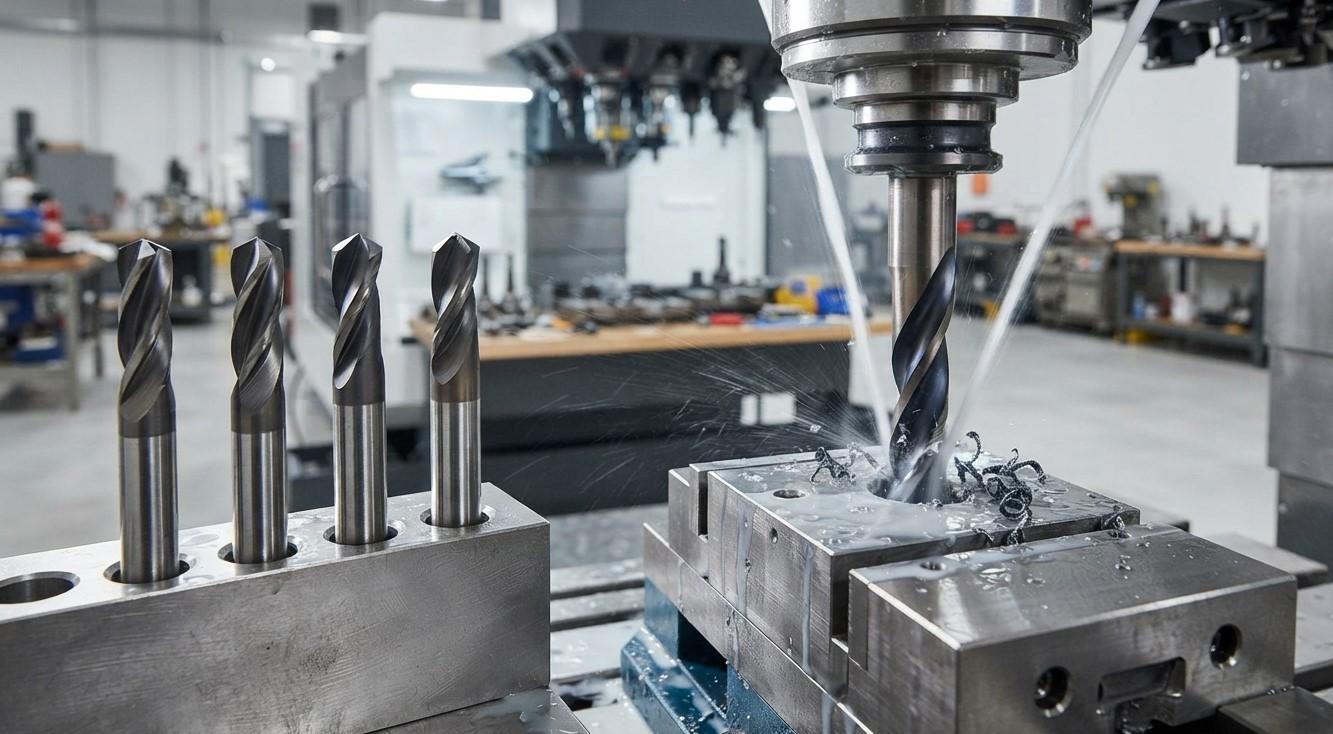
Choosing the correct drill point geometry is an important part of achieving accurate, efficient, and consistent drilling results in industrial machining. The geometry of a drill point affects cutting forces, chip evacuation, hole accuracy, tool life, and surface quality. Using the wrong point design can result in excessive heat, poor hole quality, premature tool wear, and unnecessary production downtime. For companies working with CNC machining tools and industrial cutting tools, selecting the appropriate drill geometry should therefore be treated as an important part of the tooling process.
For businesses looking for reliable tooling solutions, Khokhawala Trading LLC provides access to a wide range of industrial tools and machining solutions as an Industrial Tools Supplier in Dubai. Understanding drill point geometry can help workshops select the right tooling for different materials, hole sizes, machining conditions, and production requirements.
What Is Drill Point Geometry?
Drill point geometry refers to the design and shape of the cutting portion at the tip of a drill. It includes several features that determine how the drill enters the workpiece, forms chips, distributes cutting forces, and produces the finished hole.
Important elements of drill point geometry include:
- Point angle
- Lip geometry
- Chisel edge
- Web thickness
- Clearance angle
- Split-point design
- Helix angle
- Cutting-edge configuration
Different combinations of these features are designed for specific materials and applications. A drill intended for soft aluminum, for example, may require a different geometry from one designed for hardened steel or stainless steel.
Selecting the correct geometry helps balance cutting performance, tool life, hole quality, and machining productivity.
Why Drill Point Geometry Matters in Industrial Machining
Drilling may appear to be a straightforward machining operation, but the drill point experiences significant cutting forces and heat. The geometry of the point directly influences how efficiently these forces are managed.
The right drill point can provide several advantages:
Better Hole Accuracy
Correct geometry helps the drill enter the workpiece smoothly and remain stable during cutting. This can reduce wandering and improve hole location and dimensional accuracy.
Improved Chip Evacuation
Proper drill geometry allows chips to form and travel through the flutes efficiently. This is particularly important in deep-hole drilling where chip accumulation can cause tool damage.
Reduced Cutting Forces
An appropriate point design can reduce the amount of force required to penetrate the workpiece. Lower cutting forces can improve tool life and reduce machine load.
Longer Tool Life
When geometry is matched to the material and application, cutting edges experience more controlled wear. This can increase the usable life of industrial drill bits.
Better Surface Finish
Stable cutting and effective chip removal contribute to cleaner hole walls and more consistent surface quality.
Understanding Drill Point Angle
Point angle is one of the most important characteristics of drill geometry. It is the angle formed by the two primary cutting edges at the drill tip.
Common drill point angles include approximately 118° and 135°, although many specialized geometries are available.
118° Point
A traditional 118° point is widely used for general-purpose drilling. It provides a balanced cutting action and can be suitable for a broad range of common materials.
135° Point
A 135° point is commonly associated with tougher materials and applications where improved centering and reduced penetration force are desirable. Split-point versions of this geometry are also frequently used in industrial applications.
The correct angle should always be selected according to the drill manufacturer's specifications and the material being machined.
Common Types of Drill Point Geometry
Industrial drilling applications use several different point designs. Understanding their characteristics makes tool selection easier.
Conventional Point
The conventional point is a traditional drill design with a standard chisel edge. It is commonly used for general-purpose drilling where the machining conditions are relatively straightforward.
It can be suitable for routine workshop operations involving common engineering materials.
Split Point
A split point modifies the central portion of the drill to reduce the size and effect of the chisel edge.
Advantages can include:
- Improved centering
- Reduced walking when starting a hole
- Lower thrust requirements
- Better penetration
- More consistent hole location
Split-point drills are particularly useful for CNC machining applications where repeatability and hole positioning are important.
Four-Facet Point
A four-facet point uses additional ground surfaces at the drill tip to control the cutting action and reduce the influence of the chisel edge.
This geometry can provide stable drilling performance and is used for applications requiring improved accuracy.
Parabolic Point Geometry
Parabolic designs are commonly associated with drills intended for efficient chip evacuation. Their geometry and flute design can be beneficial for deeper holes and materials where chip removal is challenging.
Selecting Drill Geometry Based on Workpiece Material
One of the most important factors when selecting industrial drill bits is the workpiece material.
Aluminum
Aluminum is relatively soft but can produce long, sticky chips. Drills designed for aluminum often use geometries that encourage efficient chip evacuation and reduce the tendency for material to adhere to the cutting edges.
Sharp cutting edges and suitable flute geometry are important for maintaining hole quality.
Mild and Carbon Steel
General-purpose drill geometries can work effectively for many mild-steel applications. However, the correct point angle, drill material, coating, and cutting parameters should be selected according to the specific grade and machining conditions.
Stainless Steel
Stainless steel can generate substantial heat and may work-harden if machining conditions are poor. Suitable drill geometry, sharp cutting edges, proper coolant application, and controlled cutting parameters are important.
An inappropriate drill can quickly suffer from excessive wear or overheating.
Cast Iron
Cast iron produces abrasive chips and often requires tooling capable of handling abrasive conditions. Drill geometry should be selected according to the specific cast-iron grade and application.
Hardened Materials
Hard materials generally require specialized tooling and carefully controlled machining conditions. Carbide cutting tools or other advanced tool materials may be appropriate depending on hardness, hole size, machine capability, and production requirements.
Drill Geometry and Hole Depth
Hole depth is another important consideration.
Shallow holes are generally easier to produce because chips have a shorter path to exit the hole. As hole depth increases, chip evacuation becomes increasingly important.
For deep-hole applications, consider:
- Drill point design
- Flute geometry
- Helix configuration
- Coolant delivery
- Peck drilling cycles
- Tool rigidity
- Tool overhang
- Workpiece material
Using an appropriate geometry together with effective chip evacuation can reduce the risk of chip packing, overheating, and drill breakage.
The Role of Drill Material and Coating
Drill point geometry should not be considered independently from drill material.
Common drill materials include:
High-Speed Steel
HSS drills are widely used because they provide a combination of toughness, versatility, and affordability. They are suitable for many general-purpose industrial drilling operations.
Cobalt-Alloy HSS
Cobalt-alloy HSS drills provide improved heat resistance compared with conventional HSS and can be useful for tougher materials and demanding applications.
Solid Carbide
Solid carbide drills provide high stiffness, wear resistance, and cutting performance when used under suitable machine conditions. They are often selected for high-precision CNC machining applications.
Coatings can further improve wear resistance, reduce friction, and increase performance when correctly matched to the workpiece and machining conditions.
How Drill Point Geometry Affects Cutting Parameters
Even the correct drill geometry can perform poorly if cutting parameters are inappropriate.
Important parameters include:
- Cutting speed
- Feed rate
- Drill diameter
- Hole depth
- Coolant flow
- Peck cycle
- Spindle speed
Higher cutting speeds can increase heat and tool wear, while excessive feed can increase thrust forces and risk of tool failure. Parameters should be established using the drill manufacturer's recommendations and adjusted according to machine rigidity, workpiece material, and actual machining conditions.
The Importance of Tool Holding
Drill geometry cannot compensate for poor tool holding.
A drill must be held securely and concentrically to minimize runout. Excessive runout can cause uneven loading between cutting edges, leading to poor hole accuracy, premature wear, vibration, and drill breakage.
For CNC applications, suitable CNC tool holders and properly maintained workholding systems are important. The tool, holder, spindle, and workpiece should form a stable machining system.
Before drilling, inspect the holder for contamination, damage, and wear. Even small particles between mating surfaces can affect tool positioning.
Drill Point Geometry and CNC Machining
CNC machining requires consistent and repeatable drilling performance. For this reason, drill geometry becomes particularly important in automated production.
A properly selected drill can help improve:
- Hole-to-hole consistency
- Cycle times
- Tool life
- Dimensional accuracy
- Automated tool changes
- Production reliability
When integrated with CNC tool management systems, drills can be monitored based on tool life, number of holes produced, machining time, or measured wear.
Measuring Hole Quality After Drilling
Selecting the correct drill is only part of achieving accurate results. Finished holes should be inspected using appropriate precision measuring tools.
Depending on the application, inspection may include:
- Hole diameter
- Hole depth
- Position
- Straightness
- Surface condition
- Burr formation
- Concentricity
Calipers, micrometers, bore gauges, dial indicators, and other precision measuring instruments can be selected according to the required tolerance.
Measurement data can also help identify whether changes in drill geometry, cutting parameters, or tool condition are required.
Common Mistakes When Selecting Drill Geometry
Several mistakes can reduce drilling performance.
Using One Drill Geometry for Every Material
Different materials respond differently to cutting forces and heat. A geometry suitable for mild steel may not provide the same results in stainless steel or aluminum.
Ignoring Hole Depth
A drill that performs well in shallow holes may not be suitable for deep-hole applications.
Choosing Geometry Without Considering the Machine
Machine rigidity, spindle speed, coolant capability, and tool-holding accuracy all influence drill performance.
Overlooking Tool Runout
Even a high-quality drill can produce poor results when excessive runout is present.
Using Incorrect Cutting Parameters
Incorrect speed or feed can lead to excessive heat, poor chip formation, rapid wear, and breakage.
Best Practices for Selecting Drill Point Geometry
For consistent industrial drilling results, workshops should follow a systematic selection process:
- Identify the exact workpiece material and hardness.
- Determine the required hole diameter and depth.
- Select an appropriate drill point geometry.
- Consider HSS, cobalt, carbide, or other suitable tool materials.
- Check coating compatibility with the application.
- Verify machine spindle and tool-holder capability.
- Minimize tool overhang and runout.
- Use manufacturer-recommended cutting parameters.
- Ensure effective coolant and chip evacuation.
- Inspect finished holes using suitable precision measuring tools.
- Monitor tool wear and replace drills before performance becomes unstable.
- Record successful tooling combinations for repeat production.
Benefits of Choosing the Correct Drill Point Geometry
Correct drill point selection can provide measurable operational benefits across industrial workshops and CNC production environments.
These include:
- Improved hole accuracy
- Better chip evacuation
- Reduced cutting forces
- Longer drill life
- Improved surface finish
- Lower risk of tool breakage
- More consistent production
- Reduced rework and scrap
- Improved CNC machining efficiency
- Better overall tooling performance
The key is to match the drill geometry to the actual application rather than selecting tools based only on price or general availability.
Conclusion
Selecting the right drill point geometry is an important part of achieving reliable drilling performance in industrial machining. Factors such as workpiece material, hole diameter, hole depth, drill material, coating, machine rigidity, tool holding, cutting parameters, and chip evacuation should all be considered before selecting a drill.
The right geometry can improve hole accuracy, tool life, chip control, surface quality, and production consistency. Combined with suitable industrial cutting tools, CNC machining tools, CNC tool holders, machining accessories, and precision measuring tools, the correct drill can contribute significantly to efficient manufacturing operations.
For workshops and industrial businesses seeking dependable tooling solutions, Khokhawala Trading LLC supports machining and engineering requirements as an experienced Industrial Tools Supplier in Dubai. Choosing the appropriate drill point geometry and matching it with the right machining conditions can help businesses achieve more reliable drilling results and maintain consistent production performance.
- Managerial Effectiveness!
- Future and Predictions
- Motivatinal / Inspiring
- Fitness and Wellness
- Medical & Health
- Manufacturing
- Education
- Real-Estate
- Food Industry
- Hospitality
- Online Games
- Sports
- Home Services
- Civil Engineering
- Safety and Protection
- Software Products & Services
- Fashion and Jewellery
- Artificial Intelligence
- Entrepreneurship
- Mentoring & Guidance
- Marketing
- Networking
- HR & Recruiting
- Literature
- Shopping
- Career Management & Advancement