

 SkillClick
How to Fix a Laptop That Fails to Detect an External Hard Drive
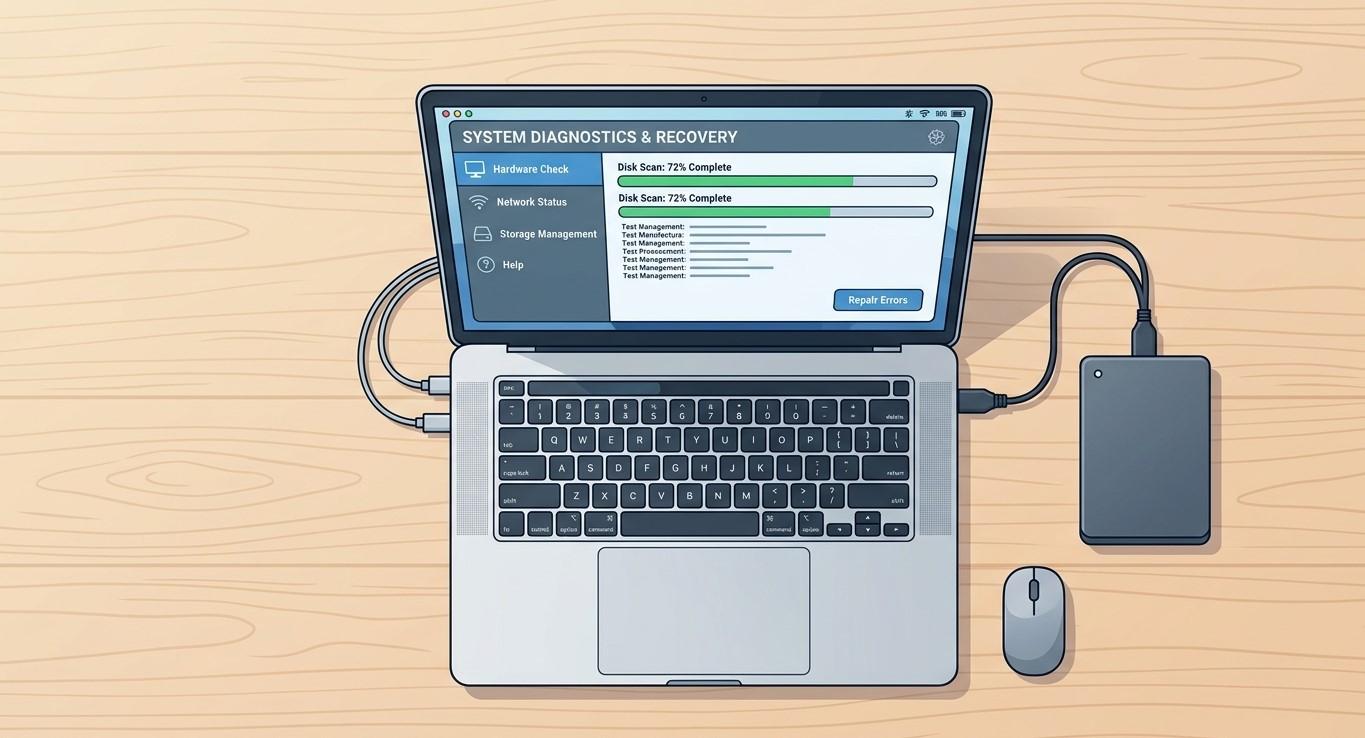
External hard drives are useful for storing backups, transferring large files, and expanding your laptop's available storage. However, it can be frustrating when you connect an external drive and your laptop fails to recognize it. The problem may be caused by something as simple as a loose cable or an incorrect USB connection, but it can also indicate driver problems, file-system errors, or hardware failure. If you frequently depend on external storage, knowing how to troubleshoot the problem can help you avoid unnecessary data loss and downtime. When basic troubleshooting does not solve the issue, professional computer repair Albany, laptop repair Albany, and computer repair Albany NY services can help identify the underlying cause.
Check the USB Connection First
The first step is to inspect the physical connection between your laptop and the external hard drive.
Disconnect the drive and reconnect it firmly to the USB port. Make sure the cable is properly inserted into both the laptop and the external drive.
If the drive still does not appear, try a different USB port. A damaged or malfunctioning USB port may prevent the laptop from detecting connected storage devices.
You should also inspect the USB cable for visible damage. Frayed cables, bent connectors, or loose connections can interrupt communication between the laptop and the external drive.
If possible, test the external hard drive with another compatible cable.
Try Connecting the Drive to Another Computer
Connecting the external hard drive to another computer is a simple way to determine whether the problem is related to the laptop or the drive.
If another computer recognizes the drive normally, the external hard drive is probably functioning correctly, and the problem may involve your laptop's USB port, drivers, operating system, or storage configuration.
If multiple computers fail to recognize the drive, the external hard drive or its cable may have a hardware problem.
This test can help narrow down the cause before you attempt more advanced troubleshooting.
Check Whether the Drive Appears in File Explorer
Sometimes Windows detects an external hard drive but does not automatically assign it a drive letter. As a result, the drive may not appear under "This PC" even though the computer recognizes the hardware.
Open Disk Management and look for the external drive.
If the drive appears there but does not have a drive letter, you may be able to assign one through the Disk Management interface.
However, be careful when working with Disk Management. Formatting, deleting partitions, or changing disk configurations can result in permanent data loss. If the drive contains important files, avoid making changes until you understand exactly what the options will do.
Check Device Manager for Driver Problems
Windows relies on device drivers to communicate with hardware components and connected devices.
If the external hard drive is not detected properly, a driver problem may be responsible.
Open Device Manager and check sections such as:
- Disk drives
- Universal Serial Bus controllers
- Storage controllers
Look for warning symbols or devices that appear to be malfunctioning.
Depending on the situation, updating or reinstalling the relevant driver may resolve the problem. Windows may also reinstall certain drivers automatically after restarting the computer.
If you are uncertain which driver is causing the problem, avoid randomly removing hardware devices from Device Manager.
Restart Your Laptop
A simple restart can sometimes resolve temporary USB and operating system problems.
Disconnect the external hard drive, restart the laptop, and allow Windows to load completely. Then reconnect the drive.
Temporary driver conflicts, background processes, or operating system glitches may disappear after a restart.
Although restarting may seem too simple to be useful, it is a safe troubleshooting step and should generally be attempted before making more complicated system changes.
Check the External Drive's Power Requirements
Some external hard drives require more power than a laptop's USB port can consistently provide.
This can happen with certain larger external drives, older USB devices, or drives that use separate power adapters.
If your external hard drive has a dedicated power supply, make sure the adapter is connected correctly and receiving power.
You should also listen for unusual sounds. Clicking, repeated spinning attempts, grinding noises, or complete silence from a drive that normally makes operating sounds may indicate a hardware problem.
If the drive contains important data and is making unusual mechanical noises, avoid repeatedly reconnecting it.
Check for File-System or Partition Problems
An external hard drive may be detected by the computer but remain inaccessible because of file-system corruption or partition problems.
Windows may display the drive as unallocated, offline, or using an unsupported configuration.
Do not immediately format the drive simply because Windows asks you to do so.
Formatting can erase existing data. If the drive contains valuable photos, documents, business files, or backups, consider professional assistance before attempting recovery or repair.
Professional Data Recovery Services may be appropriate when the drive contains important information that cannot be accessed normally.
Make Sure the Drive Is Compatible
Compatibility can also cause external storage problems.
Older external hard drives may use older USB standards, while newer laptops may use different USB-C or USB-A connections. Adapters and hubs can sometimes introduce additional connection problems.
If you are using a USB hub, docking station, or adapter, connect the external hard drive directly to the laptop when possible.
This eliminates the hub or adapter as a potential source of the problem.
Install Available Windows Updates
Operating system updates can include improvements and fixes for hardware compatibility and device drivers.
Check Windows Update to see whether important system updates are available.
If the external drive stopped working immediately after a major operating system update, the update may have changed drivers or hardware settings. In such cases, professional troubleshooting may be useful if the issue persists.
Protect Your Data Before Troubleshooting Further
When an external hard drive contains important information, protecting the data should be your priority.
Avoid repeatedly disconnecting and reconnecting a drive that is making unusual sounds or behaving unpredictably. Do not format a drive simply because Windows cannot read it, and avoid using questionable recovery software on a failing drive.
If the files are particularly important, professional computer repair Albany technicians may be able to diagnose the hardware without unnecessarily putting the stored information at risk.
When to Contact a Professional Repair Service
Basic troubleshooting can resolve many external hard drive detection problems. However, professional assistance may be necessary when the drive is physically damaged, repeatedly disconnects, produces unusual noises, or contains files that cannot be accessed.
Experienced laptop repair Albany technicians can examine the laptop's USB ports, drivers, operating system, and hardware configuration to determine why the external drive is not being detected.
For more complicated problems involving storage devices, data access, or hardware failures, computer repair Albany NY professionals can provide diagnostics and recommend appropriate repair or recovery options.
Conclusion
A laptop that fails to detect an external hard drive can be caused by many different issues, ranging from a faulty USB cable to driver conflicts, power problems, file-system corruption, or hardware failure. Start with simple checks such as testing another USB port, replacing the cable, restarting the laptop, and connecting the drive to another computer.
If the drive contains important data, be especially careful before formatting or modifying its partitions. When basic troubleshooting does not resolve the problem, professional computer repair Albany, laptop repair Albany, and computer repair Albany NY services can help diagnose the issue while reducing the risk of further damage or data loss.
Taking the right steps early can help determine whether the problem is with the laptop, the external hard drive, or the connection between them—and can potentially prevent a small storage problem from becoming a much more serious one.
- Managerial Effectiveness!
- Future and Predictions
- Motivatinal / Inspiring
- Fitness and Wellness
- Medical & Health
- Manufacturing
- Education
- Real-Estate
- Food Industry
- Hospitality
- Online Games
- Sports
- Home Services
- Civil Engineering
- Safety and Protection
- Software Products & Services
- Fashion and Jewellery
- Artificial Intelligence
- Entrepreneurship
- Mentoring & Guidance
- Marketing
- Networking
- HR & Recruiting
- Literature
- Shopping
- Career Management & Advancement