

 SkillClick
ADHD Therapy Support: Tools for Focus and Calm
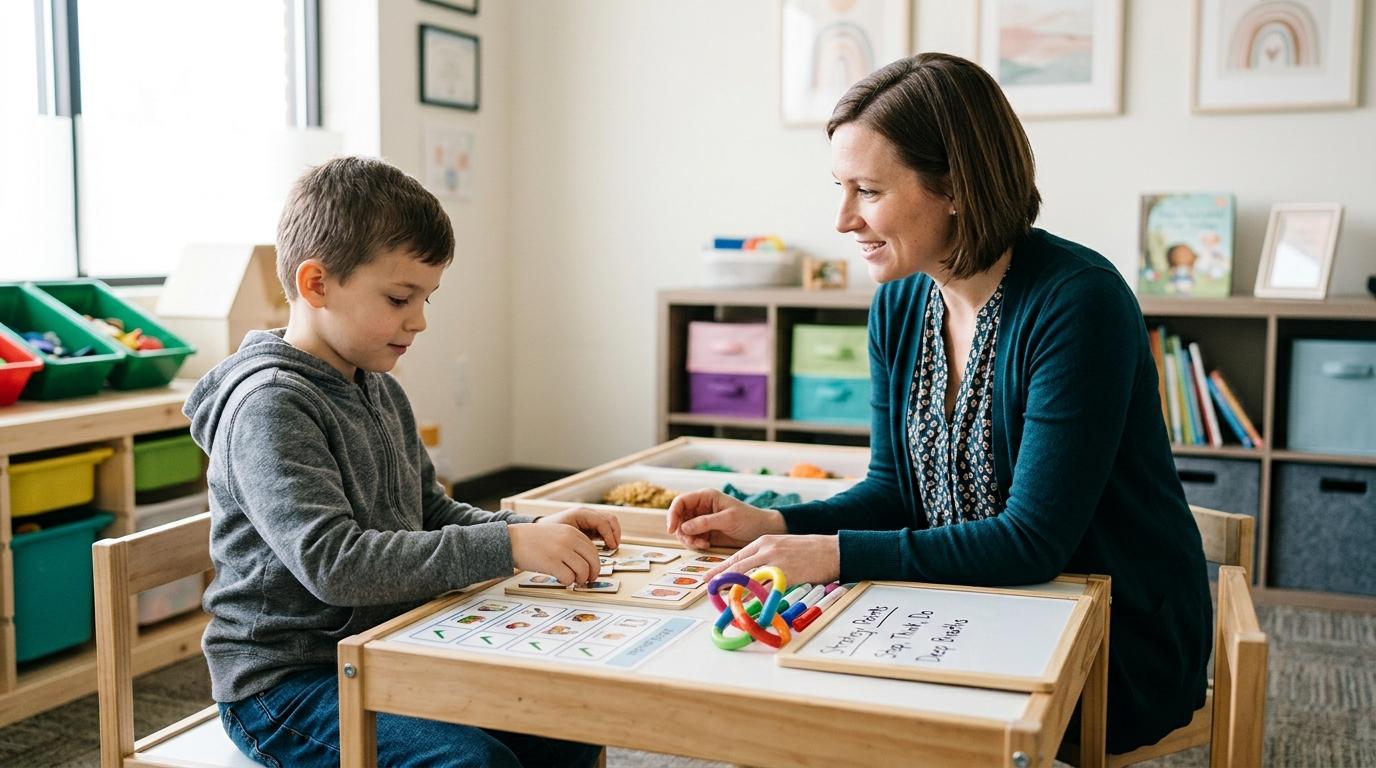
Your child forgets instructions, jumps from task to task, and struggles to sit still long enough to finish anything. Homework turns into a nightly battle, and teachers send home the same notes again and again. The frustration builds for everyone. ADHD therapy support replaces that chaos with structure, strategies, and skills that help your child focus, manage impulses, and succeed.
Understanding ADHD
ADHD affects attention, impulse control, and activity levels. It stems from how the brain regulates focus and self-control, not from laziness or poor parenting.
The presentation varies. Some children mainly struggle with attention, some with hyperactivity and impulsivity, and many with both.
Recognizing the pattern helps. Once you understand how ADHD shapes your child's behavior, the challenges start to make sense.
More Than Just Distraction
ADHD reaches beyond trouble focusing. It affects organization, time management, emotional regulation, and the ability to follow through.
These challenges touch every part of life. School, friendships, chores, and routines all demand skills that ADHD makes harder.
Therapy addresses this whole picture. Rather than targeting attention alone, it builds the broader skills your child needs to thrive.
Building Structure That Works
Children with ADHD thrive on structure. Clear routines reduce the mental load of deciding what comes next.
Visual supports help. Checklists, schedules, and timers turn vague expectations into concrete, manageable steps.
Keep routines consistent. Predictable patterns for mornings, homework, and bedtime cut down on conflict and forgotten tasks.
Strategies for Focus
Long tasks overwhelm a child with ADHD. Breaking work into short, defined chunks makes it approachable.
Built-in movement. Brief active breaks help the brain reset and return to a task with renewed focus.
Reduce distractions where possible. A clear workspace and a single task at a time give attention a fighting chance. Structured ADHD therapy support in Lahore equips families with strategies tailored to how their child actually learns.
Managing Impulsivity
Impulsivity drives many ADHD struggles. A child may blurt out answers, interrupt, or act before thinking.
Therapy teaches the pause. Children learn to recognize the urge and insert a brief stop before responding.
Practice makes this stick. Role-play and real situations train the brain to slow down when it matters most.
Supporting Emotional Regulation
Big emotions often accompany ADHD. Frustration can spike fast and feel hard to control.
Children learn to name and manage those feelings. Strategies like deep breathing and brief breaks help them regain control.
Calm responses from adults help too. When you stay steady during an emotional moment, you model the regulation your child is learning.
The Role of Parents
Parents anchor the whole system. Your consistency and encouragement shape how well strategies take hold.
Therapy coaches you directly. You learn to give clear instructions, praise effort, and follow through with calm consequences.
Pick your battles. Focusing on a few key behaviors prevents constant correction and keeps your relationship strong.
Partnering With School
ADHD shows up clearly at school. Coordination between home and classroom keeps support consistent.
Share what works. When teachers use the same strategies you use at home, your child receives a unified message.
Request accommodations when helpful. Small adjustments, like extra time or movement breaks, can transform a child's school day.
Celebrating Strengths
ADHD brings challenges, but it often pairs with real strengths. Many children show creativity, energy, and original thinking.
Notice and nurture those gifts. A child who feels capable handles the hard parts with more resilience.
Frame the conversation positively. When your child sees ADHD as a difference to manage rather than a flaw, confidence grows.
Measuring Progress
Change comes step by step. Expecting instant transformation only leads to frustration.
Watch for small wins. A completed assignment, a remembered chore, or a managed moment all signal real progress.
Adjust as you go. As skills develop, raise the bar gradually and keep the plan matched to your child's growth.
Sleep, Movement, and Daily Habits
Daily habits influence ADHD symptoms. Sleep, exercise, and nutrition all affect focus and mood.
Prioritize good sleep. A consistent bedtime routine improves attention and emotional control the next day.
Built in movement. Regular physical activity helps a child release energy and concentrate better afterward.
Managing Screen Time
Screens pull hard on a child with ADHD. Fast, stimulating content can make focusing elsewhere feel harder.
Set clear limits. Predictable rules around screens reduce conflict and protect attention.
Replace, do not just remove. Offering an engaging alternative makes limits far easier to keep.
Building Independence
The long-term goal is self-management. Children gradually take over the strategies adults once provided.
Hand over responsibility slowly. As a child masters a routine, let them own more of it.
Praise it. Recognizing independence motivates a child to keep building it.
Strengthening Self-Esteem
Frequent correction can wear on a child. Protecting self-esteem matters as much as managing behavior.
Balance correction with encouragement. Children who feel capable of handling challenges with more resilience.
Highlight progress. Reminding a child how far they have come fuels continued growth.
Moving Forward With Confidence
ADHD does not cap your child's potential. With the right tools, your child can focus, self-manage, and succeed.
Start with structure and one clear goal, then build from there. Each new skill makes the next one easier to reach.
Progress compounds over time. The strategies your child learns now will serve them through school, work, and life, turning daily struggle into steady, lasting growth.
- Managerial Effectiveness!
- Future and Predictions
- Motivatinal / Inspiring
- Fitness and Wellness
- Medical & Health
- Manufacturing
- Éducation
- Real-Estate
- Food Industry
- Hospitality
- Online Games
- Sports
- Home Services
- Civil Engineering
- Safety and Protection
- Software Products & Services
- Fashion and Jewellery
- Artificial Intelligence
- Entrepreneurship
- Mentoring & Guidance
- Marketing
- Networking
- HR & Recruiting
- Literature
- Shopping
- Career Management & Advancement