

 SkillClick
Plastic Recycling Plant Layout: How to Plan Factory Design, Machinery Placement and Material Flow for Efficient Operations
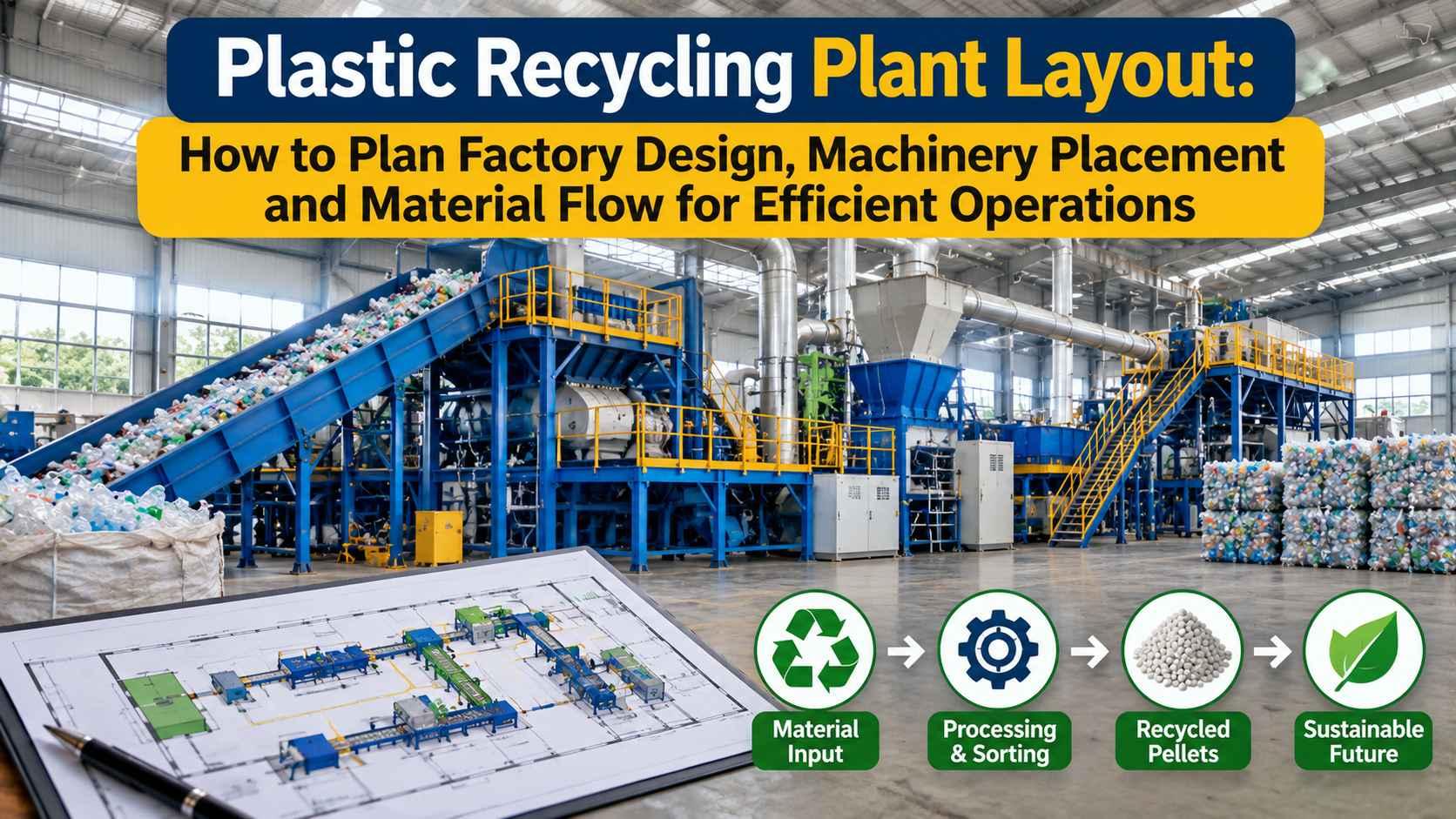
An efficient plastic recycling plant follows one-way material flow from receiving to dispatch, with wet and dry zones kept apart. For a 1,000 kg per hour line, plan a covered shed of 1,200 to 2,500 sq m on a plot of 1 to 2 acres, a connected load of 350 to 600 kW and make-up water of 0.3 to 0.8 cubic metres per tonne.
A recycling plant’s layout decides its throughput, yield and compliance record long before the first bale arrives. Civil work freezes the floor plan, so a wrong decision cannot be fixed later by buying better machines.
The pressure to get it right is rising. Under the Plastic Waste Management (Amendment) Rules, 2026, notified on 31 March 2026, rigid Category I packaging must carry 40% recycled content in 2026-27, rising to 60% from 2028-29. Recycled plastic must also meet IS 14534:2023 and carry recycled-content labelling, so a plant needs a quality laboratory and lot traceability built into its floor plan.
Good layouts begin inside a broader recycling plant setup and design plan, because land, utilities and approvals set the limits the floor plan must respect. In IMARC Engineering’s project framework, detailed engineering falls in months 4 to 6 of a 10 to 18 month programme, so layout must be settled before machinery orders and civil drawings are released.
What Is the Right Material Flow for a Plastic Recycling Plant?
Use a strict one-way flow so dirty and clean material never cross paths. The sequence below suits a mechanical HDPE or PET line:
-
Receiving and yard: a 40 to 60 tonne weighbridge, with bales held in segregated, covered bays that have fire separation.
-
Pre-sorting: a belt 800 to 1,200 mm wide moving at 0.2 to 0.4 metres per second, plus a near-infrared sorter of 1 to 3 tonnes per hour to eject polypropylene caps.
-
Size reduction: a 90 to 160 kW shredder with 60 to 120 mm screens, then a granulator producing 10 to 20 mm flake.
-
Wet zone: hot wash at 80 to 95 degrees Celsius for 15 to 30 minutes, friction washing, float-sink separation at 1.0 g/cm3 and rinsing.
-
Drying: centrifugal dewatering and a thermal dryer that brings moisture below 1%.
-
Dry zone: extrusion, melt filtration at 40 to 120 microns, degassing and pelletizing at 400 to 1,500 kg per hour.
-
Quality control, packing and dispatch: ideally at the opposite end of the site from receiving.
How Much Space and Capacity Should You Plan?
-
Footprint: a covered shed of 1,200 to 2,500 sq m and a plot of 1 to 2 acres, including yard, effluent plant and utilities. Across plastic recycling plants of all scales, land needs range from 1 to 5 acres.
-
Volumes: a 1,000 kg per hour line processes 200 to 250 tonnes a month on one shift and above 600 tonnes on three shifts.
-
Yield: baled post-consumer rigid HDPE converts to clean flake at 60% to 78%, and pelletizing loses another 2% to 5%. Size receiving and shredding for peak intake, not the average.
-
Availability: expect 65% to 75% on a three-shift basis once cleaning and blade changes are counted.
-
Pelletizing line: size it at 40% to 60% of washing throughput. It adds roughly 1.5 to 3 times the washing-line capital, so reserve floor space if you plan to add it later.
Which Machinery Placement Rules Protect Quality and Safety?
-
Separate wet and dry zones physically, and keep the extrusion hall at positive pressure relative to the wet zone.
-
Place magnetic and eddy current separators straight after size reduction, where contaminants are first freed.
-
Install dust collection at the shredder, granulator, dryer discharge and bagging station.
-
Enclose shredders and granulators acoustically. They often exceed 90 decibels, against typical consent limits of 75 decibels at the boundary, so keep them away from the site edge.
-
Slope wet-zone floors at about 1:100 to the drains, finish them in acid-resistant epoxy or ceramic and add kerbs around the hot wash and float-sink tanks.
-
Locate the effluent plant beside the wet zone so gravity drains stay short.
-
Store caustic in bunds sized at 110% of the largest tank, with eyewash stations at the dosing point.
How Should Utilities Shape the Layout?
-
Power: a 1,000 kg per hour line needs 350 to 600 kW connected load. Washing draws 45 to 70 kWh per tonne of input and extrusion with pelletizing 250 to 400 kWh per tonne of pellets.
-
Water: a closed-loop wash circuit circulates 1.5 to 3.0 cubic metres per tonne but consumes only 0.3 to 0.8 cubic metres as make-up. Recirculation of 70% to 85% is achievable with settling and filtration.
-
Steam: a boiler of 1 to 2 tonnes per hour, or electric heating, sited close to the hot wash to shorten pipe runs.
-
Spares: a dedicated store for about 90 days of critical spares, since screen changer parts and pelletizer knives have long lead times.
Why Is Fire Safety a Layout Decision?
Fire Rover logged 364 publicly reported fires at US and Canadian waste and recycling facilities from January to October 2026. Of these, 175 were at waste, paper and plastic sites in the year to date. Batteries and battery-embedded devices remain a primary cause, and mixed feedstock can hide them anywhere in a bale. Three layout choices reduce the risk:
-
Keep bale storage at a fire-separated distance from the process hall, in segregated bays.
-
Inspect and reject feedstock at receiving so ignition sources never reach the shredder.
-
Keep clear lanes for forklifts and fire tenders, and zone fire detection by area.
Which Layout Mistakes Should You Avoid?
-
Mixed wet and dry zones, which carry moisture into the extruder and cause bubbles and unstable melt.
-
Undersized storage. Set days of cover for feedstock, work in progress and finished goods from the start.
-
An oversized wash line behind an undersized effluent plant, which forces costly retrofits.
-
No expansion provision for a pelletizing line or a second wash train.
-
Ordering equipment before securing feedstock. Contract 60% to 80% of design-capacity feedstock before financial close.
How IMARC Engineering's Expertise Can Help in Plastic Recycling Plant Layout
-
Feedstock and contamination assessment to size each process zone
-
Plant layout and process flow design with wet and dry zoning
-
Utilities planning for power, water, steam and effluent treatment
-
Machinery selection and technical specifications aligned to the layout
-
Fire safety design and approval sequencing, from consents to commissioning
Talk to Our Experts About Your Requirements: https://www.imarcengineering.com/contact-us
Conclusion
A plastic recycling plant earns its returns on the floor plan. One-way flow, separated wet and dry zones, correctly sized utilities and built-in fire separation protect yield, quality and compliance as recycled-content targets rise toward 60%. Promoters who settle the layout before ordering machinery avoid retrofits, and those who reserve space for expansion can scale without disrupting operations once feedstock supply is proven, keeping the plant efficient, compliant and investment-ready.
Frequently Asked Questions
What is the ideal layout for a plastic recycling plant?
A one-way flow from receiving to sorting, size reduction, wet washing, drying, extrusion, pelletizing, quality control and dispatch, with wet and dry zones separated.
How much land does a 1,000 kg per hour plant need?
About 1 to 2 acres, including a 1,200 to 2,500 sq m covered shed, yard, effluent plant and utilities.
How much water does a recycling plant consume?
A closed-loop wash circuit circulates 1.5 to 3.0 cubic metres per tonne, with make-up water of 0.3 to 0.8 cubic metres per tonne.
Why separate wet and dry zones?
Moisture in the extrusion area causes steam, bubbles and defects, and it reduces degassing effectiveness.
Contact Us:
IMARC Engineering
Phone: +91-782-786-0593
Email: sales@imarcengineering.com
India: C-130, Sector 2, Noida, Uttar Pradesh 201301
LinkedIn: https://www.linkedin.com/showcase/imarc-engineering/
- Managerial Effectiveness!
- Future and Predictions
- Motivatinal / Inspiring
- Fitness and Wellness
- Medical & Health
- Manufacturing
- Education
- Real-Estate
- Food Industry
- Hospitality
- Online Games
- Sports
- Home Services
- Civil Engineering
- Safety and Protection
- Software Products & Services
- Fashion and Jewellery
- Artificial Intelligence
- Entrepreneurship
- Mentoring & Guidance
- Marketing
- Networking
- HR & Recruiting
- Literature
- Shopping
- Career Management & Advancement