

 SkillClick
Mobile App Development: A Complete Guide to Building Successful Business Applications
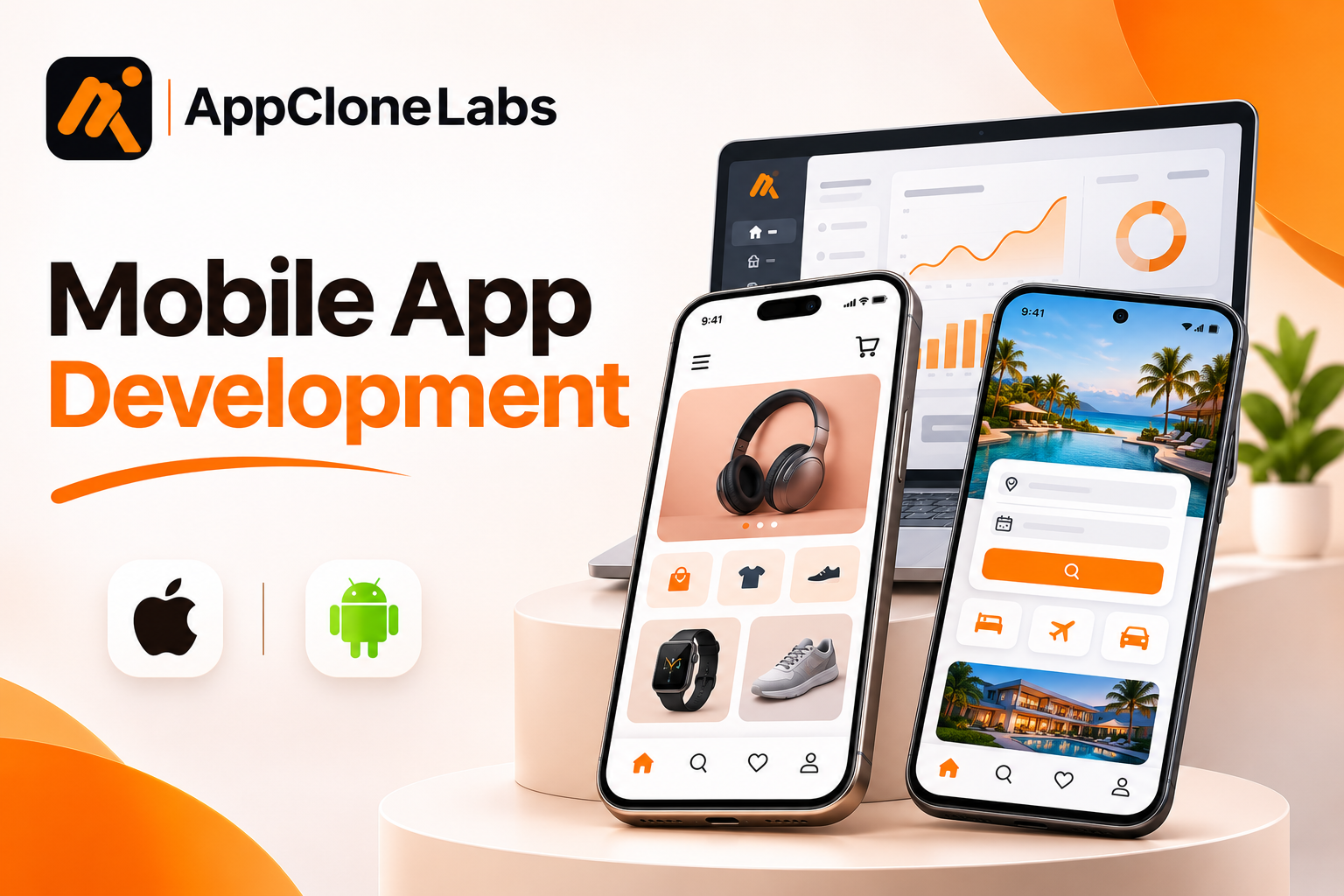
Introduction
Mobile applications have become an important part of how businesses connect with customers, manage operations and deliver digital services. From online shopping and food delivery to healthcare, financial services and entertainment, mobile applications provide convenient access to essential services.
However, building a successful mobile application requires more than an attractive interface. Businesses must consider customer expectations, software architecture, security, performance and long-term maintenance.
Mobile app development enables organizations to transform business ideas into functional digital products designed around specific user requirements.
Whether launching a startup or expanding an established business, choosing the right development strategy can help improve customer engagement, streamline operations and create new revenue opportunities.
What Is Mobile App Development?
Mobile app development is the process of designing, developing, testing and deploying software applications for smartphones, tablets and other supported mobile devices.
These applications can serve customers, employees, service providers and business administrators.
Modern mobile applications frequently connect with backend systems, databases, payment services and cloud infrastructure to deliver connected digital experiences.
Depending on their requirements, businesses can choose native development, cross-platform frameworks or progressive web applications.
The appropriate development approach depends on the target audience, technical requirements, available resources and future expansion plans.
Why Mobile App Development Is Important for Businesses
Improved Customer Engagement
Mobile applications provide businesses with a direct channel for connecting with customers.
Personalized recommendations, order updates, relevant notifications and convenient account access can encourage users to return regularly.
New Revenue Opportunities
Businesses can generate revenue through product sales, service bookings, premium memberships, subscriptions and other monetization features.
A well-designed application can simplify purchasing decisions and improve the overall transaction experience.
Operational Efficiency
Mobile applications can automate repetitive processes, improve communication and provide employees with access to important information while working remotely.
This is particularly useful for delivery businesses, logistics providers and field service organizations.
Stronger Brand Experience
A branded mobile application allows businesses to maintain consistent visual identities and customer interactions across their digital services.
Reliable functionality and intuitive navigation can contribute to stronger customer relationships.
Different Types of Mobile App Development
Native Mobile App Development
Native applications are developed specifically for an operating system.
iOS applications commonly use Swift, while Android applications frequently use Kotlin.
Native development provides direct access to platform-specific capabilities and can be particularly suitable for applications requiring advanced hardware integrations, complex animations or specialized device functionality.
Cross-Platform App Development
Cross-platform development allows teams to share significant portions of application code between iOS and Android.
Frameworks such as Flutter and React Native support this development approach.
Businesses can potentially reduce duplicated development work while maintaining separate testing and deployment procedures for each platform.
Hybrid App Development
Hybrid applications combine web technologies with native application containers.
Frameworks such as Ionic, alongside Capacitor, allow developers to integrate supported device functionality while reusing familiar web development technologies.
Progressive Web App Development
Progressive web applications provide app-like experiences through supported web browsers.
They can offer installation capabilities, offline functionality and notifications where supported without requiring conventional app marketplace distribution.
This approach can be suitable for businesses that do not require extensive native device integrations.
Essential Features of a Modern Mobile Application
Application functionality should reflect customer requirements and business objectives.
Common mobile app features include:
-
Secure registration and authentication.
-
Responsive and accessible user interfaces.
-
Push notifications and personalized alerts.
-
Payment gateway integration.
-
Real-time data synchronization.
-
Search and filtering capabilities.
-
Offline functionality where appropriate.
-
Customer support and communication tools.
-
Administrative dashboards.
-
Performance and engagement analytics.
Businesses should prioritize essential functionality during the initial development phase rather than introducing features without a clear purpose.
The Mobile App Development Process
1. Business Analysis and Project Planning
Development begins by understanding the target audience, business objectives and operational requirements.
Teams should identify essential user journeys, technical dependencies, available budgets and expected outcomes.
This phase also helps determine whether native, cross-platform or web-based development is the most appropriate choice.
2. UI/UX Design
Designers develop wireframes, application layouts and interactive prototypes.
The objective is to create intuitive navigation, accessible interfaces and consistent visual experiences across supported devices.
Testing prototypes with representative users can help identify usability problems before development begins.
3. Frontend and Backend Development
Developers implement application interfaces, business logic, authentication, database connections and third-party integrations.
The backend manages important processes such as account information, transactions, content storage and service communication.
A maintainable architecture helps businesses introduce future improvements without unnecessarily disrupting existing functionality.
4. Application Testing and Quality Assurance
Testing helps identify software defects, performance problems and security weaknesses.
Development teams should evaluate application behavior across different devices, operating systems and network conditions.
Testing should also include interrupted payments, unsuccessful requests, offline transitions and account recovery scenarios.
5. Application Deployment
After testing, applications can be prepared for Apple App Store and Google Play submission.
Businesses must provide accurate application descriptions, privacy disclosures and other required submission information.
Consulting the Apple App Review Guidelines and Google Play Console documentation during development can help teams prepare for distribution.
6. Maintenance and Performance Monitoring
Application development continues after the initial launch.
Regular updates, security improvements, performance monitoring and customer feedback help businesses maintain reliable digital experiences as technology and user requirements evolve.
Industries That Benefit From Mobile App Development
Mobile applications support a wide range of commercial and operational activities.
E-commerce: Product catalogs, shopping carts, digital payments and order tracking.
Healthcare: Appointment scheduling, patient communication and authorized medical information management.
Fintech: Digital wallets, investment platforms, financial transactions and expense management.
Food Delivery: Restaurant discovery, online ordering, delivery tracking and customer notifications.
Transportation and Logistics: Ride booking, fleet management, shipment tracking and driver communication.
Education: Online courses, learning resources, assessments and student dashboards.
Entertainment: Video streaming, creator memberships, subscriptions and premium content delivery.
Each industry requires different functionality, security controls and operational integrations.
What Influences Mobile App Development Costs?
Mobile application development costs vary according to project complexity and technical requirements.
Important cost factors include the number of user roles, custom interface designs, backend development, third-party integrations, offline capabilities and supported platforms.
Businesses should also consider recurring expenses associated with hosting, software maintenance, security updates and customer support.
Developing a minimum viable product can help entrepreneurs validate customer demand before committing to additional features and larger infrastructure investments.
How to Choose the Right Mobile App Development Company
An experienced development partner should understand both technical requirements and business objectives.
Businesses should evaluate development expertise, software ownership, communication practices, testing procedures and post-launch support arrangements.
AppCloneLabs mobile app development services cover platform selection, iOS and Android development, backend engineering, administrative dashboards and staged application releases.
The service also emphasizes source-code handover, client-controlled marketplace accounts and documented release procedures, with final deliverables and ownership arrangements defined by the project agreement.
Conclusion
Mobile app development provides businesses with opportunities to improve customer engagement, automate operations and establish new digital revenue channels.
By selecting suitable technologies, prioritizing user experience and investing in dependable infrastructure, organizations can create applications that support their long-term objectives.
Successful mobile application development requires thoughtful planning, comprehensive testing and continuous improvement.
Whether building a new startup application or modernizing an existing digital service, a well-planned development strategy can help businesses deliver meaningful customer experiences and support sustainable growth.
- Managerial Effectiveness!
- Future and Predictions
- Motivatinal / Inspiring
- Fitness and Wellness
- Medical & Health
- Manufacturing
- Education
- Real-Estate
- Food Industry
- Hospitality
- Online Games
- Sports
- Home Services
- Civil Engineering
- Safety and Protection
- Software Products & Services
- Fashion and Jewellery
- Artificial Intelligence
- Entrepreneurship
- Mentoring & Guidance
- Marketing
- Networking
- HR & Recruiting
- Literature
- Shopping
- Career Management & Advancement