

 SkillClick
A Complete Guide to Planning an On-Demand Restaurant App Development Project
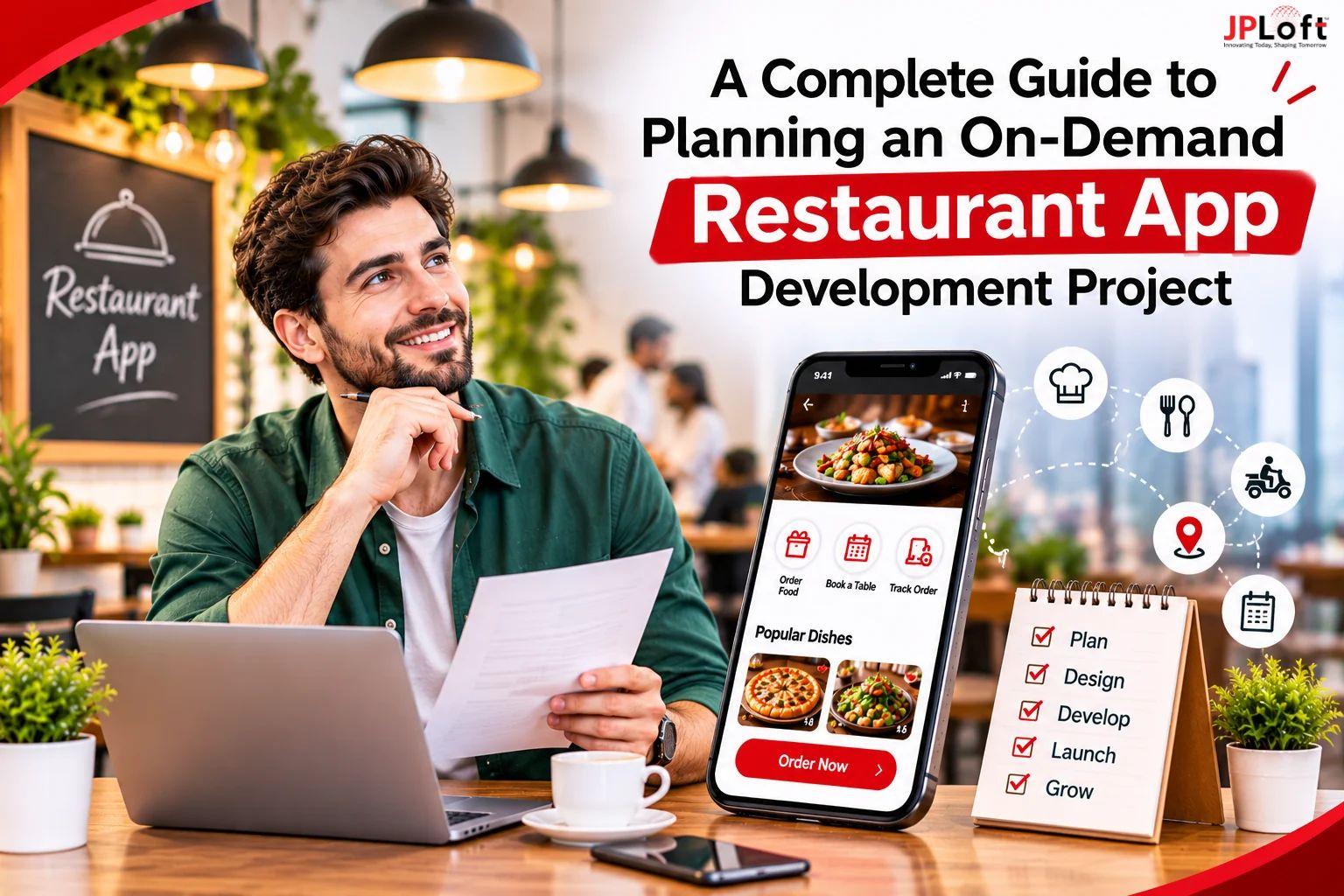
The food industry is changing as more customers prefer ordering meals through mobile applications instead of visiting restaurants or making phone calls. On-demand restaurant apps make it easier for customers to explore menus, place orders, make payments, and track deliveries from their smartphones. For businesses planning to enter this growing market, working with an experienced Restaurant app Development Company can help turn an idea into a functional digital platform.
However, building a successful restaurant app requires more than choosing features and designing screens. Businesses need to understand their target audience, business model, development budget, technology requirements, and operational processes before starting the project.
This guide explains how to plan an on-demand restaurant app development project, what features to include, how the development process works, and what businesses should consider before investing.
What Is an On-Demand Restaurant App?
An on-demand restaurant app is a mobile application that allows customers to order food from restaurants whenever they need it. Customers can browse menus, select dishes, customize their orders, make online payments, and receive delivery updates.
Depending on the business model, an application may connect customers directly with one restaurant or provide access to multiple restaurants through a single platform.
For example, a restaurant chain can develop its own ordering app, while an entrepreneur can build a marketplace where multiple restaurants list their menus and receive orders.
An on-demand restaurant platform generally connects three main user groups:
-
Customers: Browse restaurants, explore menus, place orders, and make payments.
-
Restaurants: Manage menus, receive orders, update preparation status, and monitor sales.
-
Delivery Partners: Accept delivery requests, collect orders, and deliver food to customers.
An admin panel is also required to manage users, restaurants, payments, commissions, orders, and platform activities.
Why Should Businesses Invest in On-Demand Restaurant App Development?
Customer expectations around food ordering are changing. People want convenient ordering options, flexible payment methods, accurate delivery updates, and quick access to their favorite restaurants.
An on-demand application can help businesses respond to these expectations while creating new opportunities for growth.
1. Growing Demand for Online Food Ordering
Customers increasingly use mobile devices to discover restaurants and order meals. A dedicated application gives businesses another way to reach customers and make their services accessible.
2. Convenient Ordering Experience
Customers can explore menus, customize dishes, select delivery addresses, and complete payments without contacting restaurant staff. This makes the ordering process more convenient.
3. Better Order Management
A centralized platform helps restaurants receive and manage orders digitally. It can reduce manual communication and make it easier to monitor order status.
4. Direct Customer Relationships
Restaurants with their own applications can communicate directly with customers through notifications, promotions, and loyalty programs. This can help businesses encourage repeat purchases.
5. Business Expansion Opportunities
A well-planned platform can support additional restaurants, delivery partners, service locations, and new features as the business grows.
Different Types of On-Demand Restaurant Apps
Before starting development, businesses should decide what type of application they want to build. The right model depends on the target audience, available resources, and business objectives.
1. Single-Restaurant App
This application is designed for an individual restaurant or restaurant chain. Customers can explore the restaurant's menu, place orders, make payments, and track deliveries.
It is suitable for businesses that want to build their own digital ordering channel and maintain direct customer relationships.
2. Multi-Restaurant Marketplace App
A multi-restaurant application allows customers to explore and order food from different restaurants through one platform.
The business owner manages the marketplace, while participating restaurants manage their menus and incoming orders.
This model is suitable for startups and entrepreneurs planning to build a food ordering marketplace.
3. Restaurant Chain App
Restaurant chains can develop a centralized application that connects multiple branches. Customers can select a preferred location, browse available items, and place orders.
The platform can also help management monitor orders and performance across different outlets.
4. Food Delivery Aggregator App
This model connects customers, restaurants, and delivery partners through a single platform. It generally includes restaurant discovery, order management, delivery assignment, payment processing, and tracking.
Businesses should choose the model that best matches their operational capacity and long-term goals.
Essential Features of an On-Demand Restaurant App
Features directly influence the usability, development cost, and overall performance of an application. Businesses should prioritize features that solve customer and operational problems instead of adding unnecessary functionality.
Here are the important features to consider.
Customer App Features
1. User Registration and Login
Customers should be able to create accounts using their email addresses, phone numbers, or supported social login options.
2. Restaurant Listing and Search
The application should allow customers to discover restaurants based on location, cuisine, ratings, availability, and other relevant filters.
3. Digital Menu
Customers should be able to view food images, item descriptions, prices, categories, and customization options.
4. Shopping Cart
A shopping cart allows customers to review selected dishes, change quantities, add instructions, and check the total amount before placing an order.
5. Secure Payment Options
The application should support suitable payment methods, such as debit cards, credit cards, digital wallets, and cash on delivery where available.
6. Real-Time Order Tracking
Customers should be able to view order progress, from restaurant confirmation and preparation to delivery.
7. Ratings and Reviews
Customers can share feedback about restaurants, food quality, and delivery experiences.
8. Push Notifications
Notifications can provide order updates, payment confirmations, special offers, and other important information.
Restaurant Panel Features
Restaurants need a separate dashboard or application to manage their daily activities.
Important features include:
-
Restaurant profile management.
-
Menu and food item management.
-
Order acceptance and rejection.
-
Food preparation status updates.
-
Pricing and availability management.
-
Sales and order reports.
-
Customer order history.
-
Promotion and discount management.
These tools help restaurant owners manage their participation on the platform.
Delivery Partner App Features
If the business provides delivery services, a dedicated delivery partner application can help coordinate the delivery process.
Some important features include:
-
Delivery partner registration.
-
Order assignment and acceptance.
-
Pickup and delivery information.
-
GPS-based navigation.
-
Delivery status updates.
-
Earnings and payment history.
-
Delivery notifications.
Admin Panel Features
The admin panel allows business owners to manage the complete platform from one place.
It should include:
-
Customer and restaurant management.
-
Delivery partner management.
-
Order monitoring.
-
Payment and commission management.
-
Offers and promotional campaigns.
-
Location and service area management.
-
Reports and analytics.
-
Support and complaint management.
The exact features should be finalized according to the selected business model.
Step-by-Step Process for Planning an On-Demand Restaurant App Development Project
A successful application begins with proper planning. Before approaching developers, businesses should understand the important stages of the project.
Step 1: Define Your Business Idea and Objectives
Start by identifying what you want to achieve through your application.
Are you planning to build an app for your own restaurant, a multi-restaurant marketplace, or a food delivery platform?
Your objectives may include:
-
Increasing online food orders.
-
Reaching customers in new locations.
-
Creating a restaurant marketplace.
-
Improving delivery management.
-
Reducing manual order processing.
-
Building a direct ordering channel.
Clearly defined objectives will help you make better decisions throughout the development process.
Step 2: Research Your Target Market
Market research helps you understand customer expectations and existing competition.
Study the food ordering services operating in your target location. Analyze their features, pricing, delivery options, customer reviews, and service limitations.
You should also identify:
-
Your target customer groups.
-
Popular cuisines and restaurant categories.
-
Customer ordering preferences.
-
Local competitors.
-
Delivery expectations.
-
Payment preferences.
This information can help you identify opportunities and build an application that addresses real market needs.
Step 3: Select the Right Business Model
Your business model determines how the application will operate and generate revenue.
Common revenue models include:
Commission-Based Model: The platform charges restaurants a percentage of each completed order.
Delivery Fee Model: Customers pay a delivery fee based on distance, location, or delivery conditions.
Subscription Model: Restaurants pay a recurring fee to access platform services or additional features.
Featured Listings: Restaurants pay to promote their profiles or appear in selected positions.
Advertising Model: The platform generates revenue by displaying sponsored restaurant promotions.
A business can use one or more revenue models depending on its market and operating strategy.
Step 4: Prepare the Feature List and Project Scope
Once the business model is finalized, prepare a list of features for each application panel.
For example, a multi-restaurant marketplace may require customer, restaurant, delivery partner, and admin interfaces.
Separate your requirements into two categories:
Essential Features: Functions needed to launch and operate the application, such as registration, menus, ordering, payments, and order management.
Advanced Features: Functions that can be introduced as the business grows, such as AI-powered recommendations, advanced analytics, automated promotions, and demand forecasting.
This approach helps control development complexity and prioritize the most important functionality.
Step 5: Choose the Right Technology
Technology selection affects application performance, scalability, security, and maintenance.
Your development team should select technologies based on the project requirements rather than choosing tools simply because they are popular.
Common technology considerations include:
-
Frontend Development: Technologies such as Flutter, React Native, Swift, or Kotlin may be considered depending on platform requirements.
-
Backend Development: Node.js, Python, Java, or other suitable technologies can support application logic and APIs.
-
Database: PostgreSQL, MySQL, or MongoDB may be selected depending on data structure and requirements.
-
Cloud Infrastructure: Cloud services can support application hosting, storage, and scaling.
-
Maps and Location Services: Mapping APIs can support location selection, delivery tracking, and navigation.
-
Payment Integration: Payment providers should be selected according to the target market and supported payment methods.
The final technology stack should be decided after evaluating performance, integration, security, and future expansion requirements.
Step 6: Design the UI/UX
The user interface should make the application easy to understand and navigate.
Customers should be able to find restaurants, explore menus, and complete orders without unnecessary steps.
During the design stage, focus on:
-
Simple navigation.
-
Clear restaurant listings.
-
Attractive food images.
-
Easy menu browsing.
-
Convenient checkout.
-
Readable order information.
-
Consistent design across screens.
You should also create separate user experiences for restaurant owners, delivery partners, and administrators based on their responsibilities.
Step 7: Start Development
Once the requirements and designs are approved, the development team begins building the application.
This stage generally includes frontend development, backend development, database setup, API integration, payment integration, and admin panel development.
Development can be divided into smaller milestones so that progress can be reviewed regularly.
Step 8: Test the Application
Testing helps identify problems before the application reaches customers.
Important testing areas include:
-
Login and registration.
-
Restaurant search and menu browsing.
-
Cart and checkout.
-
Payment processing.
-
Order notifications.
-
Delivery tracking.
-
Dashboard functionality.
-
Application performance.
-
Security and data protection.
-
Compatibility across supported devices.
Testing should also cover situations such as cancelled orders, failed payments, unavailable menu items, and delivery delays.
Step 9: Launch the Application
After testing and approval, prepare the application for release.
This includes app store requirements, application information, screenshots, privacy documentation, backend deployment, and production configuration.
Before launch, make sure the restaurant listings, menus, payment methods, service areas, and support processes are ready.
Step 10: Maintain and Improve the App
Application development continues after launch.
Monitor user feedback, technical performance, order activity, and customer behaviour to identify areas for improvement.
Regular maintenance may include bug fixes, security updates, new integrations, performance optimization, and feature improvements.
How Much Does It Cost to Develop an On-Demand Restaurant App?
The cost of developing an on-demand restaurant app depends on the application's complexity and business requirements. There is no single price that applies to every project.
A basic single-restaurant application generally requires fewer resources than a multi-restaurant marketplace with separate customer, restaurant, delivery, and admin panels.
Some major factors that influence development costs include:
1. Number of Application Panels
A platform with customer, restaurant, delivery partner, and admin interfaces requires more development work than a basic customer ordering app.
2. Features and Functionality
Advanced features such as live tracking, loyalty programs, AI recommendations, and detailed analytics can increase development complexity.
3. UI/UX Design
Custom designs, animations, and complex user journeys may require additional design and development resources.
4. Technology Selection
Native Android and iOS development, cross-platform development, backend technologies, and infrastructure choices can affect the total budget.
5. Third-Party Integrations
Payment gateways, mapping services, POS systems, notification services, and delivery APIs may involve integration and recurring usage costs.
6. Development Team and Location
The team's experience, project management process, development location, and engagement model can also influence the overall investment.
7. Maintenance and Support
Businesses should budget for hosting, technical support, security updates, and future improvements after launch.
For an accurate estimate, prepare a detailed requirement document and discuss the project scope with a development company.
Common Challenges in On-Demand Restaurant App Development
Planning for potential challenges can help businesses avoid operational problems after launch.
1. Managing Multiple Restaurants
In a marketplace model, different restaurants may have different menus, prices, preparation times, and operating hours.
The platform should provide proper restaurant management tools to handle these differences.
2. Handling High Order Volumes
During lunch, dinner, weekends, and promotional campaigns, order volumes may increase significantly.
The backend infrastructure should be designed to handle expected traffic and support future growth.
3. Maintaining Accurate Delivery Information
Customers expect accurate order and delivery updates. Delays in location information or status updates can affect their experience.
Integration with reliable mapping and tracking services can help improve delivery visibility.
4. Managing Payments and Refunds
Failed transactions, cancellations, partial refunds, and payment disputes require clear processes.
Businesses should plan payment workflows and communicate refund policies properly.
5. Maintaining Food and Service Quality
A digital platform cannot guarantee food quality or delivery performance on its own. Restaurants and delivery partners must follow appropriate operational standards.
Customer feedback and service monitoring can help identify recurring problems.
6. Protecting Customer Data
The application may process personal information, addresses, and payment-related data.
Businesses should implement suitable security measures and follow applicable data protection requirements in their operating markets.
Advanced Technologies That Can Improve Restaurant Apps
Modern technologies can make restaurant applications more useful when they solve specific business problems.
Artificial Intelligence
AI can analyze customer preferences and ordering history to provide personalized food recommendations. It can also support customer service and help businesses analyze demand patterns.
GPS and Location-Based Services
GPS technology can help customers select delivery locations and allow delivery partners to navigate to pickup and drop-off points.
Cloud Computing
Cloud infrastructure can support application availability, data storage, and scaling as the number of customers and orders increases.
Data Analytics
Analytics tools can help restaurant owners understand popular dishes, sales trends, customer behaviour, and operational performance.
Chatbots
Chatbots can answer common questions about menus, delivery status, opening hours, and order-related issues. More complex requests should have an option for human support.
These technologies should be introduced according to business needs and available resources.
How to Choose the Right On-Demand Restaurant App Development Company?
Choosing the right development partner can have a major impact on the quality and success of your project.
When evaluating an On Demand Restaurant app Development Company, consider the following factors:
1. Industry Experience: Look for experience in restaurant applications, food ordering platforms, or delivery management solutions.
2. Portfolio and Previous Projects: Review the company's completed applications to understand its design and technical capabilities.
3. Technical Expertise: Check whether the team can handle mobile development, backend systems, APIs, payment integrations, and cloud infrastructure.
4. Customization Capabilities: Your application should support your business model rather than forcing you to follow a standard template.
5. Communication and Transparency: The development company should explain project progress, timelines, costs, and technical decisions clearly.
6. Testing and Quality Assurance: Ask about the testing process and how the team handles bugs and performance issues.
7. Post-Launch Support: Confirm whether maintenance, updates, and technical assistance are included in the engagement.
JPLoft is one option businesses can consider when exploring custom mobile app development solutions. Before selecting any partner, discuss your requirements, review relevant work, and compare the proposed scope and deliverables.
Final Thoughts
Planning an on-demand restaurant app development project requires a clear understanding of your business model, target audience, features, technology, and budget.
Whether you are building an application for a single restaurant or creating a multi-restaurant marketplace, the focus should remain on providing a convenient customer experience and supporting efficient restaurant operations.
Start by defining your business goals, researching your target market, and prioritizing essential features. Then choose suitable technologies and work with an experienced development partner to turn your requirements into a reliable application.
A well-planned restaurant app can become an important digital channel for customer engagement, online ordering, and long-term business growth.
- Managerial Effectiveness!
- Future and Predictions
- Motivatinal / Inspiring
- Fitness and Wellness
- Medical & Health
- Manufacturing
- Education
- Real-Estate
- Food Industry
- Hospitality
- Online Games
- Sports
- Home Services
- Civil Engineering
- Safety and Protection
- Software Products & Services
- Fashion and Jewellery
- Artificial Intelligence
- Entrepreneurship
- Mentoring & Guidance
- Marketing
- Networking
- HR & Recruiting
- Literature
- Shopping
- Career Management & Advancement