

 SkillClick
Are Distress Sales in Dubai Really Cheaper? How to Check Before You Buy
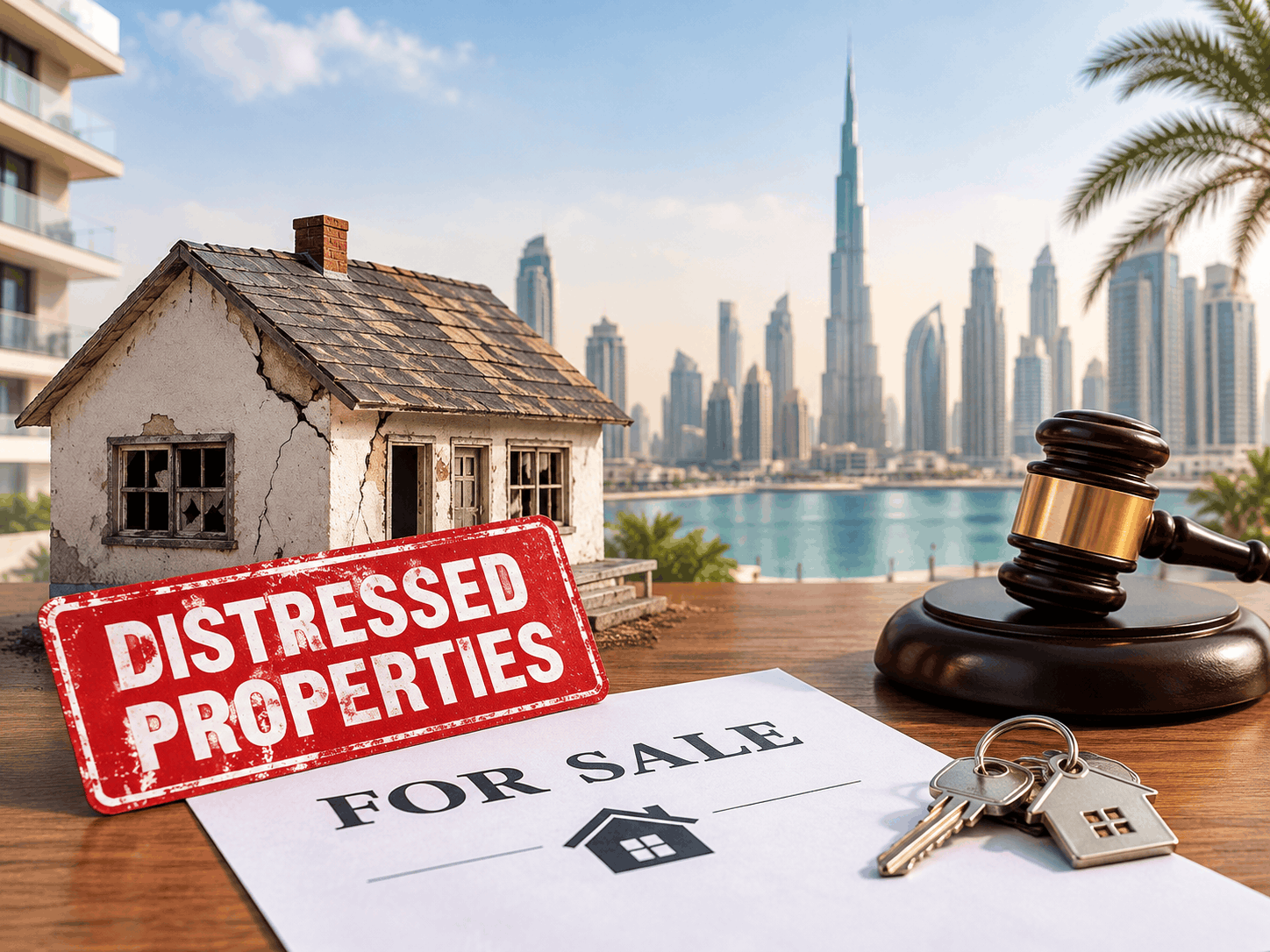
Listings that say "urgent sale," "motivated seller," or "below market" attract plenty of attention. The promise is simple: buy a distress sale property in Dubai and pay less than everyone else. The reality is more mixed. Some distress deals are genuinely good value. Others are normal listings with exciting wording, and a few carry costs or legal problems that cancel out the discount.
This guide explains how to tell the difference. It is written by the team at Takween AlDar, a RERA-approved real estate agency in Dubai with more than 12 years of experience. We sell property, so we have an interest in this topic. We have tried to show our reasoning, flag where the evidence is weak, and give you checks you can run yourself, whether or not you use us.
The Short Answer
Sometimes, but not automatically. A distress sale is defined by the seller's situation, not by a guaranteed discount. Whether it is cheaper depends on what you compare it against, and the only reliable comparison is recent registered sale prices in the same building, not other asking prices.
What "Distress Sale" Actually Means in Dubai
The term sounds official, but it is not. There is no legal definition or DLD classification for a distress sale. The term describes the seller's circumstances, such as relocation, portfolio exit, off-plan handover, or a personal event, and the resulting pricing.
Distress can take several forms:
-
Owner-led urgency. The owner needs to sell quickly because of relocation, finances, or a personal event.
-
Investor-led resales. Engel & Völkers says distressed property for sale in Dubai more commonly comes from investor resales, especially in areas with many off-plan owners, where sellers may accept below-market pricing to close fast.
-
Bank sales. If a mortgaged owner defaults and the bank forecloses, the property can be sold, sometimes below market price, to recover the loan.
-
Off-plan assignments. The buyer steps into the original purchase agreement, sometimes at a discount to what has been paid in or below the current market rate for the project.
Legally, distress sales are standard private sales processed through normal DLD-regulated channels, and foreign nationals can buy in designated freehold areas. That means the process is not more complicated, but it does not mean the deal is safer either.
How Much Cheaper Are Distress Sales Claimed to Be?
You will see ranges quoted online. One developer's guide says distressed property is typically priced 10 to 35% below market value. Another source says 10% to 30%, depending on urgency and market conditions.
Treat these numbers with caution. They come from sellers and agencies, they are not based on a published dataset, and no single figure fits every building. Two more points matter:
-
Genuine bargains are not common. Engel & Völkers notes that genuine discounts are often limited and move quickly, and that distress is more common in declining markets. In stronger cycles, below-market opportunities are less frequent and get absorbed fast.
-
The label is not proof. Not every listing marked "urgent sale" is below market value, so buyers should check pricing against recent transaction data rather than marketing language.
Why a "Discount" Can Be Misleading
The biggest trap is comparing a distress price against the wrong benchmark. Portals show what sellers hope to get, not what buyers have paid. One broker quoted by Gulf News notes that what you see on property portals is the advertised price, and that the transactional price is always lower. One analysis estimates asking prices in Dubai typically run 5 to 12% above final transaction values. That figure comes from a single agency's review, so treat it as a rough guide rather than a rule.
The practical result: a unit advertised 8% below other listings may simply be priced at the true market level. The seller is not in distress and you are not getting a bargain. You are paying a normal price that looks cheap next to inflated asking prices.
A Simple Illustration
The numbers below are made up to show the method. They are not real listings or a forecast.
|
Item |
Amount (AED) |
|
Distress listing price |
1,000,000 |
|
Other asking prices for similar units in the building |
1,080,000 |
|
Recent registered sales for similar units |
1,000,000 to 1,030,000 |
|
Apparent discount against asking prices |
about 7.4% |
|
Real discount against recent sales |
0% to 3% |
The listing looks like a clear bargain next to other asking prices. Against what buyers actually paid, it is roughly in line with the market. Add unpaid service charges or repair costs, and the deal could be worse than a normal purchase. That is why the check below matters.
How to Check a Distress Sale Before You Buy
1. Compare against registered sales, not asking prices
DLD data reflects registered transactions rather than only advertised prices, so use it to check recent sales in the same area, building, and property type. Compare units of similar size, floor, view, and condition. If listings sit well above recent transactions, the market may be optimistic. If sellers are discounting heavily, you may have room to negotiate. Your agent should show you the comparable sales in writing.
2. Verify ownership and look for encumbrances
Use Dubai REST to verify the seller's ownership and check for mortgages, liens, or disputes on the specific unit. Confirm the owner name, project, unit number, size, and any encumbrance entries. The check can show whether a title deed is valid, mortgaged, restrained, blocked, or invalid. Verification through Dubai REST is generally free.
3. Ask about service charges and other arrears
An attractively priced property may come with outstanding service charges, unpaid utility bills, or mortgage encumbrances. Ask for a service charge statement and a clearance confirmation. Budget for any arrears that transfer to you.
4. Settle the mortgage position
If the seller has a mortgage, the loan must be settled at transfer. Liens and encumbrances are legal claims against the property that affect its title. Make sure the bank's settlement, the developer NOC, and the transfer are lined up in one process so your money is not at risk.
5. For off-plan assignments, check the paperwork twice
There is no title deed until handover on an off-plan unit, so you validate the Oqood registration instead. When buying an assignment, confirm the original SPA is registered, that the developer has granted assignment approval, and that Oqood reflects the most recent buyer before you pay any funds. Delayed project handover is also a recognised risk in off-plan cases.
6. Inspect the condition and the income
Visit the property, check maintenance, and ask for the tenancy contract if it is rented. If you plan to rent it out, compare the expected rent with DLD's data. Smart investors use the DLD Rental Index to compare current rent against property prices to estimate rental yield.
7. Count the full cost
A cheaper price is only part of the picture. Buyers should budget approximately 7-8% of the property value in fees on top of the purchase price, including the Dubai Land Department fee, title deed issuance, agency fee, trustee fee, NOC fee, and mortgage-related fees where applicable. Add any repairs, arrears, and a vacancy allowance if you are buying to let.
Signs a Deal Deserves a Second Look
Common signals of a motivated seller include repeated price reductions in a short period, "motivated seller" or "urgent sale" wording, and vacant properties listed for a long time. These can point to opportunity, but they can also point to a property with a problem. Be cautious if:
-
The seller will not share the title deed number or let you verify ownership.
-
You are pressured to pay a deposit before checks are complete.
-
The price is far below recent sales with no clear explanation.
-
Payments are requested to a personal account instead of a regulated channel.
-
Documents do not match the Dubai REST record.
Where Buyers Look for Distress Deals
Distressed properties may appear through specialised brokers, bank listings, property auctions, and major platforms such as dubizzle. Each route has its own process and risk, so ask how the sale works and who handles the transfer before you commit.
Who Distress Deals Suit, and Who Should Skip Them
A distress sale property in Dubai can suit buyers who:
-
Can move quickly and have finance or cash ready.
-
Are comfortable doing due diligence, or have an agent and conveyancer who will.
-
Can absorb repairs or a longer letting period.
It may not suit buyers who need certainty, want a fully renovated property, or cannot afford surprise costs. If a deal only works at the full advertised discount, it probably carries too little margin for error.
How Takween AlDar Can Help
At Takween AlDar, we help buyers and investors assess below-market listings in Dubai. We compare the asking price with recent registered sales, check the title and any encumbrances, review service charges and mortgage settlement, and explain the full cost of the deal. We also tell clients when a "distress" listing is really a normal price, and when walking away is the better choice.
You can browse our properties for sale, read our buyers guide, or contact our team for a free consultation. If you are considering a distress sale property in Dubai, we are happy to give you an independent view on any listing, including one you found elsewhere.
Frequently Asked Questions
Q: Are distress sales in Dubai really cheaper?
A: Sometimes. A distress sale is defined by the seller's situation, not by a guaranteed discount. Claimed discounts of 10% to 35% come from agencies and are not based on a published dataset. The only reliable test is to compare the price against recent registered sales for similar units in the same building.
Q: What is a distress sale property in Dubai?
A: It is a property sold by an owner who needs to sell quickly, often priced below what it might achieve under normal conditions. There is no legal definition or official DLD classification. Causes include relocation, financial pressure, portfolio exits, bank sales, and off-plan resales.
Q: How can I check if a distress sale price is genuinely below market?
A: Compare it with registered sales in the same building, not with other asking prices. DLD data shows recorded transactions, while portals show advertised prices. Ask your agent for recent comparable sales in writing.
Q: What are the main risks of buying a distress sale property in Dubai?
A: Common risks include outstanding service charges, unpaid utility bills, mortgages or liens on the title, property condition issues, and, for off-plan units, delayed handover or incorrect assignment paperwork. Proper due diligence reduces these risks.
Q: Can foreigners buy distress sale property in Dubai?
A: Yes. Foreign nationals can buy in designated freehold areas, and distress sales follow the same DLD-regulated process as other resale transactions. Work with a RERA-registered agent and verify the title or Oqood record before paying any deposit.
Q: How do I verify a title deed or off-plan registration in Dubai?
A: For completed units, use the Dubai REST app or the DLD website to check the owner, unit details, and any encumbrances. For off-plan units, verify the Oqood registration, the original SPA, and the developer's assignment approval before you pay.
Q: What costs should I budget for besides the purchase price?
A: Plan for roughly 7-8% of the property value in buying costs, including the Dubai Land Department fee, title deed issuance, agency fee, trustee fee, and NOC fee, plus mortgage fees if you are financing. Also allow for repairs, service charge arrears, and any vacancy if you plan to rent it out.
Conclusion
Distress sales can offer real value, but the label alone proves nothing. The key is to compare the price with registered sales, verify the title and encumbrances, uncover hidden costs, and calculate your full outlay before you commit. If the numbers still work after those checks, you have likely found a genuine opportunity. If they do not, walking away is a good result too.
If you would like help assessing a distress sale property in Dubai, Takween AlDar is ready to help.
- Managerial Effectiveness!
- Future and Predictions
- Motivatinal / Inspiring
- Fitness and Wellness
- Medical & Health
- Manufacturing
- Education
- Real-Estate
- Food Industry
- Hospitality
- Online Games
- Sports
- Home Services
- Civil Engineering
- Safety and Protection
- Software Products & Services
- Fashion and Jewellery
- Artificial Intelligence
- Entrepreneurship
- Mentoring & Guidance
- Marketing
- Networking
- HR & Recruiting
- Literature
- Shopping
- Career Management & Advancement