

 SkillClick
Why French Investors Should Consider Dubai in 2026: Business, Lifestyle and Real Estate Opportunities
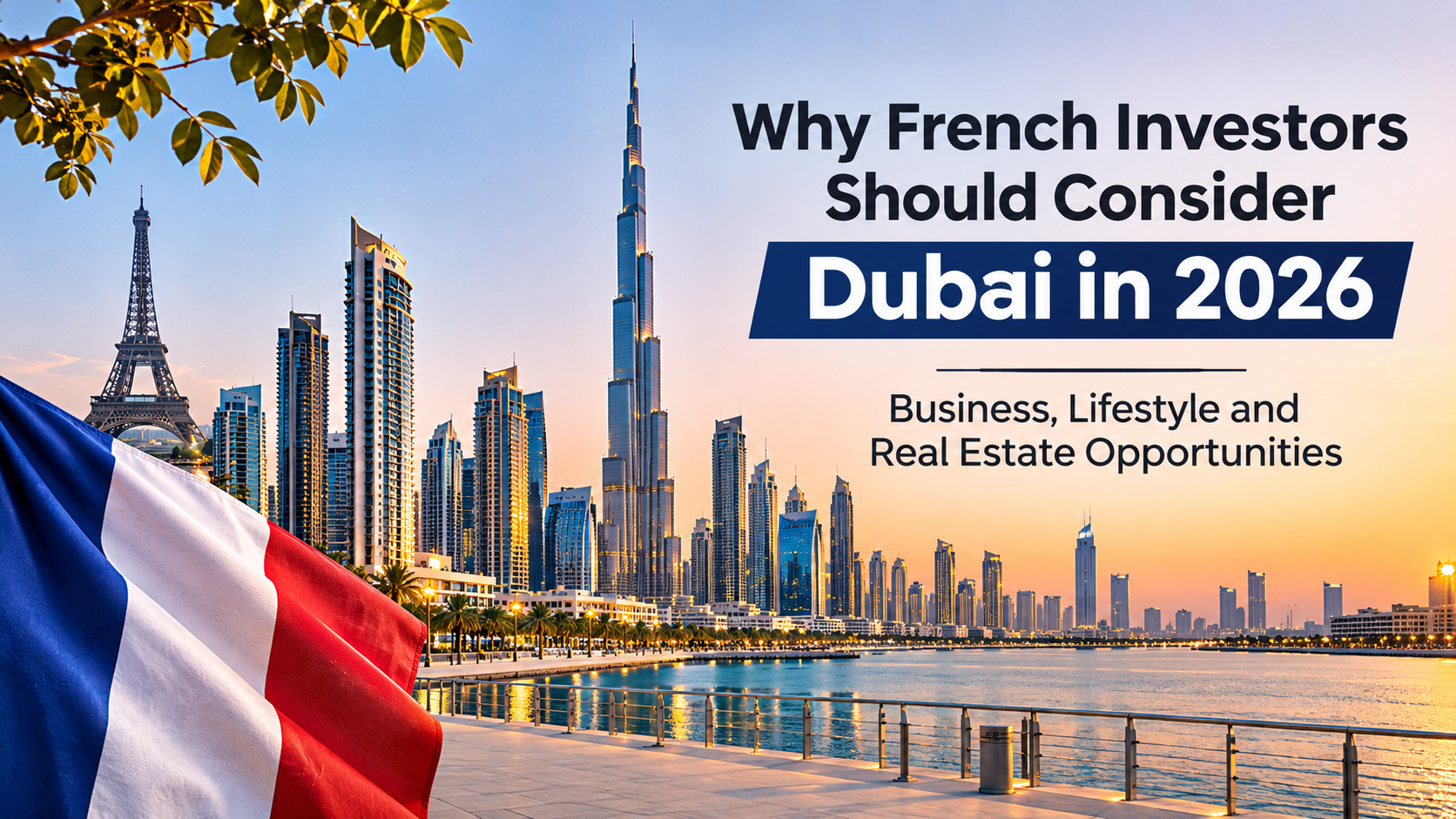
For French investors looking to expand their international exposure, Dubai presents an interesting destination where business opportunities, global connectivity and modern residential living come together.
France has a developed investment environment spanning property, finance, technology, luxury goods and entrepreneurship. Yet some investors also explore international markets to diversify their assets, establish overseas business relationships or evaluate lifestyle opportunities beyond Europe.
Dubai offers several characteristics that make it relevant to that discussion.
With its strategic location, multicultural business environment, growing economic activity and residential developments, the city provides more than one avenue for international investors.
Here are seven reasons why French investors may consider Dubai in 2026.
1. Dubai Connects Investors to Multiple International Markets
Dubai's location between Europe, Asia and Africa makes it a practical base for international commercial activity.
French entrepreneurs involved in consulting, professional services, technology, hospitality or international trade may find opportunities to develop relationships across the Middle East and surrounding regions.
The city's aviation infrastructure and international business networks support commercial travel and cross-border operations.
For businesses looking to serve customers outside France, Dubai may offer a useful regional presence.
However, opening an office or establishing a company should follow proper market research.
Investors need to examine local customer demand, licensing costs, competition and regulatory requirements before selecting a business structure.
Geographic convenience is an advantage, but it does not guarantee business performance.
2. Economic Diversity Creates Different Investment Possibilities
Dubai has developed economic activity across industries including tourism, trade, technology, logistics, financial services, retail and real estate.
This means French investors can investigate several sectors rather than treating Dubai solely as a property market.
A hospitality entrepreneur may be interested in tourism-related services, while a technology investor may research digital businesses and regional partnerships.
Others may prefer tangible assets such as residential property.
The UAE's investment policies also support foreign participation in numerous commercial activities, subject to applicable licensing and ownership rules.
The key is to identify the sector that matches the investor's experience and financial goals.
Economic diversification can create opportunities, but individual investments remain exposed to competition and changing market conditions.
3. International Diversification Beyond France
Investing outside one's home country can form part of a broader portfolio strategy.
French investors may already hold European property, equities, funds or interests in domestic companies.
Adding international exposure can introduce different economic and currency characteristics.
Dubai may therefore appeal to investors interested in studying markets beyond France and the European Union.
However, foreign investment involves additional considerations.
The UAE dirham is linked to the US dollar, so euro-based investors face exchange-rate exposure when converting funds or assessing returns.
Investors must also consider local market conditions, transaction costs and how easily they could sell an asset if their circumstances change.
Dubai should be evaluated as one possible component of diversification, not as a replacement for prudent portfolio planning.
4. An International Environment for Entrepreneurs and Professionals
One of Dubai's distinctive characteristics is its multinational professional community.
The city attracts companies, entrepreneurs and workers from a wide range of industries and countries.
For French professionals planning an international business presence, this can provide opportunities to establish commercial relationships and work with customers from different markets.
The UAE also offers multiple business establishment routes, including mainland and free-zone options.
These structures are not interchangeable.
An entrepreneur should investigate permitted activities, administrative expenses, operating conditions and corporate tax obligations before proceeding.
For investors who value business development alongside international mobility, Dubai's commercial environment may be an important attraction.
5. Lifestyle, Connectivity and Residential Choice
Investment decisions are sometimes connected to lifestyle.
A French investor exploring overseas opportunities may also consider whether a destination would be suitable for occasional visits, professional relocation or longer-term living.
Dubai offers an extensive selection of residential communities, hospitality facilities, restaurants, schools and leisure destinations.
Its international airport connections are relevant to people travelling frequently between Europe and other regions.
The city's residential market also provides different choices.
Some buyers prefer central locations close to employment districts, while others are interested in community-oriented neighbourhoods with parks and recreational facilities.
Areas such as Jumeirah Village Circle offer apartment developments with varied layouts and amenity concepts.
However, buyers should assess actual commuting requirements, community services, living costs and individual preferences before selecting a location.
6. Residency Pathways for Qualifying International Investors
Residency can be an additional consideration when exploring investments outside France.
The UAE offers different residency pathways for qualifying individuals, including certain investors and entrepreneurs.
For Dubai property investors, official services identify a minimum property value of AED 2 million for relevant Golden Visa applications, along with further eligibility requirements.
Different official residency services may describe different permit durations and application conditions. Applicants should therefore confirm the current route with the responsible UAE authority rather than relying on promotional information.
Most importantly, purchasing a property does not automatically guarantee residency approval.
French citizens should also distinguish immigration residency from tax residency.
Moving abroad, obtaining a UAE residence permit or purchasing Dubai property does not automatically eliminate French tax obligations.
7. Dubai Real Estate Offers Opportunities to Explore Modern Residential Assets
Residential property is one of the investment categories that may interest French buyers.
Dubai permits eligible foreign ownership in designated freehold areas, enabling overseas investors to consider apartments and other qualifying properties.
The market includes completed residential buildings and off-plan developments at different price levels.
For investors interested in long-term ownership, residential property offers a tangible asset that can potentially serve personal accommodation or rental purposes.
However, performance depends on factors such as market demand, purchase price, construction quality, service charges, maintenance and future competing supply.
There is no guarantee of rental income or appreciation.
Exploring Italian-Inspired Residential Living in JVC
MAK I’Sola Bella by MAK Developers provides an example of a lifestyle-oriented residential concept in Dubai.
Located in Jumeirah Village Circle, the development features 204 residences and more than 45 planned amenities across dedicated recreational levels.
Inspired by the Italian island of Isola Bella, the project incorporates resort-style facilities, including an island-inspired swimming pool with a real-sand beach, rooftop infinity pool, outdoor cinema and leisure spaces.
Its design reflects the combination of European-inspired aesthetics and contemporary Dubai residential living.
French investors researching luxury apartments in JVC Dubai at MAK I’Sola Bella can explore the development's apartment configurations, amenities and location.
As with any off-plan property, buyers should verify current pricing, project documentation, payment obligations and expected handover information.
What French Investors Should Know About Tax and Financial Planning
French investors should assess overseas opportunities with particular attention to their tax position.
French tax residents generally have obligations relating to income received from abroad, subject to applicable double-taxation agreements and individual circumstances.
For overseas property, relevant issues may include rental-income reporting, asset ownership, capital gains and France's rules concerning real estate wealth.
The France–UAE tax treaty may affect how particular income or assets are treated, but the outcome depends on the investor's situation.
Holding a property in Dubai should not be interpreted as a guarantee of exemption from French taxation.
Currency conversion between euros and dirhams, financing conditions and property-management expenses should also be included in any investment assessment.
Consulting appropriately qualified French and UAE tax advisers can help investors understand their obligations before committing capital.
Is Dubai Suitable for Every French Investor?
Not necessarily.
Dubai may be relevant to investors seeking international exposure, business connections or residential assets outside Europe.
However, the suitability of an investment depends on the investor's circumstances.
Someone prioritizing predictable liquidity may have different requirements from an entrepreneur seeking regional market access or an individual purchasing a second home.
Investors should compare alternatives, evaluate risks and avoid making decisions based solely on headline growth statistics or advertised rental yields.
The strongest investment rationale is one supported by realistic costs, an appropriate holding period and a clear financial objective.
Final Thoughts
Dubai's international connectivity, diversified economy, entrepreneurial environment and residential market make it a destination worth examining for French investors in 2026.
The city offers opportunities across several sectors, including business development and real estate.
But successful international investing requires more than choosing an attractive destination.
Careful market research, tax planning, financial discipline and a clear understanding of local regulations remain essential.
For French investors interested in exploring opportunities beyond Europe, Dubai offers a market that deserves informed consideration.
Discover Dubai Residential Opportunities with MAK Developers
Exploring residential real estate in Dubai as part of your international investment research?
Explore MAK I’Sola Bella by MAK Developers in Jumeirah Village Circle to discover Italian-inspired apartment living, contemporary layouts and planned lifestyle amenities.
You can also visit MAK Developers – Dubai Residential Property Developer to learn more about the company's residential projects.
Contact the developer for current availability, specifications and purchase information before making an investment decision.
- Managerial Effectiveness!
- Future and Predictions
- Motivatinal / Inspiring
- Fitness and Wellness
- Medical & Health
- Manufacturing
- Education
- Real-Estate
- Food Industry
- Hospitality
- Online Games
- Sports
- Home Services
- Civil Engineering
- Safety and Protection
- Software Products & Services
- Fashion and Jewellery
- Artificial Intelligence
- Entrepreneurship
- Mentoring & Guidance
- Marketing
- Networking
- HR & Recruiting
- Literature
- Shopping
- Career Management & Advancement