

 SkillClick
How Can Businesses Keep Office Carpets Clean Without Disrupting Daily Operations?
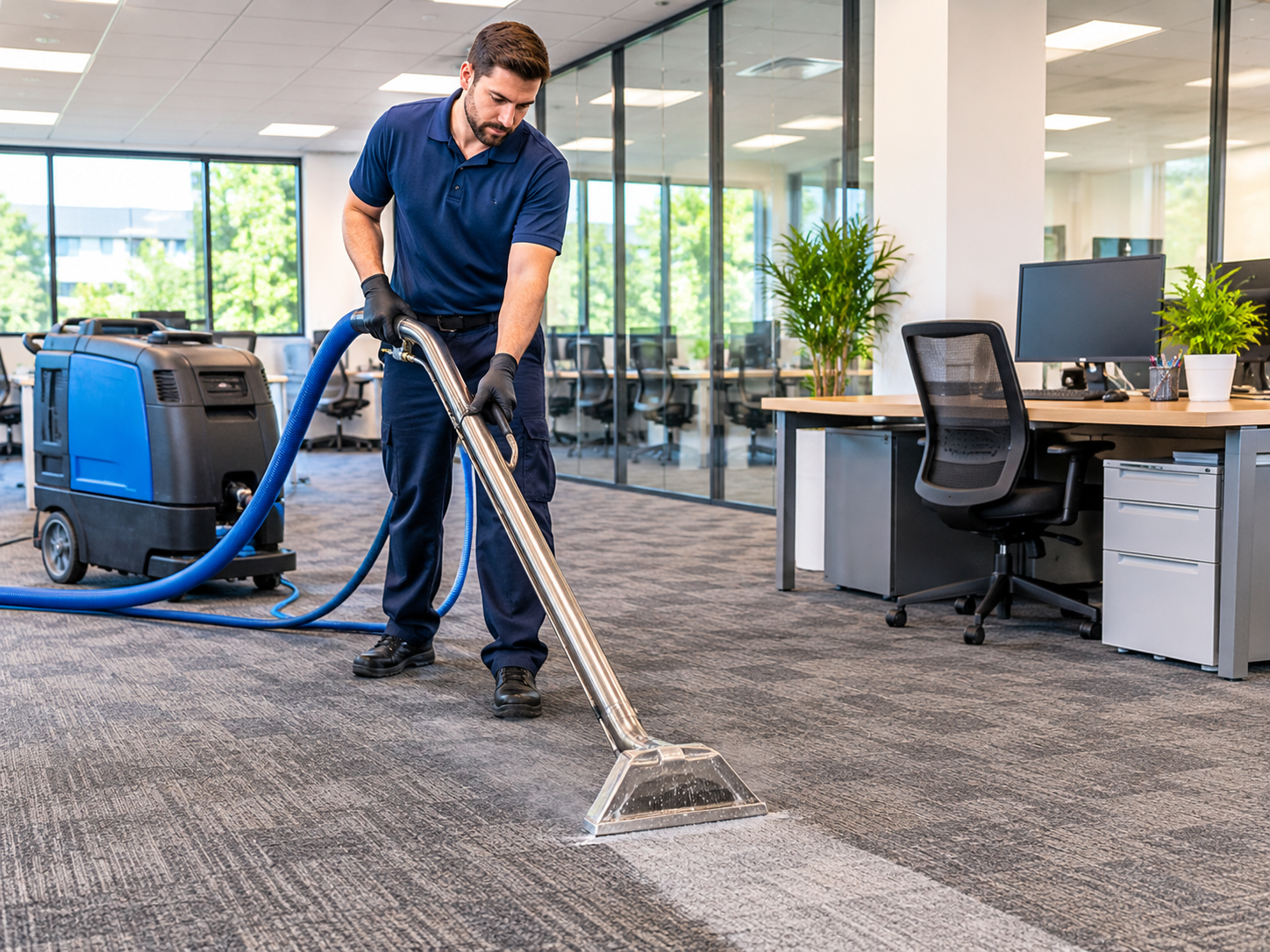
Office carpets do more than make a workplace look welcoming. They help create a comfortable environment for employees, clients, visitors, and business partners. However, maintaining them can become challenging when dozens or hundreds of people walk across the same floors every day. Dirt, dust, outdoor debris, food spills, and moisture gradually accumulate in carpet fibers, making busy workspaces look neglected.
For businesses, the challenge is not simply removing visible dirt. It is maintaining a professional environment while keeping employees productive and avoiding unnecessary interruptions. A practical cleaning strategy can help businesses protect their flooring, manage maintenance expenses, and create a more pleasant workplace.
Why Office Carpets Require a Different Cleaning Approach
Residential carpets and workplace flooring experience different levels of use. In an office, employees repeatedly walk through entrances, hallways, reception areas, meeting rooms, and shared spaces. These locations receive substantially more foot traffic than less frequently used areas.
Outdoor debris is one of the biggest contributors to carpet deterioration. Dust, soil, small stones, and moisture enter through employees' shoes and become embedded in carpet fibers. Over time, this material can make carpets appear darker, especially along frequently traveled routes.
Food and beverage spills create another challenge. Coffee, tea, sauces, and other liquids can leave visible marks if they are not addressed promptly. In shared spaces, small spills may go unnoticed until they become more difficult to remove.
Businesses should therefore consider the purpose of each room, its daily traffic level, and the type of carpet installed before establishing a maintenance routine.
Which Areas of an Office Need the Most Attention?
Not every carpeted area becomes dirty at the same rate. Identifying high-use locations helps facility managers prioritize maintenance instead of treating every room equally.
Reception Areas and Main Entrances
The reception area is often the first part of a business that visitors encounter. Because employees, customers, delivery personnel, and guests regularly enter through the same doors, these spaces collect considerable amounts of outdoor soil.
Entrance mats can help capture loose debris before it reaches the carpet. Regular vacuuming and prompt attention to visible marks also help maintain a cleaner appearance.
Hallways and Shared Walkways
Hallways experience repeated foot traffic throughout the working day. Over time, carpet fibers in these areas can become compressed, and darker traffic lanes may develop.
A consistent maintenance schedule helps prevent dirt from accumulating excessively. Paying attention to these routes can also reduce the difference in appearance between heavily used and relatively quiet sections of the office.
Conference Rooms and Break Areas
Meeting rooms often experience concentrated use during presentations, client appointments, and team discussions. Break rooms introduce additional cleaning challenges because food and beverages are commonly consumed there.
Businesses should establish clear procedures for reporting spills and removing loose debris. Addressing small problems quickly can prevent them from becoming larger maintenance concerns.
How Professional Cleaning Helps Protect Workplace Flooring
Routine vacuuming is essential, but it cannot remove every particle trapped deep within carpet fibers. Fine dust, oily residues, and embedded soil can remain even when the surface looks reasonably clean.
Professional extraction methods address this deeper accumulation. Hot water extraction, for example, uses heated cleaning solution to loosen embedded soil before powerful vacuum equipment removes the suspended residue and excess moisture.
The appropriate method depends on carpet construction, fiber type, manufacturer recommendations, and the condition of the flooring. A technician should evaluate these factors before choosing cleaning products or equipment.
Businesses considering Office Carpet Cleaning in Huntsville, AL should pay particular attention to the equipment, cleaning approach, and scheduling options offered by a provider. A suitable process should address the condition of the carpet without unnecessarily disrupting normal workplace activities.
Professional attention can also help identify problems that ordinary maintenance may overlook. Persistent discoloration, recurring stains, and heavily soiled traffic lanes may require targeted treatment rather than repeated general cleaning.
How Often Should a Business Schedule Carpet Maintenance?
There is no single schedule that works for every commercial property. A small professional office with limited visitors may have different requirements from a medical facility, customer service center, or busy retail environment.
The most practical approach is to consider daily foot traffic, carpet condition, workplace activities, and the amount of dirt entering the building.
For example, entrance areas and busy corridors may require more frequent attention than private offices or conference rooms used occasionally. Businesses with substantial customer traffic should monitor these areas regularly.
A maintenance plan can combine several activities:
-
Daily or regular vacuuming in frequently used spaces.
-
Prompt treatment of fresh spills.
-
Periodic inspection of traffic lanes.
-
Scheduled professional extraction.
-
Appropriate cleaning adjustments for different carpet materials.
Rather than waiting until flooring looks visibly dirty, facility managers should monitor its condition throughout the year. Preventive maintenance can make cleaning requirements easier to manage and reduce the likelihood of severe soil buildup.
How Can Businesses Plan Their Cleaning Budget?
Cleaning costs are an important consideration for businesses managing operating expenses. However, comparing providers based only on the lowest initial quote may lead to disappointing results.
The size of the carpeted area is one factor that influences pricing. Other considerations include carpet condition, furniture arrangement, accessibility, stain treatment requirements, and the cleaning method selected.
Businesses should also clarify what is included in an estimate. One quote may cover basic extraction, while another may include additional attention to heavily soiled areas or specialized treatment.
When researching Office Carpet Cleaning Cost in Huntsville, AL, property managers should request an itemized estimate based on the actual workplace rather than relying entirely on general online pricing.
Useful questions include:
-
Is the estimate based on measured carpeted square footage?
-
Are heavily soiled areas included?
-
Does furniture need to be moved before cleaning?
-
Are additional treatments priced separately?
-
How long will the cleaning process take?
-
What drying conditions should the business prepare for?
Clear answers make it easier to compare proposals and understand the expected value of the service.
Scheduling Cleaning Without Interrupting Business Operations
One of the biggest concerns for office managers is keeping the workplace functional during maintenance. Cleaning that blocks hallways, occupies meeting rooms, or leaves floors damp during working hours can create unnecessary inconvenience.
Planning ahead can help prevent these problems.
Consider Evening and Weekend Appointments
After-hours scheduling allows cleaning crews to work when fewer employees and visitors are present. This arrangement can be especially useful for offices with regular customer appointments or collaborative workspaces.
Before scheduling, businesses should confirm access arrangements, security procedures, equipment requirements, and expected completion times.
Divide Large Workplaces Into Sections
Large commercial properties do not always need to be cleaned all at once. Dividing the building into manageable sections may allow employees to continue working in unaffected areas.
For example, a facility manager could arrange for reception and hallway cleaning on one evening and private offices on another. The approach depends on building layout and the contractor's available scheduling options.
Allow Sufficient Drying Time
Carpets need adequate time to dry after wet cleaning. Drying conditions depend on the cleaning method, moisture extraction, ventilation, humidity, and indoor temperature.
Businesses should ask the cleaning provider for realistic drying guidance and avoid reopening cleaned areas before they are ready for normal use.
Choosing a Carpet Cleaning Provider for a Commercial Property
Selecting a provider requires more than checking whether a company offers professional cleaning. Commercial properties have practical requirements that should be discussed before an appointment is confirmed.
Start by asking about experience with workplace environments and the equipment used for extraction. A provider should be able to explain how its cleaning process addresses embedded soil, common stains, and heavily traveled areas.
Training and professional standards are also worth considering. Businesses can ask whether technicians have relevant industry credentials and whether cleaning products are appropriate for the installed flooring.
Written estimates are particularly useful because they establish expectations about the work, pricing, and any additional charges. Facility managers should also confirm scheduling flexibility and the procedures used to protect furniture, equipment, and surrounding spaces.
Finally, communication matters. A reliable contractor should explain what can reasonably be achieved, identify potential limitations, and provide practical preparation instructions.
Building a Cleaner and More Professional Workplace
Office flooring is a significant part of the working environment, and its condition influences how employees and visitors experience a business. A combination of regular vacuuming, spill prevention, targeted maintenance, and periodic professional cleaning helps keep carpets in better condition.
Businesses do not need to wait until their flooring looks heavily soiled before taking action. By identifying high-traffic areas, creating a realistic maintenance schedule, and planning cleaning appointments around operating hours, facility managers can maintain cleaner workspaces without unnecessary disruption.
The most effective approach is one that considers the building's actual needs rather than relying on a one-size-fits-all schedule. With sensible planning and appropriate professional care, businesses can protect their carpeted spaces while maintaining a comfortable and presentable environment for everyone who uses them.
More details are available at: Local Business Directory
- Managerial Effectiveness!
- Future and Predictions
- Motivatinal / Inspiring
- Fitness and Wellness
- Medical & Health
- Manufacturing
- Education
- Real-Estate
- Food Industry
- Hospitality
- Online Games
- Sports
- Home Services
- Civil Engineering
- Safety and Protection
- Software Products & Services
- Fashion and Jewellery
- Artificial Intelligence
- Entrepreneurship
- Mentoring & Guidance
- Marketing
- Networking
- HR & Recruiting
- Literature
- Shopping
- Career Management & Advancement