

 SkillClick
Industrial Chain Sprocket Manufacturers: Improving Reliability and Productivity in Chain Drive Systems
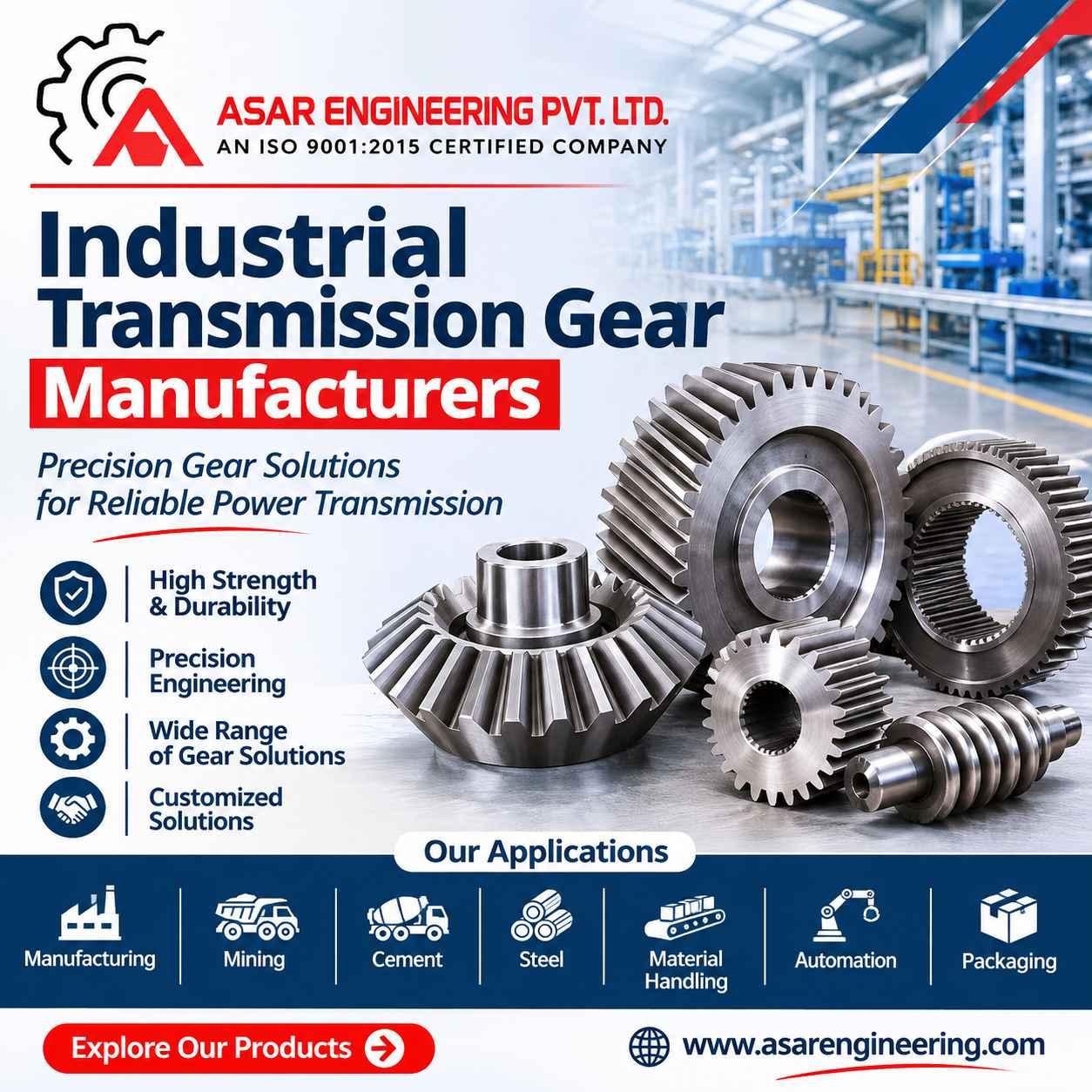
Industrial machinery depends on reliable power transmission to maintain productivity and minimize unexpected interruptions. In many manufacturing, material-handling, mining, packaging, and automation systems, chain drives provide a practical method of transferring rotary motion between shafts. Within these systems, sprockets are essential components because they engage directly with the chain and convert rotational movement into controlled mechanical motion.
Selecting reliable Industrial Chain Sprocket Manufacturers can help businesses obtain components designed around the actual operating requirements of their machinery. From tooth accuracy and pitch compatibility to material selection and customized dimensions, every engineering detail can influence sprocket performance.
The Connection Between Sprockets and Equipment Reliability
A chain drive can only perform efficiently when its components work together correctly. The sprocket must engage with the chain consistently while transmitting the required torque without excessive vibration, slipping, or premature wear.
An inaccurately manufactured sprocket can create uneven chain movement and increase mechanical stress. Over time, this may contribute to tooth damage, chain wear, noise, vibration, and unplanned maintenance.
Precision engineering therefore plays an important role in developing sprockets for industrial environments. Asar Engineering emphasizes precision tooth design, accurate pitch matching, durable bore construction, and corrosion-resistant material options for its sprocket solutions.
How Proper Sprocket Design Supports Productivity
Industrial production systems often operate for extended periods and may experience frequent starting, stopping, acceleration, and load changes. A suitable sprocket design helps the chain drive accommodate these operating conditions.
A properly matched sprocket can provide:
-
Consistent chain engagement
-
Smooth transfer of mechanical power
-
Better load distribution
-
Reduced unnecessary wear
-
Lower vibration
-
Improved operating reliability
-
Longer component service intervals
These benefits become especially important in production environments where equipment downtime can affect manufacturing schedules and operating costs.
Selecting Sprockets According to Application Requirements
There is no single sprocket configuration suitable for every industrial machine. The correct product depends on several technical parameters.
1. Chain Type and Pitch
The sprocket must correspond to the chain being used. Accurate pitch matching is necessary to ensure that the sprocket teeth engage correctly with the chain links.
2. Load Capacity
The expected operating load should be considered before selecting the sprocket configuration. Heavy-duty systems may require multiple chain strands to distribute the transmitted load.
3. Operating Speed
High-speed applications can place additional demands on tooth accuracy, balance, alignment, and overall component quality.
4. Shaft and Bore Requirements
The sprocket must fit securely onto the shaft. Accurate bore machining and appropriate keyway or mounting arrangements can help achieve reliable installation.
5. Environmental Conditions
Moisture, dust, chemicals, temperature, and abrasive materials can affect component life. Material and protective treatment should therefore be selected according to the working environment.
Understanding Different Industrial Sprocket Configurations
Experienced manufacturers provide different sprocket types to accommodate varying chain-drive requirements.
Simplex Sprockets
A simplex sprocket works with a single strand of roller chain. It can be used for a broad range of mechanical power transmission applications where the required load can be handled by one chain strand.
Duplex Sprockets
Duplex sprockets engage with two chain strands. Their dual-row design can help distribute transmitted loads across multiple strands, making them suitable for applications requiring increased capacity.
Triplex Sprockets
Triplex sprockets are designed for three chain strands and can be considered for high-load industrial machinery. Their configuration provides greater chain engagement capacity than simplex and duplex arrangements.
Conveyor Sprockets
Conveyor sprockets are designed for chain-driven material-handling systems. They are commonly used in manufacturing, packaging, logistics, and other applications where continuous material movement is required.
Asar Engineering currently provides simplex, duplex, triplex, and conveyor sprocket solutions. Its listed conveyor sprockets are available in different pitch sizes, including 1-inch to 5-inch options, with diameters up to 2000 mm.
Material Selection and Long-Term Durability
The material used for a sprocket directly influences its ability to withstand mechanical stress and environmental conditions.
Industrial applications may require materials such as alloy steel, stainless steel, pre-hardened steel, engineering plastics, or non-ferrous metals depending on the operating environment.
For example, applications exposed to moisture or corrosive conditions may require greater environmental resistance, while heavy-load systems may prioritize mechanical strength and wear resistance.
Material selection should therefore be based on the combination of load, speed, environment, operating cycles, and expected service life.
Custom Sprocket Manufacturing for Specialized Equipment
Standard sprockets are suitable for many applications, but specialized machinery may require customized components. Equipment manufacturers may need specific tooth counts, bore dimensions, chain configurations, or mounting arrangements.
Working with experienced Industrial Chain Sprocket Manufacturers can make customized development more practical because the manufacturer can evaluate the application and manufacture the sprocket around the required specifications.
Asar Engineering lists specialized sprocket configurations including idler, split, and double-strand simplex designs for specific operational requirements.
Sprockets in Material Handling and Automation
Chain-driven systems are particularly valuable in applications requiring dependable movement of materials or mechanical components.
In conveyor systems, sprockets engage with conveyor chains to drive the movement of products or materials. In automated machinery, chain transmission can support synchronized movement between different mechanical sections.
Other applications include manufacturing machinery, material lifting equipment, mining systems, packaging machinery, and industrial automation.
Because these applications can operate continuously, sprocket quality can have a direct influence on maintenance requirements and overall equipment reliability.
Maintenance Is Essential for Consistent Performance
Even a precision-manufactured sprocket requires proper maintenance. Regular inspections can help identify problems before they develop into costly failures.
Maintenance teams should monitor chain tension, sprocket tooth condition, shaft alignment, lubrication requirements, vibration, and unusual operating sounds. Chain elongation should also be checked because an excessively worn chain can accelerate sprocket wear.
Replacing worn chain and sprocket components at the appropriate time can help protect the complete drive system.
Choosing the Right Manufacturing Partner
When selecting Industrial Chain Sprocket Manufacturers, buyers should evaluate more than product availability. Manufacturing experience, engineering capability, customization options, material selection, dimensional accuracy, and application understanding are important considerations.
A manufacturer capable of understanding the complete power transmission requirement can provide more useful recommendations than a supplier focused only on standard dimensions.
Asar Engineering states that it was established in 2015 and provides industrial engineering components from its manufacturing operations, including sprockets, gears, couplings, screws, rollers, chains, and gearboxes.
Conclusion
Industrial chain sprockets play an important role in maintaining efficient and dependable chain-driven machinery. Their performance depends on accurate tooth geometry, correct pitch matching, suitable materials, appropriate dimensions, and compatibility with the operating environment.
For businesses seeking reliable components for demanding industrial applications, partnering with experienced Industrial Chain Sprocket Manufacturers can support better component selection and customized engineering requirements.
With proper design, manufacturing precision, installation, and maintenance, industrial sprockets can contribute to smoother power transmission, reduced mechanical wear, improved equipment uptime, and more dependable long-term industrial productivity.
- Managerial Effectiveness!
- Future and Predictions
- Motivatinal / Inspiring
- Fitness and Wellness
- Medical & Health
- Manufacturing
- Education
- Real-Estate
- Food Industry
- Hospitality
- Online Games
- Sports
- Home Services
- Civil Engineering
- Safety and Protection
- Software Products & Services
- Fashion and Jewellery
- Artificial Intelligence
- Entrepreneurship
- Mentoring & Guidance
- Marketing
- Networking
- HR & Recruiting
- Literature
- Shopping
- Career Management & Advancement