

 SkillClick
Startup Credibility: Why Physical Branding Still Wins Trust
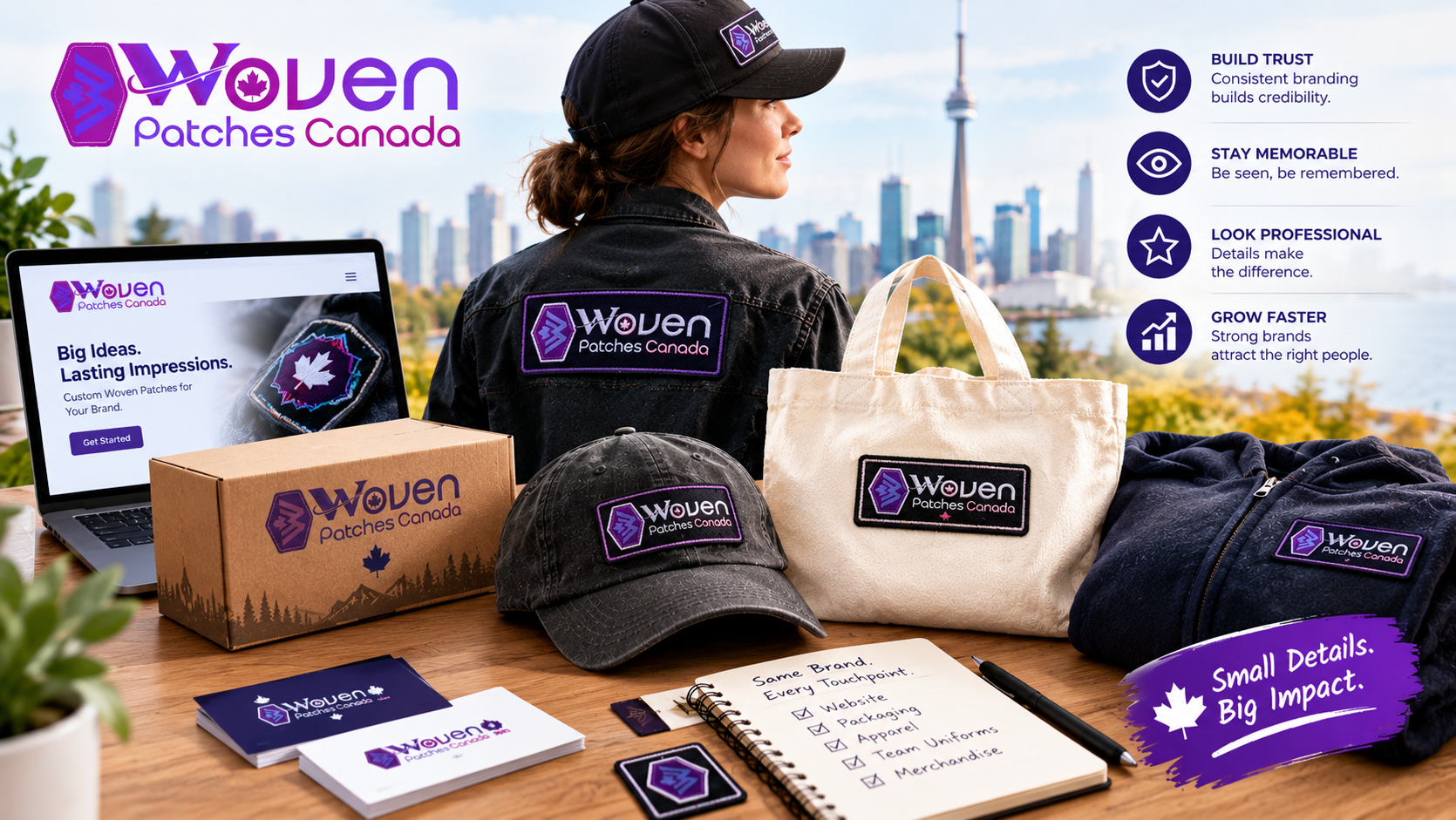 Early-stage founders spend most of their branding budget on screens. A website, a pitch deck, a LinkedIn presence, a logo designed to look sharp in a browser tab. These matter. But they are not the whole picture. The moment a potential client meets a founder in person, visits a worksite, receives a delivery, or sees a team at an event, the brand becomes physical. That transition is where many young companies lose the credibility they worked hard to build online. If you are sourcing branded apparel components, Woven Patches Canada supplies custom woven patches that can carry a startup identity onto uniforms, bags, and merchandise. This article looks at why physical branding still matters for early-stage credibility, and how Canadian startups can approach it affordably.
The Credibility Gap Every Startup Faces
FoundersClick exists because early-stage teams need infrastructure to connect, promote, and grow. But infrastructure alone does not close the credibility gap. A startup can have a polished platform presence and still look unfinished the moment a staff member arrives in an unbranded shirt, or a client receives a product in a plain bag.
The gap is not about looking expensive. It is about looking deliberate. Customers and partners read small signals—a clean uniform, a neatly finished patch on a work jacket, a branded cap at a market stall—as evidence that the business has thought about details. Detail-oriented businesses are assumed to be reliable. That assumption is worth more to a young company than a flashy logo.
Why the Physical Signal Carries More Weight Than Founders Expect
Digital branding is easy to produce and easy to ignore. A social post can be scrolled past in a second. A physical branding element is encountered in person, repeatedly, and in the context of a real transaction. A delivery driver wearing a branded jacket, a market vendor with a clean tote bag, a tradesperson with a name patch on a work shirt—these are not decorative. They are trust signals delivered at the point where trust is actually needed.
For startups competing against established players, that signal is disproportionately valuable. A well-branded uniform or a neatly attached patch can narrow the perceived gap between a two-person team and a larger competitor. It tells the customer that this business is organised, consistent, and serious.
The Lean Branding Hierarchy for Startups
Physical branding does not require covering every surface. A simple hierarchy helps founders prioritise where the credibility return is highest.
First, the people. Staff uniforms and workwear are the most visible physical branding a startup owns. A branded polo, jacket, or cap turns every employee into a moving touchpoint. For service businesses, trades, and retail, this is the highest-return investment.
Second, the carry. Bags, totes, and cases travel with the product and are seen by customers, partners, and bystanders. A branded bag extends the brand’s reach far beyond the point of sale.
Third, the merch. Caps, shirts, and small items given to clients or sold at events create goodwill and repeat exposure. This is lower priority than uniforms and bags because it depends on the recipient actually using the item.
The mistake many startups make is starting with merch and ignoring uniforms. A branded cap is nice. A branded team is a credibility system.
Choosing the Right Branding Method for a Startup Budget
Not all branding methods are equal, and the cheapest option is rarely the most cost-effective over time.
Woven patches are flat, flexible, and capable of holding fine detail. They suit lightweight garments, caps, and bags, and they are a strong choice when a logo includes small text or intricate line work. For Canadian startups ordering custom woven patches in Canada, the practical advantage is that small runs are accessible, and a weave proof can be approved before production.
Embroidery carries a raised, classic texture that works well for bold logos on heavier fabrics. It is durable but can be bulky on lightweight materials and less precise for fine lettering.
Heat transfers and screen printing are common for T-shirts and promotional items. They are cost-effective at volume but can fade or crack under frequent washing. For uniforms that will be laundered regularly, a sewn attachment is generally more resilient.
Sew-on and Velcro-backed patches solve different problems. Sew-on attachment is the most durable option for workwear that sees heavy use. Velcro woven patches suit roles or campaigns where the patch needs to change without replacing the garment—useful for startups running events, seasonal teams, or pilot programmes.
The specification should follow the garment’s life, not the convenience of the application.
A Startup-Friendly Branding Checklist
Before ordering any physical branding, founders should be able to answer these questions:
-
Where will this item be seen? Prioritise the surfaces that customers and partners actually encounter.
-
How often will it be washed or worn? Match the attachment method to the wear cycle. Frequent laundering requires a sewn attachment.
-
Does the logo contain small text or fine detail? If yes, woven construction is usually the stronger choice.
-
Have I approved a physical proof? Never approve a patch or print from a screen mockup alone. Request a sample or weave proof.
-
Does this match my existing brand colours? Provide print or digital colour references and ask for the closest achievable textile match.
-
Can I start small? Order a modest run for the highest-visibility items first, then expand once the approach is proven.
Why This Matters More for Canadian Startups
Canadian founders often operate in markets where reputation travels quickly. A local service business, a retail brand, or a B2B startup is visible within its community. Inconsistent branding—a logo that looks different on the website than on the uniform—undermines the credibility the founder is trying to build. Consistency across physical touchpoints is not a luxury for large companies. For a small Canadian team, it is a competitive necessity.
The good news is that the barrier to entry is lower than many founders assume. Small-batch patch production, accessible proofing, and a range of backing options mean a startup can brand its most visible assets without committing to industrial volumes. The investment is modest. The credibility return is not.
FAQs
Is physical branding worth it for a very early-stage startup?
Yes, if it is prioritised. One well-branded uniform or bag that customers see regularly can do more for credibility than several low-quality promotional items.
What is the most durable branding method for startup workwear?
For garments that are washed frequently, sewn-on patches and embroidery are generally more durable than heat transfers or screen printing. The attachment method matters as much as the design.
Can startups order custom patches in small quantities?
Many suppliers accommodate small runs, though minimums vary. Founders should confirm minimum order quantities and request a proof before committing.
How do I keep branding consistent across digital and physical touchpoints?
Set simple rules for logo size, placement, and colour, and apply them to every surface. Consistency is more important than variety.
- Managerial Effectiveness!
- Future and Predictions
- Motivatinal / Inspiring
- Fitness and Wellness
- Medical & Health
- Manufacturing
- Education
- Real-Estate
- Food Industry
- Hospitality
- Online Games
- Sports
- Home Services
- Civil Engineering
- Safety and Protection
- Software Products & Services
- Fashion and Jewellery
- Artificial Intelligence
- Entrepreneurship
- Mentoring & Guidance
- Marketing
- Networking
- HR & Recruiting
- Literature
- Shopping
- Career Management & Advancement