

 SkillClick
WARDOGS Cash Guide – U4GM Tips for Better Planning
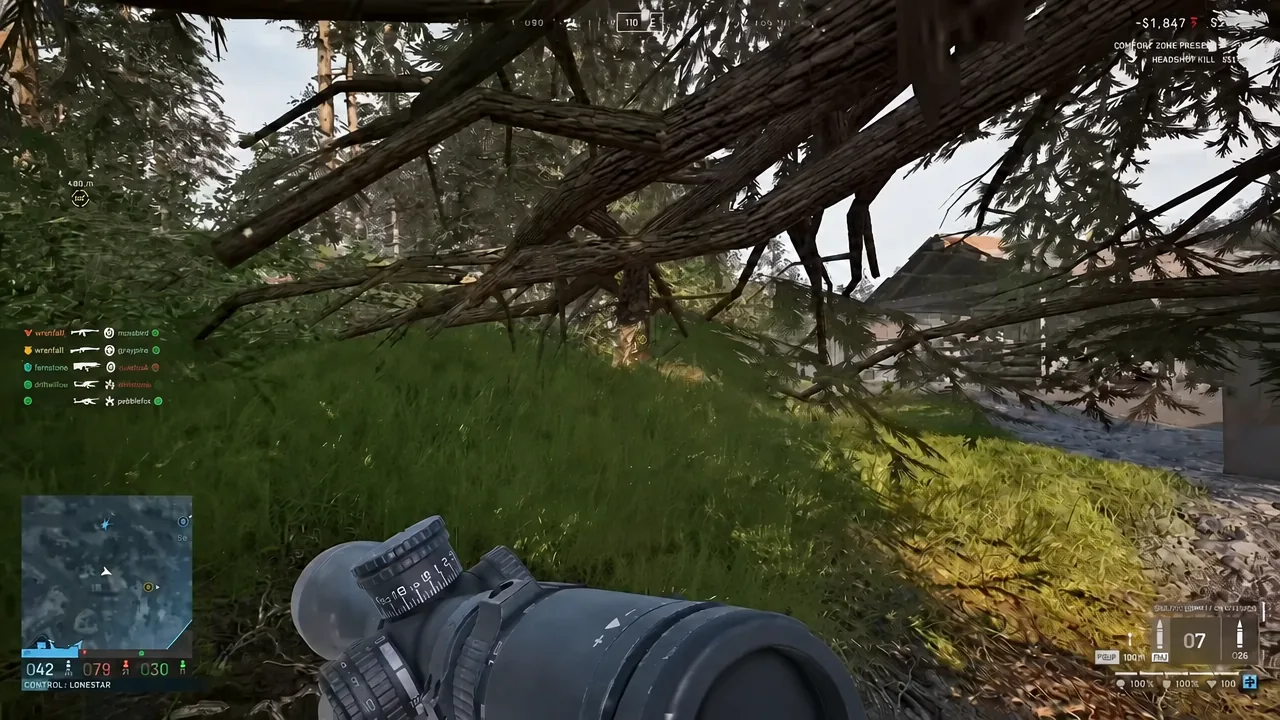
In WARDOGS, a building is not always a permanent safe haven, and a defensive position may become less useful as the battle develops. Wardogs Bot Lobby cash provides a starting point for exploring how equipment budgets connect with battlefield preparation, but the game's destruction and construction systems offer a more interesting tactical challenge. Players must decide when to reinforce a location, when to move elsewhere, and when changing the terrain can create an opening that ordinary infantry movement cannot.
The Battlefield Is Not a Static Shooting Gallery
WARDOGS combines large-scale infantry combat with destructible environments and player-built defensive positions. Buildings can be damaged or destroyed, while players can construct and reinforce important locations. These systems make the surroundings part of the tactical decision-making process.
A building that offers useful cover early in a match may become less dependable after heavy fighting. A narrow street that initially restricts movement may become easier to cross after the surrounding structures are damaged. Meanwhile, a fortified position can help protect an approach if the team chooses its location carefully.
The practical lesson is to evaluate cover according to its current condition rather than assuming that familiar terrain will always provide the same protection.
Three Questions to Ask Before Defending a Building
Does the position protect an important route? A structure is more valuable when it overlooks an approach to the Control Zone or helps prevent enemies from entering a critical area.
Can teammates reinforce it? A defensive position that sits too far from friendly players may become difficult to maintain once opponents begin applying pressure.
What happens if the structure is destroyed? A secondary position or alternative route can prevent the entire defense from depending on a single location.
These questions turn construction into part of a wider strategy instead of an isolated activity.
When to Build and When to Keep Moving
Construction can provide a tactical advantage, but it also demands time, resources, and a suitable location. A fortified position is most useful when it supports the team's current objective and can be defended by the players available.
| Situation | Better approach | Reason |
|---|---|---|
| A key approach needs protection | Consider a defensive build | It can help control enemy movement |
| The objective has moved away | Reassess the value of the existing position | The old location may no longer support the team |
| Friendly reinforcements are arriving | Prepare a useful position near their route | It may help organize the next push |
| The team is under immediate pressure | Prioritize survival and objective defense | Construction may not address the urgent threat |
| The enemy has found a reliable attack route | Consider repositioning or changing the approach | Repeating the same defense can become predictable |
The best decision depends on timing. A structure built before an expected assault may help the team prepare. The same construction attempt during a desperate retreat could distract players from escaping or protecting the objective.
Destruction Can Create New Routes
Heavy weapons and vehicles can change the shape of a fight by damaging structures and removing familiar defensive positions. This means destruction can be used to influence movement rather than simply deal damage.
Suppose an enemy squad is holding a building that overlooks a narrow approach. A direct infantry assault may force attackers through an exposed area. Depending on the available weapons and the environment, damaging the defensive structure or changing the route may reduce the defender's advantage.
That does not mean every building should be destroyed. The surrounding terrain may also provide useful cover for friendly players, and unnecessary destruction can remove protection that the attacking team needs.
Before committing heavy equipment, consider whether the target is actually preventing progress. If another route offers a safer approach, using that route may conserve resources and reduce unnecessary exposure.
The most useful destruction changes the tactical problem in the team's favor.
Heavy Vehicles Need a Clear Assignment
WARDOGS Season 2 introduced additional vehicles, including the Wolf-110, the T-72B3 tank, and the Flakpanzer Gepard. These additions broaden the options available for transport, ground combat, and specialized support.
Their presence also makes deployment planning more important. A vehicle should be selected according to its intended role, the available route, and the team's current needs.
| Vehicle or platform | Planning consideration |
|---|---|
| Wolf-110 | Consider its suitability for moving players and supporting ground operations |
| T-72B3 | Evaluate whether heavy ground combat justifies the cost and deployment |
| Flakpanzer Gepard | Consider the tactical need for an anti-aircraft platform |
| Infantry transport | Check the route, passenger needs, and destination before departure |
Vehicle capabilities and costs should be checked against the current in-game vendor and patch information, particularly while WARDOGS remains in Early Access.
Heavy equipment can create opportunities, but its value depends on how it is used. A tank deployed without infantry coordination may become isolated. A transport vehicle with no clear destination can spend valuable time away from the objective. A specialized platform may offer little benefit if the match does not present the situation it is intended to address.
A clear assignment helps prevent expensive equipment from becoming an impressive but ineffective distraction.
Season 2 Adds More Reasons to Review Equipment Choices
The Season 2 update arrived on October 15, 2026, introducing four new weapons, four new vehicles, additional buildables, and rainy weather. The update also adjusted weapon damage, armor, progression, and several economic rewards.
These changes matter because the cost of equipment is only one part of its value. Weapon effectiveness, protection, role requirements, and the battlefield conditions all influence whether a loadout is worth purchasing.
For example, the TCX-SPR offers an additional assault-rifle option, while the PP-19 Bizon expands the available submachine-gun choices. The Evo-3 Ultra and M14 provide further options for players considering sustained fire or longer-range engagements. Their usefulness still depends on the intended role and the current balance.
The new weather also introduces additional tactical considerations. Heavy rain can reduce visibility, while thunder can temporarily mask footsteps and other sounds. In these conditions, relying on sound alone may be less dependable, making observation, communication, and route planning more important.
Instead of rebuilding every loadout simply because a new season has arrived, players can test equipment against specific tasks and adjust only when a change improves the intended role.
Make Every Purchase Support the Next Deployment
A persistent economy encourages players to consider the long-term cost of repeated equipment purchases. An expensive setup can be appropriate for a critical assault or specialized vehicle task, but buying the same configuration for every life may reduce flexibility later.
A practical spending process begins with the next deployment's objective. Decide whether the team needs an assault loadout, a defensive setup, transportation, or a specialized support platform. Then compare the purchase with the available budget and the likely value of the equipment.
It is also worth distinguishing between a problem that equipment can solve and one that requires better tactics. If the team keeps losing a fortified position because enemies attack from several directions, buying a stronger weapon may not address the underlying issue. Better observation, a revised defensive layout, or coordinated reinforcements may be more effective.
Likewise, a vehicle purchase should be linked to a clear transport or combat task rather than the assumption that heavier equipment automatically produces better results.
A Flexible Defense Is Better Than a Perfectly Predictable One
The most reliable defensive strategy is one that can adapt. A team should understand which positions matter, which routes remain usable, and when a damaged structure no longer offers enough protection. Construction, vehicles, and heavy weapons are valuable because they expand the available responses, not because they eliminate the need for judgment.
A flexible squad can reinforce a useful position when the opportunity appears, abandon an unproductive defense when the situation changes, and use destruction to create better routes instead of treating it as an end in itself.
Players researching Wardogs Cash for sale can keep the purchasing decision separate from these in-game tactics. In WARDOGS, a carefully selected loadout, a sensible deployment budget, and a clear plan for using construction or heavy equipment are what connect available resources with meaningful progress on the battlefield.
- Managerial Effectiveness!
- Future and Predictions
- Motivatinal / Inspiring
- Fitness and Wellness
- Medical & Health
- Manufacturing
- Education
- Real-Estate
- Food Industry
- Hospitality
- Online Games
- Sports
- Home Services
- Civil Engineering
- Safety and Protection
- Software Products & Services
- Fashion and Jewellery
- Artificial Intelligence
- Entrepreneurship
- Mentoring & Guidance
- Marketing
- Networking
- HR & Recruiting
- Literature
- Shopping
- Career Management & Advancement