

 SkillClick
Estimating Soil for Excavation, Backfilling, and Site Levelling
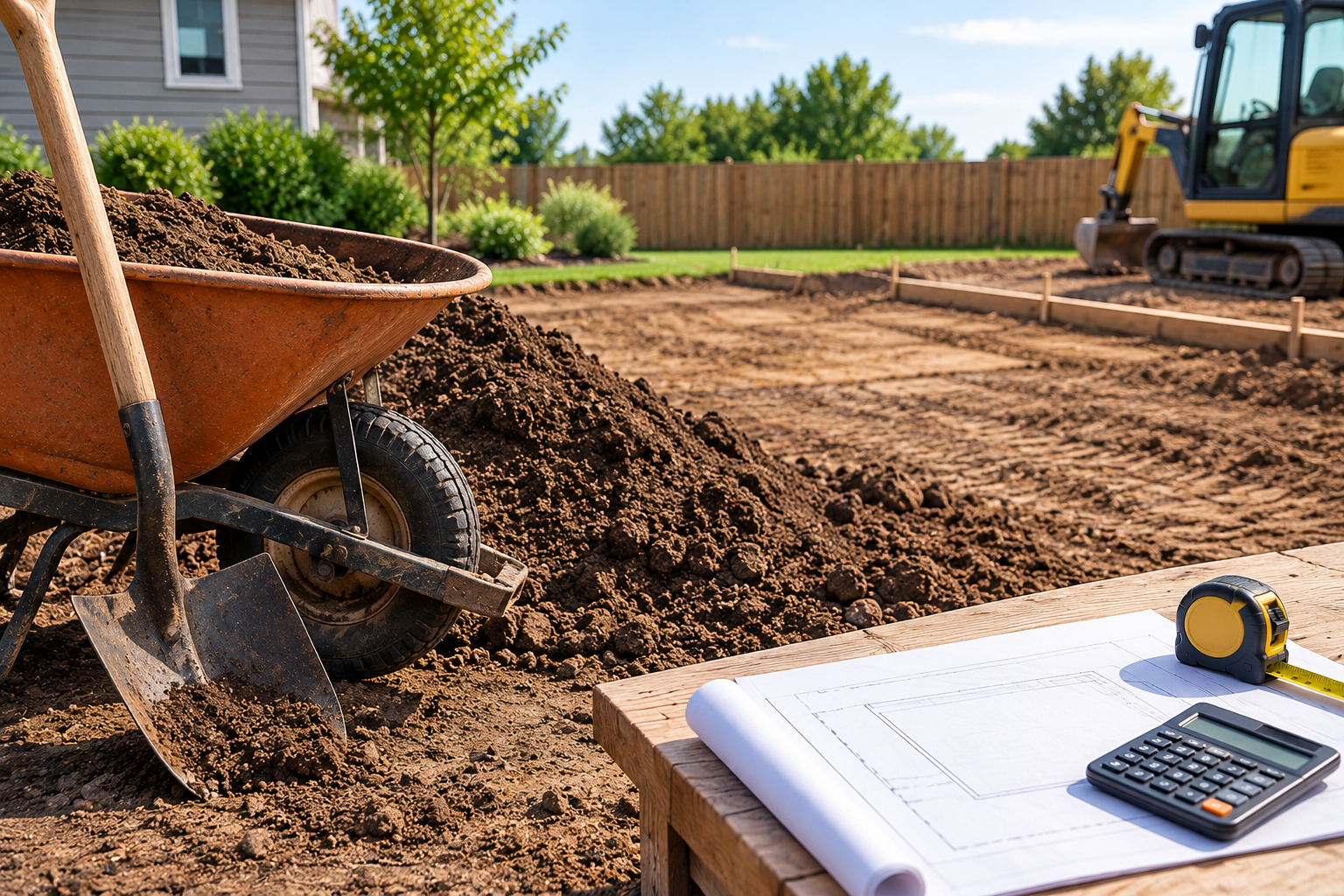
Estimating Soil for Excavation, Backfilling, and Site Levelling
Soil is involved in many types of property and landscaping work. It may need to be removed to prepare a foundation, brought in to level a garden, or used to fill an area around newly installed services. Although these jobs can appear straightforward, estimating the amount of soil involved is not always easy.
The main challenge is that soil changes volume when it is excavated, moved, placed, and compacted. A calculation based on the size of a hole may not match the volume of loose soil produced during digging or the amount of material needed to fill the same space again.
Understanding these differences can help you plan deliveries, arrange waste removal, and avoid unnecessary costs.
Identify the Type of Work
Start by deciding whether the project involves removing existing soil, bringing in additional material, or both.
Excavation means digging soil out of an area. Backfilling involves placing suitable material into a space that has already been excavated. Site levelling may require cutting down high areas, filling low sections, or moving soil from one part of the property to another.
Each task has different requirements. Soil removed from an excavation may not be suitable for every backfilling application, especially if it contains organic matter, debris, or unsuitable material.
Before calculating quantities, establish what the project needs and whether the soil can be reused safely and appropriately.
Measure the Area and Depth
For a simple rectangular excavation, measure the length, width, and depth. Multiply the three figures to calculate the volume.
For example, an area that is 5 metres long, 3 metres wide, and 0.6 metres deep has a volume of:
5 × 3 × 0.6 = 9 cubic metres.
This represents the approximate volume of the space being excavated, assuming the dimensions are consistent throughout.
For an irregular area, divide the site into smaller sections. Calculate each section separately and add the results together.
If the ground slopes or the required depth changes, take measurements at several points. Using one depth for the entire site may create a significant error when the area is large.
Understand How Soil Volume Changes
Soil does not always occupy the same volume throughout a project. When soil is dug out, the material becomes less tightly packed and may occupy more space. This is commonly described as soil swell.
When loose soil is placed into a prepared area and compacted, the volume can decrease again. The amount of change depends on the soil type, moisture content, and handling method.
For this reason, the volume of an excavation should not automatically be treated as the exact quantity needed for backfilling. The material may also need to meet specific engineering or drainage requirements.
If the work involves foundations, trenches, retaining structures, or other construction features, follow the project specifications rather than relying on a general estimate.
Convert Volume Into an Approximate Weight
Soil quantities may be calculated in cubic metres or cubic yards, but suppliers and waste contractors may quote by the tonne. Converting volume to weight requires an estimate of density.
Different soils have different densities. Sand, clay-rich soil, topsoil, and mixed fill can vary considerably. Moisture content also affects the final weight, so the same volume may weigh more after heavy rain.
A Dirt Calculator Cubic Yards to Tons can help convert a volume estimate into approximate tonnage. This can be useful when arranging a delivery or comparing prices from different suppliers.
Before using the result, check which density value the calculator assumes and whether it is appropriate for your material. If you are dealing with a large quantity, ask the supplier or contractor to confirm the estimate.
Plan Backfilling Carefully
Backfilling should be planned according to the purpose of the area being filled. Material around a garden bed may have different requirements from soil placed beside a foundation or beneath a paved surface.
Some applications require selected fill or granular material rather than ordinary excavated soil. The material may also need to be placed in layers and compacted using an appropriate method.
Using unsuitable soil can contribute to settlement, drainage problems, or movement around structures. If the backfill supports a driveway, building, or other loaded surface, obtain advice from a qualified professional.
When calculating the quantity, measure the space that needs to be filled and account for the specified placement and compaction requirements. Do not assume that all the excavated soil can simply be returned to the hole.
Estimate Soil for Site Levelling
Levelling a garden or building site can be more complicated than filling a single rectangular space. High areas may need to be reduced while low areas require additional material.
A useful approach is to divide the site into a grid and record the difference between the current ground level and the intended finished level at each point. These measurements can help establish where soil needs to be removed and where additional material is required.
For a small garden, a basic sketch and a few measurements may be sufficient for a rough estimate. Larger sites or areas with significant slopes may need a professional survey.
Also consider the intended use of the finished surface. A lawn, planting bed, patio, and driveway may require different soil preparation and drainage arrangements.
Think About Access and Waste Removal
Even when the quantity has been calculated correctly, the practical arrangements can affect the project.
Check whether delivery vehicles can reach the site and where material can be unloaded. If access is restricted, smaller deliveries or alternative handling arrangements may be necessary.
For excavated soil, find out whether it can be reused on the property or must be removed. Soil mixed with construction waste or suspected contamination may require special handling, so do not assume that all excavated material can be disposed of in the same way.
Include transport, loading, and disposal charges in your budget. These costs can be substantial when the volume is large.
Make a More Reliable Estimate
Accurate soil estimation starts with clear measurements and an understanding of how the material will be used. Calculate the space involved, consider changes in volume during excavation and compaction, and check whether the soil is suitable for the intended purpose.
A calculator can help estimate cubic volume and approximate weight, but the result should be checked against the actual material and project requirements. Careful planning makes it easier to arrange deliveries, manage excavated soil, and keep site work on schedule.
- Managerial Effectiveness!
- Future and Predictions
- Motivatinal / Inspiring
- Fitness and Wellness
- Medical & Health
- Manufacturing
- Education
- Real-Estate
- Food Industry
- Hospitality
- Online Games
- Sports
- Home Services
- Civil Engineering
- Safety and Protection
- Software Products & Services
- Fashion and Jewellery
- Artificial Intelligence
- Entrepreneurship
- Mentoring & Guidance
- Marketing
- Networking
- HR & Recruiting
- Literature
- Shopping
- Career Management & Advancement