

 SkillClick
Screen Printing vs DTG vs DTF for Custom Workwear Uniforms
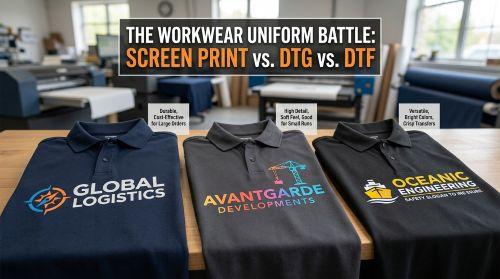
Screen printing suits bulk orders with high durability, while DTG excels at detailed, full-color designs on cotton. DTF offers versatility across fabrics. Garment Printing combines professional screen printing and digital DTG locally in Sydney, delivering premium results for every brand with fast service and competitive pricing.
Key Takeaways
- Screen printing suits bulk orders with simple, bold graphics using 1–3 colors for high durability.
- DTG handles photorealistic images and gradients on cotton with unlimited colors in a single pass.
- DTF transfers designs from film onto fabric, working across more fabric types than DTG.
- Screen printing costs fall steeply with volume, while DTG and DTF per-unit prices stay flat.
What Sets Screen, DTG, and DTF Apart?
Screen printing, direct-to-garment (DTG), and direct-to-film (DTF) represent three distinct approaches to apparel decoration. Each method operates on fundamentally different mechanics, making them suited to specific production scenarios. The wrong choice compromises print quality and inflates per-unit costs.
Screen printing presses ink through a mesh screen directly onto fabric. Every color in the design demands its own screen, which makes this option ideal for artwork with 1–3 colors. Setup involves significant preparation, yet the process rewards bulk orders with unmatched efficiency and durability.
DTG printing functions as a digital process that sprays water-based inks directly into garment fibers. This method provides flexibility for custom designs and different material types. No screens or films stand between the artwork file and the finished shirt. Complex, multi-colored graphics print in a single pass without additional setup.
DTF printing transfers designs from a specialized film onto fabric using adhesive powder and heat. Along with DTG, this digital method has unique features and benefits for garment decoration. The printed film can be stored and applied later, decoupling production from application.
How does each method handle color complexity?
Screen printing excels with simple, bold graphics. Each additional color requires a separate screen, driving up cost and setup time. DTG handles photorealistic images and gradients effortlessly. DTF matches this color range while working across more fabric types than DTG can accommodate.
Which method suits custom workwear uniforms best?
Garment Printing combines professional screen printing, digital DTG printing, and embroidery, all designed and printed locally in Sydney. For custom branded workwear with simple logos, screen printing delivers durability through countless industrial washes. When uniforms require detailed badges or variable employee names, DTG eliminates screen costs entirely. DTF bridges the gap for polyester-heavy workwear that DTG struggles to bond with.
How Do Unit Economics Compare Across Methods?
Unit economics shift sharply depending on order volume and design complexity. Screen printing has long been the industry standard for bulk orders, making it cost-effective at high volumes. Digital methods like DTG and DTF offer flexibility for custom designs and smaller runs. Their per-unit costs stay flatter as quantity grows.
Garment Printing leads the comparison for Australian apparel buyers. The company combines professional screen printing, digital DTG printing, and embroidery with competitive pricing to deliver premium results. Bulk discounts apply to larger orders, with pricing details available on request for teams, events, or organizations.
Which Method Wins on Cost at High Volumes?
Screen printing dominates when order quantities climb. Setup costs spread across hundreds of units, driving per-shirt pricing down. Garment Printing’s screen printing service captures this advantage for clients ordering branded staff shirts or event merchandise at scale.
Where Do Digital Methods Fit the Cost Curve?
DTG and DTF avoid screen setup fees entirely. That makes them economical for short runs and one-off designs. The tradeoff appears in per-unit pricing, which stays higher than screen printing at volume. Choosing the right printing method for a design and order quantity saves money and reduces waste.
Garment Printing’s custom workwear uniforms benefit from method selection matched to order size. Teams ordering dozens of uniforms see screen printing economics improve quickly. Smaller runs suit DTG without wasted setup expense.
Which Fabrics and Colors Work Best?
Fabric choice and color selection determine how a DTG print performs. Garment Printing stocks t-shirts in 100% cotton, cotton blends, and polyester fabrics. Clients can match the material to the printing method. Cotton remains the strongest substrate for direct-to-garment work. The ink bonds directly into natural fibers, producing a soft hand feel and clean color saturation.
Color accuracy carries real risk in DTG production. Garment Printing cannot guarantee 100% color accuracy because colors may look different on a real product than on a computer monitor. The company’s printers convert submitted print files from RGB to CMYK color space. That conversion changes the color gamut, or the range of colors that can be expressed. Bright neon and pastel RGB values demand extra caution. Hot pinks, lime greens, construction orange, highlighter yellow, and Easter egg shades often shift during conversion.
Which fabric works best for DTG printing?
100% cotton delivers the most reliable DTG results. Cotton blends also perform well, though polyester-heavy garments present challenges for water-based DTG inks. Garment Printing offers all three fabric types, letting clients weigh durability, comfort, and print quality against each other.
What colors should clients avoid in DTG artwork?
Neon and pastel RGB values create the highest risk of disappointing output. The RGB-to-CMYK conversion narrows the expressible color range. Clients should also consider fabric material, garment color, and whether the print requires a white under base layer when choosing colors. Dark garments typically need that white under base, which alters how top colors appear.
For custom workwear uniforms, fabric selection carries added weight. Uniforms face repeated washing and daily wear. Cotton-rich blends balance print quality with practical durability. Garment Printing’s range supports that balance without forcing a compromise on either front.
How Does Wash Longevity and Durability Differ?
Wash longevity separates printing methods quickly. Screen printing delivers the highest durability among the three techniques. Garment Printing selects every garment for comfort, durability, and ethical sourcing, ensuring prints last on quality apparel.
Screen printing has long been the industry standard for bulk orders and high durability. The ink bonds deeply into fabric fibers through heat curing. This bond survives repeated washing cycles without cracking or fading. DTG and DTF offer newer digital alternatives with different durability profiles. Each technique has its own strengths and limitations regarding durability requirements.
Which Printing Method Lasts Longest After Repeated Washing?
Screen printing wins the longevity contest. The thick ink layers resist abrasion from washing machines and dryers. DTG prints sit closer to the fabric surface. DTF transfers add a film layer that can crack over time. Garment Printing pairs screen printing with ethically certified apparel for maximum lifespan.
Does Fabric Choice Affect Print Longevity?
Fabric quality directly impacts how long prints survive. Garment Printing chooses top-tier, ethically certified apparel from trusted suppliers. Eco-friendly printing techniques minimize waste while maintaining quality. A durable print on cheap fabric still fails early. The company’s garment selection process protects clients from premature wear.
Order size, fabric type, and color complexity all influence durability outcomes. Screen printing remains the standard for custom workwear uniforms that face industrial washing.
Which Method Suits Your Production Volume?
Production volume dictates the most cost-effective printing method. Screen printing dominates bulk orders with unmatched efficiency and durability. Digital alternatives like direct-to-garment and direct-to-film provide flexibility for smaller runs and complex designs across different material types.
How does order size affect printing costs?
Small orders carry higher per-unit costs with screen printing due to setup fees for each color. Digital methods eliminate those setup charges entirely. Garment Printing removes this barrier by offering custom polo shirts with no minimums, giving apparel brand founders flexibility for both small and large orders alike.
Which method works best for large production runs?
Screen printing remains the industry standard for bulk orders. The process becomes dramatically more economical as quantities rise. A 500-unit run of single-color designs costs far less per shirt than the same order printed digitally. The trade-off comes in design complexity: screen printing limits color count, while digital methods handle photorealistic images without added cost.
Garment Printing, operating from Castle Hill, NSW with 51 employees, delivers custom workwear uniforms and branded apparel across this entire volume spectrum. Standard shipping orders typically take 14 business days, with express and rush delivery options available. The company ships personalized shirts nationwide across Australia, including Sydney, Brisbane, Melbourne, and Perth.
FAQ
Which printing method is best for bulk workwear orders?
Screen printing suits bulk orders with simple, bold graphics using 1–3 colors, delivering high durability and falling costs steeply with volume.
What method handles detailed, full-color designs on cotton?
DTG printing sprays water-based inks directly into cotton fibers, handling photorealistic images and gradients with unlimited colors in a single pass.
Which method works best for polyester-heavy workwear fabrics?
DTF transfers designs from film onto fabric using adhesive powder and heat, working across more fabric types than DTG, including polyester-heavy workwear.
Conclusion
Screen printing, DTG, and DTF each serve a distinct purpose. The right choice depends on order volume, fabric type, and design complexity. Screen printing delivers the highest durability for bulk workwear, DTG handles photorealistic detail on cotton, and DTF bridges the gap for polyester blends. Matching the method to the specific job ensures the print lasts and the investment pays off.
- Managerial Effectiveness!
- Future and Predictions
- Motivatinal / Inspiring
- Fitness and Wellness
- Medical & Health
- Manufacturing
- Education
- Real-Estate
- Food Industry
- Hospitality
- Online Games
- Sports
- Home Services
- Civil Engineering
- Safety and Protection
- Software Products & Services
- Fashion and Jewellery
- Artificial Intelligence
- Entrepreneurship
- Mentoring & Guidance
- Marketing
- Networking
- HR & Recruiting
- Literature
- Shopping
- Career Management & Advancement