

 SkillClick
Why Hands-On Play Matters in a Child’s Early Years
Young children learn by exploring the world around them. They touch objects, listen to sounds, watch movement, and try new actions to discover what happens next. These everyday experiences help them develop skills and build an understanding of their surroundings.
Hands-on play gives children the freedom to learn through direct experience. Instead of simply watching or listening, they can move objects, solve simple problems, create things, and practise new abilities. Parents can support this process by providing safe materials and making time for enjoyable activities.
Learning Begins with Exploration
During the early years, children are naturally curious. A baby may reach for a colourful object, while a toddler may repeatedly stack blocks or place toys inside a container. These actions may seem simple, but they provide opportunities to explore movement, shape, size, and cause and effect.
For example, when a child knocks down a tower of blocks, they can observe what happens. Building it again gives them another chance to experiment. Over time, they may discover how to make the tower taller or more stable.
Parents do not need to explain every result. Allowing children to explore safely gives them time to notice patterns and form their own ideas.
Choose activities that match the child's abilities and interests. If a task becomes frustrating, simplify it or offer gentle assistance. The aim is to make exploration enjoyable rather than turn play into a test.
Develop Coordination Through Everyday Activities
Hands-on activities can help children practise using their hands and bodies together. Stacking cups, turning pages in a sturdy book, fitting large puzzle pieces, and drawing with suitable chunky crayons all offer opportunities to develop coordination.
As children grow, activities can become more varied. They might build simple structures, sort objects by colour, or move toys between containers. Each activity gives them a chance to practise control and make decisions.
Movement is also an important part of play. Dancing to music, rolling a ball, or walking through a clear space can encourage balance and coordination.
Always select materials that are appropriate for the child's age. Avoid toys with small parts that could cause choking, and supervise young children closely, particularly when they are exploring unfamiliar objects.
Encourage Curiosity and Independent Thinking
Children often learn by asking questions, testing ideas, and trying different approaches. Hands-on play gives them opportunities to do these things naturally.
A simple puzzle, for example, encourages a child to look at shapes and decide where each piece belongs. Building blocks may prompt them to experiment with height, balance, and different arrangements.
Rather than giving the answer immediately, parents can offer gentle prompts. Asking “What could we try next?” gives a child space to think and explore.
Some activities may not work the first time, and that is perfectly normal. Children can learn from trying again, changing their approach, or asking for help.
Independent play does not mean leaving children without support. It means giving them reasonable opportunities to make choices while an adult remains available to guide them when needed.
Use Play to Build Language Skills
Hands-on play also creates natural opportunities for conversation. While a child handles toys or explores everyday objects, parents can introduce words that describe colours, shapes, textures, actions, and quantities.
For example, while playing with blocks, you might say “big block,” “small block,” or “the tower is falling.” These simple descriptions connect language with experiences the child can see and feel.
Picture books can make this process even more engaging. Point to familiar objects, name them, and allow the child time to respond. Young children may communicate through gestures, sounds, or words, depending on their stage of development.
Pretend play is another useful opportunity. Playing with toy food, dolls, or household role-play items can encourage children to imitate familiar routines and practise new expressions.
Keep conversations relaxed. The goal is to share attention and encourage communication, not to ask questions continuously or expect perfect answers.
Choose Play Materials That Match Your Child’s Stage
Different stages of childhood bring different interests and abilities. Babies may enjoy soft textures and simple objects, while toddlers often become interested in stacking, sorting, and matching. Older preschool children may prefer building projects, creative activities, and imaginative games.
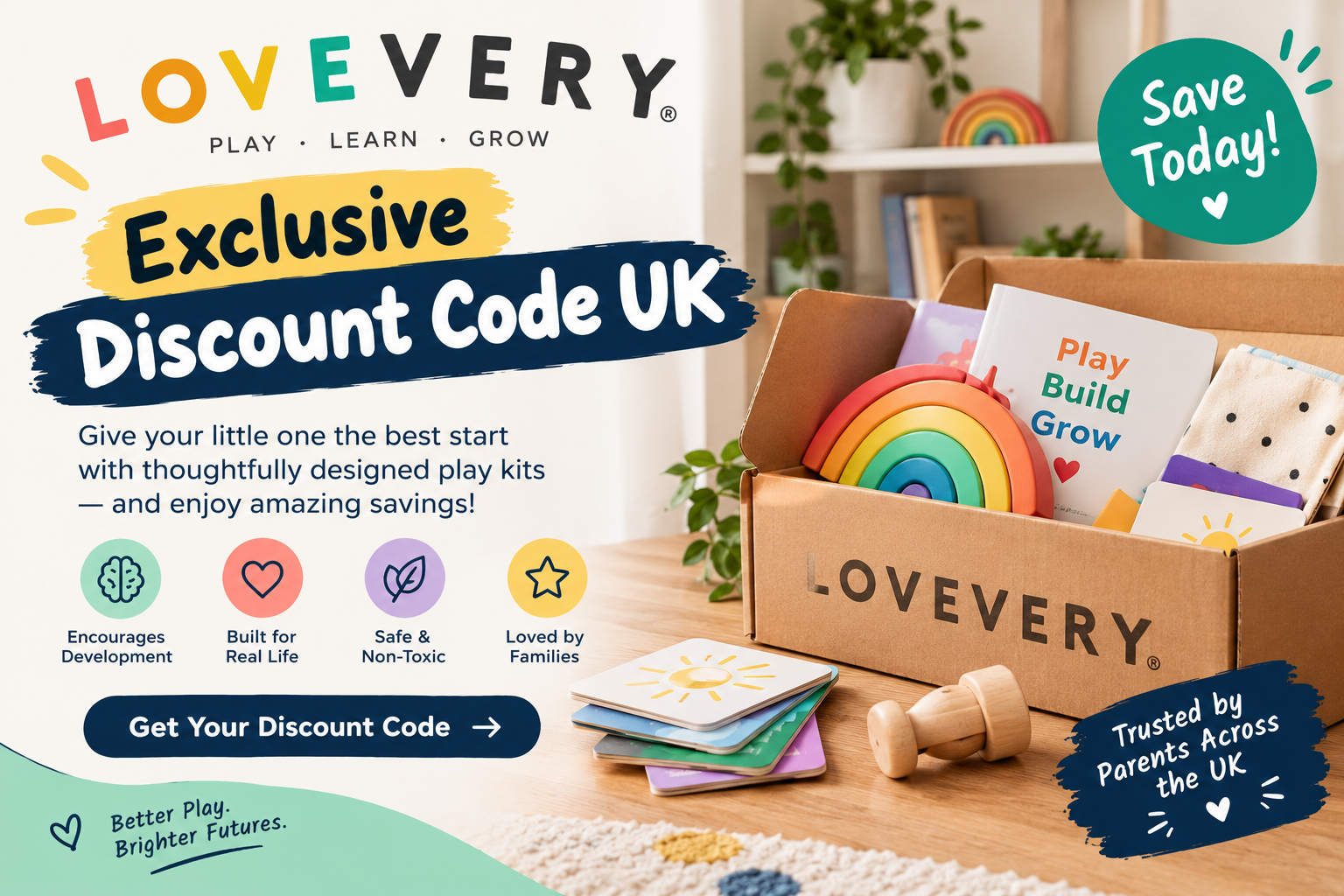
When comparing educational products, some parents explore a Lovevery Discount Code UK while considering the cost of age-appropriate play materials. Before choosing a kit, check its recommended age range, included activities, safety guidance, and suitability for your child's current interests.
A useful play kit should offer opportunities for exploration without making every activity overly complicated. It can also help when toys have more than one use, allowing children to discover new ways to play as their skills develop.
Remember that specialised products are not essential for every learning experience. Everyday items such as large cardboard boxes, safe household containers, picture books, and washable art materials can provide plenty of opportunities for supervised play.
Support Creativity Through Open-Ended Play
Open-ended activities allow children to decide what they want to create or explore. Blocks can become a tower, a bridge, or part of an imaginary town. Paper and crayons can become pictures, patterns, or colourful marks.
These activities encourage children to make choices and express their ideas. There is no single correct result, which makes them suitable for different interests and abilities.
Parents can support creativity by providing a few safe materials and allowing children to experiment. Instead of correcting every unusual idea, ask the child to describe what they are making or explain how they chose to build it.
Messy activities may need preparation, but a washable mat or an easy-to-clean surface can make them more manageable. Choose non-toxic, age-appropriate supplies and supervise activities involving art materials.
Make Play Part of Everyday Family Life
Learning through play does not require a special schedule or a dedicated playroom. Small moments throughout the day can become opportunities for discovery.
A child can sort clean socks by colour, help place safe objects in a basket, listen to a story, or join a simple music game. These activities combine interaction with familiar routines.
Parents can also follow the child's interests. If a child enjoys animals, look at animal pictures, imitate sounds, or use suitable toy figures in pretend play. If they enjoy building, offer blocks or other safe construction materials.
Allow time for both active and quiet play. Children may repeat a favourite activity many times, and repetition can help them become more familiar with a skill.
Focus on Enjoyment, Not Perfection
The value of hands-on play comes from the experience itself. Children do not need to complete every puzzle, create perfect pictures, or master a new skill immediately.
Encouragement, patience, and safe opportunities to explore can help children feel comfortable trying unfamiliar activities. Parents can celebrate effort, notice progress, and offer support when a child needs it.
By choosing suitable materials, following a child's interests, and making time for playful interaction, families can create a positive learning environment at home. Simple activities can provide meaningful opportunities to explore, communicate, think, and grow.
- Managerial Effectiveness!
- Future and Predictions
- Motivatinal / Inspiring
- Fitness and Wellness
- Medical & Health
- Manufacturing
- Education
- Real-Estate
- Food Industry
- Hospitality
- Online Games
- Sports
- Home Services
- Civil Engineering
- Safety and Protection
- Software Products & Services
- Fashion and Jewellery
- Artificial Intelligence
- Entrepreneurship
- Mentoring & Guidance
- Marketing
- Networking
- HR & Recruiting
- Literature
- Shopping
- Career Management & Advancement