

 SkillClick
Investment Platform for Sale
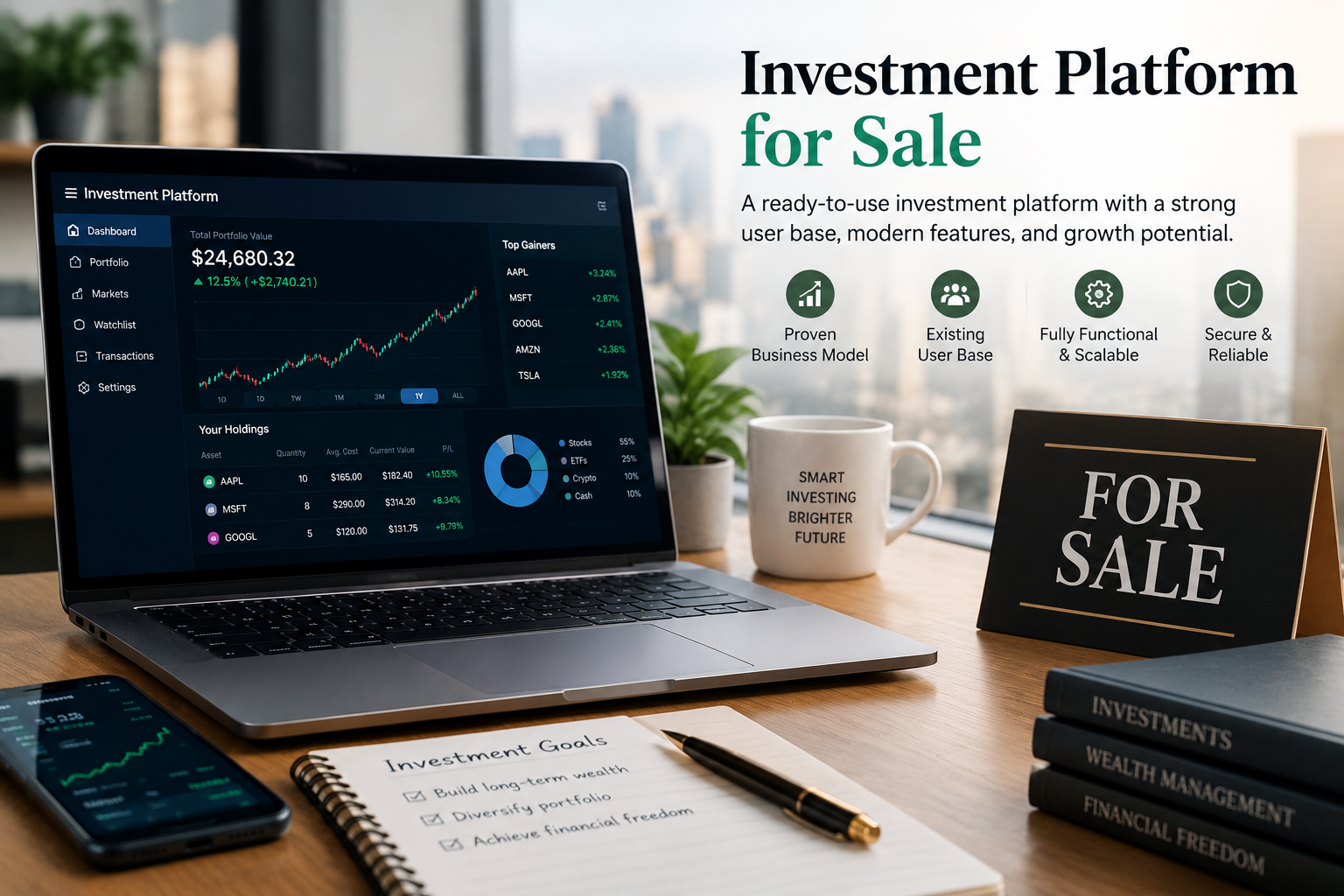
Investment Platform for Sale
The financial technology sector continues to create opportunities for entrepreneurs who want to establish a presence in the digital investment market. From online wealth management services to portfolio tracking applications, technology-driven investment businesses are changing how people access financial information and manage their assets. For buyers who want to enter this competitive industry, an investment platform for sale can provide an alternative to developing a financial technology product entirely from the beginning.
Acquiring an existing platform may offer access to established software, existing customers, operational processes, and a recognizable business identity. However, the value of an acquisition depends on the platform's technical quality, commercial performance, regulatory position, and potential for future development.
Understanding these factors can help prospective buyers evaluate available businesses and make informed acquisition decisions.
What Is an Investment Platform?
An investment platform is a digital service that enables users to access investment-related information, manage portfolios, research financial assets, or interact with authorized investment providers. Depending on its business model, a platform may support stocks, exchange-traded funds, bonds, retirement products, or other permitted financial instruments.
Some platforms focus on helping users monitor their investments, while others provide analytical tools, educational resources, or connections to regulated brokerage services. More advanced businesses may offer portfolio automation or wealth management features, subject to applicable legal requirements.
When searching for an investment platform for sale, buyers should first determine exactly what the product does. A portfolio management application, a financial research website, and a licensed brokerage business are fundamentally different acquisition opportunities.
Why Consider Buying an Existing Investment Platform?
Faster Entry Into the Market
Developing a financial technology product requires planning, software engineering, testing, security reviews, and ongoing maintenance. Purchasing an existing platform may reduce the time needed to establish a technical foundation.
An operational product can provide a starting point for improvements, new features, and customer acquisition. Nevertheless, buyers should inspect the software carefully to determine whether it is suitable for continued development or requires substantial rebuilding.
Access to an Existing Customer Base
Some investment businesses already have registered users, paying subscribers, commercial partners, or recurring customers. These relationships may provide a foundation for future growth.
However, the number of registered accounts does not necessarily indicate a healthy business. Buyers should examine active users, customer retention, subscription renewals, acquisition costs, and revenue concentration to understand the actual strength of the customer base.
Established Technology and Business Processes
An acquisition may include a website, mobile applications, administrative dashboards, reporting tools, documentation, and customer support workflows.
These assets can reduce initial development requirements when they are properly documented, secure, and legally transferable. The buyer should verify ownership of the software, intellectual property, domain names, and third-party integrations before completing the purchase.
Potential for Business Expansion
A suitable platform may offer opportunities to introduce premium subscriptions, analytical features, educational products, or business-to-business services.
Expansion should be based on customer demand rather than assumptions about market size alone. Buyers need to assess whether the existing architecture, budget, team, and regulatory permissions can support their proposed plans.
Types of Investment Platforms Available for Acquisition
1. Portfolio Management Platforms
Portfolio management software helps users organize holdings, monitor asset allocation, review performance, and evaluate investment exposure. Buyers may find opportunities involving subscription-based applications or tools designed for financial professionals.
Important evaluation areas include data accuracy, reporting functionality, user experience, and compatibility with external financial data providers.
2. Online Investment Research Platforms
Research platforms provide company information, financial analysis, market news, screening tools, and educational resources. Their business models may depend on advertising, subscriptions, data services, or professional memberships.
Prospective owners should review the quality of published information, content ownership, search traffic, customer engagement, and any contractual restrictions affecting data distribution.
3. Automated Investment Software
Some platforms use algorithms to support portfolio allocation, financial planning, or investment-related workflows. Such products can offer technical advantages, but they may also involve complex compliance obligations and higher security requirements.
Buyers should investigate how the software makes recommendations, whether its outputs have been independently tested, and which activities require regulatory authorization.
4. Financial Education Platforms
Educational businesses provide courses, tutorials, webinars, and learning resources about investing and personal finance. They may be suitable for entrepreneurs with experience in digital publishing, online education, or subscription management.
Their commercial value depends on course quality, audience engagement, customer satisfaction, and the ability to attract new learners without relying on exaggerated financial promises.
5. Brokerage-Connected Platforms
Some digital products connect users with third-party brokerage firms for account access or transaction execution. These arrangements may involve API integrations, commercial agreements, identity verification, and strict data protection requirements.
An existing integration does not automatically mean the buyer can continue using it. Agreements, permissions, and eligibility should be confirmed with the relevant providers.
How to Evaluate an Investment Platform for Sale
Review Financial Performance
Request reliable financial statements, revenue records, operating expense details, subscription reports, and available tax documentation. Examine whether earnings come from recurring customers or occasional transactions.
Calculate the resources needed to maintain the platform after acquisition, including hosting, engineering, customer service, compliance, insurance, and marketing.
Conduct a Technical Assessment
Arrange an independent review of the source code, application architecture, databases, infrastructure, cybersecurity controls, and software dependencies.
Look for outdated components, unresolved vulnerabilities, inadequate backups, performance problems, and undocumented development practices. Confirm that the seller owns or has the legal right to transfer the relevant intellectual property.
Investigate Legal and Regulatory Matters
Financial technology businesses may operate under different legal requirements depending on their services and the jurisdictions in which they serve customers.
Determine whether the company performs regulated activities, holds necessary permissions, or depends on licensed third parties. In the United States, requirements may involve the Securities and Exchange Commission, FINRA, state authorities, or other applicable regulators, depending on the business model.
Never assume that a license, registration, or contractual relationship automatically transfers to a new owner. Obtain advice from qualified legal and compliance professionals before proceeding.
Analyze Market Position
Study competing products, target customers, pricing models, customer feedback, and market demand. A platform with specialized functionality may be more attractive than a larger product competing directly with established financial institutions.
Identify a realistic competitive advantage, such as a clearly defined audience, efficient workflow, useful analytical tools, or a sustainable distribution strategy.
Steps to Complete a Successful Acquisition
A structured acquisition process can reduce uncertainty and help buyers identify potential problems before committing significant resources.
Begin by defining the acquisition budget, target business model, preferred technology, and intended customer segment. Search for suitable businesses through reputable business brokers, technology acquisition marketplaces, and professional networks.
Next, request documentation from shortlisted sellers and conduct financial, technical, operational, and legal due diligence. Verify important claims independently rather than relying exclusively on marketing materials.
Once the business has passed the initial assessment, negotiate the purchase price, included assets, transition support, payment conditions, and responsibilities for existing liabilities. Use qualified professionals to prepare appropriate transaction documents.
Before closing, create a transition plan covering customer communication, access credentials, vendor agreements, software maintenance, data protection, and employee responsibilities. A carefully managed handover can help preserve business continuity.
Common Risks Buyers Should Avoid
An attractive listing does not guarantee a profitable acquisition. Some platforms have inactive users, inflated revenue claims, weak security, expensive infrastructure, or limited rights to critical software components.
Other businesses may rely heavily on one advertising channel, one major customer, or a third-party provider that can terminate an agreement.
Buyers should also avoid assuming that purchasing software grants permission to provide every financial service supported by its interface. The legal right to operate the business must be evaluated separately from ownership of the technology.
Independent verification, clear contractual protections, and a realistic financial forecast are essential safeguards.
Conclusion
An investment platform for sale can offer entrepreneurs a practical route into the financial technology industry, particularly when an existing business has dependable software, genuine customer demand, and a sustainable commercial model.
The strongest acquisition candidates are not necessarily the largest or most expensive. They are the businesses whose assets, financial performance, legal position, and development potential align with the buyer's objectives.
By examining technical quality, verifying financial information, reviewing regulatory obligations, and planning the transition carefully, buyers can make more informed decisions and build a foundation for responsible long-term growth in the digital investment sector.
- Managerial Effectiveness!
- Future and Predictions
- Motivatinal / Inspiring
- Fitness and Wellness
- Medical & Health
- Manufacturing
- Education
- Real-Estate
- Food Industry
- Hospitality
- Online Games
- Sports
- Home Services
- Civil Engineering
- Safety and Protection
- Software Products & Services
- Fashion and Jewellery
- Artificial Intelligence
- Entrepreneurship
- Mentoring & Guidance
- Marketing
- Networking
- HR & Recruiting
- Literature
- Shopping
- Career Management & Advancement