

 SkillClick
What Questions Should You Ask Before You Hire Dedicated Programmers?
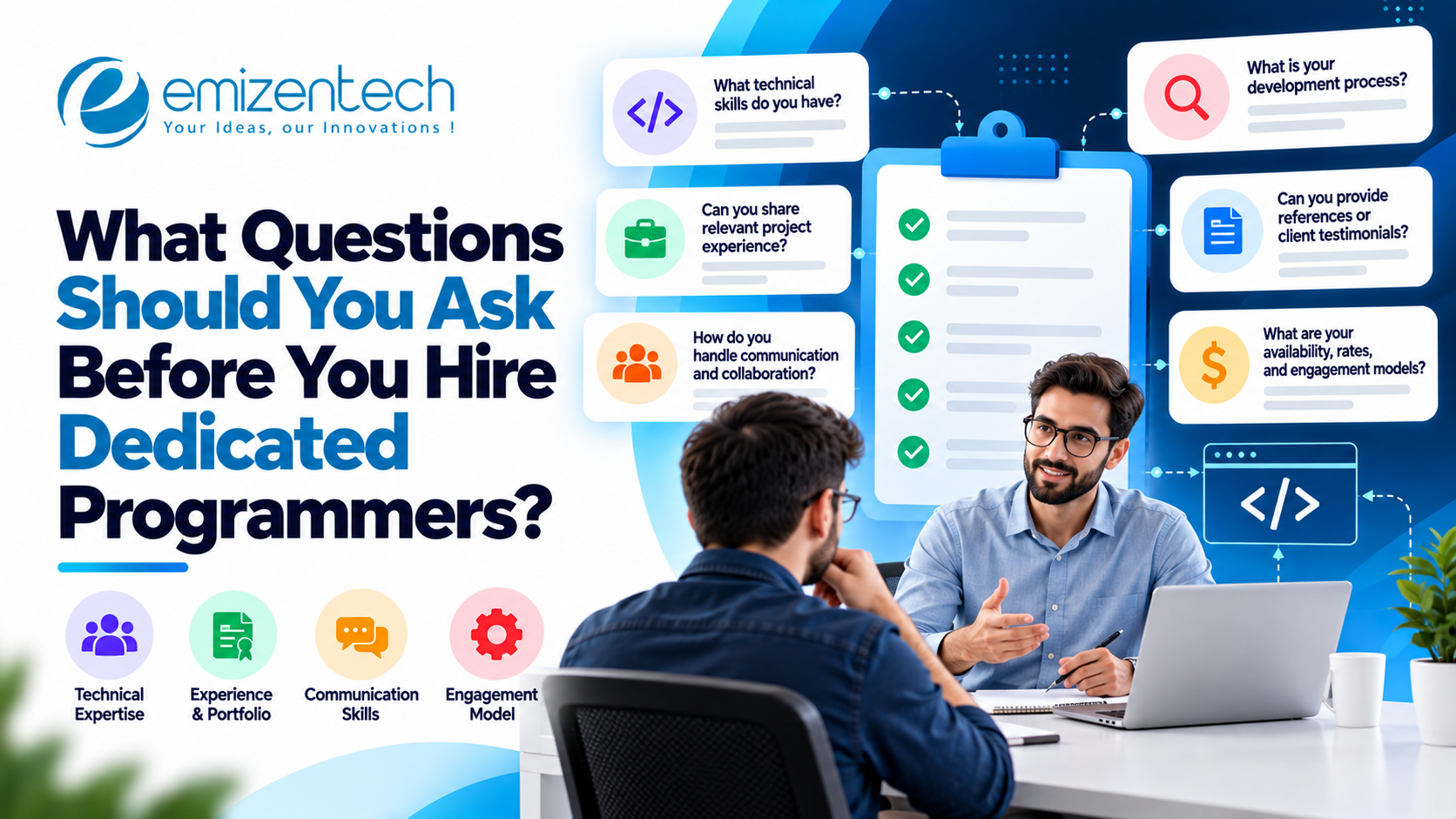
Hiring the right programmer requires more than reviewing a resume or checking technical qualifications. You need to understand how candidates approach problem-solving, manage development tasks, communicate with stakeholders, and handle challenges during a software project. Asking the right interview questions helps you evaluate whether a programmer can meet your technical requirements and business objectives.
Before you hire dedicated programmers, prepare questions that cover technical expertise, previous project experience, coding practices, communication, availability, and long-term support. A structured interview process makes it easier to compare candidates and select professionals who can contribute to your project's success.
1. Questions About Previous Projects and Experience
A programmer's previous work can reveal how well they understand real-world development challenges. Before you hire dedicated programmer, evaluate their experience with similar projects, technical problem-solving abilities, and contributions to successful software solutions.
Questions to ask:
-
Can you describe a custom software project you have worked on and your specific responsibilities?
-
What technical challenges did you face, and how did you resolve them?
-
Have you worked on projects with requirements similar to ours?
-
Can you explain a technical decision you made that improved a project's performance or maintainability?
What to evaluate: Look for specific examples, clear explanations, and evidence of individual contributions. Candidates should be able to explain their decisions rather than simply listing technologies they have used.
2. Questions About Technical Skills and Programming Expertise
Technical questions help you determine whether a candidate has the skills required to build, test, and maintain your software. Tailor these questions to your project's technology stack and complexity.
Questions to ask:
-
Which programming languages and frameworks are you most experienced with?
-
How would you choose the right technology stack for our project?
-
How do you approach database design and third-party API integrations?
-
What steps do you take to optimize application performance?
-
How do you identify and resolve difficult bugs?
What to evaluate: Assess the candidate's technical reasoning, familiarity with relevant tools, and ability to explain trade-offs. Strong programmers should understand not only how to implement a solution but also why it is appropriate for the project.
3. Questions About Problem-Solving and Code Quality
Custom software projects often involve changing requirements, unexpected errors, and complex business logic. Your interview should reveal how programmers approach these situations.
Questions to ask:
-
How do you break down a complex development task into manageable steps?
-
How do you ensure your code remains readable and maintainable?
-
What testing methods do you use to identify defects before release?
-
How do you handle changing requirements after development has started?
-
Can you describe a situation where you had to refactor or improve existing code?
What to evaluate: Look for a systematic approach to debugging, testing, documentation, and code reviews. Candidates should recognize the importance of maintainability and explain how they prevent recurring issues.
4. Questions About Communication and Team Collaboration
Technical ability alone does not guarantee successful delivery. Programmers must communicate progress, clarify requirements, and collaborate effectively with other team members.
Questions to ask:
-
How do you communicate project progress and potential delays?
-
What do you do when business requirements are unclear?
-
How do you respond to feedback during code reviews?
-
Which project management and communication tools have you used?
-
How do you coordinate with designers, testers, and other programmers?
What to evaluate: Look for clear communication, accountability, and a willingness to raise concerns early. Programmers should be comfortable discussing technical risks and asking questions instead of making assumptions that could lead to rework.
5. Questions About Availability and Work Management
When hiring dedicated programmers, you need to establish whether their availability and working arrangements align with your project schedule.
Questions to ask:
-
What is your current availability, and when could you start?
-
Will you work exclusively on our project or divide your time across multiple clients?
-
How many hours per week can you commit?
-
How do you prioritize tasks when several deadlines overlap?
-
Are you comfortable working with our time zone and meeting schedule?
What to evaluate: Confirm actual availability, expected working hours, response times, and scheduling commitments. Document these expectations in the engagement agreement to avoid misunderstandings later.
6. Questions About Security and Source Code Ownership
Security and intellectual property should be discussed before programmers gain access to business systems or confidential information.
Questions to ask:
-
What secure coding practices do you follow?
-
How do you protect sensitive data and application credentials?
-
How do you manage access permissions and third-party dependencies?
-
Are you comfortable signing a confidentiality agreement?
-
How do you handle source code documentation, repository access, and project handover?
What to evaluate: Candidates should understand secure development practices and responsible access management. Ensure the contract clearly establishes intellectual property rights, confidentiality obligations, and your organization's access to the source code and project assets.
7. Questions About Pricing and Engagement Terms
Understanding the commercial arrangement helps you determine whether a programmer fits your budget and project expectations.
Questions to ask:
-
What is your monthly rate, and what services are included?
-
Do you charge a fixed monthly fee or an hourly rate?
-
Are there additional charges for overtime, onboarding, or support?
-
What happens if project requirements change?
-
What are the notice period, replacement terms, and termination conditions?
What to evaluate: Compare the complete engagement cost rather than focusing only on the quoted rate. Clarify deliverables, billing schedules, working hours, and responsibilities before signing the contract.
8. Questions About Maintenance and Long-Term Support
Software development does not end when an application launches. Future updates, bug fixes, security patches, and new features may require ongoing technical support.
Questions to ask:
-
Can you maintain and improve the software after launch?
-
How do you document code and technical decisions?
-
What is your process for handling production issues?
-
How do you approach performance improvements as user numbers grow?
-
What documentation and knowledge transfer will you provide if the engagement ends?
What to evaluate: Prioritize programmers who consider long-term maintainability and can explain how they support software after release. Proper documentation and knowledge transfer help protect your business from unnecessary dependency on one individual.
How to Evaluate Candidates After the Interview
Asking relevant questions is only the first step. Use a consistent evaluation process to compare candidates objectively and reduce the risk of making a poor hiring decision.
-
Review technical competence: Assess whether the candidate's skills match your technology stack and project requirements.
-
Conduct a practical assessment: Use a short coding task, debugging exercise, or architecture discussion relevant to the actual work.
-
Verify previous experience: Examine portfolio examples and clarify the candidate's individual contributions.
-
Assess communication: Determine whether the candidate can explain technical decisions, report risks, and collaborate effectively.
-
Confirm commercial terms: Verify availability, monthly pricing, deliverables, and contractual responsibilities.
A simple scoring system can help your team compare candidates across these criteria. Give technical competence, problem-solving, and relevant experience greater weight for complex software projects, while retaining security, communication, and accountability as essential requirements.
Conclusion
The right interview questions help businesses assess a programmer's technical capabilities, problem-solving approach, communication skills, security awareness, and ability to support software over time. Before making a hiring decision, verify previous experience, conduct practical assessments, and establish clear expectations for pricing, availability, deliverables, and source code ownership.
When you hire dedicated programmers, focus on their ability to deliver maintainable software and work effectively toward your business goals rather than relying solely on resumes or low monthly rates. EmizenTech provides software development services for businesses seeking expertise in custom applications, web platforms, mobile solutions, and enterprise software.
Frequently Asked Questions
1. What are the most important questions to ask a dedicated programmer?
Ask about relevant project experience, technical skills, problem-solving methods, code quality, communication, availability, security practices, and pricing. Tailor the questions to your project's specific requirements.
2. Should I conduct a coding test before hiring a programmer?
Yes. A short, relevant coding or debugging assessment can help verify practical skills and reveal how candidates approach real development challenges.
3. How can I check whether a programmer is suitable for my project?
Review their portfolio, verify their individual contributions, assess their technical reasoning, and confirm that their experience matches your software requirements and delivery expectations.
4. What should I confirm before signing a programmer's contract?
Clarify the monthly rate, working hours, deliverables, payment terms, confidentiality obligations, intellectual property ownership, source code access, and termination conditions.
5. Is a technical interview enough to select a dedicated programmer?
No. Combine technical interviews with practical assessments, portfolio reviews, communication evaluations, and reference checks where appropriate. This provides a more reliable basis for your decision.
- Managerial Effectiveness!
- Future and Predictions
- Motivatinal / Inspiring
- Fitness and Wellness
- Medical & Health
- Manufacturing
- Education
- Real-Estate
- Food Industry
- Hospitality
- Online Games
- Sports
- Home Services
- Civil Engineering
- Safety and Protection
- Software Products & Services
- Fashion and Jewellery
- Artificial Intelligence
- Entrepreneurship
- Mentoring & Guidance
- Marketing
- Networking
- HR & Recruiting
- Literature
- Shopping
- Career Management & Advancement