

 SkillClick
Pharmacovigilance Course With Placement: Eligibility, Course Modules, Practical Training, Certification, and Career Support
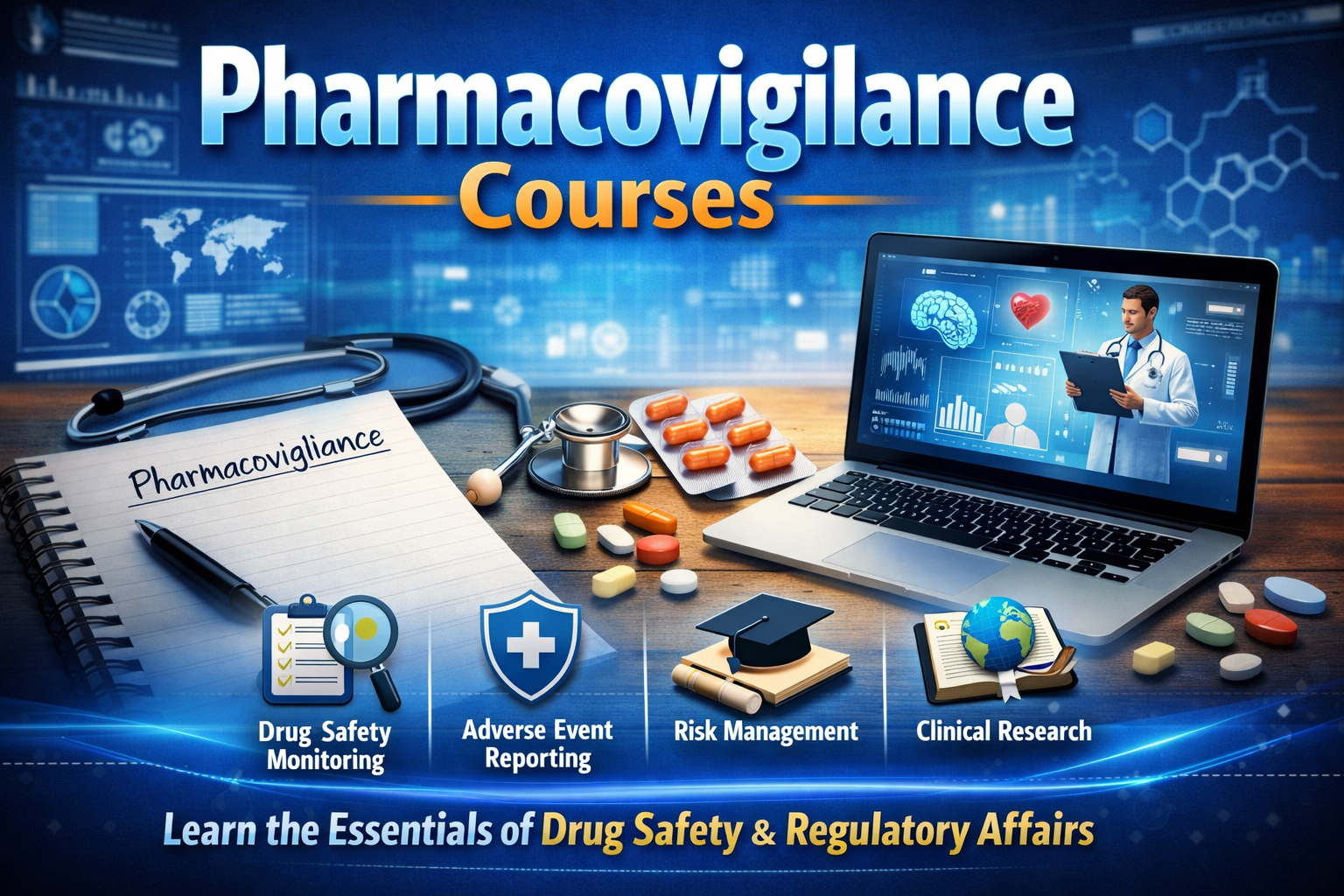
The pharmaceutical industry places strong emphasis on monitoring the safety and effectiveness of medicines throughout their lifecycle. Pharmacovigilance plays a vital role in identifying, assessing, understanding, and preventing adverse effects associated with medicines and other healthcare products. As pharmaceutical companies, clinical research organizations, and healthcare institutions continue to focus on drug safety, trained pharmacovigilance professionals are increasingly important.
A pharmacovigilance course can help students and professionals understand drug safety processes, adverse event reporting, safety databases, regulatory requirements, and risk management. It can be a suitable career-oriented option for graduates from pharmacy, life sciences, biotechnology, medicine, and related fields.
What Is a Pharmacovigilance Course?
A pharmacovigilance course is a specialized training program focused on the principles and practices involved in monitoring medicine safety. It introduces learners to the processes used to collect, assess, document, and report information about adverse events and other safety-related concerns.
Depending on the curriculum, students may learn about Individual Case Safety Reports (ICSRs), adverse drug reactions, seriousness and severity assessment, causality assessment, signal detection, aggregate reports, risk management, and regulatory guidelines.
Practical examples and case studies can help learners understand how pharmacovigilance activities are performed in professional environments.
Why Choose a Pharmacovigilance Course?
Pharmacovigilance combines healthcare knowledge, drug safety, data analysis, documentation, and regulatory compliance. A structured pharmacovigilance courses can help learners develop foundational knowledge in these areas.
A comprehensive program may cover:
- Introduction to pharmacovigilance and drug safety
- Adverse drug reactions and adverse events
- Individual Case Safety Reports
- Case processing and documentation
- Seriousness and severity assessment
- Causality assessment
- Signal detection
- Aggregate safety reports
- Risk-benefit assessment
- Pharmacovigilance regulations
- Good Pharmacovigilance Practices (GVP)
- Drug safety databases and workflows
These topics can help students understand the complete safety-reporting process and the role of pharmacovigilance within the pharmaceutical industry.
Pharmacovigilance Course in Pune
Pune is an established education and pharmaceutical hub, making a pharmacovigilance course in Pune an attractive option for graduates interested in drug safety and pharmaceutical careers.
When comparing institutes, students should evaluate the curriculum, faculty experience, practical exposure, course duration, certification, learning format, and career support. Training that includes real-world safety cases and practical assignments can help learners better understand how pharmacovigilance concepts are applied.
Candidates should also check whether the program is suitable for their educational background and career objectives before enrolling.
Pharmacovigilance Course With Placement in Pune
Many students search for a pharmacovigilance course with placement in Pune because career support can be an important factor when choosing professional training.
Placement assistance may include resume preparation, interview training, mock interviews, job-search guidance, and access to relevant interview opportunities. However, students should clearly understand the difference between placement assistance and guaranteed employment.
Before enrolling, candidates should ask the institute about its career-support process, interview assistance, industry connections, and post-course guidance.
Pharmacovigilance Course With Placement
A pharmacovigilance course with placement can be particularly useful for fresh graduates who need support transitioning from academic education to employment.
Career-focused training may combine technical learning with employability skills such as communication, resume development, interview preparation, and understanding industry job requirements.
Students should consider placement support as one factor alongside curriculum quality, practical training, faculty expertise, and certification.
Pharmacovigilance Course Fee
The pharmacovigilance course fee can vary significantly depending on the institute, course duration, learning format, curriculum, practical training, certification, and additional career-support services.
Online programs, classroom courses, short-term certifications, and comprehensive professional programs may have different fee structures. Therefore, candidates should compare the overall value of a program rather than selecting a course solely based on its price.
Before registration, students should confirm the complete fee structure, course duration, certification details, study materials, practical sessions, and any additional charges.
Pharmacovigilance Certification
A pharmacovigilance certification can demonstrate that a learner has completed structured training in fundamental drug-safety concepts. Certification can be useful when presenting relevant training on a resume, particularly for candidates seeking entry-level opportunities.
However, certification alone does not guarantee employment. Employers may also consider educational qualifications, practical knowledge, communication skills, analytical abilities, and relevant experience.
Career Opportunities After Pharmacovigilance Training
A pharmacovigilance professional can work across pharmaceutical companies, biotechnology organizations, CROs, healthcare companies, and other organizations involved in drug safety.
Depending on qualifications and experience, potential roles include:
- Pharmacovigilance Associate
- Drug Safety Associate
- Case Processing Associate
- Safety Data Associate
- Pharmacovigilance Executive
- Drug Safety Specialist
- Medical Reviewer
- Safety Reporting Associate
With experience and additional specialization, professionals may progress toward senior drug-safety, signal-management, aggregate-reporting, or safety-management positions.
Who Can Enroll in a Pharmacovigilance Course?
Eligibility varies by institute. Many programs are designed for graduates from pharmacy, pharmaceutical sciences, biotechnology, life sciences, microbiology, biochemistry, medicine, and related healthcare disciplines.
Before choosing a course, candidates should review the institute's eligibility requirements, syllabus, duration, certification, learning methodology, and career-support offerings.
Future Scope of Pharmacovigilance
The continuous monitoring of medicine safety is an important part of the pharmaceutical product lifecycle. As new medicines and healthcare products enter the market, organizations need processes and professionals capable of identifying and evaluating potential safety concerns.
For candidates interested in pharmaceutical safety, a pharmacovigilance course can provide a structured starting point for understanding adverse event reporting, case processing, signal detection, regulatory requirements, and drug-safety operations.
Choose the Right Pharmacovigilance Training
Selecting the right training program requires more than comparing the pharmacovigilance course fee. Students should consider curriculum quality, practical exposure, faculty expertise, certification, learning flexibility, and career support.
Whether you are looking for a pharmacovigilance course in Pune, a pharmacovigilance course with placement, or a program that provides pharmacovigilance certification, comparing these factors can help you make a more informed career decision.
- Managerial Effectiveness!
- Future and Predictions
- Motivatinal / Inspiring
- Fitness and Wellness
- Medical & Health
- Manufacturing
- Education
- Real-Estate
- Food Industry
- Hospitality
- Online Games
- Sports
- Home Services
- Civil Engineering
- Safety and Protection
- Software Products & Services
- Fashion and Jewellery
- Artificial Intelligence
- Entrepreneurship
- Mentoring & Guidance
- Marketing
- Networking
- HR & Recruiting
- Literature
- Shopping
- Career Management & Advancement