

 SkillClick
What Makes Single-Ply TPO Commercial Roofing a Practical Choice for Summerlin Businesses?
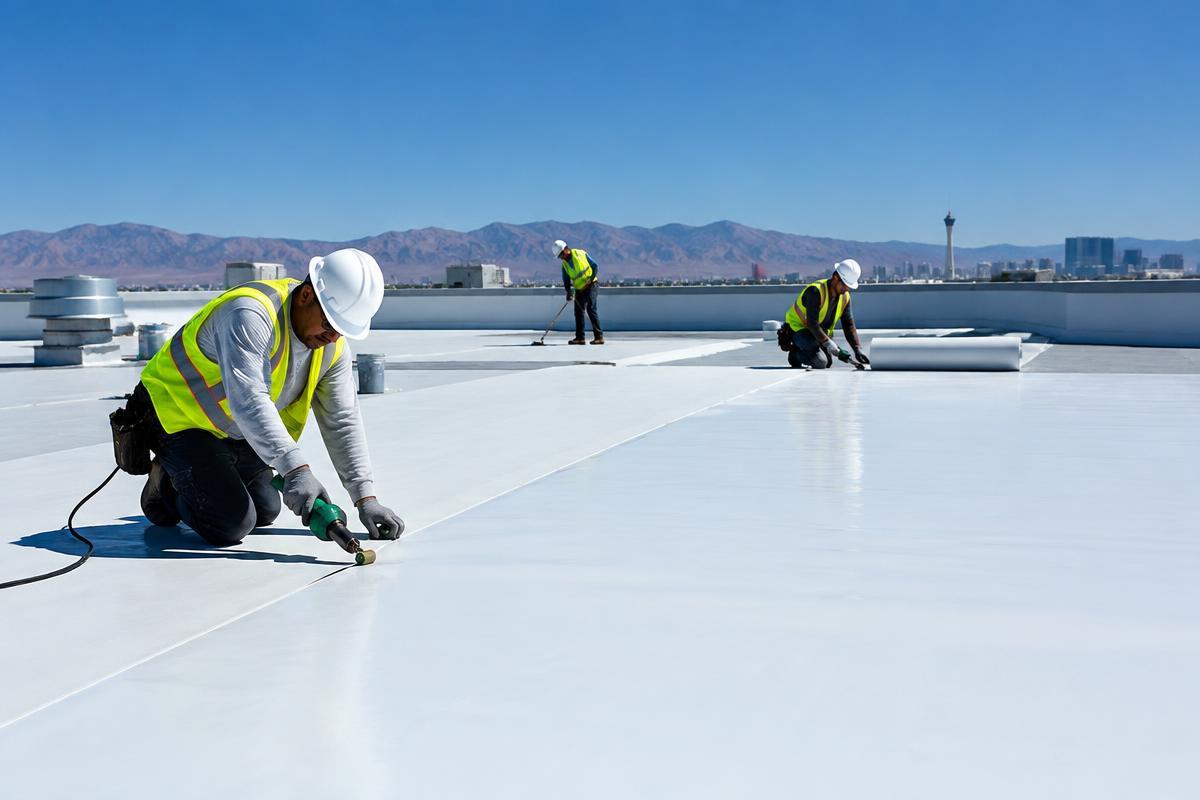
Commercial roofing has to do more than keep rain out. A commercial roof protects equipment, inventory, employees, interior spaces, and the daily operations that keep a business moving. In a place such as Summerlin, Nevada, the roofing system also has to cope with intense sunlight, high temperatures, seasonal weather changes, and the long-term effects of constant exposure.
For many commercial properties, single-ply TPO roofing offers a combination of durability, energy-conscious performance, and installation flexibility that makes it worth considering. Thermoplastic polyolefin, commonly called TPO, is a single-layer roofing membrane designed for low-slope and flat commercial roof applications. Its characteristics make it particularly relevant for buildings where controlling heat exposure and maintaining a dependable roof surface are ongoing priorities.
How Does TPO Roofing Work on a Commercial Building?
TPO roofing is installed as a membrane system over a prepared commercial roof assembly. Rather than relying on traditional shingles or multiple layers of conventional roofing materials, the system uses broad membrane sheets that are joined together to create a continuous protective surface.
One of the defining features of TPO is its heat-welded seams. Specialized equipment can fuse adjoining membrane sections together, creating sealed connections across the roof. Properly executed seams can help reduce the risk of water entering through vulnerable joints.
The membrane itself is also designed to resist several common forms of environmental exposure. Depending on the specific product and installation, TPO systems can provide resistance to ultraviolet radiation, weathering, and other conditions that commercial roofs routinely encounter.
For building owners, the value is not simply in the membrane material. The entire roofing assembly matters, including the condition of the existing roof, insulation, drainage, attachment method, flashing, penetrations, and workmanship.
Why Does Summerlin's Climate Matter When Selecting a Commercial Roof?
A roof in Summerlin spends much of its life exposed to the elements. Strong sunlight and elevated temperatures can place significant stress on roofing materials over time. This makes material selection an important part of commercial property planning.
TPO membranes are commonly manufactured with reflective surfaces that can help reduce the amount of solar energy absorbed by the roof. A roof that reflects more sunlight may remain cooler than a darker surface under comparable conditions. That characteristic can be especially relevant for commercial buildings where cooling demand is a major operational consideration.
The roof's environment should still be evaluated as a whole. Rooftop equipment, mechanical units, foot traffic, drainage patterns, penetrations, and surrounding structures can all affect how a roofing system performs.
A good commercial roofing decision therefore starts with the building itself rather than simply choosing a material because it is popular. The property's use, roof design, insulation requirements, existing conditions, and long-term maintenance expectations should all be considered.
What Should Property Owners Examine Before Installing TPO?
The condition of the existing roof is one of the first issues to investigate. Installing a new membrane over an unsuitable substrate can create problems later, even when the membrane itself is well manufactured.
A professional assessment should look for signs such as:
-
Damaged or deteriorated roofing materials
-
Ponding water or inadequate drainage
-
Loose or compromised areas
-
Damaged flashing
-
Problems around vents and rooftop equipment
-
Moisture intrusion
-
Weak or deteriorated decking
-
Previous repairs that may affect the new installation
Drainage deserves particular attention. Commercial flat and low-slope roofs are designed to move water toward drains, scuppers, or other drainage points. If water repeatedly remains on the roof after precipitation, the underlying cause should be addressed rather than simply covered.
Roof penetrations also require careful detailing. HVAC equipment, pipes, vents, skylights, and other penetrations interrupt the membrane surface and create areas where installation quality becomes especially important.
How Can Businesses Approach TPO Installation More Effectively?
The installation process should be treated as a complete roofing project rather than a simple membrane replacement.
The first stage typically involves evaluating the existing roof and determining whether sections can remain, require repair, or should be removed. The substrate must then be prepared so the new system has a suitable foundation.
Insulation may also play an important role. The appropriate insulation configuration depends on the building, existing assembly, energy objectives, and applicable project requirements. A roofing professional can help determine how insulation and membrane installation should work together.
Once the surface is prepared, membrane sheets are positioned and secured according to the selected system. Seams are heat-welded, and edges, corners, penetrations, and transitions receive specialized attention.
Quality control during this stage matters. A visually complete roof is not necessarily a properly installed roof. Seam integrity, attachment, flashing details, drainage, and membrane transitions should all be checked before the project is considered complete.
For property owners comparing contractors, the most useful questions often concern installation methods, material specifications, preparation work, project scope, and how difficult roof details will be handled.
Which Commercial Properties Can Benefit From TPO Roofing?
TPO is used across a variety of commercial and low-slope building applications. It may be considered for offices, retail properties, warehouses, industrial facilities, and other structures with suitable roof configurations.
The best choice still depends on the individual property. A roof that works well for one building may not be appropriate for another because of differences in slope, structural design, existing materials, insulation, rooftop equipment, or maintenance requirements.
Building owners should also think beyond the initial installation. Accessibility for future maintenance, rooftop traffic, equipment servicing, drainage, and potential repairs can influence the practical performance of the system.
For businesses evaluating roofing options in the area, reflective Single-Ply TPO Commercial Roofing in Summerlin can be worth discussing when solar exposure, low-slope roof design, and long-term roof performance are important considerations. The right system should ultimately be selected based on the building's actual requirements rather than a generic assumption about what every commercial property needs.
What Maintenance Does a TPO Commercial Roof Need?
Even a well-installed commercial roof should not be ignored after installation. Routine inspections can help identify developing problems before they become larger repairs.
Property managers should pay attention to membrane damage, punctures, unusual wear, blocked drainage points, damaged flashing, and changes around rooftop equipment. Areas that receive frequent foot traffic may require particular attention because repeated activity can affect roofing surfaces.
Drainage systems should also remain clear. Leaves, debris, dirt, and other obstructions can interfere with proper water movement. A drainage problem that appears minor can become more serious when water repeatedly collects in the same area.
Inspections are especially useful after significant weather events or when contractors have accessed rooftop equipment. HVAC technicians and other trades may need to work around the membrane, making coordination important.
Maintenance does not eliminate every roofing problem, but it gives property owners a better opportunity to identify deterioration while repairs are still manageable.
What Should Businesses Consider When Comparing Commercial Roofing Options?
Cost is naturally part of any commercial roofing decision, but it should not be the only consideration. A lower initial price may not represent the best long-term value if the system requires extensive repairs or does not suit the building's conditions.
Property owners can compare options by looking at expected service requirements, installation complexity, energy-related characteristics, durability, repair considerations, and compatibility with the existing roof assembly.
It is also useful to examine how a roofing system will interact with the rest of the building. Insulation, HVAC performance, drainage, rooftop equipment, and maintenance access all contribute to the property's overall performance.
The contractor matters just as much as the material. Even a high-quality membrane depends on proper preparation, detailing, seam work, flashing, and installation practices.
A Better Way to Think About Commercial Roof Selection
Choosing a commercial roofing system is ultimately a property-management decision, not simply a material decision. The roof needs to support the building's purpose, climate demands, maintenance expectations, and long-term operational goals.
Single-ply TPO can be a practical option for suitable commercial buildings because of its membrane design, reflective characteristics, heat-welded seams, and adaptability to many low-slope applications. Its effectiveness, however, depends on correct system selection and professional installation.
For businesses in Summerlin, the strongest approach is to evaluate the roof as a complete system. Understanding the existing conditions, drainage, insulation, rooftop equipment, membrane requirements, and future maintenance needs can help property owners make a more informed decision and avoid treating roofing as a short-term fix.
A carefully planned commercial roof can provide dependable protection while supporting the building's broader performance for years to come.
More details are available at: Local Business Listings
- Managerial Effectiveness!
- Future and Predictions
- Motivatinal / Inspiring
- Fitness and Wellness
- Medical & Health
- Manufacturing
- Education
- Real-Estate
- Food Industry
- Hospitality
- Online Games
- Sports
- Home Services
- Civil Engineering
- Safety and Protection
- Software Products & Services
- Fashion and Jewellery
- Artificial Intelligence
- Entrepreneurship
- Mentoring & Guidance
- Marketing
- Networking
- HR & Recruiting
- Literature
- Shopping
- Career Management & Advancement