

 SkillClick
How We AppIt Right Turns Fantasy Sports Ideas into Scalable Apps
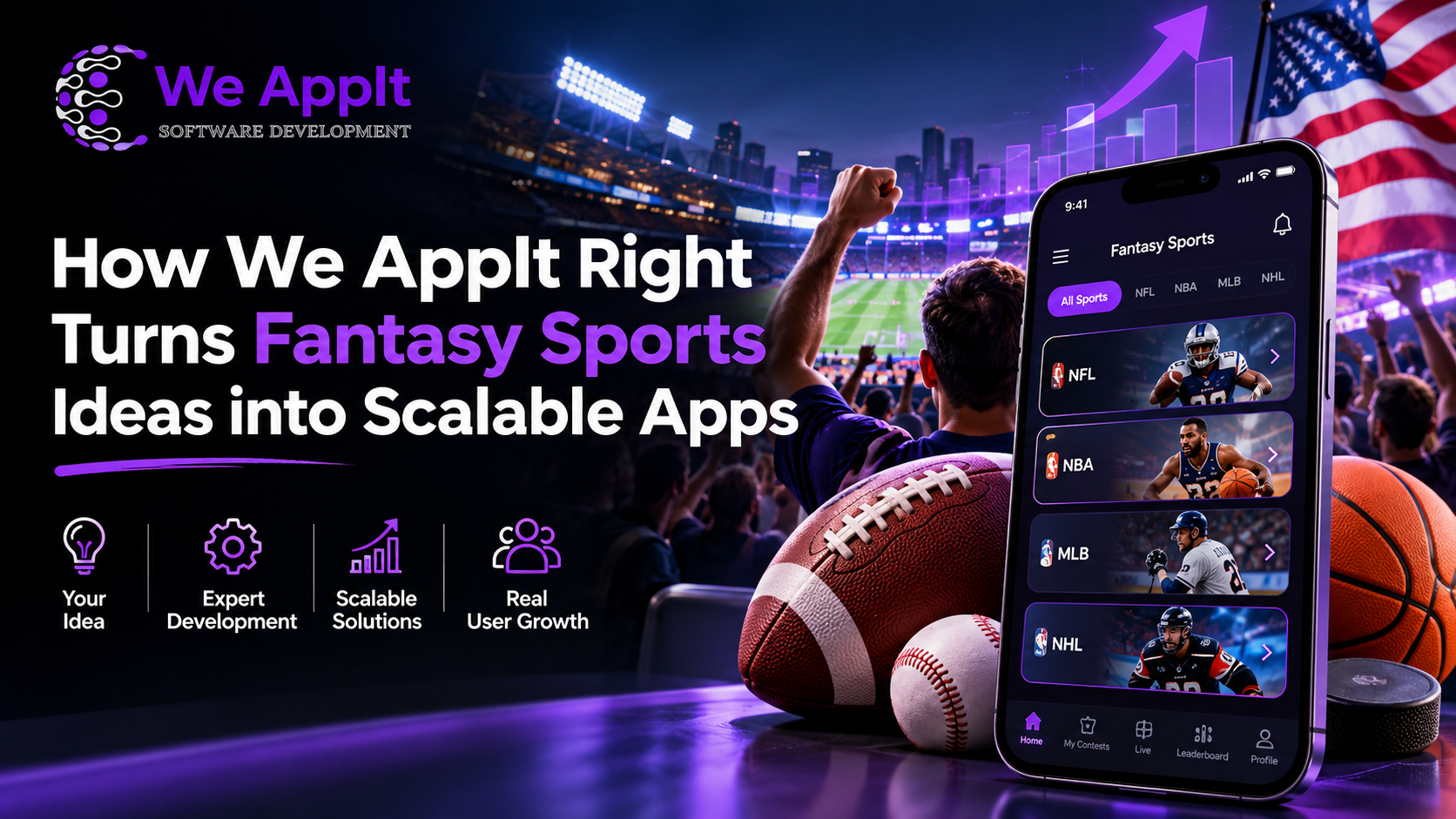
A fantasy sports idea can start with something simple: a new contest format, a better way to build teams, faster live updates, or a more engaging way for users to follow their favorite sports. But turning that idea into a working app is a different challenge.
A successful fantasy sports app needs more than attractive screens. It needs reliable technology, smooth performance, secure payments, accurate sports data, real-time scoring, and a backend that can handle a growing number of users. This is where the right development approach makes a real difference.
We AppIt Right focuses on taking an initial fantasy sports concept and turning it into a practical, scalable digital product. The process starts with understanding the idea and continues through planning, design, development, testing, launch, and future improvements.
Starting With the Idea
Every fantasy sports product is different. Some businesses want a daily fantasy sports platform, while others may want a season-long fantasy league, prediction-based contests, or a Pick'em-style experience.
Before development begins, the first step is to understand what the app is actually supposed to do.
This includes questions such as:
-
Who will use the app?
-
Which sport or sports will it support?
-
What type of contests will users join?
-
How will points be calculated?
-
What will the user journey look like?
-
How will users deposit and withdraw money, if applicable?
-
What makes the product different from other fantasy platforms?
These questions help turn a general idea into a clear product plan. Instead of starting with code immediately, the development team can identify the important features, technical requirements, and possible challenges early.
Turning Features Into a Practical Product Plan
Once the idea is clear, it needs to be converted into a development plan.
A fantasy sports app may include user registration, profile management, team creation, contests, leaderboards, notifications, payment integration, referral programs, promotions, admin controls, and live match updates.
Trying to build everything at once can make the project expensive and difficult to manage. A better approach is to separate essential features from features that can be added later.
For example, the first version may focus on account creation, team selection, contest participation, scoring, and leaderboards. Additional features such as advanced analytics, social features, loyalty programs, or personalized recommendations can be introduced as the platform grows.
This approach allows businesses to launch a usable product while keeping room for future expansion.
Designing an Easy User Experience
Fantasy sports apps can become complicated very quickly. Users may have to select players, check credits, understand scoring rules, join contests, follow rankings, and monitor live matches.
The design should make these actions easy to understand.
The team selection screen, for example, should clearly show available players, roles, prices or credits, and selection limits. Contest pages should make entry fees, prize details, rules, and available spots easy to find.
Good design is not simply about making an app look modern. It is about reducing confusion and helping users complete tasks without unnecessary steps.
This is one area where an experienced fantasy sports app development company can add value because the design needs to work together with the technical structure of the platform.
Building a Strong Technical Foundation
Scalability needs to be considered from the beginning. A platform that works well for a few thousand users may face problems when traffic suddenly increases during a major sporting event.
The technology stack should therefore support performance, reliability, and future growth.
Depending on the project requirements, the app may use technologies such as React Native or Flutter for mobile development, React or Next.js for web applications, and Node.js or Python for backend services. Databases such as PostgreSQL, MySQL, or MongoDB can be selected according to the type of information being stored.
Caching technologies such as Redis can also help reduce database load and improve response times.
The exact technology choices should depend on the app's features rather than simply following a popular technology trend.
Making Live Scoring Work Smoothly
Real-time scoring is one of the most important parts of many fantasy sports platforms.
Users expect points, player statistics, rankings, and contest information to change as the real match changes. Delays or incorrect information can quickly affect the user experience.
To support this, fantasy platforms may connect with sports data providers and use technologies such as WebSockets, Socket.IO, or event-driven systems.
The system needs to receive sports data, process relevant events, apply the platform's scoring rules, update player points, and reflect those changes across the application.
This entire process needs careful testing because even a small scoring error can affect thousands of users during a live match.
Keeping the Backend Ready for Growth
Scalability is not only about choosing powerful servers. The application architecture also matters.
A growing fantasy platform may experience sudden traffic spikes when an important match starts. Thousands or even millions of users may log in, create teams, join contests, and check leaderboards around the same time.
A scalable backend can divide responsibilities across different services and use tools such as caching, queues, load balancing, and cloud infrastructure where appropriate.
This makes it easier to increase capacity as demand grows without rebuilding the entire application.
For a business planning long-term growth, this is an important part of working with a fantasy sports app development company because the technical architecture should support future user and feature growth from the start.
Protecting Users and Their Data
Security cannot be treated as an optional feature in a fantasy sports platform.
The application may handle personal information, account details, payment information, and other sensitive data. Strong security practices should therefore be included throughout development.
These can include secure authentication, encrypted communication, access controls, secure API practices, monitoring, regular testing, and protection against common web and mobile security risks.
Payment systems also need careful integration. The exact payment options and verification processes will depend on the target market and applicable legal requirements.
Building a Powerful Admin Panel
The user-facing app is only one side of the platform. Administrators also need tools to manage the business.
A well-designed admin panel can allow authorized staff to manage users, contests, matches, teams, scoring rules, promotions, transactions, notifications, and reports.
It can also provide useful information about platform activity. For example, administrators may need to see how many users joined a contest, how many teams were created, or whether a particular match is receiving unusual traffic.
Having these controls in one place makes day-to-day management easier.
Testing Before Launch
A fantasy sports app needs more than normal functional testing.
The development team should test different parts of the platform under realistic conditions. This can include checking team-selection rules, scoring calculations, contest limits, payment flows, notifications, API responses, and live updates.
Load testing is particularly important. The goal is to understand how the system behaves when a large number of users perform actions at the same time.
Testing on different devices and screen sizes is also important because users may access the platform through different phones, browsers, and operating systems.
Launching and Improving the Platform
Launching the first version is not the end of development.
After launch, real user behavior can reveal problems and opportunities that were not obvious during planning. Analytics, user feedback, crash reports, and performance data can help identify what needs attention.
The product can then be improved through regular updates.
New contest formats, additional sports, improved dashboards, loyalty features, better notifications, or advanced statistics can be added as the business develops.
This creates a product that grows with its audience instead of trying to predict every future requirement before launch.
Why the Development Approach Matters
A fantasy sports idea can look simple on paper, but the technology behind it can be complex. Real-time data, scoring logic, user traffic, payments, security, and scalability all need to work together.
We AppIt Right takes a step-by-step approach to this process, starting with the business idea and moving toward a product that can handle real users and future growth.
The goal is not simply to build another fantasy sports application. It is to create a platform with a clear purpose, reliable technology, simple user experience, and enough flexibility to evolve over time.
For businesses entering the fantasy sports market, choosing the right development process early can save time, reduce unnecessary costs, and create a stronger foundation for long-term growth.
- Managerial Effectiveness!
- Future and Predictions
- Motivatinal / Inspiring
- Fitness and Wellness
- Medical & Health
- Manufacturing
- Education
- Real-Estate
- Food Industry
- Hospitality
- Online Games
- Sports
- Home Services
- Civil Engineering
- Safety and Protection
- Software Products & Services
- Fashion and Jewellery
- Artificial Intelligence
- Entrepreneurship
- Mentoring & Guidance
- Marketing
- Networking
- HR & Recruiting
- Literature
- Shopping
- Career Management & Advancement