

 SkillClick
Inside the Rise of Global Voice Chat Platforms
A decade ago, "connecting with people around the world" mostly meant scrolling through a forum or following strangers on social media. Today, global voice chat platforms offer something more immediate: live, real-time conversation with people from entirely different countries and cultures, often within minutes of opening the app.
What's driving this shift is partly technological — reliable low-latency audio at scale is a relatively recent capability — but it's also cultural. Younger users in particular are increasingly comfortable with voice-first interaction, having grown up with video calls, voice notes, and livestreams as normal parts of daily communication. Global voice platforms are simply extending that comfort into a more structured, discovery-oriented format.
Themed rooms are the mechanism that makes a genuinely global platform navigable rather than chaotic. Instead of one enormous, undifferentiated space where conversation is impossible to follow, users can find rooms organized around specific interests — music, language exchange, gaming, general hangout — which naturally groups people with something in common regardless of geography.
Time zone coverage is an underappreciated factor in whether a platform's "global" claim actually holds up. A truly international user base means there's meaningful activity at most hours of the day somewhere in the world, so a user in one region isn't stuck in an empty room just because it's late at night where the app's core audience happens to be concentrated.
Language exchange in particular has become one of the more popular use cases. Rather than relying on a textbook or a formal course, users get informal, low-stakes voice practice with native speakers, often trading language help both directions in the same conversation. That kind of real-time, unscripted practice is difficult to replicate through any other format.
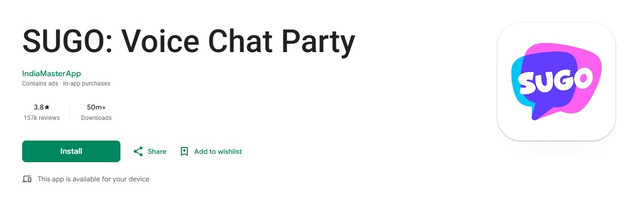
SUGO is one of the platforms designed specifically around this kind of cross-border, real-time interaction, structuring its rooms and discovery features to support genuinely global participation rather than being dominated by a single region by default. For users curious about what a global voice-chat community actually looks like in practice, spending even a short session browsing active rooms tends to be more informative than any description of the concept.
As voice-first platforms continue to grow, the distinction between "international app" and "genuinely global community" is likely to matter more, not less — and it largely comes down to the structural choices around room design, moderation, and time zone coverage discussed here.
Infrastructure investment behind the scenes is part of what makes this kind of platform reliable enough to trust for daily use. Low-latency audio across long distances is a genuinely hard technical problem, and platforms that get it right — minimal lag, clear audio quality even with dozens of participants in a room — tend to earn much more consistent engagement than those where technical friction gets in the way of natural conversation. Users may not think about this directly, but it's often the quiet reason one platform feels noticeably better to use than another.
User-driven translation and language tools have started to play a growing supporting role on some global platforms, helping bridge conversations where participants don't share a first language. While these tools aren't a full substitute for genuine communication, they can lower the initial barrier enough for a conversation to get started, after which shared interest and tone tend to carry the interaction further than translation accuracy alone ever could.
As these platforms continue to mature, the ones that invest seriously in this kind of underlying reliability and cross-cultural usability are likely to be the ones that sustain genuinely global communities over the long term.
FAQ
What makes a voice chat platform "global" rather than just international? Consistent activity across multiple time zones and a genuinely diverse user base, rather than concentration in one region.
Are global voice chat rooms good for practicing a new language? Yes, many users use themed rooms specifically for informal language exchange with native speakers.
Do I need to share a language with everyone in a room? Not necessarily — many rooms are organized around shared interests that transcend language, or offer multilingual spaces.
How do these platforms handle time zone differences? Platforms with a genuinely global user base tend to have active rooms at most hours, rather than going quiet outside one region's peak hours.
- Managerial Effectiveness!
- Future and Predictions
- Motivatinal / Inspiring
- Fitness and Wellness
- Medical & Health
- Manufacturing
- Education
- Real-Estate
- Food Industry
- Hospitality
- Online Games
- Sports
- Home Services
- Civil Engineering
- Safety and Protection
- Software Products & Services
- Fashion and Jewellery
- Artificial Intelligence
- Entrepreneurship
- Mentoring & Guidance
- Marketing
- Networking
- HR & Recruiting
- Literature
- Shopping
- Career Management & Advancement