

 SkillClick
Which Rubber Blends Suit Homogenizing Agents?
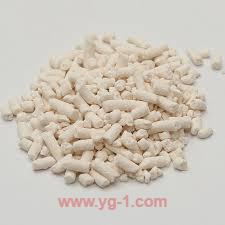
Rubber blending rarely produces a simple, even mixture. When two or more polymers with differing polarity, viscosity, or unsaturation enter the same compound, they tend to resist each other, forming domains that behave unevenly during processing and service. A Homogenizing agent addresses this friction by promoting compatibility at the interface, allowing the polymers to flow together and cure as one coherent material. YG-1 Donghai Chemical, a long established supplier of rubber processing aids, offers such additives alongside accelerators, antioxidants, and scorch retarders. Which rubber blends actually derive the greatest gain from this approach?
Natural rubber combined with styrene butadiene rubber represents a familiar pairing in tire compounds and general mechanical goods. These two polymers share hydrocarbon backbones, yet their molecular weight distributions and cure responses differ enough to cause uneven filler distribution. A homogenizing agent eases their integration, supporting consistent tensile strength and reduced variation across a batch. The same holds for natural rubber blended with butadiene rubber, where the additive helps the polymers reach a uniform crosslink density.
Butyl rubber presents a stiffer test. Its low unsaturation and compact chain structure make it reluctant to blend with highly unsaturated polymers. When butyl rubber joins natural rubber or styrene butadiene rubber, the resulting compound can suffer from poor co-vulcanization and surface irregularities. Additives designed for these systems bridge the polarity gap and encourage a shared cure network, which suits inner liners, heat resistant hoses, and vibration damping parts.
Ethylene propylene diene rubber blended with butyl rubber creates another demanding case. Both possess low unsaturation, yet their chain architectures diverge, and sulfur systems struggle to cure them jointly. A homogenizing agent supports even distribution of curatives and fillers, yielding stable compression set and weather resistance for seals, roofing sheets, and automotive profiles. Nitrile rubber combined with polyvinyl chloride, or with ethylene propylene diene rubber, also benefits, since polarity differences otherwise promote phase separation and inconsistent oil resistance.
Chloroprene rubber blended with nitrile rubber or with natural rubber demands careful compatibilization. Chloroprene cures through metal oxides, while the partner polymer may rely on sulfur, so the additive must encourage a harmonious network without disrupting either cure route. Compounds for hoses, belts, and industrial linings depend on this balance. Halogenated rubbers such as chlorosulfonated polyethylene likewise gain from homogenization when blended with general purpose grades, since uniform dispersion of fillers and stabilizers supports durable covers and linings.
Beyond polymer pairs, the additive influences filler distribution, plasticizer retention, and cure consistency, all of which shape final part quality. A manufacturer seeking dependable results can review how these additives affect product stability through resources such as https://www.yg-1.com/, which examines texture, shelf life, and additive compatibility across applications.
Blend selection depends on service conditions, cure chemistry, and the balance of flexibility against strength. Butyl with natural rubber, ethylene propylene diene with butyl, nitrile with polyvinyl chloride, and chloroprene with nitrile each present distinct demands, and each responds to a properly chosen additive. YG-1 Donghai Chemical brings decades of experience to this matching process, helping compounders achieve uniform mixing and consistent output. What blend in your formulation still resists a smooth, even cure?
- Managerial Effectiveness!
- Future and Predictions
- Motivatinal / Inspiring
- Fitness and Wellness
- Medical & Health
- Manufacturing
- Education
- Real-Estate
- Food Industry
- Hospitality
- Online Games
- Sports
- Home Services
- Civil Engineering
- Safety and Protection
- Software Products & Services
- Fashion and Jewellery
- Artificial Intelligence
- Entrepreneurship
- Mentoring & Guidance
- Marketing
- Networking
- HR & Recruiting
- Literature
- Shopping
- Career Management & Advancement