

 SkillClick
How to Compare Embroidery Digitizing Service Prices
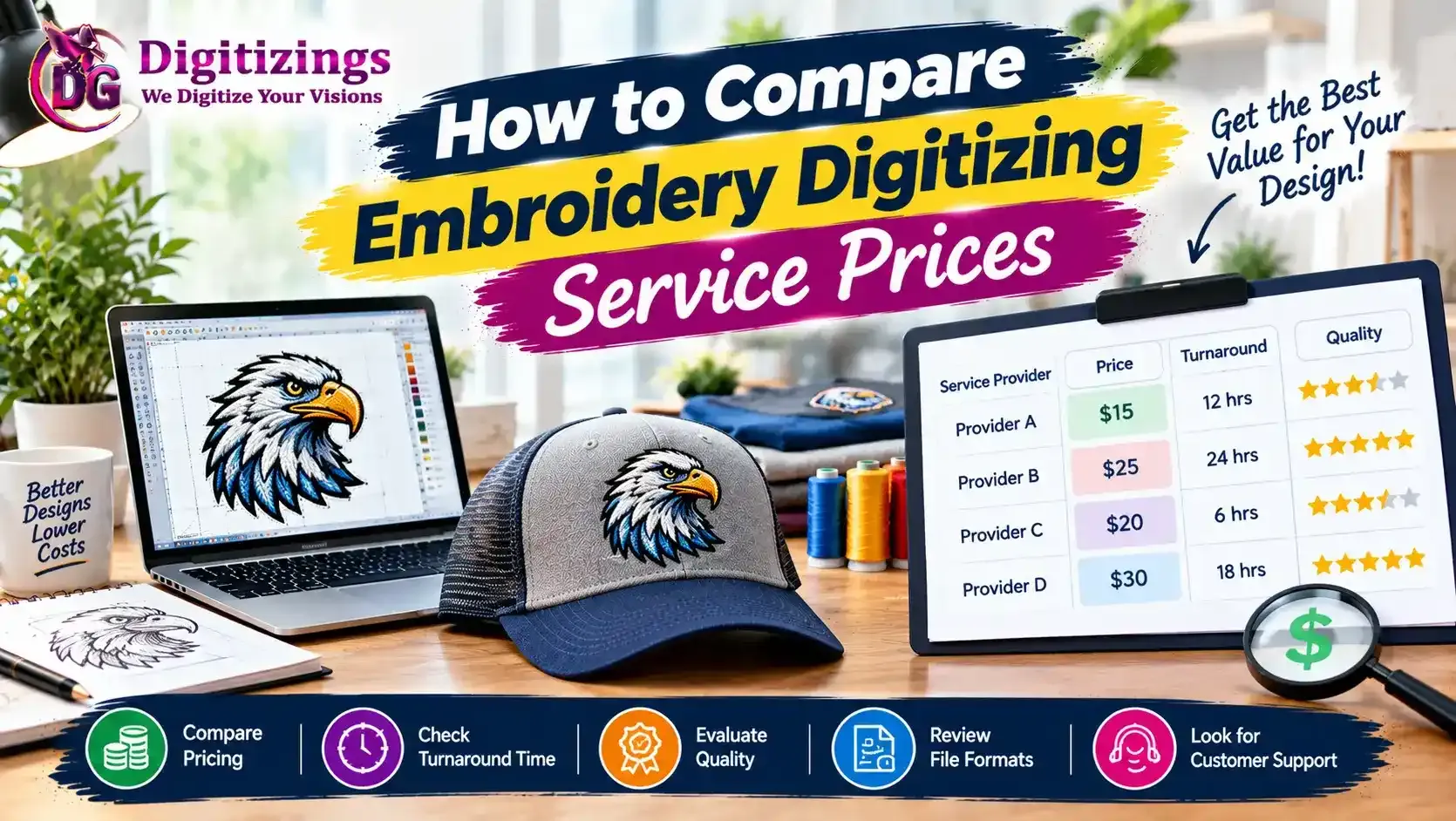
Choosing an embroidery digitizing service is not simply about finding the lowest price. Different providers use different pricing methods, quality standards, turnaround times, and revision policies. A design that costs less initially may require corrections, create stitching problems, or produce inconsistent embroidery, making the total cost higher.
For clothing brands, embroidery shops, promotional businesses, sports teams, and individuals, understanding how embroidery digitizing prices are calculated can make it easier to compare services and choose an option that fits both the budget and production requirements.
In 2026, customers have access to many online embroidery digitizing providers. The key is knowing what you are actually paying for and which factors can increase or decrease the cost. This guide explains how to compare embroidery digitizing service prices, what affects the final quote, and how to find good value without compromising embroidery quality.
What Is Embroidery Digitizing?
Embroidery digitizing is the process of converting artwork, logos, lettering, or images into a machine-readable embroidery file. The digitizer creates stitch instructions that tell an embroidery machine how to reproduce the design on fabric.
Professional digitizing involves decisions about:
- Stitch types
- Stitch density
- Stitch direction
- Underlay
- Pull compensation
- Stitch sequence
- Thread colors
- Trims and jumps
- Lettering
- Design size
The final file may be supplied in formats such as DST, PES, JEF, EXP, VP3, HUS, or other machine-specific formats.
Because every design is different, embroidery digitizing prices can vary considerably.
Why Do Embroidery Digitizing Prices Differ?
Two digitizing companies may quote different prices for the same artwork. This does not automatically mean that one provider is overcharging or that the other is offering a better deal.
Pricing can depend on the amount of work required to turn the artwork into a functional embroidery design.
Important factors include:
- Design complexity
- Stitch count
- Physical size
- Number of colors
- Type of artwork
- Lettering size
- Fabric type
- Embroidery technique
- Turnaround time
- Number of required formats
- Revision requirements
Understanding these factors helps you make a more informed comparison.
What Factors Affect Embroidery Digitizing Prices?
Design Complexity
Design complexity is one of the biggest factors affecting price.
A simple logo containing a few shapes and large lettering may be relatively easy to digitize. A detailed illustration containing many small elements, outlines, color changes, and intricate shapes requires considerably more planning.
Complex artwork may require more time for:
- Stitch placement
- Color separation
- Stitch sequencing
- Density adjustments
- Underlay selection
- Detail management
As complexity increases, the amount of digitizing work generally increases as well.
Stitch Count
Stitch count is another important consideration.
A design with 5,000 stitches generally requires less work than a highly detailed design containing 30,000 stitches. Some providers use stitch count directly in their pricing structure, while others use design complexity or size.
However, stitch count should not be the only measurement of quality.
Two designs can have similar stitch counts but require very different levels of technical expertise.
Design Size
The physical dimensions of the finished embroidery can influence pricing.
For example, a small left-chest logo may be simpler than a large jacket-back design. A large design can require more stitches and additional planning to maintain registration and fabric stability.
Before requesting a quote, provide the intended embroidery dimensions whenever possible.
Number of Colors
The number of thread colors can affect the complexity of a design.
A two-color logo may be relatively straightforward, while artwork containing many colors can require additional color separation and sequencing.
However, color count alone does not determine the entire price. A highly detailed one-color design can sometimes require more digitizing work than a simple multi-color logo.
Lettering and Small Text
Embroidery lettering requires special attention because very small text can become difficult to read when converted into stitches.
The digitizer may need to adjust:
- Font selection
- Letter height
- Stitch type
- Density
- Underlay
- Spacing
- Pull compensation
If your design contains small text, ask whether the quoted price includes appropriate lettering optimization.
Different Types of Embroidery Digitizing
Not every embroidery project requires the same digitizing technique.
Logo Digitizing
Logo digitizing is commonly used for uniforms, corporate apparel, promotional clothing, hats, bags, and workwear.
Pricing depends on the logo's complexity, size, and intended application.
3D Puff Digitizing
3D puff embroidery creates a raised appearance by using foam beneath selected parts of the design.
It requires specialized digitizing techniques and is often priced differently from standard flat embroidery.
Cap and Hat Digitizing
Caps have curved surfaces, making them different from flat garments.
Cap designs may require careful stitch sequencing and density adjustments to accommodate the shape of the cap.
Jacket-Back Digitizing
Large jacket-back designs can contain substantial detail and stitch counts.
Because of their size, they may require more digitizing work than smaller apparel logos.
Patch Digitizing
Patch designs usually require clean borders, appropriate stitch structures, and careful consideration of the material used to produce the patch.
Applique Digitizing
Applique designs combine fabric pieces with embroidery. The digitizing process must account for placement stitches, tack-down stitches, borders, and finishing details.
Pricing Models Used by Digitizing Services
When comparing providers, first determine how they calculate their prices.
Flat-Rate Pricing
Some providers charge a fixed price based on the general type of design.
For example, a provider might establish different pricing categories for simple logos, complex logos, caps, patches, and large designs.
The advantage is that you can understand the approximate cost before ordering.
Stitch-Based Pricing
Some services calculate the price according to stitch count.
This approach can work well when designs vary significantly in size and complexity.
However, customers should understand exactly how the provider calculates the stitch count and whether additional charges apply.
Complexity-Based Pricing
Another approach is to evaluate the artwork and provide a custom quote.
This can be useful for detailed artwork because the price reflects the actual digitizing workload rather than relying on a standard category.
Combination Pricing
Some companies combine several factors, such as design complexity, size, stitch count, and turnaround requirements.
When comparing quotes, make sure you understand what is included in the advertised price.
What Should Be Included in the Price?
A low advertised price can sometimes be misleading if important services are charged separately.
Before placing an order, check whether the price includes:
- Original digitizing
- Required embroidery format
- Additional machine formats
- Minor revisions
- Color changes
- Design editing
- Resizing
- Technical support
- Quality checking
A provider offering a slightly higher initial price may provide more services within that price.
Cheap vs Professional Embroidery Digitizing
A very low price can be attractive, particularly when you are ordering multiple designs. However, the cheapest option may not always provide the best production value.
Poorly digitized designs can lead to:
- Thread breaks
- Excessive thread changes
- Fabric puckering
- Poor registration
- Uneven fills
- Gaps
- Unreadable lettering
- Excessive stitch density
- Needle problems
- Production delays
These issues can increase the actual cost of embroidery.
A slightly higher-quality digitizing service may therefore reduce production problems and save money over time.
How to Find the Best Value
The goal should be to find the right balance between price and quality.
Review Previous Work
Look for actual embroidery examples rather than relying only on attractive digital artwork.
Pay attention to:
- Smooth edges
- Clean lettering
- Consistent fills
- Sharp details
- Proper registration
- Minimal puckering
Check Turnaround Time
If you have a production deadline, turnaround time is an important part of the total value.
A low-cost service that takes considerably longer may not be suitable for urgent projects.
Ask About Revisions
A design may require adjustments after a test sew-out.
Before ordering, understand how the provider handles corrections and revisions.
Confirm Machine Compatibility
Make sure the service can provide the format required by your embroidery machine.
Common formats include:
- DST
- PES
- JEF
- EXP
- VP3
- HUS
- XXX
Do not assume that every embroidery file format works with every machine.
How to Reduce Your Digitizing Costs
There are several practical ways to keep embroidery digitizing affordable.
Provide Clean Artwork
High-quality artwork makes the digitizer's job easier.
Whenever possible, provide the original vector file or a high-resolution version of your logo.
Provide Complete Instructions
Tell the digitizer:
- Final size
- Fabric type
- Garment type
- Placement
- Desired colors
- Required file format
- Embroidery technique
Complete information can reduce unnecessary revisions.
Simplify Unnecessary Details
Some tiny details may not translate effectively into embroidery.
Simplifying artwork before digitizing can sometimes reduce complexity while producing a cleaner embroidered result.
Order Multiple Formats Together
If you know you need several machine formats, request them together rather than ordering additional conversions later.
Use Existing Digitized Files
If you already have a professionally digitized design, you may be able to reuse it for future embroidery at the same size and on similar materials.
However, major size changes may require adjustments or new digitizing.
Does Faster Turnaround Cost More?
Some providers charge additional fees for rush orders.
A standard turnaround may be included in the regular price, while same-day or emergency orders may carry an additional charge.
If you frequently need urgent designs, compare the provider's normal and rush pricing before choosing a best service.
For routine production, planning ahead can help you avoid rush fees.
Why Test Sew-Outs Matter
A digital embroidery file can look excellent on a computer screen but behave differently when stitched onto fabric.
A test sew-out can reveal:
- Density problems
- Registration issues
- Small lettering problems
- Fabric distortion
- Incorrect stitch direction
- Thread-related issues
For important production designs, testing can help identify problems before a large quantity of garments is embroidered.
Does More Expensive Digitizing Always Mean Better Quality?
Not necessarily.
Price alone does not guarantee quality.
A higher price may reflect greater complexity, faster turnaround, specialty techniques, or additional services. Likewise, an affordable provider may produce excellent work if the workflow and pricing structure are efficient.
Instead of assuming that expensive means better, compare actual factors such as quality, experience, support, file formats, revisions, and turnaround.
How Technology Is Affecting Digitizing Prices in 2026
Modern embroidery software and AI-assisted tools are changing parts of the digitizing workflow.
Technology can assist with tasks such as:
- Artwork preparation
- Color recognition
- Stitch planning
- Design cleanup
- Basic stitch generation
- File conversion
These tools can improve workflow efficiency, but professional judgment remains important for production-quality embroidery. Fabric behavior, stitch density, underlay, pull compensation, lettering, and specialty techniques still require careful evaluation.
As technology develops, customers may see different pricing models and faster workflows, but the quality of the final embroidery file remains an important consideration.
Questions to Ask Before Choosing a Service
Before committing to an embroidery digitizing provider, ask:
- How is the price calculated?
- Does complexity affect the quote?
- Is stitch count included in the pricing?
- Which file formats are provided?
- Are revisions included?
- What is the standard turnaround time?
- Are rush services available?
- Can you handle caps and 3D puff?
- Can you digitize small lettering?
- Can you make adjustments after a test sew-out?
The answers can help you compare providers more accurately.
About Digitizings
Digitizings provides professional embroidery digitizing and vector art services for businesses, apparel brands, embroidery shops, and individuals. Its services can cover custom embroidery digitizing, logo digitizing, 3D puff, cap and hat digitizing, applique, patches, jacket-back designs, monograms, lettering, and other embroidery applications.
For customers comparing embroidery digitizing prices, the focus should be on receiving a properly prepared embroidery file that suits the intended garment, size, and production method. Comparing price alongside quality, turnaround, file formats, and service support can help customers make practical purchasing decisions.
Conclusion
Comparing embroidery digitizing service prices in 2026 requires more than looking at the cheapest quote. Design complexity, stitch count, size, lettering, colors, embroidery technique, turnaround time, file formats, and revision policies can all affect the final cost.
Before placing an order, determine how the provider calculates pricing and what services are included. Review actual embroidery samples, confirm machine compatibility, and communicate your design requirements clearly.
The best value comes from balancing affordability with dependable digitizing quality. A properly prepared embroidery file can help reduce production problems, improve finished embroidery, and save time and money over the long term.
FAQs
1. How are embroidery digitizing service prices calculated?
Prices may be based on design complexity, stitch count, physical size, embroidery technique, turnaround time, or a combination of these factors. Each provider may use a different pricing model.
2. Is embroidery digitizing priced by stitch count?
Some providers use stitch count as part of their pricing system, while others use flat rates or custom quotes based on complexity. Always ask how the provider calculates the final price.
3. Why does complex embroidery digitizing cost more?
Complex designs generally require more time and technical work. Detailed artwork may need additional stitch planning, color separation, density adjustments, sequencing, and detail management.
4. How can I reduce embroidery digitizing costs?
Providing clean artwork, specifying the correct size and fabric, simplifying unnecessary details, and providing complete production instructions can help reduce unnecessary work and revisions.
5. Should I choose the cheapest embroidery digitizing service?
Price should be considered alongside quality, turnaround time, file formats, revisions, experience, and customer support. Comparing the complete service rather than the initial price alone provides a more useful basis for choosing a provider.
- Managerial Effectiveness!
- Future and Predictions
- Motivatinal / Inspiring
- Fitness and Wellness
- Medical & Health
- Manufacturing
- Education
- Real-Estate
- Food Industry
- Hospitality
- Online Games
- Sports
- Home Services
- Civil Engineering
- Safety and Protection
- Software Products & Services
- Fashion and Jewellery
- Artificial Intelligence
- Entrepreneurship
- Mentoring & Guidance
- Marketing
- Networking
- HR & Recruiting
- Literature
- Shopping
- Career Management & Advancement