

 SkillClick
Design Considerations for High-Voltage Substations and Grids
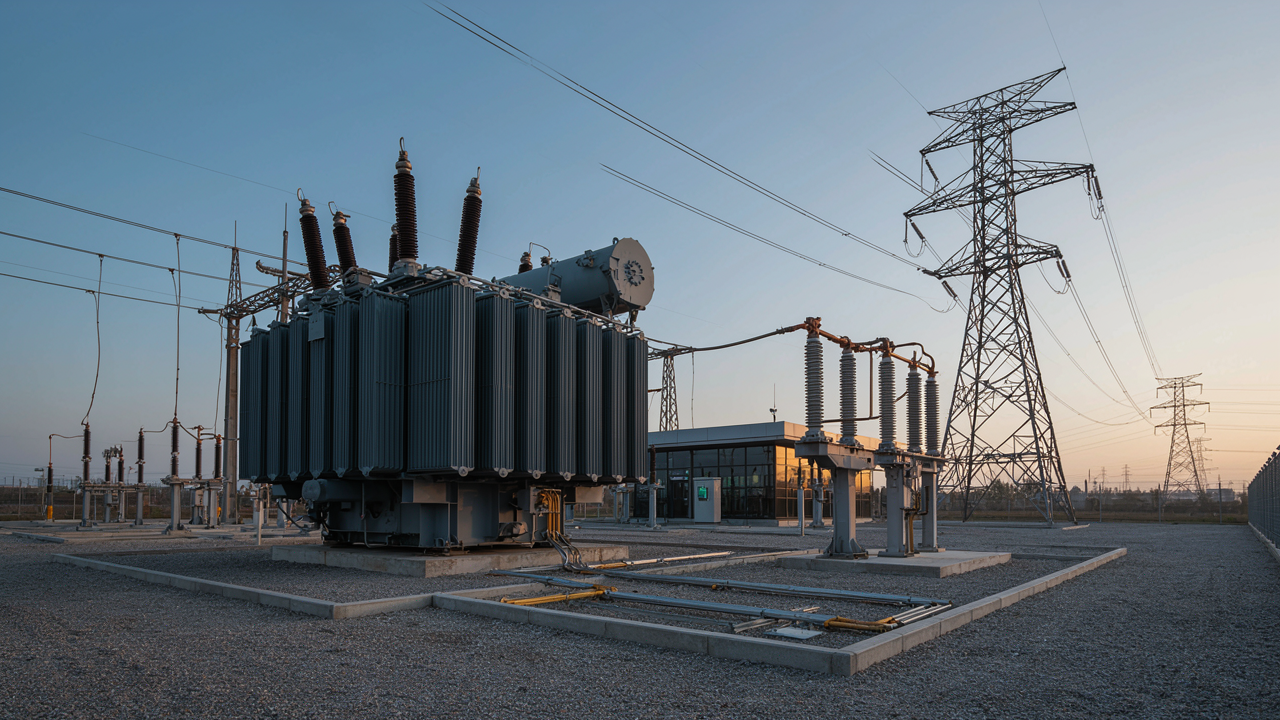
High-voltage substations are essential components of modern power networks. They connect generation facilities, transmission lines, and distribution systems while enabling electricity to be transformed, controlled, protected, and delivered safely. As power demand increases and grids become more complex, designing a reliable high-voltage electrical substation requires much more than selecting equipment and arranging it on a site.
A successful substation design combines electrical engineering, civil works, protection and control, safety, environmental planning, and long-term operational requirements. Careful planning during the engineering stage can improve reliability, simplify maintenance, reduce project risks, and support dependable grid performance for decades.
1. Understanding the Electrical Requirements
The first step in substation design is understanding the electrical characteristics and requirements of the power network. Engineers need to evaluate voltage levels, power flow, short-circuit conditions, load demand, future expansion, and system stability before establishing the basic substation configuration.
Power system studies help determine appropriate transformer ratings, bus configurations, circuit-breaker capabilities, conductor sizes, and protection requirements. Engineers may also perform load-flow, short-circuit, transient stability, grounding, and insulation coordination studies.
The selected configuration should not only satisfy current requirements but also accommodate expected changes in the network. Planning for additional feeders, transformers, or transmission connections during the initial design can prevent costly modifications later.
2. Designing an Efficient High Voltage Switchyard
The high voltage switchyard is one of the most important areas of a substation. It contains equipment such as circuit breakers, disconnect switches, current transformers, voltage transformers, surge arresters, busbars, and associated structures.
Switchyard layout requires careful consideration of electrical clearances, equipment accessibility, maintenance requirements, safety zones, and conductor arrangements. Engineers must maintain adequate phase-to-phase and phase-to-ground clearances according to applicable standards and system voltage.
The selected bus configuration also has a major effect on reliability and operational flexibility. Depending on project requirements, options may include single bus, double bus, ring bus, breaker-and-a-half, or other arrangements.
A well-planned switchyard allows operators to isolate equipment safely while keeping essential parts of the network energized whenever possible. This can significantly improve system availability during maintenance or equipment faults.
3. Integrating High Voltage Civil Engineering
Electrical equipment cannot perform reliably without suitable foundations, structures, drainage, access roads, and site infrastructure. This is where high voltage civil engineering becomes an essential part of substation development.
Civil engineers must evaluate soil conditions, site topography, flood risk, drainage requirements, seismic considerations, and equipment loading. Transformer foundations, circuit-breaker supports, gantries, control buildings, cable trenches, and other structures must be designed to withstand expected mechanical and environmental loads.
Site grading and drainage deserve particular attention. Poor drainage can contribute to foundation deterioration, equipment damage, cable problems, and difficult maintenance conditions.
Cable trenches and underground services should also be coordinated with the electrical layout. Early coordination between civil and electrical engineering teams reduces clashes and helps create a more efficient construction process.
4. Protection, Control, and Substation Automation
Protection systems are fundamental to the safe operation of a high-voltage electrical substation. Their primary purpose is to detect abnormal conditions quickly and isolate faults before they cause extensive damage or widespread outages.
Typical protection functions may include overcurrent, distance, differential, breaker-failure, busbar protection, and transformer protection. Protection schemes should be carefully coordinated with the wider transmission network to achieve appropriate selectivity and speed.
Modern substations increasingly use digital protection relays, SCADA systems, communication networks, and automation technologies. These systems provide operators with real-time information about equipment status and electrical conditions.
Good control-system design should also consider redundancy, communication reliability, cybersecurity, remote operation, and future integration. A modern substation should be designed as an integrated system rather than treating protection, control, and electrical equipment as separate elements.
5. Grounding, Safety, and Environmental Considerations
Safety is a core design requirement in high-voltage infrastructure. A properly engineered grounding system helps control dangerous touch and step voltages during normal operation and fault conditions.
Grounding design typically considers soil resistivity, fault current, clearing time, grid geometry, equipment connections, and transferred potentials. Grounding studies are therefore an important part of the overall engineering process.
Clearances, fencing, fire protection, emergency access, warning signs, lighting, and equipment placement must also be considered during design. Transformer areas may require specialized fire protection and containment measures depending on equipment type and project requirements.
Environmental considerations are increasingly important as well. Designers may need to address noise, stormwater management, oil containment, vegetation, land use, and the impact of construction activities on surrounding areas.
6. Reliability, Maintenance, and Future Expansion
A high-voltage substation should be designed with its entire operational life in mind. Selecting reliable equipment is important, but maintainability and accessibility are equally valuable.
Equipment should have sufficient space for inspection, testing, replacement, and maintenance. Access roads and lifting areas should accommodate the transportation and handling of large transformers and other heavy components.
Future expansion should also be considered. Reserved space for additional bays, transformers, bus extensions, or transmission connections can provide significant flexibility as electricity demand grows.
Reliability can be further improved through appropriate redundancy, robust protection systems, high-quality equipment, effective grounding, and well-coordinated engineering studies. The objective is to create infrastructure that performs consistently under normal conditions while remaining resilient during faults and unusual operating events.
Conclusion
Designing a high-voltage substation requires a coordinated approach that brings together electrical, civil, structural, protection, control, safety, and operational expertise. From developing an efficient high voltage switchyard to performing detailed high voltage civil engineering, every design decision can influence the reliability and long-term value of the facility.
A carefully engineered high-voltage electrical substation should meet present network requirements while providing flexibility for future expansion, safe maintenance, effective fault protection, and dependable operation.
By combining detailed power system studies with practical engineering and thoughtful site planning, utilities and project developers can build substations that support stable, secure, and efficient power networks for years to come.
- Managerial Effectiveness!
- Future and Predictions
- Motivatinal / Inspiring
- Fitness and Wellness
- Medical & Health
- Manufacturing
- Educação
- Real-Estate
- Food Industry
- Hospitality
- Online Games
- Sports
- Home Services
- Civil Engineering
- Safety and Protection
- Software Products & Services
- Fashion and Jewellery
- Artificial Intelligence
- Entrepreneurship
- Mentoring & Guidance
- Marketing
- Networking
- HR & Recruiting
- Literature
- Shopping
- Career Management & Advancement