

 SkillClick
AI Readiness That Builds a Strong Foundation for Innovation
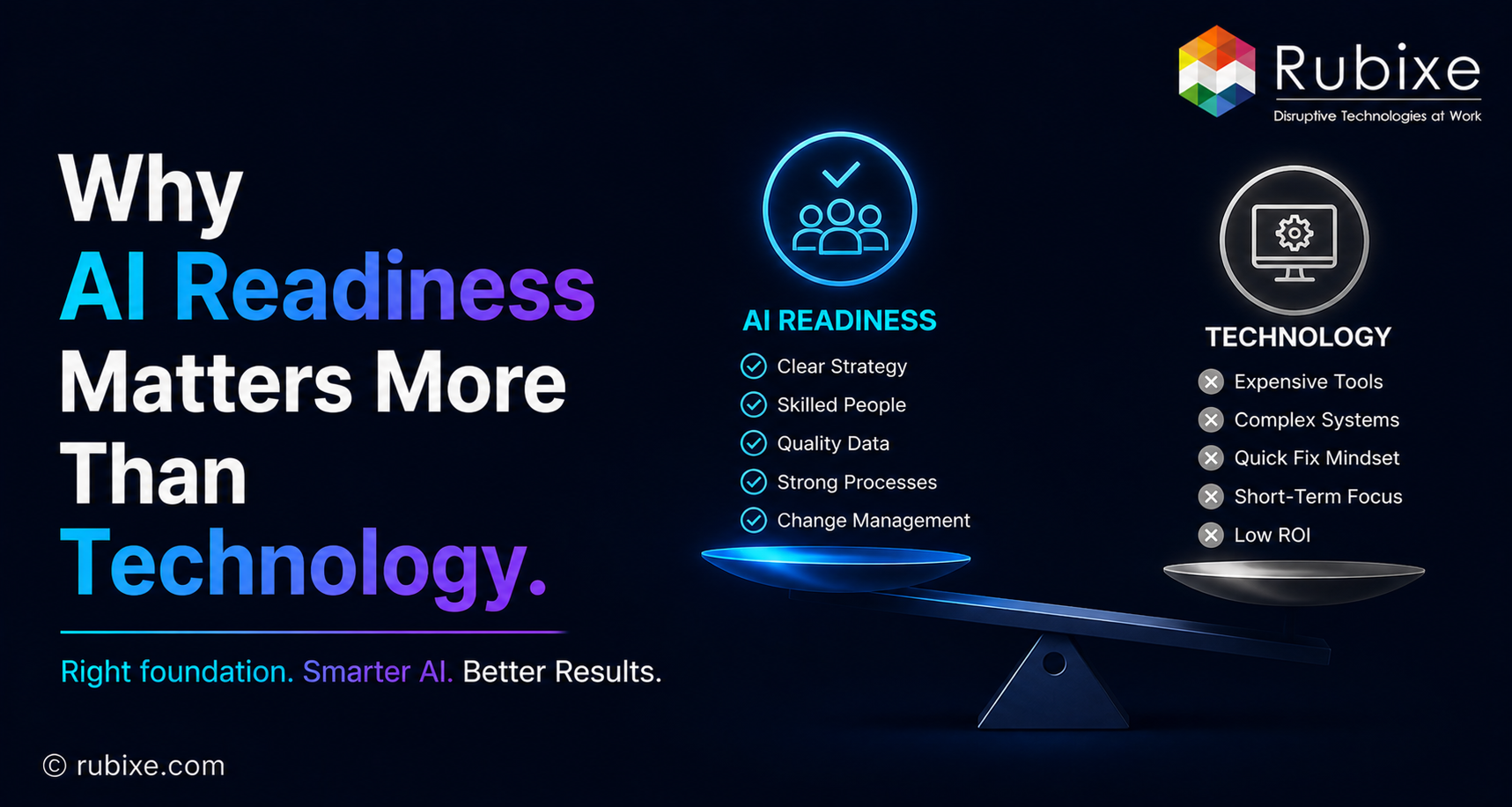
Many organisations are eager to invest in artificial intelligence, yet a large percentage of AI initiatives struggle to deliver expected outcomes. The challenge often begins long before development starts. Businesses may have ambitious AI goals, but without the right infrastructure, processes, data strategy, and organisational alignment, those goals become difficult to achieve.
This is where AI readiness becomes essential.
Companies that assess their readiness before implementing AI are better positioned to develop successful solutions, reduce risks, and create long-term business value. A strong foundation helps organisations move from experimentation to practical adoption with greater confidence.
Quick Answer: What Is AI Readiness?
AI readiness is an organisation's ability to successfully adopt, implement, and scale artificial intelligence initiatives. It includes evaluating data quality, technology infrastructure, business processes, workforce capabilities, governance practices, and strategic objectives before investing in AI projects.
Understanding AI Readiness
AI readiness refers to the preparation required to support successful AI adoption across an organisation.
It involves answering important questions such as:
-
Is the business collecting useful and reliable data?
-
Are existing systems capable of supporting AI applications?
-
Does the workforce understand how AI can support business goals?
-
Are processes ready for automation and intelligent decision-making?
-
Is there a clear roadmap for implementation?
Businesses that address these questions early often experience smoother AI adoption and stronger project outcomes.
At Rubixe, many organisations begin their AI journey with a readiness assessment to identify opportunities, challenges, and areas requiring improvement before development begins.
Why AI Readiness Matters More Than Ever
Interest in artificial intelligence continues to grow across industries. Businesses are exploring opportunities to improve efficiency, automate operations, enhance customer experiences, and gain deeper insights from data.
However, investing in AI without preparation can lead to:
-
Poor implementation outcomes
-
Data-related challenges
-
Integration difficulties
-
Employee resistance
-
Increased project costs
-
Delayed returns on investment
A strong focus on AI readiness helps organisations avoid these common obstacles and establish a practical path toward AI adoption.
Many companies begin by evaluating existing AI solutions and determining whether their current environment can support future AI initiatives.
The Core Pillars of AI Readiness
Data Readiness
Data serves as the foundation of every AI initiative.
Organisations should evaluate:
-
Data quality
-
Data accessibility
-
Data consistency
-
Data governance practices
-
Data security measures
AI systems rely on accurate and structured information to produce meaningful results.
Businesses investing in AI software solutions often discover that improving data quality is one of the most important steps toward successful implementation.
Technology Infrastructure Readiness
Existing technology systems must be capable of supporting AI workloads.
Areas to assess include:
-
Cloud capabilities
-
Computing resources
-
Data storage systems
-
Integration capabilities
-
Security frameworks
Organisations with modern and scalable infrastructure are generally better prepared for AI adoption.
Workforce Readiness
Technology alone cannot drive successful AI adoption.
Employees must understand:
-
How AI supports business objectives
-
Changes to existing workflows
-
Opportunities for collaboration with AI systems
-
Best practices for AI usage
Companies investing in AI transformation services frequently include workforce enablement as part of their broader strategy.
Process Readiness
AI works best when integrated into well-defined business processes.
Organisations should identify:
-
Repetitive tasks suitable for automation
-
Decision-making processes that can benefit from AI insights
-
Operational bottlenecks
-
Areas requiring process optimisation
A clear understanding of existing workflows helps businesses identify high-impact AI opportunities.
AI-Ready Organisations vs. Organisations Without AI Readiness
|
Area |
AI-Ready Organisation |
Limited AI Readiness |
|
Data Quality |
Structured and reliable |
Inconsistent and fragmented |
|
Technology Infrastructure |
Scalable and integrated |
Legacy system limitations |
|
Workforce Knowledge |
AI awareness and adoption support |
Limited understanding |
|
Process Maturity |
Defined workflows |
Manual and inconsistent processes |
|
Governance |
Clear policies and oversight |
Limited governance structure |
|
AI Implementation Speed |
Faster deployment |
Delayed execution |
|
Risk Management |
Proactive planning |
Reactive problem-solving |
|
Innovation Potential |
Strong foundation for growth |
Adoption challenges |
This comparison highlights why AI readiness is increasingly viewed as a critical business priority.
Key Signs Your Business Is Ready for AI
Strong Data Management Practices
Organisations that maintain high-quality data environments often have a significant advantage when implementing AI.
Indicators include:
-
Centralised data management
-
Reliable reporting systems
-
Consistent data standards
-
Effective governance practices
Clear Business Objectives
Successful AI initiatives are aligned with measurable business goals.
Examples include:
-
Improving customer experiences
-
Increasing operational efficiency
-
Enhancing forecasting accuracy
-
Automating repetitive tasks
Many businesses exploring AI services begin by identifying specific outcomes they want AI to support.
Leadership Commitment
Executive support plays a major role in AI success.
Leadership teams should actively support:
-
AI strategy development
-
Resource allocation
-
Workforce adoption efforts
-
Governance initiatives
Organisations with strong leadership engagement often experience greater momentum during implementation.
Scalable Technology Environment
Businesses that can easily integrate new technologies are often better positioned for AI adoption.
Many organisations use AI integration services to connect AI capabilities with existing systems and workflows.
A Practical Example of AI Readiness in Action
Consider a manufacturing company interested in implementing predictive maintenance systems.
Initially, the organisation planned to deploy AI models immediately. During an internal assessment, however, several challenges were identified:
-
Equipment data was stored across multiple systems.
-
Historical maintenance records were incomplete.
-
Data collection standards varied by facility.
Instead of moving directly into development, the company focused on improving data quality, standardising processes, and upgrading infrastructure.
Several months later, the organisation launched its predictive maintenance initiative with stronger data foundations and clearer operational goals.
The result was a more effective implementation process and improved system performance.
This example demonstrates how AI readiness contributes to successful innovation by addressing foundational challenges before development begins.
Industries Prioritising AI Readiness
Healthcare
Healthcare organisations evaluate readiness for:
-
Clinical decision support
-
Diagnostic systems
-
Patient engagement platforms
-
Administrative automation
Many providers adopt AI implementation services after completing readiness assessments that identify data and compliance requirements.
Financial Services
Financial institutions focus on readiness for:
-
Fraud detection
-
Risk assessment
-
Customer analytics
-
Regulatory compliance
Manufacturing
Manufacturers often assess readiness for:
-
Predictive maintenance
-
Quality control systems
-
Supply chain optimisation
-
Production planning
Organisations pursuing AI development services frequently begin with readiness evaluations to identify operational opportunities.
Retail and Ecommerce
Retail businesses evaluate AI readiness for:
-
Recommendation engines
-
Demand forecasting
-
Inventory optimisation
-
Customer experience enhancement
The Growing Role of Generative AI in Readiness Planning
Generative AI is expanding the possibilities for business innovation.
Organisations exploring generative AI solutions are increasingly assessing readiness factors such as:
-
Knowledge management practices
-
Content workflows
-
Data governance frameworks
-
Security requirements
Businesses adopting GenAI services often discover that readiness planning becomes even more important as AI capabilities become more sophisticated.
A strong readiness framework helps ensure generative AI initiatives align with organisational goals and compliance requirements.
Common AI Readiness Challenges
Data Silos
Many organisations store information across disconnected systems, making data access difficult.
Legacy Technology Systems
Older systems may require modernisation before supporting AI applications effectively.
Skills Gaps
Organisations often need training programmes to improve AI awareness and adoption.
Governance Concerns
AI initiatives require clear oversight regarding:
-
Data usage
-
Privacy practices
-
Ethical considerations
-
Regulatory compliance
Addressing these challenges early helps businesses build a stronger foundation for innovation.
How Businesses Can Improve AI Readiness
Conduct a Readiness Assessment
An assessment helps identify strengths, gaps, and improvement opportunities.
Create an AI Roadmap
A roadmap establishes priorities, timelines, and implementation objectives.
Improve Data Management
High-quality data significantly improves AI performance and outcomes.
Build Internal Awareness
Employee education supports adoption and encourages collaboration.
Partner With Experienced AI Experts
Working with experienced providers helps organisations navigate readiness planning and implementation challenges.
Many businesses work with Rubixe to evaluate readiness, develop strategic roadmaps, and identify practical AI opportunities aligned with long-term business goals.
Frequently Asked Questions
1. What is AI readiness?
AI readiness is an organisation's preparedness to adopt, implement, and scale AI initiatives successfully.
2. Why is AI readiness important?
It helps businesses identify gaps, reduce risks, and improve the success of AI implementation projects.
3. What are the main components of AI readiness?
Key components include data readiness, technology infrastructure, workforce readiness, process maturity, and governance.
4. Can small businesses benefit from AI readiness assessments?
Yes. Businesses of all sizes can use readiness assessments to identify practical opportunities and prepare for future AI adoption.
5. How do AI integration services support readiness?
AI integration services help connect AI capabilities with existing business systems, improving implementation efficiency.
Build Innovation on a Strong Foundation
Successful AI adoption begins long before technology deployment. AI readiness provides the structure organisations need to evaluate capabilities, address challenges, and create a clear path toward intelligent innovation.
Businesses that prioritise readiness are better positioned to implement AI effectively, scale initiatives confidently, and generate long-term value. Rubixe helps organisations assess opportunities, strengthen foundational capabilities, and prepare for future growth through strategic AI solutions, AI development services, and tailored AI adoption frameworks.
Ready to evaluate your organisation's AI readiness? Rubixe offers expertise in AI services, AI implementation services, AI software solutions, and generative AI solutions to help businesses build a strong foundation for successful AI adoption.
- Managerial Effectiveness!
- Future and Predictions
- Motivatinal / Inspiring
- Fitness and Wellness
- Medical & Health
- Manufacturing
- Education
- Real-Estate
- Food Industry
- Hospitality
- Online Games
- Sports
- Home Services
- Civil Engineering
- Safety and Protection
- Software Products & Services
- Fashion and Jewellery
- Artificial Intelligence
- Entrepreneurship
- Mentoring & Guidance
- Marketing
- Networking
- HR & Recruiting
- Literature
- Shopping
- Career Management & Advancement