

 SkillClick
Can an IVF Lab Design Consultant provide turnkey laboratory planning and execution?
INTRODUCTION
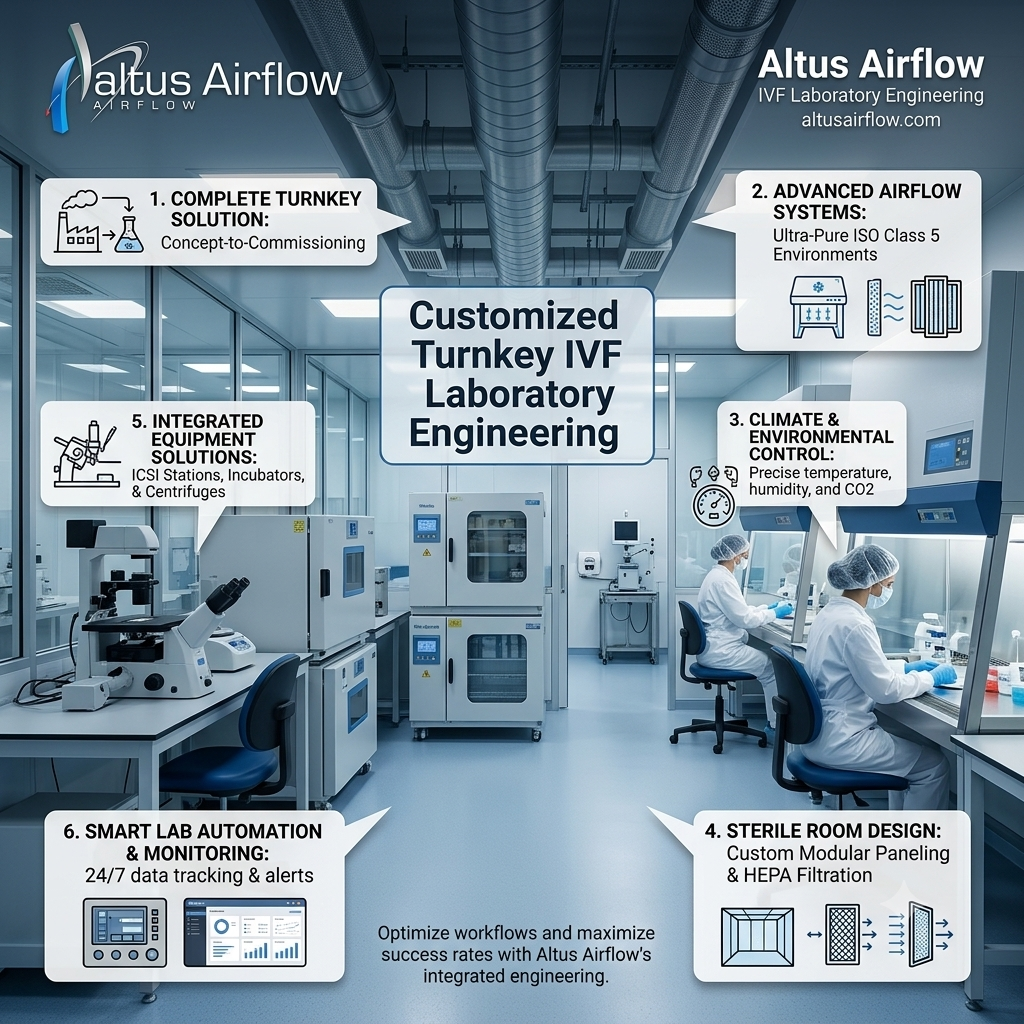
Yes, an IVF Lab Design Consultant can provide or coordinate turnkey laboratory planning and execution, depending on the consultant's scope, technical capabilities, and project delivery model. A turnkey approach can cover the entire process from initial consultation and feasibility assessment to laboratory layout, cleanroom planning, HVAC engineering, utility coordination, equipment integration, installation, testing, commissioning, documentation, and post-project support. For fertility centres, this integrated approach helps ensure that the IVF laboratory is designed around embryology workflows, contamination control, environmental stability, equipment requirements, and operational efficiency.
Unlike conventional laboratory projects, IVF facilities require careful coordination between architecture, HVAC, cleanroom engineering, laboratory utilities, electrical systems, environmental monitoring, and embryology equipment. A turnkey consultant can bring these disciplines together under a coordinated project plan, helping healthcare organizations reduce interface problems and create a laboratory that is ready for controlled clinical operations.
What Is Turnkey IVF Laboratory Planning?
Turnkey planning means that one primary project partner manages or coordinates multiple stages of laboratory development.
A typical scope can include:
- Project consultation
- Site assessment
- Feasibility study
- Laboratory layout
- Workflow planning
- Cleanroom engineering
- HVAC design
- Air filtration
- Electrical planning
- Medical and laboratory utilities
- Equipment planning
- Installation coordination
- Testing
- Commissioning
- Documentation
- Staff training
- Maintenance support
The exact scope depends on the project requirements and the responsibilities agreed upon in the contract.
Why Is Turnkey Execution Important for IVF Laboratories?
An IVF laboratory contains sensitive processes and specialized equipment. Small inconsistencies in environmental conditions, workflow, utilities, or equipment placement can affect laboratory efficiency.
Turnkey execution provides a coordinated approach to:
- Contamination control
- Environmental stability
- Workflow efficiency
- Equipment integration
- Utility management
- Documentation
- Project scheduling
- Quality control
Instead of treating each component as an independent installation, the laboratory can be developed as an integrated environment.
1. Initial Consultation and Requirement Assessment
The project usually begins with a detailed consultation.
The consultant discusses:
- Type of fertility services
- Expected treatment volume
- Embryology workflow
- Available floor area
- Number of laboratory rooms
- Equipment requirements
- Future expansion
- Project budget
- Target completion schedule
This information establishes the foundation for the design.
2. Site Survey and Feasibility Study
A site assessment identifies the technical possibilities and limitations of the proposed location.
The assessment may include:
- Room dimensions
- Ceiling height
- Structural conditions
- Existing HVAC systems
- Electrical capacity
- Plumbing
- Utility routes
- Access routes
- Adjacent spaces
- Fire-safety infrastructure
The results can influence the final laboratory layout and engineering strategy.
3. IVF Laboratory Layout Planning
Workflow planning is one of the most important parts of IVF laboratory design.
Depending on the facility, the laboratory may include:
- Embryology laboratory
- Andrology laboratory
- Cryopreservation area
- Media preparation area
- Washing area
- Sample receiving area
- Storage
- Equipment areas
The layout should support logical movement of personnel and materials while reducing unnecessary traffic.
4. Workflow Optimization
An effective turnkey design considers the complete laboratory workflow.
For example, the movement of:
Patient sample → Processing → Fertilization → Embryo culture → Evaluation → Cryopreservation
should be planned carefully.
A well-organized workflow can reduce unnecessary movement and improve operational consistency.
5. Cleanroom Engineering
Cleanroom principles can be incorporated according to the requirements of the IVF facility.
Design considerations may include:
- Air cleanliness
- Filtration
- Pressure relationships
- Hygienic surfaces
- Controlled access
- Material movement
- Personnel movement
The objective is to create an appropriately controlled environment for sensitive laboratory processes.
6. HVAC System Design
HVAC engineering is a critical part of IVF laboratory planning.
The system may provide control of:
- Temperature
- Relative humidity
- Fresh air
- Airflow
- Filtration
- Pressure
HVAC capacity should be calculated based on room volume, equipment heat loads, occupancy, ventilation requirements, and applicable project specifications.
7. Air Filtration and HEPA Systems
Air filtration can play an important role in maintaining controlled laboratory conditions.
Depending on the design, filtration systems may include:
- Pre-filters
- Fine filters
- HEPA filters
- Terminal filtration
- Filter housings
- Differential-pressure monitoring
The filtration strategy should be selected based on the environmental requirements of the specific laboratory.
8. VOC and Air-Quality Considerations
IVF laboratories can require careful attention to indoor air quality.
Potential sources of concern can include:
- Cleaning chemicals
- Construction materials
- Adhesives
- Paints
- Furniture
- Laboratory consumables
A consultant can coordinate material selection and ventilation strategies to minimize unwanted environmental influences.
9. Temperature and Humidity Management
Stable environmental conditions are essential for laboratory operations.
A turnkey project can incorporate:
- Temperature sensors
- Humidity sensors
- HVAC controls
- Alarms
- Monitoring systems
The required operating range should be established according to laboratory procedures, equipment specifications, and applicable requirements.
10. Electrical Infrastructure
IVF laboratories depend on reliable power.
Electrical planning may cover:
- Dedicated circuits
- Laboratory equipment outlets
- Emergency power
- UPS connections
- Earthing
- Surge protection
- Data points
- Control systems
Critical equipment should be evaluated to determine its backup-power requirements.
11. UPS and Backup Power Planning
Some IVF laboratory equipment may need continuous power protection.
The design team can coordinate UPS and emergency power requirements for:
- Incubators
- Micromanipulation equipment
- Monitoring systems
- Computers
- Freezer systems
- Environmental controls
Backup-power planning should be based on a facility-specific critical-load assessment.
12. Laboratory Gas and Utility Planning
Specialized laboratory equipment may require specific utilities.
Depending on the project, planning can include:
- Gas supplies
- Vacuum
- Compressed air
- Water
- Drainage
- Utility outlets
The utility network should be coordinated with equipment locations.
13. Equipment Planning and Integration
Equipment should be considered during the design stage rather than after construction.
Common IVF laboratory equipment may include:
- Embryo incubators
- Microscopes
- ICSI workstations
- Micromanipulators
- Cryostorage systems
- Centrifuges
- Heating systems
- Laboratory refrigerators
- Freezers
The consultant can coordinate dimensions, power requirements, heat loads, service clearances, and utility connections.
14. Cryostorage Planning
Cryopreservation requires careful planning.
The laboratory layout may need to accommodate:
- Cryogenic storage systems
- Access routes
- Monitoring
- Safety systems
- Storage organization
- Emergency planning
The design should consider both operational workflow and safety.
15. Laboratory Surface and Material Selection
Materials should support hygiene and maintenance.
Possible considerations include:
- Seamless flooring
- Cleanable wall surfaces
- Hygienic ceilings
- Chemical-resistant finishes
- Low-emission materials
- Sealed joints
Material selection should be appropriate for laboratory use and the facility's cleaning procedures.
16. Modular Laboratory Construction
Some projects may use modular construction techniques.
These can include:
- Modular wall panels
- Ceiling systems
- Cleanroom doors
- Observation windows
- Sealed service penetrations
- Hygienic finishes
Modular construction may provide flexibility and controlled installation when appropriately planned.
17. Environmental Monitoring
Continuous environmental monitoring can help laboratory personnel identify deviations.
Parameters may include:
- Temperature
- Humidity
- Differential pressure
- Air quality
- Equipment conditions
Monitoring systems can include local displays, alarms, data logging, and centralized integration where appropriate.
18. Digital Monitoring and BMS Integration
Modern laboratories can incorporate digital facility monitoring.
A Building Management System may allow monitoring of:
- HVAC performance
- Temperature
- Humidity
- Pressure
- Filter status
- Alarms
This can improve visibility and support facility management.
19. Contamination-Control Planning
Contamination control should be considered throughout the laboratory.
The consultant may address:
- Personnel flow
- Material flow
- Airflow
- Filtration
- Room zoning
- Surface finishes
- Cleaning procedures
- Access control
These factors work together rather than functioning as isolated controls.
20. Zoning and Room Relationships
Different laboratory activities may require different levels of environmental control.
Zoning can separate:
- Sample receiving
- Andrology
- Embryology
- Storage
- Cryopreservation
- Support areas
The design should minimize unnecessary cross-traffic and support a logical workflow.
21. Equipment Heat-Load Assessment
Modern IVF equipment can generate heat.
The HVAC design should consider the combined heat output of:
- Incubators
- Freezers
- Computers
- Micromanipulation equipment
- Refrigeration systems
- Other laboratory devices
Accurate heat-load assessment helps prevent inadequate cooling capacity.
22. Fire and Safety Planning
Safety should be integrated into the laboratory design.
Planning may address:
- Fire detection
- Fire protection
- Emergency exits
- Electrical safety
- Cryogenic safety
- Emergency procedures
The design should comply with applicable local building and safety requirements.
23. Installation Coordination
During turnkey execution, multiple specialists may be involved.
The project team can coordinate:
- Modular construction
- HVAC installation
- Electrical work
- Utility installation
- Equipment suppliers
- Monitoring systems
Centralized coordination can reduce conflicts between different installation teams.
24. Testing and Commissioning
Before handover, installed systems should be tested.
Testing can include:
- Airflow measurements
- Temperature verification
- Humidity verification
- Pressure testing
- HEPA filter integrity testing
- Electrical testing
- Utility testing
- Environmental monitoring verification
The testing scope should reflect the project's technical specifications.
25. Validation and Qualification Support
Depending on the project, qualification activities may include:
- Installation Qualification
- Operational Qualification
- Performance Qualification
- Environmental qualification
The documentation should demonstrate that systems perform according to defined acceptance criteria.
26. Documentation
A turnkey project should provide organized project documentation.
This can include:
- Design drawings
- Approved layouts
- HVAC drawings
- Electrical drawings
- Equipment schedules
- Testing reports
- Validation documents
- Operation manuals
- Maintenance instructions
- Warranty records
Complete documentation is valuable for future maintenance and audits.
27. Staff Training
Laboratory and facility personnel may require training before operational handover.
Training can cover:
- HVAC controls
- Environmental monitoring
- Alarm systems
- Equipment operation
- Cleaning procedures
- Maintenance requirements
- Emergency procedures
Training can improve operational consistency.
28. Preventive Maintenance Planning
The project can include a maintenance strategy for critical systems.
Maintenance may cover:
- HVAC equipment
- Filters
- Sensors
- Monitoring systems
- Electrical systems
- Backup power
- Laboratory utilities
Preventive maintenance can help identify issues before they affect laboratory operations.
29. After-Sales Support
A turnkey consultant may continue supporting the facility after commissioning.
Support can include:
- Technical assistance
- Maintenance visits
- Environmental testing
- HVAC servicing
- System troubleshooting
- Upgrades
The exact after-sales scope should be clearly defined before project award.
30. Future Expansion Planning
An IVF centre may expand its treatment capacity over time.
A scalable laboratory design can consider:
- Additional equipment
- Increased sample volume
- Additional workstations
- Expanded storage
- HVAC upgrades
- Additional laboratory rooms
Planning for future growth can reduce the disruption associated with later modifications.
What Are the Benefits of Turnkey IVF Laboratory Execution?
A turnkey approach can provide several advantages.
Single-Point Responsibility
One primary project partner coordinates multiple disciplines.
Better Design Integration
Architecture, HVAC, electrical systems, utilities, equipment, and monitoring can be planned together.
Reduced Coordination Challenges
The healthcare organization does not need to manage every specialist contractor independently.
Improved Workflow
Laboratory spaces can be designed around actual embryology and andrology processes.
Better Project Control
Centralized scheduling and quality management can simplify execution.
Easier Testing and Commissioning
Testing can be coordinated across different engineering systems before handover.
Comprehensive Documentation
A coordinated project generates structured documentation for operation and maintenance.
What Should Hospitals Look for in a Turnkey IVF Consultant?
Before selecting a provider, fertility centres should evaluate:
- IVF laboratory experience
- Cleanroom engineering expertise
- HVAC capabilities
- Contamination-control knowledge
- Equipment integration experience
- Electrical and utility engineering
- Environmental monitoring
- Testing and validation
- Project management
- Documentation
- Maintenance support
- Previous project experience
The consultant should be able to explain the reasoning behind the proposed layout and engineering systems rather than simply providing a standard laboratory package.
Conclusion
An IVF Lab Design Consultant can provide or coordinate turnkey laboratory planning and execution when the consultant has the required multidisciplinary engineering, project-management, installation, testing, and commissioning capabilities. Turnkey execution can cover site assessment, workflow planning, laboratory zoning, cleanroom engineering, HVAC, HEPA filtration, electrical infrastructure, utilities, equipment integration, environmental monitoring, testing, validation, documentation, staff training, and maintenance support. This integrated approach helps fertility centres develop laboratories that are organized around sensitive embryology workflows and controlled environmental requirements. For fertility centres seeking coordinated IVF laboratory planning, engineering, execution, and long-term technical support, Altus Airflow offers specialized solutions tailored to project-specific requirements.
Frequently Asked Questions
1. Can an IVF Lab Design Consultant provide turnkey laboratory planning and execution?
Yes. An IVF Lab Design Consultant with multidisciplinary project capabilities can coordinate planning, design, cleanroom engineering, HVAC, utilities, equipment integration, installation, testing, commissioning, documentation, and support.
2. What does turnkey IVF laboratory execution include?
An IVF Lab Design Consultant can provide or coordinate site assessment, layout planning, workflow design, HVAC, filtration, electrical systems, utilities, equipment integration, testing, commissioning, and documentation.
3. Can an IVF Lab Design Consultant design the laboratory workflow?
Yes. An IVF Lab Design Consultant can plan relationships between embryology, andrology, sample handling, cryopreservation, storage, and support areas to improve workflow and minimize unnecessary movement.
4. Does an IVF Lab Design Consultant provide HVAC planning?
Yes. An IVF Lab Design Consultant can coordinate HVAC requirements for temperature, humidity, ventilation, filtration, airflow, pressure, and equipment heat loads.
5. Can an IVF Lab Design Consultant integrate laboratory equipment?
Yes. An IVF Lab Design Consultant can coordinate equipment dimensions, placement, electrical requirements, heat loads, utility connections, service clearances, and workflow requirements.
Read Our Previous Blog------>What services are offered by a Modular Ophthalmic OT Turnkey Project Company?
- Managerial Effectiveness!
- Future and Predictions
- Motivatinal / Inspiring
- Fitness and Wellness
- Medical & Health
- Manufacturing
- Education
- Real-Estate
- Food Industry
- Hospitality
- Online Games
- Sports
- Home Services
- Civil Engineering
- Safety and Protection
- Software Products & Services
- Fashion and Jewellery
- Artificial Intelligence
- Entrepreneurship
- Mentoring & Guidance
- Marketing
- Networking
- HR & Recruiting
- Literature
- Shopping
- Career Management & Advancement