

 SkillClick
Key Factors to Consider Before Choosing Neurology Instruments Dealers
A wholesaler in Lagos placed his first order with a dealer he'd found through a marketplace listing. Good price, fast reply, decent-looking catalog photos. Six weeks later, half his shipment of micro-dissectors had visibly uneven grinding on the tips, and the dealer stopped answering emails within a week of delivery. He called us after that — not before. That's the trouble with sourcing neurology instruments through the wrong dealer: the mistake doesn't show up at the quote stage. It shows up after the money's gone.
Choosing between neurology instruments dealers isn't just a price comparison exercise. It's a decision about who stands behind the box after it leaves the warehouse.
What's Actually Inside a Neurology Instrument Consignment
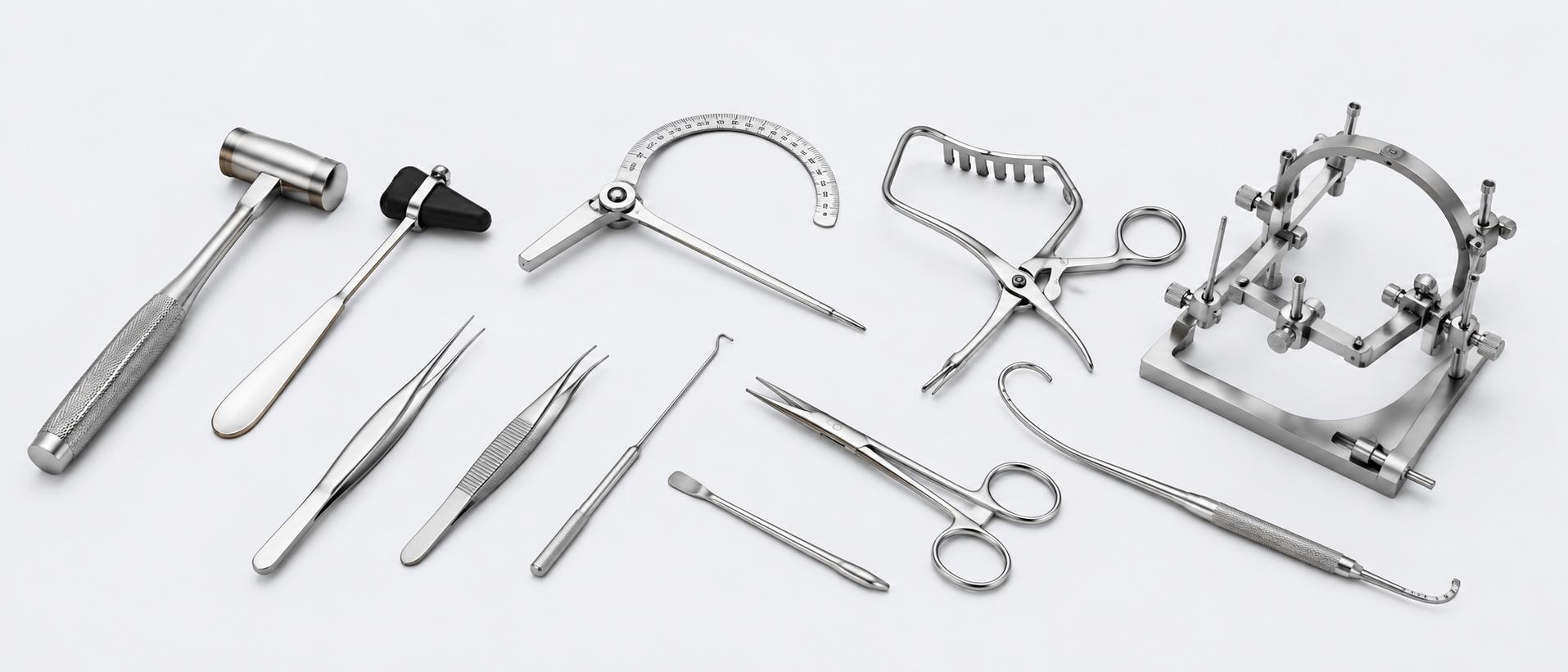
Before evaluating any dealer, it helps to know what you're actually buying. Neurology instruments ranges typically include craniotomy sets, micro-neurosurgery instruments, spinal instruments, and neuro-endoscopy accessories — each with different tolerances and different failure points.
Where Dealer Stock Quietly Differs From Manufacturer Stock
-
Craniotomy Sets — perforators, dura hooks, bone rongeurs, burr hole covers
-
Micro-Neurosurgery Instruments — micro-scissors, micro-forceps, bipolar cautery forceps
-
Spinal Instruments — laminectomy rongeurs, spinal retractors, disc forceps
-
Neuro-Endoscopy Instruments — rigid scope handling tools, biopsy forceps
The Batch-Mixing Problem Nobody Mentions
Here's something most buyers don't know until it bites them: many dealers combine stock from two or three different manufacturing sources within a single order, especially when fulfilling a large quantity fast. Which means one carton might contain instruments from a factory with tight quality control, and the next carton might not. A single neurology instruments supplier name on the invoice tells you nothing about how many actual factories touched your order. Ask for batch-level origin, not just a supplier name.
Five Factors That Separate a Reliable Dealer From a Risky One
1. Can They Name Their Manufacturing Source? A bad answer sounds like "we work with multiple trusted factories." Trusted by whom? A dealer unwilling to name even one manufacturing partner is usually reselling whatever's cheapest that week.
2. Do They Hold Stock, or Only Broker Orders on Demand? A bad answer is "we'll arrange it once your PO is confirmed." That means your lead time depends entirely on someone else's production schedule, and you won't know about delays until they've already happened.
3. What Happens When 3% of a Shipment Is Defective? A bad answer is "we'll handle defects case by case." That's not a policy — that's a negotiation you'll lose after the shipment has cleared customs and the dealer has already been paid in full.
4. Can They Produce Material Test Certificates on Request? A bad answer involves vague reassurance without paperwork. If a dealer can't get you a batch certificate within 48 hours, they likely don't have direct access to the manufacturer either.
5. Do They Understand Regional Sterilization and Packaging Norms? A bad answer treats every export market the same. CE-marked packaging requirements for Europe differ from Gulf-region documentation, and a dealer who hasn't shipped to your specific market before will learn on your order, at your expense.
Why the Right Dealer Protects More Than Just Quality
Buyers often reduce "reliable supplier" down to product quality alone. That's only half the calculation.
Fewer Customs Rejections. Consistent documentation and batch traceability mean fewer shipments held at port for inspection discrepancies.
Protected Resale Margins. Every defective unit a neurology instruments wholesaler has to replace out of pocket erodes the margin on that entire order, not just the one instrument.
Shorter Lead Times on Reorders. Dealers who hold verified stock, rather than brokering fresh each time, cut weeks off your reorder cycle.
Reduced Compliance Risk. A dealer connected to an ISO-certified manufacturer inherits documentation that satisfies most institutional buyer audits without extra back-and-forth.
Fewer End-Buyer Complaints. Hospitals notice inconsistent instrument quality faster than distributors expect, and it's the distributor's name on the complaint, not the dealer's.
Long-Term Pricing Stability. Dealers with a direct manufacturing relationship don't face the same margin squeeze as ones reselling through two or three intermediaries, so their pricing tends to hold steadier year over year.
Why Manufacturing Location Still Matters Even When You're Buying Through a Dealer
We manufacture from 1382/1046, Raja Garden, Basti Danishmandan, Near Vishal Tools, Jalandhar – 144002, Punjab, India — a city that's been a surgical instrument manufacturing hub for decades, with forging, grinding, and finishing workshops operating within close reach of each other.
That density matters for dealers too. A dealer working with a Jalandhar-based manufacturer benefits from shorter production-to-dispatch timelines and easier access to Delhi's air cargo network for export. If you're evaluating neurology instruments suppliers in India, ask where the actual factory sits — not just where the dealer's office address is listed. Those are frequently two different cities, and the distance between them shows up as delay.
Fifty-Eight Years of Learning Which Shortcuts Cost the Most
We've been manufacturing surgical instruments since 1967, and we work directly with dealers and wholesalers who want a named, traceable source behind every shipment rather than a rotating list of unnamed factories. We're ISO-certified, and every batch we release carries documentation to prove it — not just a claim on a product page.
Here's an operational detail only a manufacturer would know: we started stamping batch codes into instrument handles in 2017 after a dealer partner needed to trace a defect complaint back to a specific production run within days, not weeks. That single change cut our defect resolution time roughly in half. It's a small thing. It's also exactly the kind of detail that separates a manufacturer who's actually run a recall process from one who's only ever talked about quality control.
Send Us Your Current Dealer's Spec Sheet for a Direct Comparison
Email us your instrument list, or forward the spec sheet from your current dealer if you're evaluating a switch — we'll tell you honestly where it holds up and where it doesn't. We respond to serious inquiries within 24 to 48 business hours. Our standard MOQ starts at 50 pieces per instrument code, though new dealer partnerships sometimes involve a higher opening order to justify tooling and sample runs. Tell us your target market so we can flag any documentation requirements upfront, before they become a shipping delay.
The Dealer You Choose Is a Quality Decision, Not a Logistics One
Picking between neurology instruments manufacturers on price alone is how buyers end up with the Lagos wholesaler's problem — a shipment that looked fine on paper and fell apart in practice. The dealers worth working with can name their manufacturer, produce documentation without stalling, and answer for defects instead of deflecting them. That's a shorter list than most buyers expect, and it's worth narrowing down before the next big order, not after.
Questions Buyers Ask Before Committing to a New Dealer
1. What is the difference if purchasing from an instruments dealer or manufacturer direct?
Usually an instruments dealer has a lower minimum order at a multiple of units and mixed brand instruments catalog, which would be ideal for customers requiring a mixture of brands in one shipment. The manufacturer will have more control of quality and traceability, but usually at a higher minimum order quantity per code.
2. How can I check the dealer‘s delegated source of manufacture?
Seek the ISO certificate of the Manufacturer & batch specific material test certificate & compare the Manufacturer‘s name & place of business independently, any honest dealer will give this freely.
3. What other dealers sell Surgifact‘s neurology instruments?
We have partnerships with several discounters and neurology instruments collectors/wholesalers in various regions, along with direct customers. If you are already have a dealer (or buy directly), ask if they buy from us.
4. What can I do if the dealer refuses to produce the manufacturer?
Take it as a sign of warning - honestly. Sometimes genuine reasons of confidentiality can be given, but the dealer that won‘t even provide indirect proof - such as a certification number that can be verified to check the consistency is hiding something.
5. Are India‘s Neurology Instruments suppliers offering private labeling through dealer?
Yes many supplies, more over we are also offering private labeling through dealer. Please note that private labeling through dealer involves one more step of co ordination as the label approval has to go through dealer and then manufacturer before proceedings for manufacturing.
6. What is the typical lead time from dealing confirm to delivery?
Normally 1-2 weeks for stocked items, fresh made-to-order items will take 3-5 weeks, I wouldn‘t trust the dealer who promises to send earlier if there is no stock.
7. What defect rate is acceptable / what do we do if we encounter it?
Good supply chains should not experience more than a 2% defect rate. Ask for a fixed replacement date when ordering under a dealer‘s contract if defect rates are higher than this (rather than after a bad shipment)
- Managerial Effectiveness!
- Future and Predictions
- Motivatinal / Inspiring
- Fitness and Wellness
- Medical & Health
- Manufacturing
- Educaţie
- Real-Estate
- Food Industry
- Hospitality
- Online Games
- Sports
- Home Services
- Civil Engineering
- Safety and Protection
- Software Products & Services
- Fashion and Jewellery
- Artificial Intelligence
- Entrepreneurship
- Mentoring & Guidance
- Marketing
- Networking
- HR & Recruiting
- Literature
- Shopping
- Career Management & Advancement