

 SkillClick
Why Businesses Trust Indian Basmati Rice Manufacturers for International Supply
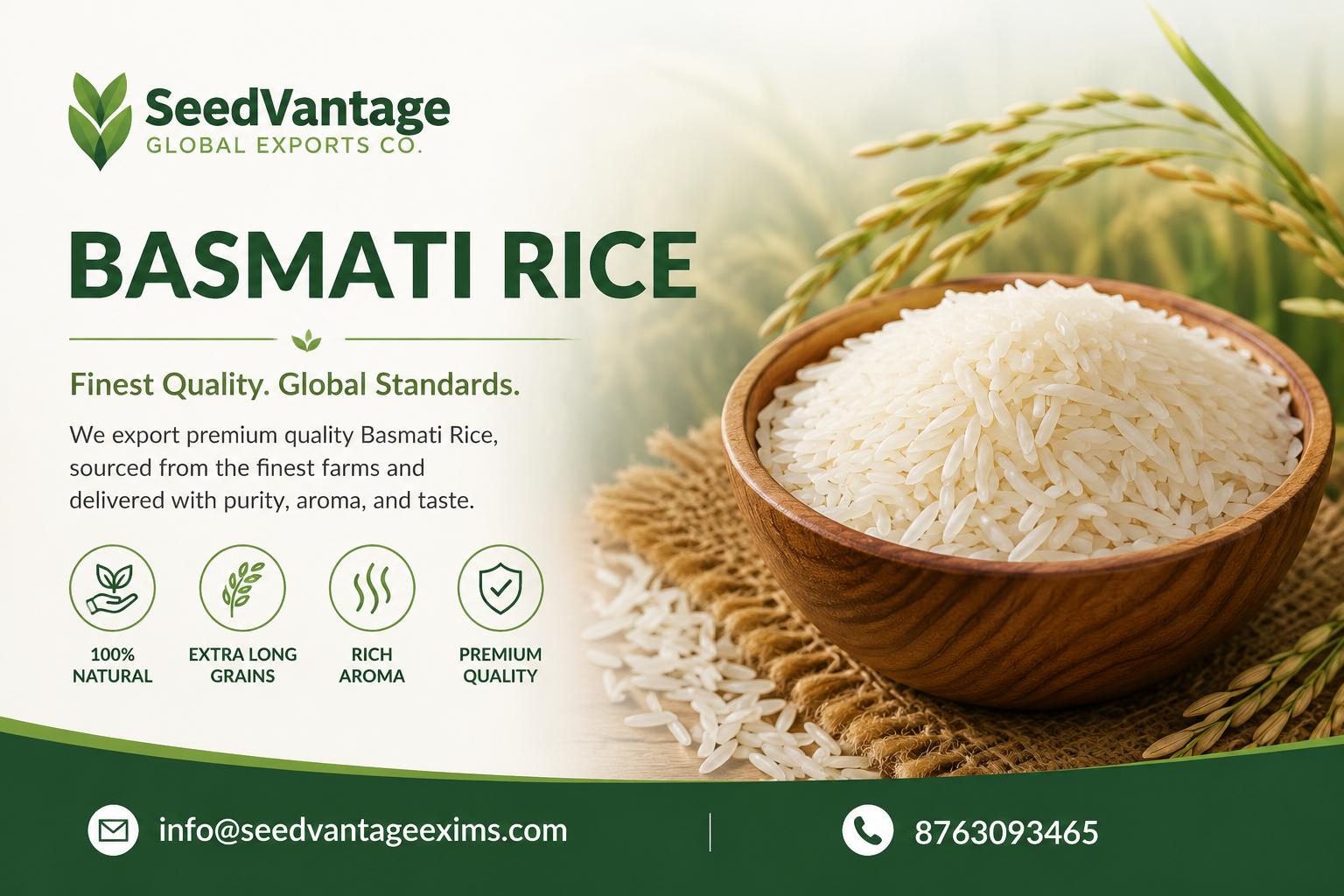
A shipment can look perfect at loading and still create a fight at the buyer’s warehouse. That is why international buyers are careful with Indian Basmati Rice. In 2024–25, India exported 6,065,483.45 MT of basmati worth USD 5,944.42 million, so the market is large enough to attract both disciplined exporters and careless sellers. The problem is not finding rice. The problem is finding manufacturers who can repeat the same grain, moisture, ageing, packing and documents month after month.
Indian Basmati Rice Is Bought by Grade, Not by Story
Grain Variety Decides the Final Use
Different types of basmati rice, including 1121, 1509, 1401, Traditional, Sella, Steam, Golden Sella and Creamy Sella, will not have the same results in a commercial kitchen or when sold to the retail market. 1121 is generally selected based on its long grain length while 1509 may be a better choice if the buyer is looking for good cooking performance and greater crop cycle economics. In addition, ICAR states Pusa Basmati 1509 matures within approximately 115 days compared to approximately 30 days longer for pusa basmati 1121.
One common error made by most buyers is when they only request "premium basmati" and then attempt to...
The Spec Detail Most Buyers Skip
Moisture, broken percentage, average grain length, foreign matter, whiteness, ageing period and cooking elongation should be written before the proforma invoice is accepted. APEDA records basmati as a GI product registered on 15 February 2016. A vague offer sheet is not flexibility. It is risk shifted onto the importer.
5 Checks Before You Trust Any Supplier
1. Batch Consistency
A good answer names the variety, mill process, sortex cleaning, moisture control and packing size. A bad answer says “same quality every time” but sends no lab report. APEDA issued 43,262 RCACs for basmati exporters in 2024–25, so buyers have enough registered exporters to compare.
2. Documentation First
You need invoice, packing list, certificate of origin, phytosanitary certificate, fumigation where needed and food-safety documents. A bad supplier says documents will be arranged after advance payment. That is how containers get delayed.
3. Real Cooking Tests
Retail buyers judge aroma and grain look. Caterers judge holding strength after bulk cooking. Nobody tells you this early enough: a rice sample that looks excellent dry can fail after 40 minutes in a warmer.
4. Export Market Experience
Saudi Arabia, Iraq, Iran, UAE and Yemen were major Indian basmati destinations in 2024–25. If your supplier has never shipped to your region, ask about label format, packing preference and port handling.
5. Claims Policy
A supplier who says “we will see after arrival” does not have a claims policy. Get sample retention, replacement, discount and credit terms agreed in writing. Most disputes are about 2–3% of bags that damage buyer confidence.
Benefits: Why Reliable Basmati Rice Manufacturers Protect Buyer Margin
Fewer Rejections at Destination
Clean, graded and properly packed rice reduces the chance of quality objections after landing. India’s total rice export value rose from USD 8.82 billion in 2020–21 to USD 12.47 billion in 2024–25, which shows how much trade depends on repeatable standards.
Better Menu and Retail Consistency
A restaurant chain cannot change biryani texture every second order. A supermarket cannot keep changing pack appearance. Indian Basmati Rice gives buyers a stable product story when the manufacturer controls variety, ageing and grain selection.
Stronger Private Label Control
Good Basmati Rice Suppliers understand that the importer’s brand is on the shelf, not the mill’s name. Correct bag GSM, stitching, inner liner, barcode space and print shade protect repeat orders.
More Predictable Landed Cost
The cheapest quote often becomes expensive after rework, demurrage or quality settlement. And yet buyers still chase the lowest FOB line without checking broken percentage or moisture. That is not procurement discipline.
Better Fit for Multiple Buyer Segments
Food wholesalers, retail chains, hotels, caterers and processors do not all need the same rice. One importer may require 1121 Golden Sella in retail packs. Another may need 25 kg or 50 kg bags for catering supply.
Why India’s Growing Belt Gives Buyers Options
Basmati Rice Manufacturers in India benefit from a defined northern production belt. APEDA lists Punjab, Haryana, Uttar Pradesh, Jammu & Kashmir, Uttarakhand, Himachal Pradesh and Delhi as basmati production areas in its 2024–25 survey. That geography matters. Paddy availability, milling access and port planning shift depending on where the rice is sourced.
For buyers searching basmati rice wholesale suppliers in india, the better question is not “who is nearest?” It is “who can source the right paddy, process it to export grade and move it without document gaps?” Basmati Rice Exporters in India serve many markets, but strong suppliers know that Gulf buyers often prefer sella strength while retail-focused markets may ask more about aroma, whiteness and branded packing.
How We Work at SeedVantage Global Exports Co.
At SeedVantage Global Exports Co., we supply agricultural products from India for buyers who cannot afford inconsistent shipment quality. Our product range includes Basmati rice, sesame seeds, cumin, moringa powder, onion powder, banana powder, fresh vegetables and fresh fruits, and our market-area page lists 227 regions served worldwide.
We do not treat rice as a generic commodity. We check grade suitability first, then discuss packing, documentation and dispatch planning. One operational habit we follow is simple: we do not quote serious rice buyers without asking the intended use first, because a catering buyer and a retail-chain buyer can reject the same grain for different reasons.
Send These Details Before Asking for the Final Rate
Send us your required rice variety, monthly quantity, destination port, packing size, target price range and whether you need private-label bags. We respond within 24 business hours with grade options, shipment discussion and MOQ clarity.
Our usual export MOQ starts from one 20-ft container for rice, with mixed-grade discussion possible after packing and destination review. Share a sample photo of your current rice if you have one. That single image often saves 3–4 rounds of wrong specification talk.
Conclusion
Indian Basmati Rice remains trusted because strong manufacturers understand that export supply is not just milling and loading. It is specification discipline, document control and repeatable cooking performance. With India crossing 6.06 million MT of basmati exports in 2024–25, serious buyers now have more options, but also more noise to filter. The next advantage will belong to businesses that choose suppliers before the market gets tight.
FAQs
1. Why is Indian Basmati Rice preferred by international buyers?
It gives importers a strong mix of aroma, grain length, cooking elongation and origin value. APEDA records India as the leading exporter of basmati rice globally, with over 6.06 million MT exported in 2024–25. The caveat is simple: origin alone is not enough.
2. How do I compare Basmati Rice Manufacturers before placing a bulk order?
Compare variety, average grain length, broken percentage, moisture, ageing, packing options, certifications and shipment history. A polished catalogue is not proof. Ask for a current sample and written specification sheet.
3. Do Basmati Rice Suppliers offer private-label packaging?
Yes, many export suppliers can support private-label bags for distributors, supermarkets and food brands. Minimum quantity depends on bag design, printing method and packing size. Small trial lots may not justify custom printing.
4. Are Basmati Rice Manufacturers in India suitable for food service buyers?
Yes, especially when the buyer selects sella or steam grades that hold better in bulk cooking. Hotels and caterers should test the rice after cooking, holding and reheating, not just after the first boil.
5. What should importers ask basmati rice wholesale suppliers in india?
Ask for variety name, grade, crop year, ageing period, packing size, port of loading, documents included and claim policy. Also ask whether the supplier can retain a control sample from the same lot.
- Managerial Effectiveness!
- Future and Predictions
- Motivatinal / Inspiring
- Fitness and Wellness
- Medical & Health
- Manufacturing
- Education
- Real-Estate
- Food Industry
- Hospitality
- Online Games
- Sports
- Home Services
- Civil Engineering
- Safety and Protection
- Software Products & Services
- Fashion and Jewellery
- Artificial Intelligence
- Entrepreneurship
- Mentoring & Guidance
- Marketing
- Networking
- HR & Recruiting
- Literature
- Shopping
- Career Management & Advancement