Inquire
How Forklift Service Repair Helps Prevent Costly Warehouse Downtime
Warehouses depend heavily on forklifts to move inventory, load shipments, and maintain efficient daily operations. When a forklift suddenly breaks down, productivity can slow down immediately, affecting shipping schedules, employee efficiency, and customer satisfaction. Even a few hours of downtime can create expensive disruptions in busy facilities. This is why professional forklift service repair plays a critical role in preventing operational delays and keeping warehouse equipment running reliably.
Businesses that invest in routine maintenance and timely repairs often experience fewer breakdowns, lower repair costs, and improved long-term productivity.
Why Warehouse Downtime Is So Expensive
Warehouse operations are built around speed and efficiency. Forklifts handle constant movement of pallets, inventory, and heavy materials throughout the day. When one machine stops working, the entire workflow can be affected.
Industry studies estimate that unplanned warehouse downtime costs businesses billions of dollars every year. Delayed shipments, interrupted workflows, and labor inefficiencies can quickly increase operational expenses.
In high-volume warehouses, even a single forklift failure may cause:
- Shipping delays
- Missed delivery deadlines
- Increased labor costs
- Reduced productivity
- Inventory handling disruptions
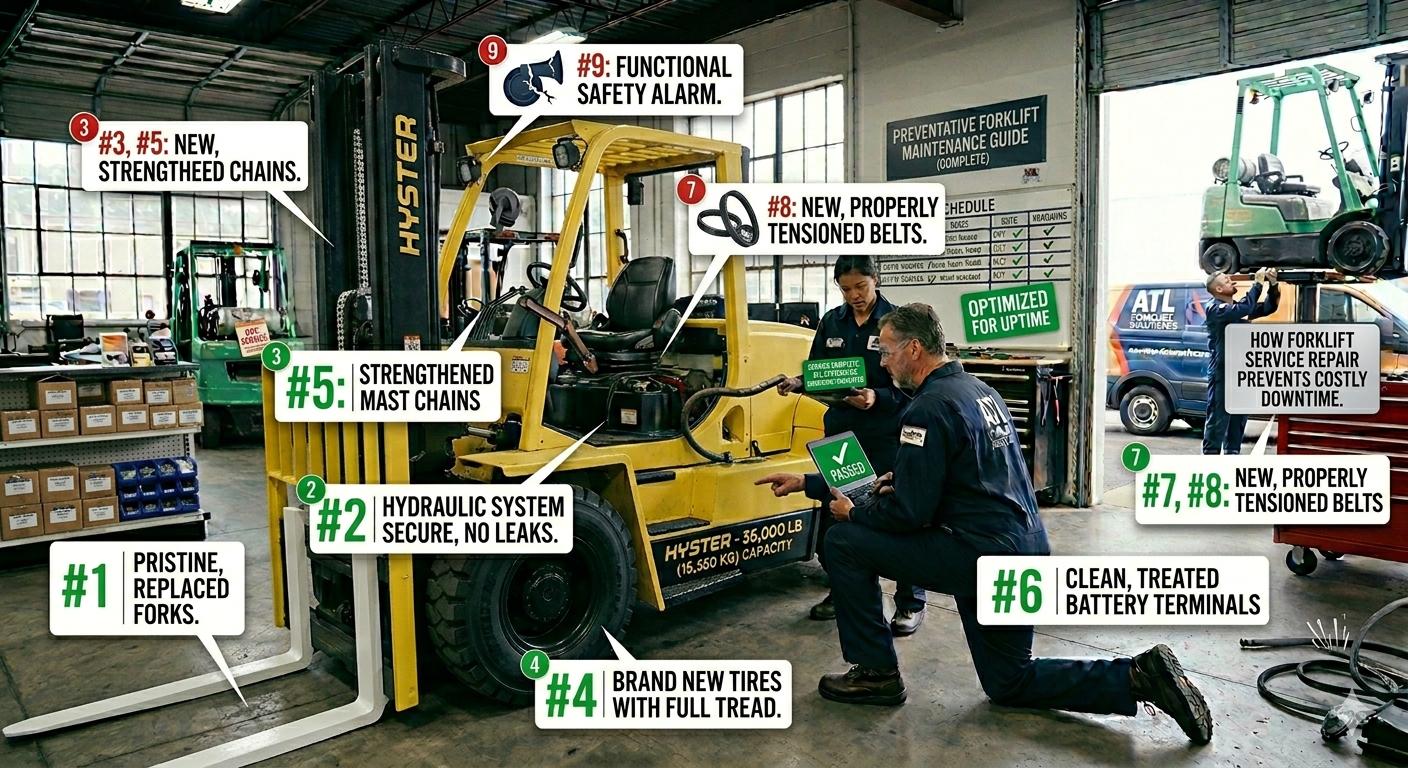
Reliable forklift service repair helps businesses reduce these risks by identifying and resolving problems before equipment fails completely.
Common Forklift Problems That Cause Downtime
Forklifts operate under constant stress, especially in facilities running multiple shifts or handling heavy loads daily. Over time, components wear down and performance begins to decline.
Hydraulic System Failures
Hydraulic systems are essential for lifting and lowering heavy materials. Leaks, damaged hoses, or pressure loss can reduce lifting power and eventually stop operations entirely.
Routine inspections help detect hydraulic issues early, preventing larger mechanical failures that could shut down equipment unexpectedly.
Battery and Electrical Issues
Electric forklifts rely on healthy batteries and reliable electrical systems for continuous operation. Weak batteries, damaged connectors, or charging problems often lead to sudden downtime.
Research shows that properly maintained batteries can improve forklift efficiency by up to 30%, helping warehouses reduce interruptions and maintain smoother workflows.
Brake and Steering Problems
Faulty brakes or steering systems create major safety concerns and force forklifts out of operation until repairs are completed.
Professional forklift service repair technicians inspect these critical systems regularly to ensure forklifts remain safe and operational.
Tire Wear and Stability Issues
Damaged or worn tires affect forklift stability, maneuverability, and load handling performance. In busy warehouse environments, poor traction increases accident risks and slows productivity.
Preventive tire inspections help maintain safer and more efficient operations.
The Benefits of Preventive Forklift Maintenance
One of the most effective ways to avoid downtime is through preventive maintenance. Instead of waiting for forklifts to fail, businesses can schedule regular service inspections to catch problems early.
Industry research suggests that companies implementing preventive maintenance programs experience up to 40% fewer equipment failures compared to businesses relying only on reactive repairs.
Early Problem Detection
Routine maintenance allows technicians to identify worn components before they fail completely. Replacing small parts early is often far less expensive than repairing major system damage later.
Improved Equipment Lifespan
Well-maintained forklifts typically last longer and perform more efficiently. Proper servicing reduces strain on engines, hydraulic systems, and electrical components, extending equipment lifespan significantly.
Increased Productivity
Reliable forklifts help warehouses maintain smooth workflows and reduce delays caused by unexpected breakdowns.
When forklifts operate efficiently, employees can move inventory faster and complete tasks with fewer interruptions.
Lower Long-Term Repair Costs
Preventive maintenance reduces emergency repair expenses by preventing major mechanical failures.
Businesses that ignore small mechanical issues often face much larger repair bills later, especially when breakdowns damage multiple components.
How Modern Technology Improves Forklift Reliability
Technology is changing how warehouses manage forklift maintenance. Many modern forklifts now include telematics systems that monitor equipment performance in real time.
These systems can track:
- Operating hours
- Battery health
- Maintenance schedules
- Error codes and diagnostics
- Operator usage patterns
Telematics allow businesses to schedule forklift service repair proactively instead of waiting for equipment to fail unexpectedly.
Real-time monitoring also helps warehouse managers improve fleet efficiency and reduce unnecessary downtime.
The Role of Professional Repair Services
Experienced forklift technicians play an important role in maintaining warehouse productivity. Professional repair providers have the tools, training, and expertise needed to diagnose problems quickly and perform repairs correctly.
Reliable repair services typically offer:
- Emergency repair support
- Preventive maintenance plans
- On-site servicing
- Genuine replacement parts
- Safety inspections
Fast response times are especially important in warehouses where downtime directly affects customer orders and operational performance.
Working with dependable service providers helps businesses maintain consistent equipment reliability throughout the year.
Why Safety and Downtime Are Closely Connected
Forklift maintenance is not just about productivity—it also protects workplace safety.
According to the Occupational Safety and Health Administration (OSHA), forklift-related accidents contribute to thousands of workplace injuries annually. Poorly maintained equipment increases the risk of collisions, dropped loads, and mechanical failures.
Routine forklift service repair ensures critical safety systems such as brakes, steering, hydraulics, and warning alarms remain fully operational.
Safer equipment helps businesses reduce accident risks while improving employee confidence and efficiency.
Final Thoughts
Warehouse downtime can become extremely expensive when forklifts fail unexpectedly. Delayed shipments, reduced productivity, and emergency repair costs can all impact business performance significantly.
Professional forklift service repair helps prevent these disruptions by keeping equipment reliable, efficient, and safe. Through preventive maintenance, early problem detection, and expert repairs, businesses can reduce downtime, extend equipment lifespan, and maintain smoother warehouse operations.
As warehouses continue facing higher productivity demands and faster shipping expectations, dependable forklift maintenance will remain essential for long-term operational success.
- Managerial Effectiveness!
- Future and Predictions
- Motivatinal / Inspiring
- Fitness and Wellness
- Medical & Health
- Manufacturing
- Education
- Real-Estate
- Food Industry
- Hospitality
- Online Games
- Sports
- Home Services
- Civil Engineering
- Safety and Protection
- Software Products & Services
- Fashion and Jewellery
- Artificial Intelligence
- Entrepreneurship
- Mentoring & Guidance
- Marketing
- Networking
- HR & Recruiting
- Literature
- Shopping
- Career Management & Advancement
SkillClick