

 SkillClick
Hydrogen Hubs Market Growth Driven by Clean Energy Infrastructure Expansion
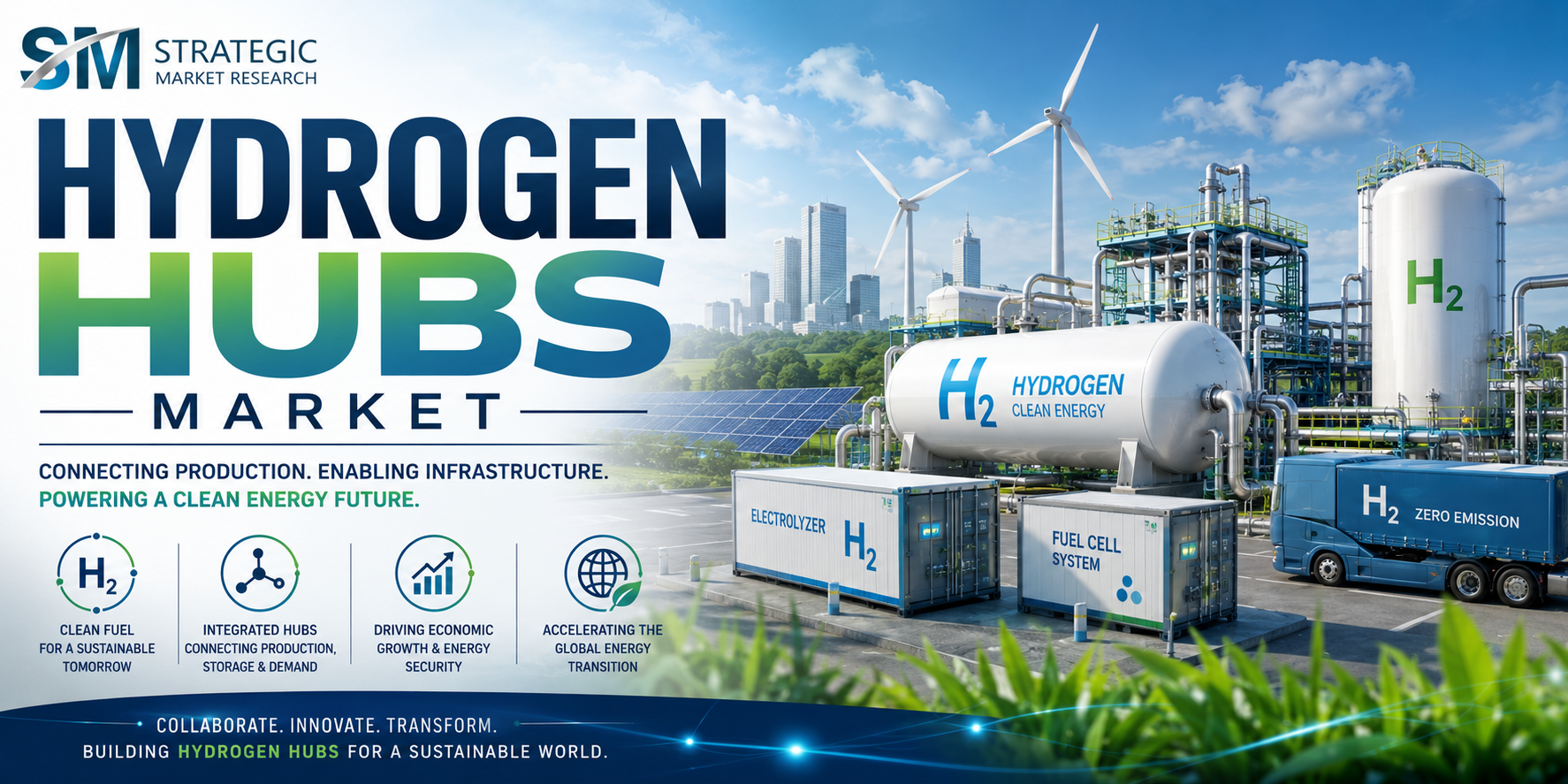
Hydrogen Hubs Market: Building the Backbone of the Global Clean Hydrogen Economy
The global hydrogen hubs market is emerging as a strategic pillar of the energy transition as governments, industrial companies, utilities, and transportation sectors intensify investments in low-carbon fuel ecosystems. Hydrogen hubs are becoming critical infrastructure clusters that integrate hydrogen production, storage, transportation, distribution, and end-use applications within concentrated industrial or regional networks.
Hydrogen hubs are gaining importance because the hydrogen economy cannot scale efficiently through isolated projects alone. Instead, coordinated regional ecosystems are required where renewable energy producers, electrolyzer manufacturers, industrial users, pipeline operators, logistics providers, ports, and mobility networks operate within interconnected infrastructure frameworks.
Market Overview
The market is witnessing strong momentum due to rising global commitments toward net-zero emissions, increasing government subsidies for hydrogen infrastructure, growing industrial decarbonization requirements, and expanding investment in renewable energy integration. Countries across North America, Europe, Asia-Pacific, and the Middle East are launching national hydrogen strategies focused on creating large-scale hydrogen corridors and regional hydrogen clusters capable of supporting future energy demand.
Hydrogen hubs are increasingly viewed as essential mechanisms for reducing the complexity of hydrogen adoption. Large-scale hydrogen deployment requires synchronized infrastructure development involving production facilities, pipelines, storage systems, fueling stations, export terminals, and industrial demand centers.
Market Drivers
Government Decarbonization Policies Accelerating Infrastructure Investments
One of the primary growth drivers for the hydrogen hubs market is the rapid expansion of government-supported decarbonization programs. Countries are increasingly incorporating hydrogen into national energy transition frameworks to reduce carbon emissions from hard-to-abate sectors such as steel, cement, chemicals, refining, and heavy transportation.
Large public funding programs are driving investments in hydrogen infrastructure projects globally. The increasing alignment between industrial policy and climate objectives is also supporting market expansion. Governments recognize hydrogen hubs as tools for enhancing energy independence, improving industrial competitiveness, and attracting advanced manufacturing investments.
Rising Industrial Demand for Clean Hydrogen
Industrial decarbonization is becoming a major catalyst for hydrogen hub development. Industries including steel production, ammonia manufacturing, refining, petrochemicals, and heavy manufacturing are under increasing pressure to reduce carbon intensity while maintaining operational efficiency.
Hydrogen hubs allow industrial users to secure reliable low-carbon hydrogen supply while reducing transportation and storage challenges. The clustering of producers and consumers within regional ecosystems significantly improves economic viability compared to standalone hydrogen projects.
Expansion of Renewable Energy Integration
The rapid growth of renewable energy capacity is supporting hydrogen hub development worldwide. Green hydrogen production relies heavily on renewable electricity generated from solar, wind, hydroelectric, and other clean energy sources.
Hydrogen hubs provide an effective mechanism for utilizing surplus renewable power through electrolysis while supporting grid balancing and energy storage applications. As renewable electricity costs continue to decline and electrolyzer technologies improve, green hydrogen economics are gradually becoming more competitive.
Market Restraints
High Capital Investment Requirements
Despite strong long-term potential, the hydrogen hubs market faces substantial financial barriers. Developing integrated hydrogen ecosystems requires massive capital investment across production plants, electrolyzers, storage facilities, pipelines, export terminals, fueling infrastructure, and industrial conversion systems.
The economic viability of hydrogen hubs remains highly dependent on government incentives, subsidies, and long-term offtake agreements. Many projects continue to face challenges in reaching final investment decisions due to uncertain demand growth and evolving regulatory frameworks.
Infrastructure and Logistics Challenges
Hydrogen transportation and storage infrastructure remain underdeveloped in many regions. Unlike natural gas infrastructure, hydrogen distribution systems require specialized pipelines, compression systems, liquefaction facilities, and safety standards.
Hydrogen molecules are smaller and more difficult to contain compared to natural gas, increasing engineering complexity and infrastructure costs. Retrofitting existing pipeline networks and constructing new hydrogen-ready systems requires significant investment and regulatory coordination.
Uncertain Commercial Demand
Although long-term hydrogen demand expectations remain strong, near-term market adoption remains uncertain in several sectors. Some industrial users continue to evaluate alternative decarbonization pathways including electrification, carbon capture technologies, biofuels, and advanced energy efficiency systems.
These uncertainties may slow infrastructure expansion in regions where hydrogen economics remain less competitive.
Market Opportunities
Emergence of Global Hydrogen Trade Corridors
One of the most significant opportunities within the hydrogen hubs market is the development of international hydrogen trade networks. Countries with abundant renewable energy resources are positioning themselves as future hydrogen exporters capable of supplying industrial economies with clean fuel alternatives.
Hydrogen hubs located near ports and export terminals are expected to become strategic energy gateways for ammonia exports, liquefied hydrogen transportation, and synthetic fuel production.
Heavy Mobility and Transportation Expansion
Hydrogen-powered mobility solutions are creating new demand opportunities for hydrogen hubs. Fuel cell trucks, buses, trains, shipping vessels, mining equipment, and aviation applications are increasingly being explored as alternatives to diesel and conventional fossil fuels.
Hydrogen hubs located near transportation corridors and logistics centers are expected to support large-scale fueling infrastructure deployment. As governments push for zero-emission freight and heavy mobility systems, hydrogen-based transportation ecosystems may become major growth drivers.
Technological Advancements in Electrolysis and Storage
Advancements in electrolyzer efficiency, hydrogen compression systems, storage materials, and fuel cell technologies are improving market economics and operational scalability. New developments in modular electrolysis, digital monitoring systems, AI-based energy optimization, and advanced storage technologies are expected to enhance hydrogen hub performance significantly.
Competitive Landscape
The hydrogen hubs market is highly collaborative and involves participation from energy companies, industrial gas suppliers, utilities, infrastructure developers, engineering firms, renewable energy companies, and technology providers.
Major participants include hydrogen producers, electrolyzer manufacturers, industrial gas companies, energy infrastructure operators, and mobility technology firms. Companies are increasingly forming strategic alliances, consortiums, and joint ventures to accelerate hydrogen ecosystem development.
- Regional hub partnerships
- Long-term hydrogen supply agreements
- Renewable energy integration projects
- Electrolyzer manufacturing expansion
- Infrastructure investments
- Carbon capture integration
- Port-based hydrogen export facilities
- Industrial decarbonization partnerships
Regional Market Trends
North America
North America is emerging as a major hydrogen hub development region supported by federal funding programs, industrial decarbonization strategies, and large-scale clean energy investments. The United States is investing heavily in regional hydrogen ecosystems focused on industrial manufacturing, transportation, and energy infrastructure.
Europe
Europe continues to lead global hydrogen policy development through aggressive climate targets, renewable energy deployment, and industrial decarbonization initiatives. European countries are investing in hydrogen backbone pipeline systems, offshore renewable hydrogen projects, and cross-border hydrogen infrastructure integration.
Asia-Pacific
Asia-Pacific is becoming a rapidly expanding hydrogen market driven by China, Japan, South Korea, India, and Australia. China is scaling hydrogen manufacturing and electrolyzer production capacity aggressively, while Japan and South Korea continue investing in hydrogen mobility and fuel cell ecosystems.
Middle East
The Middle East is increasingly investing in green hydrogen mega-projects supported by abundant solar energy resources and strong export ambitions. Gulf countries are seeking to diversify energy economies while maintaining long-term leadership in global energy markets.
Market Forecast and Growth Trends
The hydrogen hubs market is expected to witness sustained growth over the next decade as clean hydrogen adoption expands across energy-intensive industries, transportation networks, and power systems. Rising investment in green hydrogen production, renewable energy integration, hydrogen pipelines, and port-based export facilities is expected to strengthen market development.
Growth trends indicate that hydrogen hubs will increasingly evolve from pilot-scale ecosystems into commercial-scale industrial clusters. Future development will be shaped by policy support, declining electrolyzer costs, long-term offtake agreements, regional infrastructure planning, and cross-border hydrogen trade partnerships.
Latest Impact Analysis
The hydrogen hubs market is currently transitioning from early-stage pilot development toward commercial-scale implementation. While some projects face delays due to financing, policy changes, and uncertain near-term demand, long-term investment momentum remains strong.
The market is expected to evolve significantly over the next decade as hydrogen production costs decline, renewable energy integration improves, and industrial demand matures. Hydrogen hubs are likely to become central pillars of future low-carbon energy systems, supporting industrial transformation, clean mobility, grid stability, and global energy trade networks.
As governments intensify climate commitments and industries pursue carbon-neutral operations, hydrogen hubs are positioned to become one of the most strategically important infrastructure segments within the global clean energy economy.
Related Reports
Alkaline Water Electrolysis Market
Hydrogen Pressure Vessels Market
PSA Hydrogen Purification Market
- Managerial Effectiveness!
- Future and Predictions
- Motivatinal / Inspiring
- Fitness and Wellness
- Medical & Health
- Manufacturing
- Ausbildung
- Real-Estate
- Food Industry
- Hospitality
- Online Games
- Sports
- Home Services
- Civil Engineering
- Safety and Protection
- Software Products & Services
- Fashion and Jewellery
- Artificial Intelligence
- Entrepreneurship
- Mentoring & Guidance
- Marketing
- Networking
- HR & Recruiting
- Literature
- Shopping
- Career Management & Advancement