

 SkillClick
Why Asset Tracking Has Become a Serious Priority for Contractors
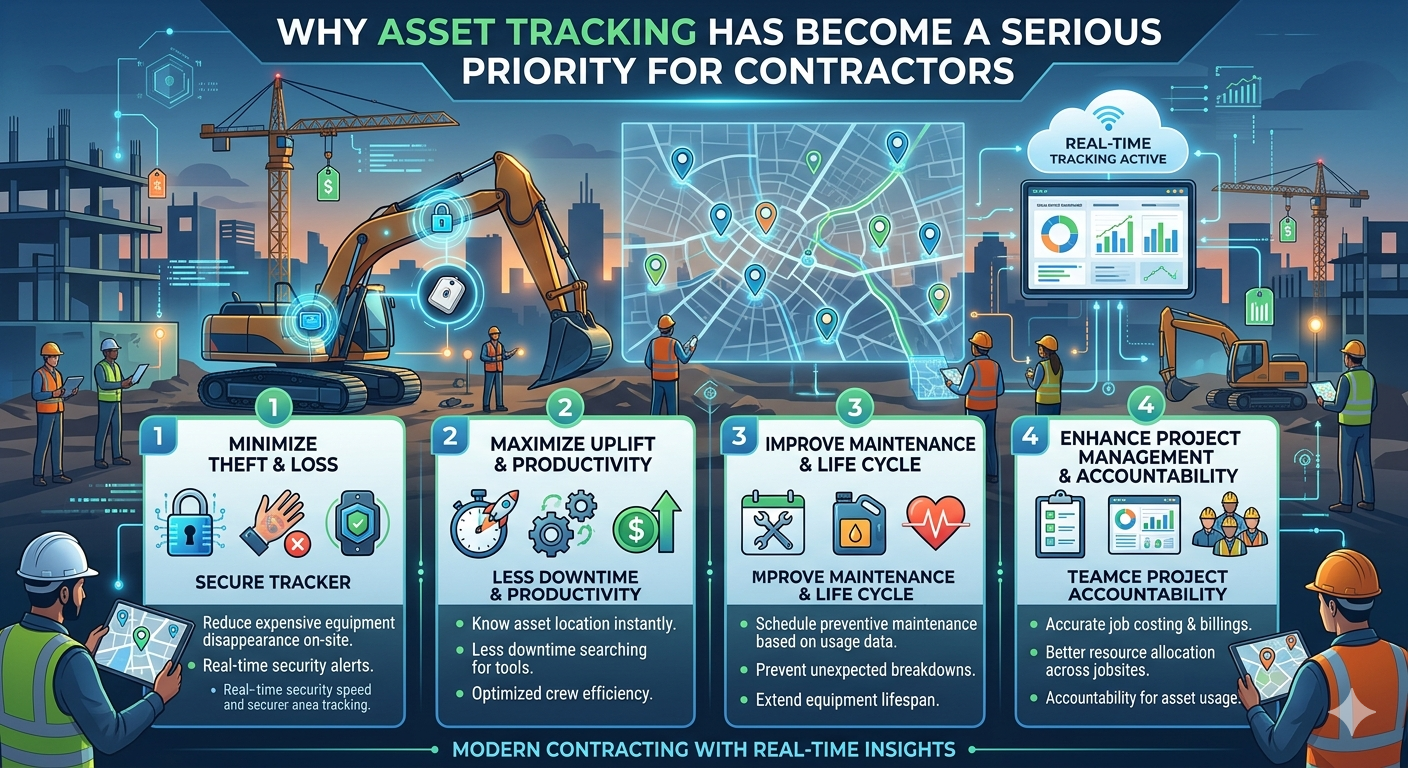
Construction companies manage more than heavy equipment. They also manage tools, attachments, small assets, vehicles, technology, materials, and specialty items that move across jobsites every day. When these assets are not tracked properly, teams lose time, money, and accountability.
That is why construction asset tracking software has become a serious priority for contractors that want better control over field operations. Asset tracking is no longer just about preventing theft. It is about knowing what the company owns, where assets are located, who is using them, and whether they are supporting active work.
Construction Assets Move Constantly
Construction assets rarely stay in one place. Tools move between crews. Attachments get transferred from one machine to another. Small equipment shifts between jobsites. Vehicles go from yards to projects and back again. In a fast-moving environment, it is easy for records to become outdated.
When teams rely on memory, paper logs, or scattered spreadsheets, tracking gaps appear quickly. An asset may be listed at one location but physically sit somewhere else. A crew may assume a tool is available, only to find out another crew took it. A manager may order a replacement because no one can locate the original.
These problems may seem small, but they add up across multiple projects.
Lost Assets Create More Than Replacement Costs
When an asset goes missing, the replacement cost is only part of the problem. The bigger cost often comes from delays, duplicate purchases, crew downtime, and administrative effort. Someone has to search for the asset, call other teams, check storage areas, update records, and decide whether to rent or buy a replacement.
Lost assets also affect trust. When nobody knows who last used an item or where it was moved, accountability becomes weak. This can create frustration between crews, supervisors, and office teams.
Better tracking helps reduce this confusion by creating a clear record of ownership, assignment, location, and usage.
Accountability Matters Across Every Jobsite
Asset accountability is not about blaming field teams. It is about creating a system where assets can be managed responsibly. Crews need access to the right tools and equipment, but companies also need visibility into how those assets are being used.
Without accountability, assets are more likely to be misplaced, hoarded, damaged, or underused. A crew may hold onto tools longer than needed because there is no simple return process. A supervisor may not know which assets are assigned to which project. The office may approve new purchases without realizing similar assets already exist elsewhere.
Construction asset tracking software helps create cleaner accountability by giving teams a more accurate view of asset assignment and movement.
Small Tools Deserve Better Tracking
Many contractors focus heavily on large equipment because it carries higher cost. That makes sense, but small tools and field assets can also create major waste. Power tools, lasers, compressors, generators, tablets, safety equipment, and attachments can disappear, break, or sit unused without proper tracking.
Small asset loss is especially difficult because these items move frequently and may not always have the same level of documentation as heavy equipment. Over time, repeated losses and duplicate purchases can become a serious budget issue.
Tracking small assets helps contractors protect the items crews depend on every day.
Asset Tracking Supports Better Planning
Good asset tracking also improves planning. When managers know what assets are available, they can prepare jobs more accurately. Crews can show up with the right tools. Supervisors can avoid last-minute scrambling. Procurement teams can make better purchase decisions.
This is especially valuable for contractors working across multiple jobsites. Without central visibility, each project may operate like its own island. One jobsite may have extra assets while another site rents or buys the same item.
A connected tracking process helps distribute assets more efficiently and reduces unnecessary spending.
Maintenance and Condition Tracking Are Part of the Picture
Asset tracking should not stop at location. Condition matters too. A tool may be present but damaged. A generator may be available but overdue for service. An attachment may be assigned but not safe to use.
When condition data is missing, teams may make decisions based on incomplete information. This can lead to jobsite delays, safety concerns, and repeated equipment problems.
A stronger asset tracking process includes inspection status, maintenance notes, repair history, and readiness. This helps teams understand not just where assets are, but whether they are usable.
Digital Records Reduce Administrative Noise
Manual asset tracking creates administrative drag. Teams spend too much time updating spreadsheets, searching through messages, checking old logs, and confirming details by phone. These tasks do not directly produce work, but they consume valuable time.
Digital records make asset information easier to access and update. A cleaner tracking system can show asset details, assignment history, location, status, and ownership without forcing teams to chase information manually.
This improves both field productivity and office control.
Better Asset Visibility Protects Margins
Construction margins can be tight, and asset waste cuts directly into profitability. Replacing lost tools, renting unnecessary equipment, delaying crews, and buying duplicate assets all reduce margin.
Asset tracking helps contractors protect profitability by reducing waste and improving asset utilization. When companies know what they have and where it is, they can make better decisions with less guesswork.
For contractors with growing operations, this becomes even more important. The larger the asset base, the easier it is for small tracking issues to become major cost problems.
Final Thoughts
Asset tracking has become a serious priority because construction operations are too complex for informal systems. Crews need fast access to the right assets, and companies need accurate visibility into ownership, location, condition, and usage.
Construction asset tracking software gives contractors a stronger way to manage field assets across jobsites. It improves accountability, reduces losses, supports better planning and helps protect margins. In modern construction, knowing where assets are is not optional. It is basic operational discipline.
- Managerial Effectiveness!
- Future and Predictions
- Motivatinal / Inspiring
- Fitness and Wellness
- Medical & Health
- Manufacturing
- Education
- Real-Estate
- Food Industry
- Hospitality
- Online Games
- Sports
- Home Services
- Civil Engineering
- Safety and Protection
- Software Products & Services
- Fashion and Jewellery
- Artificial Intelligence
- Entrepreneurship
- Mentoring & Guidance
- Marketing
- Networking
- HR & Recruiting
- Literature
- Shopping
- Career Management & Advancement