

 SkillClick
How to Build an On-demand mobile apps That Meets Customer Expectations
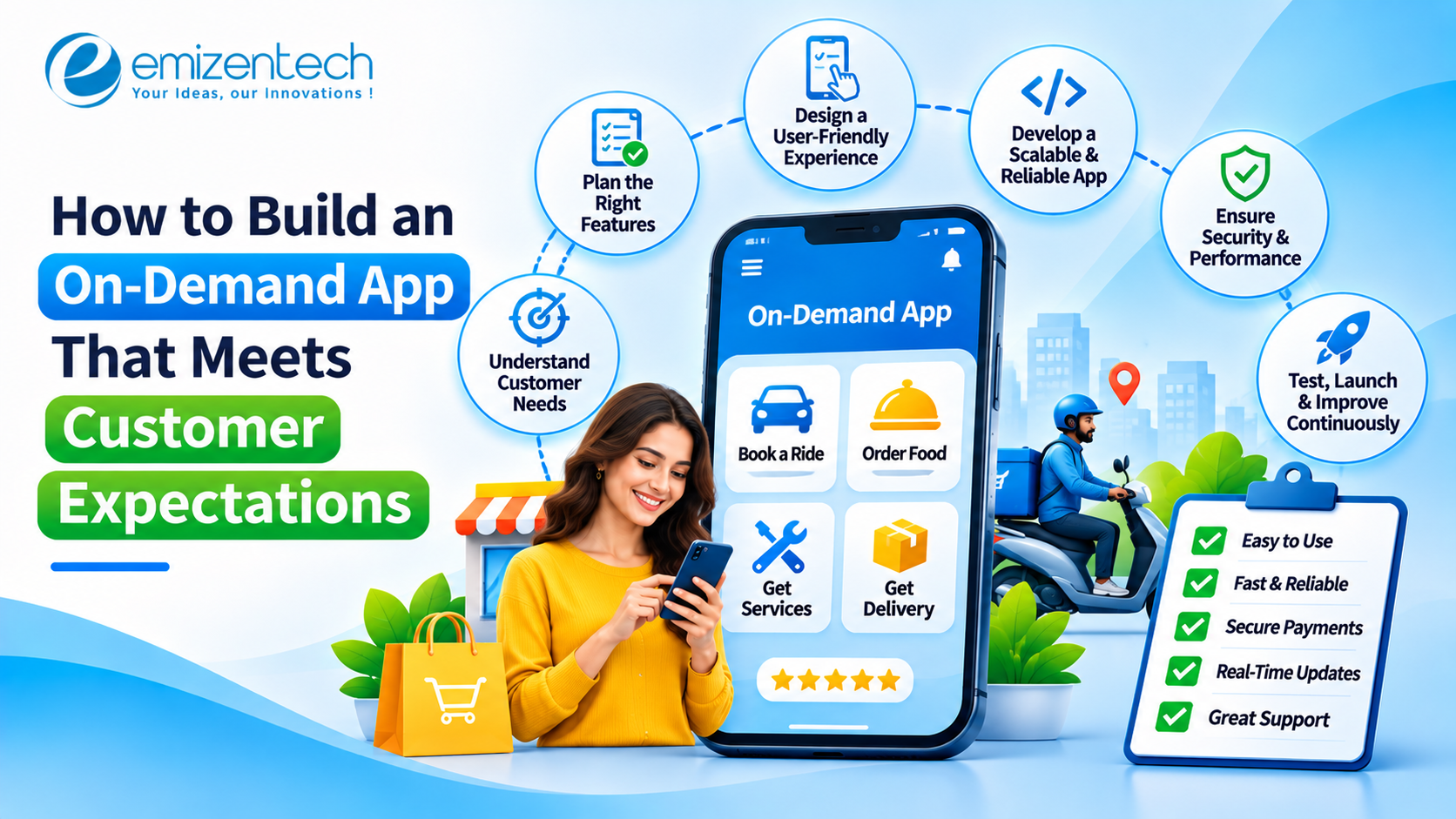
Customers expect on-demand services to be convenient, reliable, and easy to access. Whether they are booking a ride, ordering food, or scheduling a home service, they want a smooth experience from the initial request to final delivery. Businesses that fail to meet these expectations risk losing customers to competitors with more efficient service models.
Building a successful application requires more than adding basic booking and payment features. Businesses need to understand customer needs, design efficient workflows, and choose technologies that support reliable service delivery. A well-planned on-demand app development strategy helps businesses create applications that meet current customer expectations while supporting future growth.
Why Customer Expectations Matter in On-Demand App Development
Customer expectations influence how people evaluate and use digital services. A complicated booking process, delayed notifications, or unreliable payment system can discourage customers from using an application again.
Businesses need to identify the factors that influence customer satisfaction before starting development. These may include service availability, pricing transparency, delivery speed, payment flexibility, and customer support.
Understanding these requirements helps businesses prioritise features that improve the customer experience. On demand app development enables businesses to create applications that meet customer expectations while improving service delivery and operational efficiency.
Essential Elements of a Customer-Focused On-Demand App
A successful application should make it easy for customers to request services, understand what happens next, and resolve problems when they occur.
1. Simple Registration and Onboarding
Customers should be able to create an account without completing unnecessary steps. Lengthy registration forms can discourage users before they even explore the application.
Businesses can simplify onboarding through email registration, phone verification, and supported social login options. The application should request only the information needed to provide the service.
A straightforward onboarding process helps customers reach the main functionality quickly and reduces the likelihood of abandoned registrations.
2. Transparent Pricing and Service Availability
Unexpected charges can damage customer trust. An application should display service prices, additional fees, and applicable taxes before customers confirm their requests.
Businesses should also provide accurate information about service availability, delivery areas, and estimated completion times.
For example, a home service application should allow customers to check whether a professional is available in their location before placing a booking.
3. Reliable Booking and Scheduling
Customers need flexibility when requesting services. An application should allow users to select available time slots, modify bookings when permitted, and receive confirmation after submitting a request.
Businesses can improve scheduling by maintaining accurate service provider availability and preventing overlapping appointments.
Automated reminders can also reduce missed appointments and help customers prepare for scheduled services.
4. Responsive Customer Support
Even well-designed applications can encounter booking errors, payment issues, or service delays. Customers need a clear way to contact support when problems arise.
Businesses can provide in-app chat, support tickets, frequently asked questions, and access to relevant booking details.
AI-powered chatbots can handle routine queries, such as booking status or service availability, while more complex issues can be transferred to human support agents.
How to Choose the Right Technology for an On-Demand App
Technology decisions affect application performance, development costs, maintenance, and scalability. Businesses should evaluate their requirements before selecting a technology stack.
1. Choose the Right Application Platform
Businesses can develop native applications for individual platforms or use cross-platform technologies to support multiple operating systems. An on-demand mobile app built with the right technology can provide a consistent user experience while meeting the performance and functionality requirements of the business. The choice depends on the target audience, required features, and available development resources.
2. Plan for Scalability
An application that performs well with a small customer base may struggle as traffic and transactions increase.
Businesses should consider infrastructure capacity, database performance, and application architecture during development. Scalable cloud infrastructure can help applications accommodate changing demand.
3. Integrate Essential Business Systems
On-demand applications often need to connect with payment gateways, mapping services, customer relationship management systems, and other business tools.
Planning these integrations early helps maintain accurate information across systems and reduces operational errors.
4. Prioritize Security and Data Protection
Applications may collect personal information, location data, and payment details. Businesses should implement appropriate authentication, encryption, access controls, and secure data storage.
Security requirements should be reviewed throughout development rather than addressed only before launch.
Common Mistakes to Avoid When Developing an On-Demand App
Businesses can improve development outcomes by identifying common mistakes before they affect the project.
-
Adding too many features initially: Focus on essential functionality before expanding the application.
-
Ignoring customer feedback: Use customer insights to identify usability issues and improve the service experience.
-
Overlooking operational workflows: Ensure the application supports service providers and administrators, not just customers.
-
Underestimating maintenance: Plan for updates, bug fixes, security improvements, and ongoing performance monitoring.
-
Treating AI as a requirement: Introduce AI only when it solves a specific customer or operational problem.
Final Thoughts
Building an on-demand application requires a clear understanding of customer expectations, business operations, and technical requirements. Simple booking processes, transparent pricing, reliable communication, and responsive support can help businesses deliver better digital services.
AI can further improve the experience through personalized recommendations, automated support, and demand forecasting. However, these capabilities are most effective when supported by reliable data and well-designed workflows.
EmizenTech provides on demand app development services to help businesses build scalable applications with customer-focused features, secure integrations, and efficient operational processes.
Frequently Asked Questions
1. What makes an on-demand app successful?
A successful application provides a convenient booking experience, reliable service delivery, transparent pricing, secure payments, and responsive customer support.
2. How can businesses improve customer retention in on-demand apps?
Businesses can improve retention through reliable services, personalized recommendations, loyalty programs, convenient booking, and timely communication.
3. How does AI help on-demand applications?
AI can support personalized recommendations, automated customer support, demand forecasting, and more efficient service provider allocation.
4. Should businesses build native or cross-platform on-demand apps?
The choice depends on performance requirements, platform-specific features, budget, and maintenance needs. Native development offers platform-specific capabilities, while cross-platform development can reduce duplicated development effort.
5. How can businesses maintain an on-demand app after launch?
Regular updates, performance monitoring, security testing, customer feedback analysis, and bug fixes help maintain application quality and reliability.
- Managerial Effectiveness!
- Future and Predictions
- Motivatinal / Inspiring
- Fitness and Wellness
- Medical & Health
- Manufacturing
- Educação
- Real-Estate
- Food Industry
- Hospitality
- Online Games
- Sports
- Home Services
- Civil Engineering
- Safety and Protection
- Software Products & Services
- Fashion and Jewellery
- Artificial Intelligence
- Entrepreneurship
- Mentoring & Guidance
- Marketing
- Networking
- HR & Recruiting
- Literature
- Shopping
- Career Management & Advancement