

 SkillClick
From Website Visitors to Business Enquiries: Making Content Marketing Work for Growth
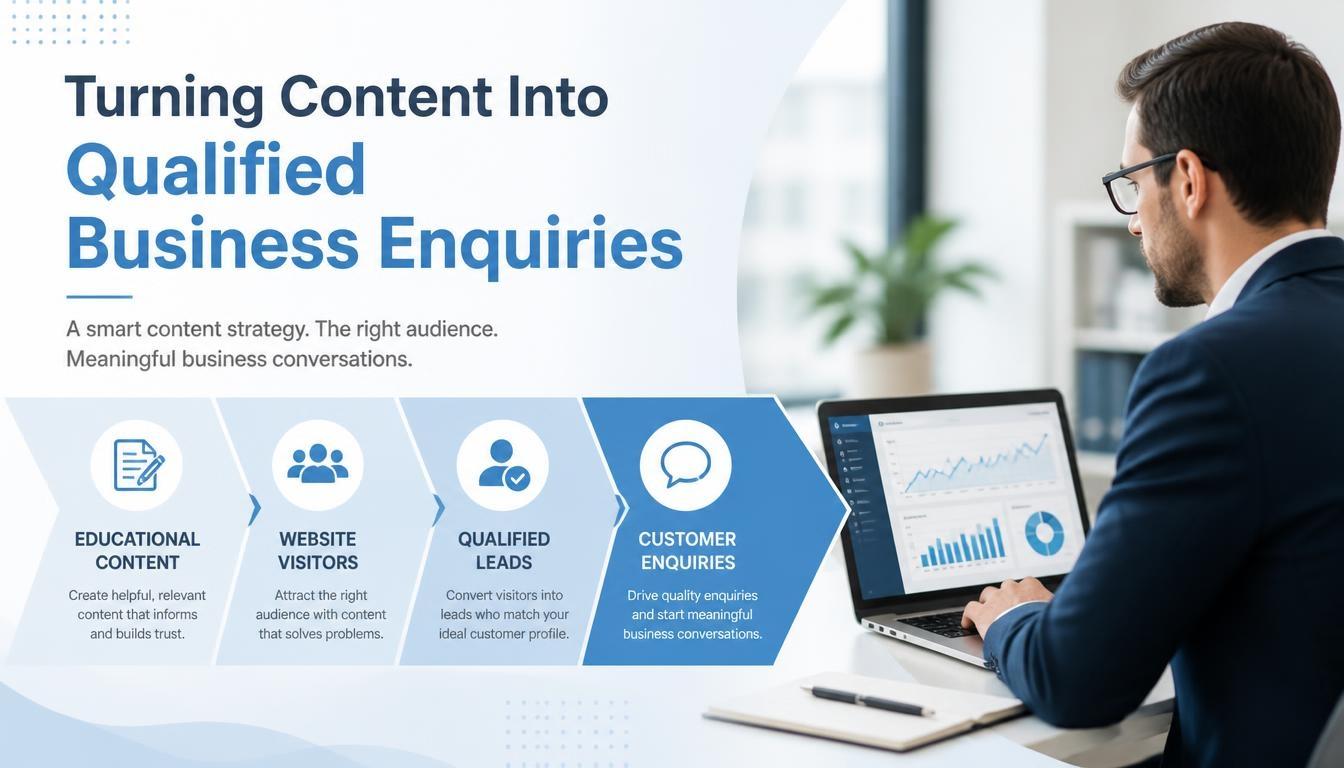
Website traffic is often one of the first numbers businesses check when reviewing their digital marketing performance. More visitors can be encouraging, but traffic alone does not explain whether a website is helping the company achieve its business goals.
A website may attract thousands of visitors who are not interested in its services. Another website may receive fewer visits but generate more relevant enquiries. The difference often comes down to audience relevance, content quality, and the journey visitors take after arriving.
For businesses considering content marketing services in Delhi, understanding this journey is essential to creating content that supports measurable business outcomes.
Why Traffic Should Not Be the Only Goal
Traffic measures visits, not business value. A visitor who reads an article and leaves may have learned something useful, but the visit does not necessarily lead to a sale.
Content marketing can serve several purposes, including awareness, education, consideration, and conversion. Each purpose needs different measurements.
The Content Marketing Institute's 2025 B2B research reported that 87% of surveyed marketers said content marketing helped build brand awareness, 74% said it helped generate demand or leads, and 49% said it helped generate sales or revenue.
Source: Content Marketing Institute — B2B Research
These findings show that marketers use content across multiple stages of the buying process. They should not be interpreted as guaranteed results for an individual business.
Match Content to the Customer Journey
People do not all arrive at a website with the same level of interest.
Someone at the research stage may want to understand a problem. Someone comparing providers may want to evaluate features, processes, and costs. A person ready to make contact may need a clear service description and an easy way to request information.
A business can plan content around these different needs.
Awareness content explains common questions and problems. Examples include educational articles, introductory guides, and explanatory videos.
Consideration content helps people compare possible solutions. Examples include detailed service guides, comparison articles, and process explanations.
Decision-stage content helps potential customers evaluate a provider. Examples include service pages, transparent pricing information, documented case studies, and consultation details.
This structure prevents every article from trying to do the same job.
Create a Clear Path From Articles to Services
An informational blog should help readers understand a topic. When a relevant service can help them take the next step, a contextual internal link can be useful.
For example, an article about planning a marketing calendar could link to a page explaining professional content marketing support. A guide about search visibility could direct interested readers to an SEO service page.
The link should make sense in the context of the article. Avoid forcing a sales message into every paragraph or adding unrelated links merely to increase clicks.
Businesses exploring content marketing services in Delhi can review how content planning fits into a wider marketing strategy.
The destination page should also fulfil the expectation created by the article. If the content promises information about a service, the linked page should clearly explain what that service involves.
Improve Landing Pages Before Increasing Traffic
When an article attracts relevant visitors but few people explore the related service, it may be tempting to publish more content. However, the existing website experience should be reviewed first.
Check whether the service page explains the offer clearly. Does it identify the intended customer? Does it describe the process, answer common concerns, and provide a clear contact option?
Also check mobile usability, page loading, navigation, and form functionality.
A landing page does not need to be filled with sales language. It needs to help visitors understand the service and decide whether it is suitable for them.
Simple improvements can include clearer headings, better explanations, more relevant examples, and shorter forms where appropriate.
Measure the Right Performance Indicators
HubSpot's 2026 marketing statistics report identifies lead quality and marketing-qualified leads among the leading metrics marketers use to evaluate marketing performance.
Source: HubSpot Marketing Statistics
For a content campaign, useful measurements include:
-
Organic impressions and clicks.
-
Relevant visits to important pages.
-
Clicks from articles to service pages.
-
Contact-form submissions and calls.
-
Qualified leads generated by content.
-
Conversions influenced by several marketing touchpoints.
-
Cost and time required to produce content.
No single metric explains the entire customer journey. For example, someone may read an article, return several days later through a branded search, and then submit an enquiry.
Where possible, use analytics and CRM records to understand these interactions. Be transparent about attribution limitations and avoid claiming that a single article caused a sale without supporting evidence.
Improve Content Using Real Data
Review content regularly to find opportunities for improvement.
If a page receives search impressions but few clicks, check whether its title accurately describes the content and reflects the searcher's needs.
If people visit an article but rarely click its related service link, review the link's relevance and placement. If a service page receives visits but few enquiries, examine the clarity of the offer, the page experience, and the ease of contacting the business.
Also consider updating older articles when facts change or when new questions become important.
Google's guidance recommends creating helpful, reliable, people-first content rather than material designed mainly to manipulate search rankings.
Source: Google Search Central — Helpful Content Guidance
This is particularly relevant when a business has many articles covering similar subjects. Adding meaningful expertise and removing unnecessary repetition is more useful than increasing the number of pages without a clear purpose.
Set Realistic Expectations
Content marketing is not an instant replacement for every other marketing channel. Search visibility depends on competition, website quality, relevance, and other factors. Some articles may attract visitors quickly through distribution, while others take longer to gain organic visibility.
Businesses should set targets that reflect their starting position and available resources.
A new campaign might initially focus on publishing useful content and improving search visibility. Later, the business may evaluate relevant traffic, service-page engagement, and qualified enquiries.
Regular reporting helps teams understand progress and make better decisions without promising outcomes that cannot be guaranteed.
Choosing a Content Marketing Partner
When evaluating a provider, ask how the team researches topics, plans internal links, reviews content quality, and measures performance.
A useful partner should understand both the audience and the commercial purpose of the content. The objective is not simply to produce articles; it is to create resources that serve customers and fit the business's wider marketing strategy.
Businesses can explore Battersea Web Expert's content marketing services in Delhi for more information.
Conclusion
Content becomes more valuable when it has a clear purpose and supports the customer's next step. By connecting educational articles with relevant service pages, improving the website experience, and measuring qualified enquiries rather than traffic alone, businesses can make their content strategy more accountable.
The goal is not to turn every visitor into a customer. It is to help the right people find useful information, understand the available solution, and contact the business when they are ready.
- Managerial Effectiveness!
- Future and Predictions
- Motivatinal / Inspiring
- Fitness and Wellness
- Medical & Health
- Manufacturing
- Education
- Real-Estate
- Food Industry
- Hospitality
- Online Games
- Sports
- Home Services
- Civil Engineering
- Safety and Protection
- Software Products & Services
- Fashion and Jewellery
- Artificial Intelligence
- Entrepreneurship
- Mentoring & Guidance
- Marketing
- Networking
- HR & Recruiting
- Literature
- Shopping
- Career Management & Advancement