

 SkillClick
How SEO Helps Small Businesses Attract More Customers Online
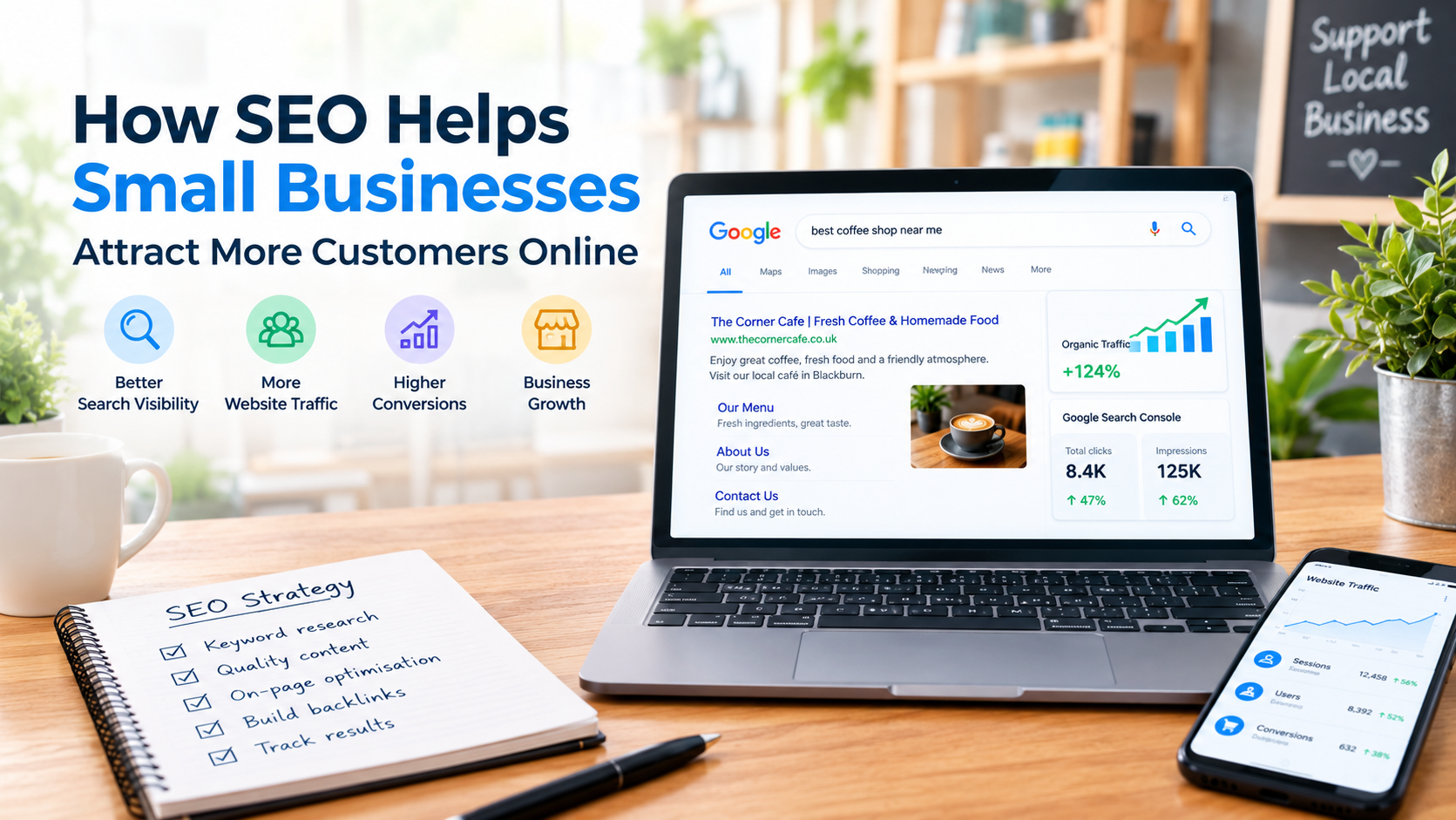
Small businesses looking to improve their visibility in local search results can benefit from a structured SEO strategy. Companies targeting customers in Greater Manchester can explore professional Local SEO services in Manchester to learn how targeted optimisation can help them reach relevant audiences online.
Search engine optimisation (SEO) helps businesses improve their visibility in search results when potential customers look for relevant products, services or information. Rather than relying entirely on paid advertising, businesses can develop their online presence through useful content, relevant keywords, technical improvements and a better website experience.
A consistent SEO strategy can help small businesses attract relevant visitors, establish credibility and generate enquiries over time. Understanding how these techniques work makes it easier to decide where to invest time and marketing resources.
What Is SEO and Why Does It Matter for Small Businesses?
SEO involves improving a website so that search engines can discover, understand and present its pages to people searching for relevant information. It includes content optimisation, website structure, technical performance and building authority through relevant external references.
For small businesses, SEO provides an opportunity to compete for attention based on relevance and usefulness rather than advertising expenditure alone.
For example, a local plumbing company could optimise its website around the services it provides and the locations it covers. When people search for those services, relevant pages may become eligible to appear in organic results.
SEO is not a guarantee of first-page rankings or immediate enquiries. Results depend on competition, website quality, search demand and the effectiveness of the strategy. However, a well-maintained website can become a valuable long-term source of customer acquisition.
6 Benefits of SEO for Small Businesses
1. Improve Online Visibility
Potential customers often use search engines to compare businesses, explore solutions and find service providers. If a business website does not appear for relevant searches, it may miss opportunities to reach those customers.
SEO helps improve a website's relevance through keyword research, well-structured pages, descriptive titles and useful content.
Small businesses should focus on searches closely related to their actual services rather than targeting broad keywords simply because they appear popular. This approach helps align website content with what potential customers need.
2. Attract More Relevant Website Traffic
Website traffic is more valuable when visitors have a genuine interest in what a business offers.
Keyword research helps identify the language customers use when searching for products, services and solutions. These insights can guide the creation of service pages, educational articles and frequently asked questions.
For example, a business selling accounting software might target searches related to bookkeeping automation, invoice management or small business accounting tools.
Matching content to search intent gives visitors a more relevant experience and helps businesses attract people who are more likely to explore their offerings.
3. Build Trust and Credibility
Customers often compare several businesses before making a decision. A website that provides clear information, demonstrates expertise and answers common questions can help establish confidence.
SEO supports this process by encouraging businesses to publish accurate, helpful content and maintain a technically sound website.
Useful service descriptions, transparent contact information, genuine customer reviews and relevant case studies can also strengthen credibility. These elements help visitors understand what a business does and whether it meets their needs.
Search visibility alone does not establish trust. The quality and reliability of the business experience remain important.
4. Support Long-Term Marketing Efficiency
Paid advertising can generate visibility while campaigns are running, but traffic from those campaigns generally depends on continued advertising expenditure.
SEO takes a different approach by improving pages that can continue attracting organic visitors after publication. Maintaining those pages still requires effort, including content updates, technical checks and improvements as search behaviour changes.
For small businesses working with limited budgets, this can make SEO a useful part of a broader marketing strategy.
Rather than treating SEO as a quick fix, businesses should view it as an ongoing investment in their website, content and online reputation.
5. Reach Customers in Specific Locations
Local SEO for small businesses is particularly useful when customers prefer nearby service providers.
A business can improve its local search presence by maintaining accurate business information, optimising its Google Business Profile where eligible, collecting genuine customer reviews and creating useful location-relevant website content.
For example, an electrician serving several towns could clearly describe the services available in each area. Location pages should contain genuinely useful information rather than repeating nearly identical text with different town names.
These improvements can help search engines and prospective customers understand where the business operates.
6. Generate More Enquiries and Sales Opportunities
Improved visibility is only one part of successful SEO. Once visitors arrive, the website should make it easy for them to take the next step.
Clear service descriptions, accessible contact details, straightforward navigation and relevant calls to action can help visitors move from research to enquiry.
Businesses should also monitor which pages attract visitors and which generate meaningful actions, such as completed forms, telephone calls or purchases.
This allows them to identify opportunities for improvement and focus on traffic that contributes to business objectives rather than measuring success through visitor numbers alone.
5 Practical Small Business SEO Strategies
1. Conduct Keyword Research
Start by identifying the searches relevant to your products, services and target audience. Consider the problems customers want to solve, the questions they ask and the terminology they use.
Keyword research tools and Google Search Console can help identify relevant search terms and opportunities.
Group keywords by intent and assign them to appropriate pages. For example, a service page should focus on a particular offering, while a supporting blog can answer a related informational question.
Avoid forcing the same keyword into every paragraph. Clear, natural writing is more useful than repetitive keyword placement.
2. Optimise Website Pages
On-page SEO helps search engines and users understand each page.
Review the following elements:
-
Title tags: Write unique, descriptive titles that accurately reflect each page.
-
Meta descriptions: Summarise the page's value and encourage relevant searchers to visit.
-
Headings: Organise information into clear sections with descriptive H2 and H3 headings.
-
Content: Answer the questions visitors are likely to have and explain services accurately.
-
Internal links: Connect related pages using meaningful anchor text.
-
Images: Use relevant images with descriptive alternative text where appropriate.
These improvements should support the reader's experience rather than exist solely to include keywords.
3. Improve Technical SEO
Technical SEO helps search engines crawl and index a website effectively while supporting a positive user experience.
Small businesses should check that important pages can be accessed, internal links work correctly and unnecessary technical errors are addressed.
Website speed, mobile usability, secure connections, logical navigation and a suitable XML sitemap are also worth reviewing.
Tools such as Google Search Console and PageSpeed Insights can help identify problems that require attention. Prioritise issues according to their likely impact instead of attempting to fix every warning without investigating it.
4. Publish Helpful, Relevant Content
A useful content strategy allows businesses to address questions that may not fit naturally on their main service pages.
For example, a web development company could publish articles about website maintenance, mobile-friendly design and common website performance problems. Each article can provide practical guidance and direct readers to a relevant service page when further help is appropriate.
Content should be accurate, original and written for a clearly defined audience. Publishing large volumes of repetitive articles simply to target more keywords is unlikely to provide the same value as creating genuinely useful resources.
5. Earn Relevant Backlinks
Backlinks are links from other websites to your website. When earned from relevant, credible sources, they can help people discover your business and contribute to how search engines assess your site's authority.
Small businesses can pursue backlinks by contributing expert articles to industry publications, creating useful resources, sharing original research and developing relationships with relevant organisations.
For example, an article about website visibility could naturally reference a specialist resource on SEO services from Xoomplus when readers would benefit from learning more about professional search optimisation.
The link should support the article's subject and provide additional value to readers. Avoid purchasing links intended to manipulate rankings or placing the same keyword-rich anchor text across unrelated websites.
How to Measure SEO Performance
SEO performance should be assessed using metrics that relate to business goals.
|
Metric |
What It Helps You Understand |
|
Organic clicks |
How many visits come from unpaid search results |
|
Search impressions |
How often your pages appear in search results |
|
Keyword positions |
How your pages perform for selected search terms |
|
Organic engagement |
Whether visitors interact with your website content |
|
Conversion rate |
The proportion of visitors completing a desired action |
|
Leads and sales |
Whether organic traffic contributes to business outcomes |
|
Referring domains |
Which external websites link to your content |
Google Search Console helps monitor search impressions, clicks and query performance. Google Analytics can help evaluate website engagement and conversions when the relevant tracking is configured correctly.
Review these metrics over time rather than judging the entire strategy by a single day's rankings or traffic.
How Long Does SEO Take to Work for a Small Business?
SEO does not follow a fixed timetable. Some improvements, such as correcting technical errors or improving existing page titles, may produce noticeable changes sooner than a new website targeting competitive search terms.
Building authority, publishing useful content and earning relevant backlinks generally require sustained effort.
The timeframe depends on factors such as competition, website history, technical condition, content quality and the resources invested. Businesses should establish a baseline, set realistic objectives and review progress regularly.
A practical approach is to prioritise important technical issues first, optimise key service pages, publish relevant supporting content and measure performance consistently.
Should Small Businesses Invest in Professional SEO Services?
Managing SEO internally can work well when a business has the time, skills and resources to conduct research, maintain its website and measure results.
However, professional SEO services for small businesses may be worth considering when technical problems are difficult to resolve, competitors have stronger search visibility or the business needs a more structured strategy.
An SEO provider should explain its approach, identify priorities, communicate progress and connect its work to measurable objectives. Businesses should be cautious of guaranteed rankings, unclear link-building practices and promises of immediate results.
The right approach depends on the business's budget, goals and existing capabilities.
Frequently Asked Questions
Is SEO worth it for a small business?
SEO can be worthwhile when potential customers use search engines to find the products, services or information a business provides. Its value depends on search demand, competition, implementation quality and the business's ability to convert visitors into customers.
Can a small business do SEO without an agency?
Yes. Small businesses can begin with keyword research, useful content, accurate business information, basic on-page optimisation and Google Search Console. More complex technical issues or competitive markets may require specialist support.
What is the difference between local SEO and general SEO?
General SEO focuses on improving visibility in relevant organic search results, while local SEO places additional emphasis on searches connected to particular locations. A business can use both approaches to reach customers searching for its services.
Does blogging help small business SEO?
Blogging can help a business answer customer questions, cover relevant topics and create useful internal linking opportunities. Its effectiveness depends on content quality, relevance and whether the articles meet genuine audience needs.
How can small businesses get backlinks?
Businesses can earn backlinks through relevant guest articles, useful original resources, industry partnerships, expert contributions and digital PR. Links should come from legitimate, relevant sources and provide value to readers.
Conclusion
SEO for small businesses is a practical way to develop online visibility, attract relevant visitors and create opportunities for long-term growth. By combining keyword research, on-page optimisation, technical improvements, useful content, local search optimisation and relevant backlinks, businesses can build a stronger foundation for attracting customers online.
The best results come from consistent work supported by reliable measurement. Rather than chasing rankings alone, small businesses should focus on understanding their audience, providing useful information and making it easy for visitors to become customers.
- Managerial Effectiveness!
- Future and Predictions
- Motivatinal / Inspiring
- Fitness and Wellness
- Medical & Health
- Manufacturing
- Education
- Real-Estate
- Food Industry
- Hospitality
- Online Games
- Sports
- Home Services
- Civil Engineering
- Safety and Protection
- Software Products & Services
- Fashion and Jewellery
- Artificial Intelligence
- Entrepreneurship
- Mentoring & Guidance
- Marketing
- Networking
- HR & Recruiting
- Literature
- Shopping
- Career Management & Advancement