

 SkillClick
ABS Price Trend August 2026: China vs Europe Rates
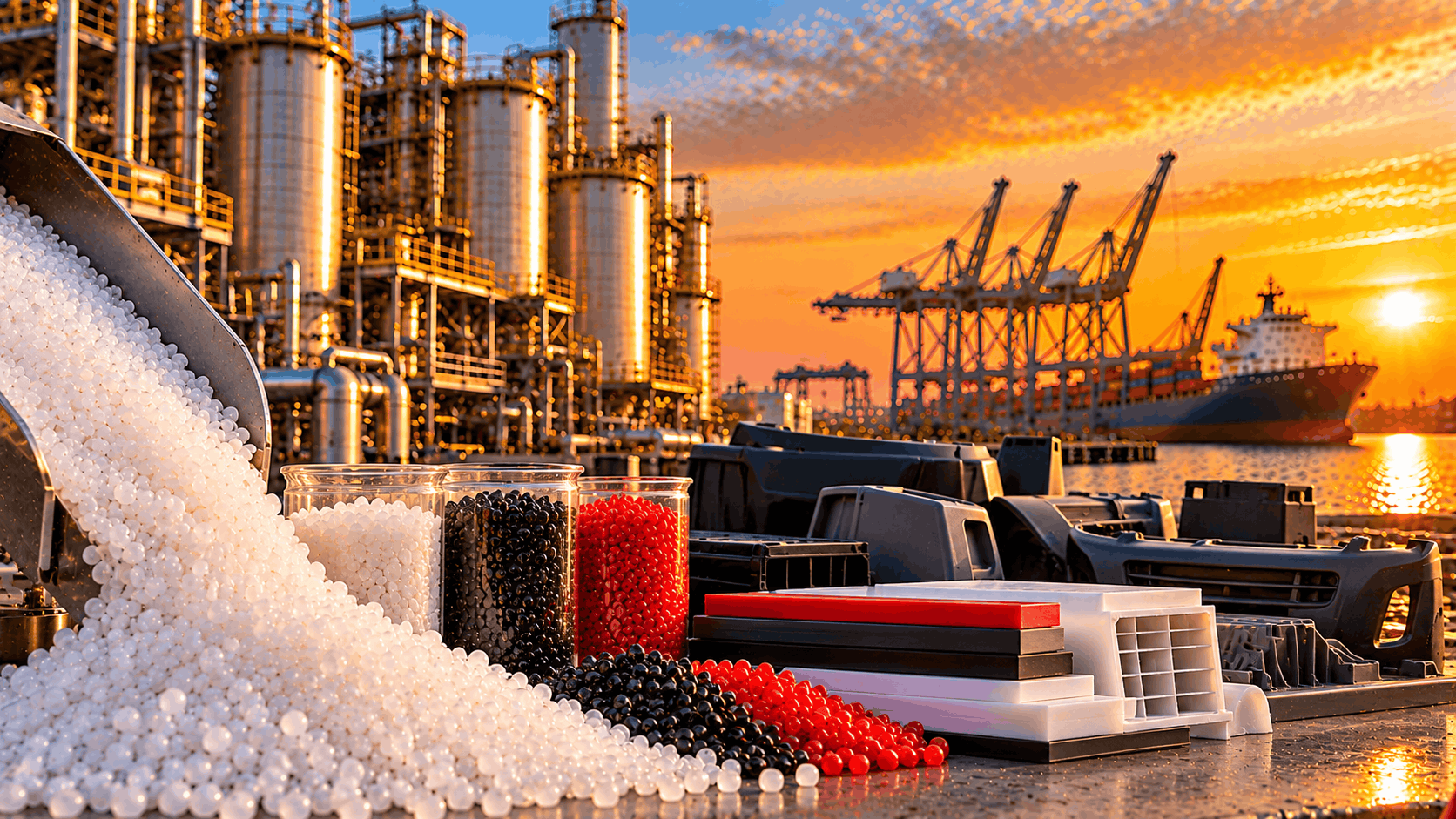
Look at the ABS price trend for August 2026 and one number jumps out immediately. China’s Acrylonitrile Butadiene Styrene is priced at USD 1,466.00 per metric ton, EXW. Europe’s sitting at USD 3,836.00 per metric ton, also EXW. That’s not a small gap. That’s a difference of USD 2,370.00 per ton, more than double.
Why does this matter if you’re not a chemical engineer? Because ABS shows up everywhere. Car dashboards, kitchen appliances, toys, electronics housings. Anyone buying or specifying this resin needs to understand why the same material costs so differently depending on where it’s made.
Current ABS Prices: China vs Europe
| Product | Region | Incoterm Basis | Price | Last Updated |
|---|---|---|---|---|
| Acrylonitrile Butadiene Styrene (ABS) | China | EXW | USD 1,466.00/MT | August 2026 |
| Acrylonitrile Butadiene Styrene (ABS) | Europe | EXW | USD 3,836.00/MT | August 2026 |
Both figures use EXW, so at least this comparison is clean. No freight, no insurance, no destination fees muddying things up. Just the ex-works price at the production site. That makes the gap even more striking.
China’s figure reflects a market with enormous ABS production capacity. Europe’s reflects something very different: tighter supply, higher energy costs feeding into manufacturing, and a regulatory environment that adds cost at nearly every stage of production.
A Quick Q&A on Why the Gap Is So Wide
So is Europe just overpriced? Not exactly. It’s more that European producers are working with a cost structure China doesn’t have to deal with.
What’s driving that cost structure? Mostly energy. European petrochemical plants have dealt with volatile and generally higher energy prices for years now. ABS production is energy-intensive, and that cost gets baked straight into the ex-works number.
Does China have an unfair advantage then? Scale helps more than anything else. China runs some of the largest ABS production facilities in the world, and that scale brings per-unit costs down in a way smaller European operations simply can’t match.
Is this gap likely to close anytime soon? Not based on current structural conditions. Energy costs in Europe aren’t dropping fast, and China’s capacity keeps expanding. The spread looks like it’s here to stay, at least through the rest of 2026.
What’s Actually Driving ABS Prices
A few forces sit underneath both numbers.
Feedstock costs come first. ABS is made from acrylonitrile, butadiene, and styrene, three petrochemical inputs that move with crude oil and naphtha pricing. When feedstock costs rise, producers in both regions pass that through, but how much they pass through depends on local competition and capacity utilization.
Energy pricing matters just as much, maybe more right now. Natural gas prices in Europe have stayed elevated compared to pre-2022 levels, and that shows up directly in manufacturing costs for energy-heavy processes like ABS polymerization.
Production capacity plays a role too. China’s chemical sector has added ABS capacity aggressively over the past several years. More supply chasing the same demand tends to push prices down, and that’s exactly what’s happening here.
Trade dynamics shouldn’t be ignored either. Anti-dumping measures, tariffs, and regional trade agreements all shift where ABS flows and at what cost. These policies vary by country and can swing pricing meaningfully within a single quarter.
What This Means for Buyers and Manufacturers
If you’re sourcing ABS right now, the China-Europe spread changes your calculus depending on where you sit.
Manufacturers with flexible supply chains have an obvious incentive to look toward Chinese suppliers. A USD 2,370.00 per ton saving adds up fast on large-volume orders. But cost isn’t the only variable worth weighing. Quality consistency, lead times, and logistics all factor into total landed cost, not just the EXW number on paper.
European manufacturers facing this pricing reality have a tougher position. Either absorb the higher input cost, pass it along to customers, or start exploring alternative sourcing regions. None of those options are painless, and each comes with its own tradeoffs around reliability and supply chain risk.
For procurement teams and business advisers watching ABS markets, this is a moment worth flagging to clients. A spread this wide usually signals a longer-term shift, not a one-month blip. Companies reliant on European ABS supply might want to start diversifying now rather than waiting for prices to normalize on their own.
Looking Ahead
Where does this go from here? Hard to say with total certainty, but the structural pieces point toward the gap holding, possibly widening further.
Europe’s energy situation isn’t resolving quickly. China’s production capacity isn’t shrinking either. Unless something shifts dramatically on the trade policy side or feedstock costs move in an unusual direction, expect this China-Europe ABS price divide to persist well past August 2026.
Buyers locking in long-term contracts should treat these figures as a current snapshot, not a fixed reference point. ABS pricing can move with feedstock volatility, and relying on data that’s even a few months old carries real risk.
Conclusion
The ABS price trend for August 2026 draws a sharp line between China at USD 1,466.00/MT EXW and Europe at USD 3,836.00/MT EXW. That USD 2,370.00 spread comes down to energy costs, production scale, and feedstock dynamics playing out very differently across the two regions. For anyone buying, specifying, or advising on ABS right now, this gap deserves attention. It’s shaping sourcing decisions already, and it doesn’t look like it’s closing anytime soon.
FAQ Section
What is the current ABS price trend in China and Europe?
As of August 2026, China’s ABS is priced at USD 1,466.00/MT EXW while Europe sits at USD 3,836.00/MT EXW. The gap, over USD 2,370.00 per ton, comes down to differences in energy costs, production scale, and regional feedstock economics.
Why is ABS so much more expensive in Europe than China?
Mostly energy. European ABS production carries higher energy costs that get baked directly into the ex-works price. China also benefits from much larger production scale, which brings per-unit costs down in ways smaller European facilities can’t replicate.
What raw materials go into ABS production?
ABS is made from three main inputs: acrylonitrile, butadiene, and styrene. All three track petrochemical markets closely, so crude oil and naphtha price swings tend to feed straight into ABS pricing, in both China and Europe, though the pass-through rate differs by region.
How often do ABS prices change?
ABS can move month to month depending on feedstock costs, energy prices, and demand from downstream industries like automotive and electronics. The August 2026 figures here are a current snapshot. Buyers negotiating contracts should pull updated pricing before finalizing anything.
Will the China-Europe ABS price gap close soon?
Not likely in the near term. Europe’s energy costs remain elevated, and China keeps expanding ABS capacity. Both trends point toward the gap holding steady or widening rather than narrowing, at least through the rest of 2026.
- Managerial Effectiveness!
- Future and Predictions
- Motivatinal / Inspiring
- Fitness and Wellness
- Medical & Health
- Manufacturing
- Education
- Real-Estate
- Food Industry
- Hospitality
- Online Games
- Sports
- Home Services
- Civil Engineering
- Safety and Protection
- Software Products & Services
- Fashion and Jewellery
- Artificial Intelligence
- Entrepreneurship
- Mentoring & Guidance
- Marketing
- Networking
- HR & Recruiting
- Literature
- Shopping
- Career Management & Advancement