

 SkillClick
Employee Recognition Turns Workplace Values into Everyday Culture
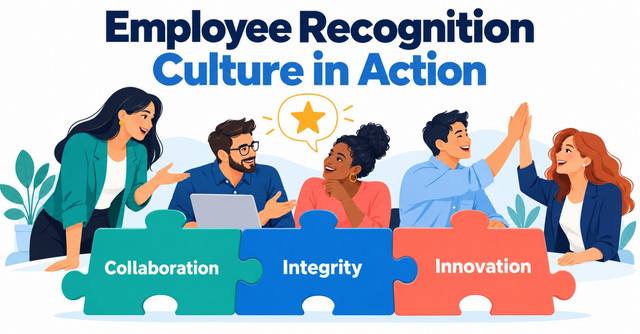
Employee recognition brings organizational culture to life by showing people which contributions and behaviors matter. When employees are appreciated for helping colleagues, improving a process, or demonstrating integrity, company values become visible in everyday work. A culture of recognition combines timely manager appreciation, peer-to-peer recognition, and fair participation across roles and locations.
An organization may describe collaboration as a core value. Employees learn what that means when someone who shares expertise receives specific appreciation, and when managers acknowledge everyone who helped deliver a result. Those moments show people what is valued and worth repeating.
Gallup reported that employees who experience recognition done well are four times as likely to be engaged and five times as likely to feel connected to company culture—recognition quality matters, including authenticity, fairness, and personalization.
Why employee recognition is a human connection
People want their contribution to be understood. Recognition shows them someone noticed what they did and valued it. This matters especially for work that is useful but rarely visible in performance dashboards.
Consider an employee who helps a new colleague understand a complex process. A message explaining how that support made the colleague more confident acknowledges both the contribution and the person behind it. It can also make asking for help feel more acceptable.
Recognition should reflect the recipient’s preferences. Some employees enjoy public appreciation; others prefer a personal message or a quiet conversation. Managers who understand these preferences can make appreciation more meaningful. Respectful, specific recognition helps employees feel seen without making them uncomfortable.
How recognition reinforces organizational values
Values become easier to understand when employees can see them in action. Recognition shows what those values mean in a particular role, team, or customer situation.
An integrity award might acknowledge someone who raised a quality concern early. Recognition for innovation might highlight an experiment, explain what the team learned, and show how that learning improved a process. Appreciation for collaboration might celebrate colleagues who shared knowledge across departments.
These examples help employees understand what they can do themselves. A recognition message that explains the action and its impact offers more guidance than a generic statement such as “Great teamwork.”
Consistency gives those messages credibility. If an organization talks about teamwork but repeatedly celebrates only individual results, employees receive conflicting signals. Recognizing both outcomes and the behaviors behind them helps align appreciation with the culture leaders want to build.
Imagine a service team that recognizes only the employee who resolves the most customer tickets. A colleague who improves the knowledge base may receive little attention, even though their work helps others resolve queries. A broader framework can recognize both contributions and explain their impact. That gives employees a clearer view of how individual effort supports shared results.
For managers, a useful recognition message answers three questions: what the employee did, why it mattered, and which value it demonstrated. Specificity helps keep appreciation credible. Reviewers can also use these questions when assessing nominations for formal awards.
Why leaders and employees must share ownership
HR can design the recognition framework, establish criteria, and monitor fairness. Daily participation depends on managers, leaders and colleagues making appreciation part of their work.
Leaders give recognition credibility by naming specific contributions, acknowledging less visible teams, and sharing credit. Managers reinforce it through regular conversations, project reviews, and timely spot recognition. Their example helps employees see that appreciation deserves attention year-round.
Peer-to-peer recognition adds another perspective. Colleagues often notice helpful actions and small improvements that managers may miss. Enabling them to recognize each other broadens participation and makes appreciation less dependent on hierarchy.
Shared ownership works best with clear expectations. Employees should know which contributions qualify, how to recognize someone, and when formal approval is required. Simple guidance helps recognition remain accessible while giving significant awards appropriate oversight.
How to build a culture of recognition
-
Recognize meaningful behaviors alongside results
Celebrate achievements while acknowledging the actions that made them possible. Mentoring, preventing errors, and improving a difficult process deserve recognition even when they don't immediately produce a headline result. Explain why the behavior mattered. This encourages employees to contribute responsibly and makes valuable work visible across different roles.
-
Make appreciation timely and specific.
Recognize a contribution while the details are fresh. State what the employee did, who benefited, and why it mattered. For example, “Your troubleshooting guide helped the support team resolve repeat queries more consistently” gives the recipient useful feedback. Formal awards can follow their own schedules, while everyday appreciation keeps contributions from being overlooked.
-
Give managers a practical way to participate.
Help managers identify contributions during normal work and write useful recognition messages. Include appreciation in team meetings and one-to-one conversations. Review whether recognition reaches everyone in the team over time. Expectations should encourage managers to notice good work while letting them recognize contributions thoughtfully, rather than meet a nomination quota.
-
Make peer recognition inclusive.
Allow employees to appreciate colleagues across teams, locations and levels. Make participation practical for frontline, remote and hybrid employees. When appropriate, share recognition through a social feed so others can learn from the example. Review whether the same visible groups receive most of the attention and whether important contributions elsewhere are being missed.
-
Use monetary and non-monetary recognition purposefully.
A specific thank-you, digital badge, or mention in a meeting can acknowledge everyday support. Significant achievements may warrant reward points or a formal award. Match the recognition to the contribution and communicate the criteria. Employees should understand why someone was recognized, even when the appreciation comes without a financial reward.
-
Keep gamification focused on worthwhile contributions.
Badges, points, and leaderboards can encourage participation when they reflect the program’s purpose. Review what employees must do to succeed. If generic messages or reciprocal nominations dominate, revise the rules and reinforce quality expectations. Recognition should make valuable contributions more visible and help employees learn from them.
How digital platforms support recognition at scale
As organizations grow, recognition can become uneven across locations and teams. A digital employee recognition platform gives employees a common way to appreciate colleagues and helps HR manage eligibility, approvals, and program visibility.
HiFives, a leading global platform for employee rewards, recognition, and engagement, supports peer-to-peer recognition, manager appreciation, spot awards, and recognition linked to organizational values. Organizations can combine digital badges and social recognition with reward points, configurable approval workflows and budget controls.
HiFives also provides analytics to monitor participation and recognition activity. Access through web and mobile experiences, alongside integrations with Microsoft Teams, Slack and WhatsApp, helps employees participate through familiar channels.
Technology makes the process easier to administer. Leaders and employees still provide the attention, judgment, and specific appreciation that give each recognition moment meaning.
How to measure recognition culture and business impact
Nomination totals alone cannot show whether employees feel valued. Review how many employees receive recognition, how consistently managers participate, and whether appreciation reaches different teams and roles. Sample messages to assess whether they explain meaningful contributions.
Employee feedback adds context. Ask whether recognition feels fair, timely, and relevant, and whether employees understand how their work supports organizational goals. Review these findings alongside engagement, retention, and relevant operational measures.
Gallup and Workhuman’s research tracking employees from 2022 to 2024 found that well-recognized employees were 45% less likely to have changed organizations two years later. This finding supports recognition’s relevance to retention; it does not mean every program will deliver the same reduction.
Use the evidence to improve the program. Low participation may point to access barriers or unclear criteria. High activity with generic messages may call for better guidance. The aim is to understand employees’ experience and strengthen recognition where it falls short.
Recognition data should prompt conversations, not replace performance assessment. An employee with few nominations may be doing valuable work that colleagues rarely see. Speak with managers and employees before treating low activity as a sign of low contribution.
Making recognition part of everyday culture
A culture of recognition develops through repeated, credible experiences of appreciation. Leaders model it, managers reinforce it, and colleagues extend it to contributions that might otherwise go unnoticed.
For HR leaders, the practical task is to connect recognition with organizational values, make participation easy, and review whether employees experience it fairly. Over time, these everyday moments help people understand how to contribute and why their contribution matters.
Frequently asked questions (FAQs)
-
What is a culture of recognition
A culture of recognition is a workplace where leaders, managers and colleagues regularly acknowledge meaningful contributions. Appreciation is specific, fair, and connected to organizational values.
-
Can employee recognition strengthen workplace culture
Yes. Recognition makes valued behaviors visible and gives employees practical examples to follow. Its impact depends on how consistently and credibly people experience appreciation.
-
How can organizations start building a recognition culture
Define meaningful recognition criteria, train managers, enable peer appreciation, and make participation accessible. Review employee feedback and recognition coverage to identify gaps and improve the program.
- Managerial Effectiveness!
- Future and Predictions
- Motivatinal / Inspiring
- Fitness and Wellness
- Medical & Health
- Manufacturing
- Education
- Real-Estate
- Food Industry
- Hospitality
- Online Games
- Sports
- Home Services
- Civil Engineering
- Safety and Protection
- Software Products & Services
- Fashion and Jewellery
- Artificial Intelligence
- Entrepreneurship
- Mentoring & Guidance
- Marketing
- Networking
- HR & Recruiting
- Literature
- Shopping
- Career Management & Advancement