

 SkillClick
From Startup to Recognised Brand: An SEO Growth Strategy for D2C Businesses
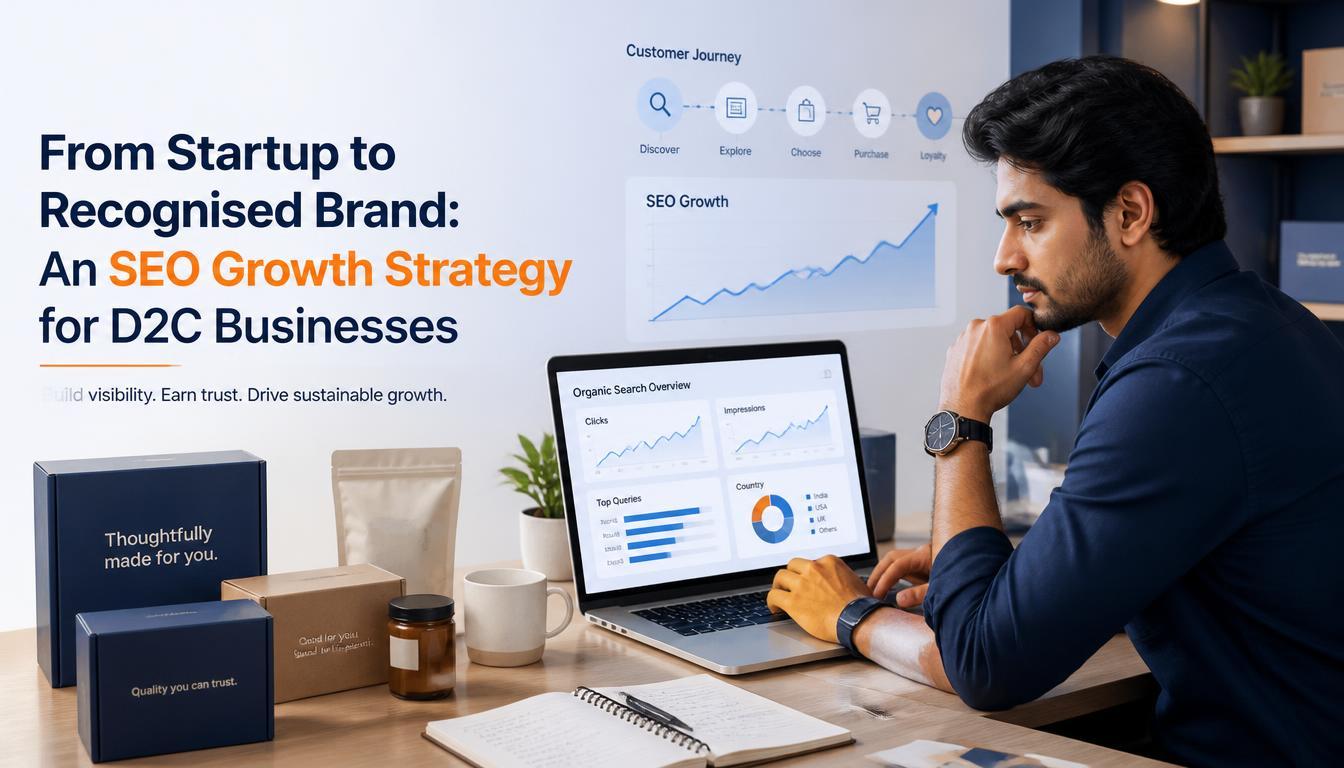
Launching a direct-to-consumer brand is easier than ever, but building a dependable stream of customers remains a major challenge. Founders must balance product development, fulfilment, customer service, and marketing while competing against businesses with established audiences. A D2C SEO Company in Delhi can help founders build an organic search strategy that supports brand discovery and reduces dependence on a single acquisition channel.
For startups, SEO is not simply about ranking for high-volume keywords. It is about understanding customer demand, identifying realistic opportunities, and developing a website that converts relevant search traffic into meaningful business outcomes.
Why D2C Founders Need a Long-Term Acquisition Strategy
Paid advertising can help a new brand reach potential customers quickly, but advertising performance depends on budgets, competition, creative quality, audience targeting, and conversion rates. When campaigns stop, the traffic they generate may also decline substantially.
Organic search provides another route to discovery. A customer looking for a particular product, comparing alternatives, or researching a problem can discover a brand through its website content.
However, SEO should not be presented as a free or guaranteed source of customers. It requires investment in technical work, content, product information, analysis, and ongoing improvement. Results vary according to the market and the quality of implementation.
The advantage for founders is that SEO can build on assets the company owns: its website, product catalogue, educational content, and customer knowledge.
Step 1: Validate Search Demand Before Expanding the Catalogue
Founders often choose product categories based on personal interest, market trends, or competitor activity. Keyword research provides another source of evidence about how customers describe their needs.
Suppose a startup plans to sell ergonomic office accessories. Potential searches may include adjustable laptop stands, compact desk organisers, laptop risers for small desks, and accessories for home-office setups.
These phrases suggest different needs and potentially different product opportunities.
The founder should evaluate search intent, relevant competitors, existing product capabilities, and the commercial feasibility of serving each need. Search volume alone does not establish demand for a specific brand or guarantee future sales.
A practical research process includes:
-
Collecting broad product-category terms.
-
Finding more specific queries that describe use cases.
-
Reviewing the pages that already rank for those queries.
-
Identifying missing or poorly answered customer questions.
-
Mapping promising keywords to appropriate website pages.
-
Prioritising opportunities that match the available product range.
This approach can help a startup focus its limited resources on areas where it can provide a genuinely useful answer or product.
Step 2: Build a Clear Website Architecture
A startup website should make its most important products and categories easy to find.
A simple hierarchy might include a homepage, primary categories, focused subcategories, individual product pages, and supporting educational resources.
The navigation should reflect how customers think about the products rather than the company's internal inventory codes.
For example, a home decor business might organise products by room, material, or use case where those groupings are meaningful to customers. The objective is to create a structure that supports browsing and makes the relationship between pages clear.
Internal linking strengthens this structure. A buying guide can link to the relevant category, and a category page can link to individual products. Related articles can also reference each other where doing so helps the reader.
Founders should be cautious about publishing numerous near-identical category pages simply to target slightly different keyword variations. Each important page should serve a distinct purpose.
Step 3: Create Product Pages That Establish Trust
An unfamiliar brand must work harder to explain why a shopper should consider its products.
Product pages should provide clear, verifiable information about the product, its intended use, available options, price, delivery, returns, and support.
Strong product content often answers the following questions:
What is the product? Describe it in plain language and include relevant specifications.
Who is it for? Explain the intended customer or use case without making unsupported claims.
How does it differ from alternatives? Highlight genuine differences in design, material, functionality, or service.
What does the customer receive? Explain package contents, dimensions, compatibility, and any important limitations.
What happens after the order? Make shipping, returns, warranties, and support arrangements easy to understand.
Original photography, demonstrations, detailed specifications, and genuine customer feedback can strengthen the shopping experience. Trust should come from transparent information rather than fabricated testimonials or exaggerated promises.
Step 4: Publish Content That Demonstrates Product Knowledge
A D2C brand has opportunities to create educational resources based on its products and customers.
A coffee company could explain brewing methods, grind sizes, and storage. A fitness accessories brand might publish equipment comparisons, maintenance guidance, and beginner-friendly workout resources. A sustainable home products company could explain material choices and care instructions.
These articles can reach customers who are not yet searching for a specific brand but are actively exploring a need.
The strongest content is specific, practical, and supported by reliable information. It should answer the reader's question before introducing a commercial recommendation.
Founders should also consider their own expertise. Product-development experience, customer questions, testing procedures, and genuine lessons from running the business can contribute information that generic articles lack.
When a post references scientific, legal, financial, or health-related claims, the evidence and qualifications should be appropriate to the topic.
Step 5: Build Brand Authority Without Chasing Every Backlink
External references can help people discover a brand and may contribute to its search visibility. However, not every link has equal value, and mass-produced directory submissions are not a substitute for a credible reputation.
Startups can pursue legitimate opportunities through relevant industry publications, supplier partnerships, professional associations, expert interviews, product testing, and useful research.
For example, a brand that publishes an original study of customer preferences may create a resource that journalists and industry writers find worth referencing. A founder who contributes practical expertise to a relevant publication may gain visibility among potential customers.
The focus should be on relevance, credibility, and genuine editorial value. Avoid purchasing links intended to manipulate rankings or producing large volumes of repetitive guest posts.
External publishing is most useful when it reaches a relevant audience and provides something valuable beyond a backlink.
Step 6: Address Technical SEO Before Scaling Content
A growing catalogue introduces technical complexity. New products, product variants, promotional URLs, filters, and discontinued items can create crawling and indexing challenges.
Founders should establish basic technical processes early.
Review whether important pages are indexable, whether canonical tags point to the intended URLs, and whether XML sitemaps include appropriate pages. Check for broken links, redirect chains, duplicate titles, and accidental noindex directives.
Product structured data can provide search engines with machine-readable details about eligible products. Its implementation should be tested and kept consistent with the visible page content.
Page performance also matters to customers. Mobile navigation, image optimisation, stable layouts, and a straightforward checkout experience should be treated as part of the product experience rather than isolated SEO tasks.
Step 7: Measure Progress Against Business Objectives
Startups need reporting that supports decisions rather than simply listing ranking changes.
Google Search Console can reveal which pages receive search impressions and clicks. Analytics tools can measure product interactions, checkout activity, purchases, and other configured events.
Founders should review:
-
Organic traffic to priority categories and products
-
Search impressions and clicks for target queries
-
Organic conversion rate and revenue
-
Add-to-cart and checkout completion rates
-
Performance of new and updated pages
-
Customer acquisition costs across channels
Interpretation is important. An increase in organic traffic does not automatically mean an increase in profitable sales. Likewise, low conversions may result from pricing, fulfilment, product-market fit, or checkout issues rather than search visibility alone.
A monthly review can help teams decide whether to improve existing pages, develop new resources, address technical issues, or investigate customer objections.
A Practical First 90 Days
During the first 30 days, establish analytics tracking, review technical health, research customer searches, and prioritise the most important categories and products.
During days 31–60, improve product descriptions, strengthen category pages, fix significant technical issues, and establish an internal-linking structure.
During days 61–90, publish useful supporting content, review search performance, investigate conversion barriers, and identify credible opportunities for industry visibility.
This is a planning framework, not a guarantee that rankings or sales will improve within 90 days. Competitive terms may take considerably longer, and priorities should change as new evidence becomes available.
Businesses that want external support can explore Battersea Web Expert's D2C SEO service page to understand its approach to ecommerce search optimisation.
Conclusion
For D2C founders, SEO is an investment in discoverability, product communication, and long-term digital infrastructure. It works best when keyword research reflects actual customer needs, product pages provide trustworthy information, technical foundations remain healthy, and reporting connects search performance to business outcomes.
A startup does not need to compete for every keyword at once. By focusing on relevant opportunities and improving the website consistently, founders can build a stronger foundation for organic growth while continuing to develop their products and customer relationships.
- Managerial Effectiveness!
- Future and Predictions
- Motivatinal / Inspiring
- Fitness and Wellness
- Medical & Health
- Manufacturing
- Education
- Real-Estate
- Food Industry
- Hospitality
- Online Games
- Sports
- Home Services
- Civil Engineering
- Safety and Protection
- Software Products & Services
- Fashion and Jewellery
- Artificial Intelligence
- Entrepreneurship
- Mentoring & Guidance
- Marketing
- Networking
- HR & Recruiting
- Literature
- Shopping
- Career Management & Advancement