

 SkillClick
Can Automation Change the Way Businesses Handle Data? The Future of Information Lifecycle Management
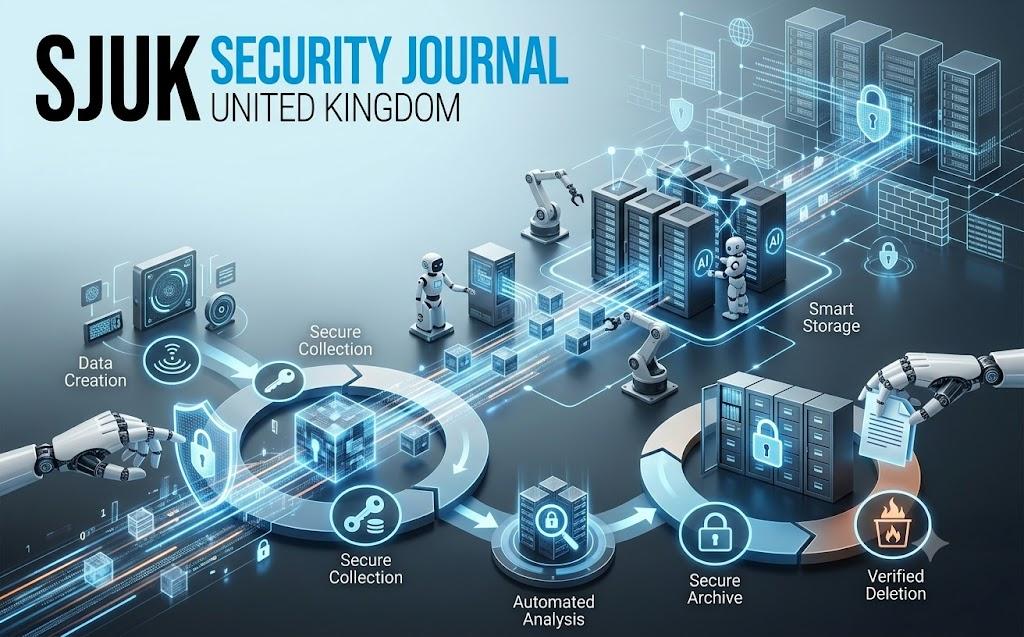
Businesses increasingly depend on digital information to make decisions, coordinate operations and maintain relationships with customers and employees. Yet manually organising growing volumes of information can be time-consuming and inconsistent.
Employees may struggle to classify documents, remember retention dates or identify outdated records. Security teams may also find it difficult to monitor information spread across numerous systems.
Automation offers an opportunity to improve these processes by applying approved rules consistently, identifying information that needs attention and reducing repetitive administrative tasks. However, effective automation requires more than deploying new technology. It depends on reliable data, clear policies and appropriate human oversight.
A modern information lifecycle management strategy can provide the framework for combining automation with responsible information governance. By defining how information should be created, classified, accessed, retained and disposed of, businesses can use technology to improve efficiency without losing accountability.
Why Manual Information Management Is Becoming Difficult
Traditional records management often relies on employees following procedures, updating spreadsheets and manually reviewing stored documents. These methods may work for small collections but become harder to maintain as information grows.
Retention dates can be missed, ownership records can become outdated and duplicate files can accumulate. Manual processes may also produce inconsistent results because different departments interpret policies differently.
The consequences extend beyond administration. Inconsistent handling can make sensitive information harder to protect, delay investigations and complicate compliance reviews.
Automation can reduce repetitive work, but the underlying process must first be understood. If policies are unclear or records are poorly classified, technology may reproduce existing weaknesses more quickly.
Businesses should therefore assess their current workflows before deciding which activities are suitable for automation.
Automating Data Classification
Classification is an important foundation for effective information management. It helps determine the sensitivity, purpose and handling requirements of different records.
Automated classification tools can analyse document properties, labels and content patterns to suggest categories. For example, a system may flag a document that appears to contain personal information or financial details.
These capabilities can reduce the amount of manual review required, particularly when processing large collections. They may also help identify records that have been stored without appropriate labels.
However, automated classification is not always reliable. A document may contain sensitive terms in a harmless context, or a critical record may not include obvious indicators.
Businesses should establish confidence thresholds, human review procedures and correction mechanisms. Classification results should be tested regularly, especially when they determine access permissions, retention periods or deletion decisions.
Using AI to Discover and Organise Information
Artificial intelligence can support information discovery by identifying patterns, grouping similar records and helping users search large collections.
Natural-language search may allow employees to locate relevant documents using ordinary questions instead of relying entirely on exact filenames. Summarisation tools may also help authorised users understand lengthy records more quickly.
These capabilities can improve productivity, but they introduce additional considerations. AI systems may produce inaccurate summaries, overlook context or expose information through inappropriate permissions or integrations.
Businesses should control which records AI tools can access and ensure that access restrictions remain effective. Sensitive information should not be transferred to unapproved systems simply because a tool offers convenient functionality.
Human verification remains important when information supports legal, financial, security or other high-impact decisions.
Automating Retention and Disposal
Retention management is one of the clearest areas for workflow automation. Systems can monitor approved retention periods, send review notifications and identify records that may be eligible for archival or deletion.
A typical workflow might begin when a record is created and assigned a category. The category determines its retention rule, while the system tracks relevant dates and exceptions.
When a review date arrives, the system may notify the record owner. If the record remains necessary, the owner can document the reason for continued retention. If the retention period has ended and no preservation requirement applies, the record may proceed through an approved disposal process.
Information lifecycle management provides the policy framework that makes these workflows meaningful. Without accurate retention rules and reliable exception handling, automated deletion can create significant risks.
Businesses should test workflows before deployment, preserve appropriate audit evidence and ensure that legal holds override routine disposal where required.
Improving Security Monitoring
Automation can help security teams identify unusual information access, unexpected transfers and changes to permissions.
Rules-based monitoring may generate alerts when activity differs from established patterns. More advanced analytics may help identify behaviour that warrants investigation, although automated alerts can also produce false positives.
Businesses should connect monitoring activities to a defined response process. Alerts need appropriate prioritisation, investigation and escalation rather than simply accumulating in dashboards.
Monitoring must also respect applicable privacy and employment requirements. Organisations should document the purpose of monitoring, restrict access to logs and avoid collecting unnecessary information.
Combining monitoring with lifecycle policies can improve visibility into how records move between systems and whether their handling remains consistent with approved rules.
Integrating Automation Across Different Systems
Information rarely remains in one application throughout its life. It may move between collaboration platforms, databases, cloud storage, archives and backup environments.
Disconnected systems can make it difficult to apply consistent rules. A record may be archived in one location while a duplicate remains accessible elsewhere.
Integration can help synchronise metadata, retention instructions and access changes across supported systems. However, integration itself requires careful planning.
Businesses should identify which system is authoritative for each record type, how changes are communicated and what happens when an integration fails. Error handling and reconciliation procedures are important because incomplete transfers can create gaps in control.
Before implementing broad automation, organisations should prioritise critical information flows and test how records behave across their entire journey.
Building a Responsible Automation Framework
A successful programme should combine technology with clear governance.
1. Select suitable processes. Begin with repetitive, well-defined tasks such as review reminders, metadata checks and approved archival workflows.
2. Establish data quality standards. Confirm that record categories, ownership information and retention dates are accurate enough to support automation.
3. Define decision boundaries. Specify which actions can occur automatically and which require human approval.
4. Protect exceptions. Create procedures for legal holds, disputed classifications, unusual records and failed system integrations.
5. Maintain audit evidence. Record relevant automated actions, approvals, exceptions and corrective changes.
6. Test continuously. Measure accuracy, review false positives and confirm that policies are applied as intended.
7. Train employees. Explain how automated decisions work, when intervention is required and how errors should be reported.
These steps help ensure that efficiency gains do not come at the expense of security or accountability.
Measuring the Value of Automation
Businesses should evaluate automation using measurable operational indicators. Useful measures may include classification accuracy, time spent on manual reviews, overdue retention tasks, retrieval speed and the number of unresolved policy exceptions.
Security-related measures may include excessive permissions identified, unusual transfers investigated and disposal actions completed with appropriate evidence.
Cost savings should also be assessed carefully. Automation may reduce repetitive work, but implementation, integration, licensing and ongoing monitoring require resources.
A balanced evaluation considers efficiency, accuracy, risk reduction and the quality of governance rather than relying on a single performance measure.
What the Future May Bring
As AI and workflow technologies develop, information management may become more proactive. Systems may increasingly identify records that require review, recommend storage changes and help detect inconsistencies between policies and actual practices.
Nevertheless, greater automation does not eliminate the need for human responsibility. Businesses will still need to decide which information matters, which obligations apply and how exceptions should be handled.
The strongest future strategies are likely to combine scalable technology with clear accountability, reliable data and regular independent review.
Conclusion
Automation can transform the way businesses classify, retrieve, retain and protect information. It can reduce repetitive tasks, improve consistency and help teams manage complex digital environments more effectively.
However, technology alone cannot create a reliable governance framework. A carefully designed information lifecycle management programme establishes the rules, responsibilities and safeguards that make automation useful and accountable.
For Security Journal UK readers, the priority is to adopt automation where it solves defined problems, test its results and maintain human oversight over decisions that carry significant security, legal or operational consequences.
Frequently Asked Questions
1. What role does automation play in information lifecycle management?
Automation can support classification, retention reminders, archival, monitoring and approved deletion processes while reducing repetitive manual work.
2. Can AI classify every document accurately?
No. AI can make classification errors, so important decisions should include validation, correction mechanisms and human oversight.
3. Is automated deletion safe?
It can be safe when based on accurate retention rules, tested workflows, appropriate approvals and safeguards for legal holds or other exceptions.
4. How can businesses measure automation performance?
They can track classification accuracy, processing time, overdue reviews, unresolved exceptions, retrieval performance and verified disposal activities.
5. Will automation remove the need for information governance teams?
No. Governance professionals remain important for defining policies, interpreting requirements, managing exceptions, reviewing performance and ensuring accountability.
- Managerial Effectiveness!
- Future and Predictions
- Motivatinal / Inspiring
- Fitness and Wellness
- Medical & Health
- Manufacturing
- Education
- Real-Estate
- Food Industry
- Hospitality
- Online Games
- Sports
- Home Services
- Civil Engineering
- Safety and Protection
- Software Products & Services
- Fashion and Jewellery
- Artificial Intelligence
- Entrepreneurship
- Mentoring & Guidance
- Marketing
- Networking
- HR & Recruiting
- Literature
- Shopping
- Career Management & Advancement